wow...it's party time again... REVISITED :)
OFF TOPIC discussions
John Henry, yes I assume your 'mountain dew' guard status is secure- I think it's a lifetime assignment. Just don't fall off your bicycle:

John Henry, yes I assume your 'mountain dew' guard status is secure- I think it's a lifetime assignment. Just don't fall off your bicycle:
Wow, I can't really believe the average is 10 mtn dulcimers per member. It's probably just the most verbose members who have tons of dulcimers. Quiet modest folk like me have only one or two. 
Now wait a minute!..... so where is Rod gonna be while you are stuck 'guarding the dew'?(and hey you don't have worry about ME trying to steal any of that stuff, for sure!) LOL! =:-SContra Dance! I,d love to only Rod has already said that whatever, I,m detailed to sit and guard the Dew , needed someone he could trust,you see.................knew that I would'nt touch it.

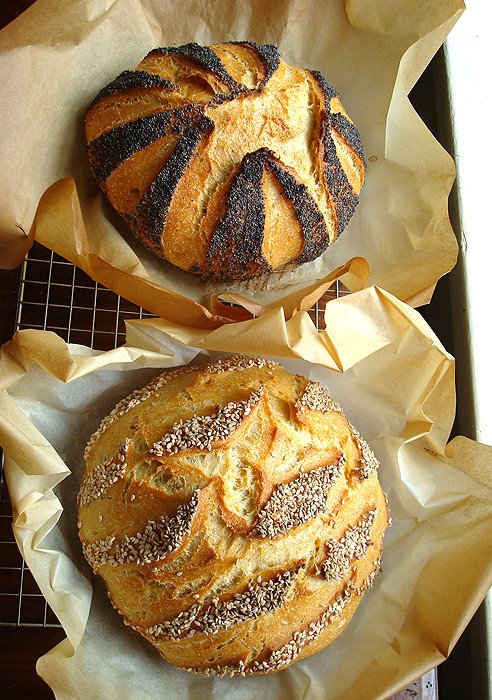
Bill, I think I'm going to bring a nice healthy spinach salad with my own kitchen-grown sprouts, with feta cheese and calamata olives and a shitake dressing. But I'll keep some 'emergency' extra salsa and chips in my car just in case a whole gang of hungry new members come busting in the door unexpectedly and want to eat up all the good stuff.You bring the salsa and chips for the rest of us and we won't crack into the emergency supplies in my trunk unless we need to. :DThis is the most fun you can ever have Robin. I've got some chips and salsa, Jim's got Cookies, i think Lisa's got Chips and salsa too. :)
Ok, just had to bump this old thread up...brings back some smiles from five years ago... 
And you are much needed indeed! :D...(especially since the sheriff has a habit of snoozing while the criminals rant rampant. LOL )just glad ta be here when needed...
He gets extra bullets whenever I have to go over to Mt. Pilot for a day or two, leaving Mayberry's wellbeing completely in his capable hands. But best not to shower him with live ammunition lest he start gettin' all full of himself. ;DRandy was saying to me that we should think about giving him more bullets, but I said why? If you're good like "The Deputy" you only need one shot!!! Atta boy Deputy Mo!!
Ken, I was thinking of makming a fun little YouTube video showing how I make my 'button straps' for my dulcimers. I think I'll do that next! ...and next thing you know there will be button straps on dulcimers everywhere ! ;DLisa, I'd love to see how one of your straps works. Can't quite envision it from the description, and it's neat to hear of a way to do this without putting a strap peg on the instrument.
I agree. I dislike that tinny sound at the strum hollow- it's too close to the bridge, and on a banjo that place sounds tinny as well.As to hitting the dulcimer with a pick and marring it...well I do it all the time and my soft long pick just sort of makes a general worn patina area- i think of it as a cool personalization touch, I don't mind the surface damage. ;)The sound I get at the strum hollow is very tinny on all my dulcimers. I vary where I strum based on the sound I want to get, and use the sound at the strum hollow for special effect only.
I have to say that years ago on someone else's recommendation I tried the Lava soap trick on my antique banjo with wooden pegs, using just a little on one peg, and it was a total disaster for me. The peg would not hold at ALL, it slipped like it was covered in grease. I tried wiping the Lava off with a damp cloth and I had to really scrub and scrub to get rid of the soap film residue that did not want to go away. It was an awful experience for me. Then I bought the Peg Drops and it worked like magic. Just my own experience.I asked about this at Potter's music in Bethesda MD because the pegs on my old cello were slipping. I was told about the peg dope; however he suggested Lava Soap, which is what he used. I told a cello friend about it recently and she tried it and said it is working fine. The grit in the Lava holds while the soap is slippery. At least this is the idea. I didn't try it on my old cello because I haven't changed the strings on it since buying a new one.
Wow i would love to see a video of you playing that. :)Striking just the melody notes is how I play with a striker, and if I lift my hand and angle downward with just the tip I can even pick up the lower notes I need on certain songs. I've done "Peat Bog Soldier" in Aeolian and have to pick up a 0 fret on the middle string. This is a song that works well will a strong marching beat. Dona, Dona, also in Aeolian, is another one.
Happy holidays and a joyful new year to all - What a wonderful group of people!
Keltia, try thinking of the bowed psaltery more like a piano rather than a dulcimer.
You pick a range of the piano keys you want on your psaltery- usually between 1 and 3 octaves somewhere. Then you will have all the notes within that range. There is one string for every note. Each string will only play its one note- just like on a piano.
On a dulcimer or guitar, each string plays many notes through fretting it- therefore you can choose 'tunings' based on the kind of fingerings you are going to use.
a draw showing what note is what string could be fine.
Here are a few different tuning charts. Your string notes really depend on what high/low range you would like, on the size of the psaltery in terms of string length, and on how many strings you want:
http://www.juneappledulcimers.com/pages/BowedPsalteryTuningChart/
http://www.apsimplepsaltery.com/tuning_scheme.JPG
http://i153.photobucket.com/albums/s225/nigelum/Hodge-Podge/Psaltery_tuning_chart_resized.jpg
http://tuckasee.com/howto1.jpg
http://www.dulcimershofar.com/skin1/images/psal_notes.gif
As you can see there is no one correct way to tune a bowed psaltery, as they are all different depending on what strings they have.
A 25 string tenor like you show would be a nice typical psaltery. 25 or 32 strings or so, you'd be able to play various types of music on it. I would suggest you get at least 1 1/2 octaves to start with.
Keltia said:
Well, true... XD
My questions are about the whole....
1 - strings name/tuning?
2 - specific stuff to do/not do with (to know) ?
3 - hows big is the difference between one from a luthier & one from industry for that instrument (Indeed i wonder for that one) I'd like to hear both & see the differencies but I can dream about...
4 - Where to find tabs about ?
I think those questions are the common ones for any instr. heh Quite normal when yr pretty new at a new instrument... But I thought it was a thread about bowed psaltery but sure as I said: I'll dig more that
psaltery website later.
Keltia, yes your questions are normal for any new instrument, but they require a lot of in depth answers that could easily take days of typing. Donna suggests correctly that all this information is already there for the reading on her site totally dedicated to bowed psalteries- no need to try to explain everything about BP's here. This is a good place for discussing a few specific questions and for having fun comparing our BP experiences here, from the standpoint of being mountain dulcimer players. I do recommend that anyone who wants to learn about bowed psalteries in an in depth way would do well to look at Donna's comprehensive site http://psalterystrings.com/ .
But to try to address some aspects of your questions:
1 - strings name/tuning?
Psalteries can have varying numbers of strings, all tuned to various notes. Mine has 32 strings and is approximately 2 1/2 octaves. Basically, there is a string for every note. I won't name all 32 notes/strings on my psaltery here, but if you like I can point out an online chart for tuning a 32 string psaltery. You do not fret any strings to make notes, you just bow each open string. There are some people who use specific 'tunings' to achieve effects that are not the norm, but mostly the strings are not tuned in 'tunings'- they are just an array of notes (whole and half steps) going up the scale.
2 - specific stuff to do/not do with (to know) ?
To do : practice a lot, concentrate of getting a smooth sound from your bow and a light touch. learn a simple melody line.
Not to do : saw away on it roughly with a heavy hand which produces unfortunate sounds. Be impatient. Try to play 1-3-5 chords.
Not really sure what you mean by this question, but tried my best to answer it. If I'm missing what you meant by your question, please specify and clarify further what you are wanting to know.
3 - hows big is the difference between one from a luthier & one from industry for that instrument (Indeed i wonder for that one) I'd like to hear both & see the differencies but I can dream about...
On Donna's site there are quite a few descriptions and comparisons from various people owning psalteries amde by different people. She also lists some of the makers on the left column of her site, you can look at their sites and what they offer- most of them make nice psalteries that are good quality. Many of their sites offer photos and sound clips. Donna's site also has LOTS of videos of people playing thier psalteries, and you can watch and compare them.
Much depends on how many strings you want - that largely determines what size psaltery you would like to buy. Some are very small with less than a dozen strings- others have over 30 strings. Some have a high sound, some have longer strings and a lower sound. If you want to play very simple tunes then a smaller one with fewer strings might be fun to try. There is no one single type that is best for all people- just like with mountain dulcimers, a lot depends on what kind of music you are wanting to play- knowing that can help others make recommendations. Naturally larger psalteries with many strings are more expensive than small psalteries with only one octave of strings or less.
4 - Where to find tabs about ?
There are some tabs on Donna's site that you can find (Donna can point you to them perhaps).
But TAB is not as useful or applicable for bowed psalteries as it is for mountain dulcimers. Why?- because there is no fingering/fretting involved . No fingering positions to indicate, so basically any tab for the bowed psaltery consists mostly of just indicating which strings to play for each note in the melody. In a way, I feel it's just easier to pick out a simple tune by ear and practice playing it until you 'know' the tune on the psaltery. Once you can play one very simple tune, you can build on that and slowly play other tunes and get better.
In my view, TABs are mostly useful for instruments with fingerings and fingered fretted notes and chords - like mountain dulcimers, guitars, banjos, etc. Otherwise, you can simply use standard notation or else just learn the tune by ear. Start simple .
Hope this helps?
Sue, be sure to join http://psalterystrings.ning.com/ ....where you can drool over b.psalteries to your heart's content!OMG , The Bowed Saltery is such a Beautiful Instrumment. I had the oppertunity to play one last week and Just fell in love with it ! Just a beautiful sound and now I want a new toy ! Maybe Christmas

 I picked it up a couple of nights ago, dreading how i might sound. But NO!- after about five minutes of shaking out the cobwebs, I was almost back where I had left off. What a kind and forgiving instrument it was!I happily played my favorite practice tunes for an hour, and I seem to have wound up pretty much back where I was again. What a relief. Now hopefully I can get back into more regular practice.