What John said!
Ken
"The dulcimer sings a sweet song."
What John said!
Ken
"The dulcimer sings a sweet song."
I'm sure you'll do FINE, Jer! It's not like rocket surgery or anything...
Strings to get are determined by the tuning you want to use and the vibrating string length (VSL). To determine the VSL measure from the fret board side of the nut to where the string touches the bridge. It could be the face of the bridge that faces toward the peg head or if the bridge is triangular the peak of the triangle. Using the string chart Richard suggested you can find the correct size strings. The chart tends to give a little lighter gauge string so you can go to a 0.011 or 0.012 if it suggests at 0.010. I prefer to buy single loop end strings and make up my own sets rather that buy prepackaged sets. My guess is that you could get away with using the D'Addario EJ64 set which are three 0.012 and one 0.022 bass string. This set works with VSLs from 26" to 28 1/4 inches for DAA tuning.
Ken
"The dulcimer sings a sweet song."
Strings to get are determined by the tuning you want to use and the vibrating string length (VSL). To determine the VSL measure from the fret board side of the nut to where the string touches the bridge. It could be the face of the bridge that faces toward the peg head or if the bridge is triangular the peak of the triangle. Using the string chart Richard suggested you can find the correct size strings. The chart tends to give a little lighter gauge string so you can go to a 0.011 or 0.012 if it suggests at 0.010. I prefer to buy single loop end strings and make up my own sets rather that buy prepackaged sets. My guess is that you could get away with using the D'Addario EJ64 set which are three 0.012 and one 0.022 bass string. This set works with VSLs from 26" to 28 1/4 inches for DAA tuning.
Ken
"The dulcimer sings a sweet song."
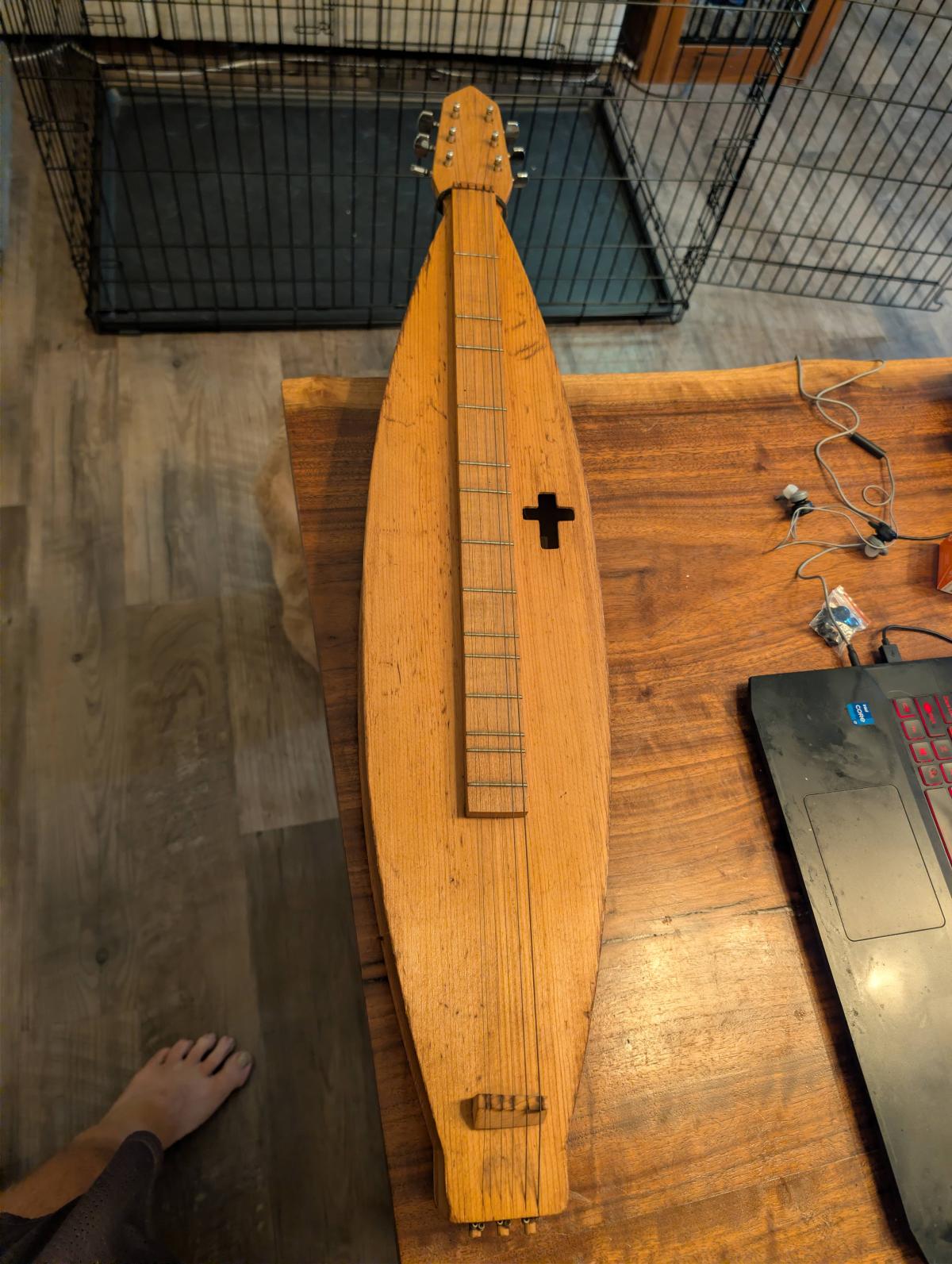
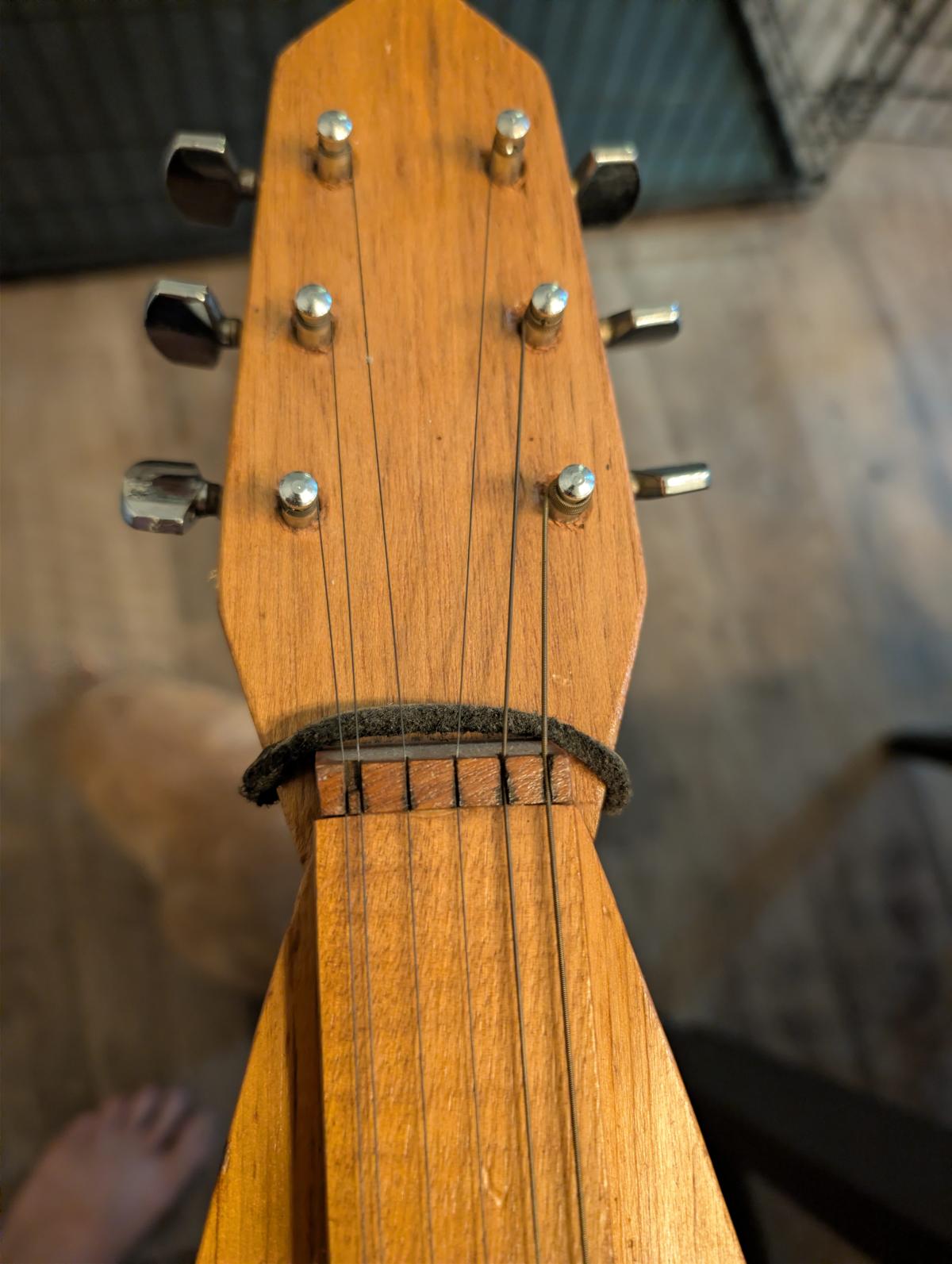
What style of playing are you planning to start with? These dulcimers are most suitable for noter or finger dancing style and playing in a 1 - 5 - 5 tuning (DAA, CGG, etc.). This is because neither dulcimer has a 6 1/2 fret. If you want to play chord/melody style, I would look into have a 6 1/2 fret installed on both dulcimers. The suggestion from removing strings to make the 6 string dulcimer into a 3 string dulcimer seems fine, but the spacing between strings will be a little odd. Eventually you may want to looking into have a new nut and bridge made. Matt's suggestion regarding brads 0n the 2nd dulcimer is good. I would consider filling in the holes and making new ones. I often use #2 round head wood screws 1/2 in. to 3/4 inch long instead of brads. Best wishes on your project.
Ken
"The dulcimer sings a sweet song."
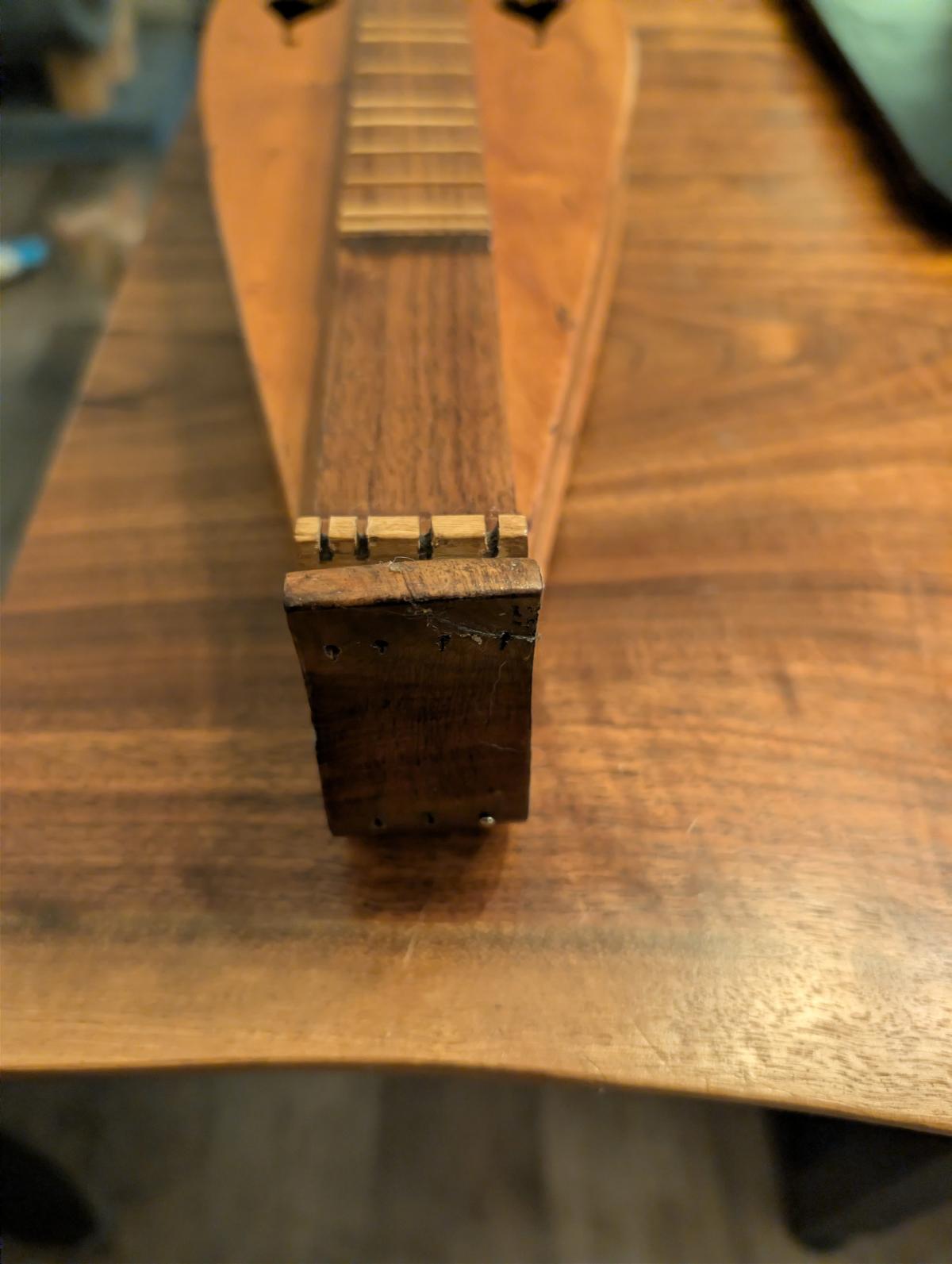
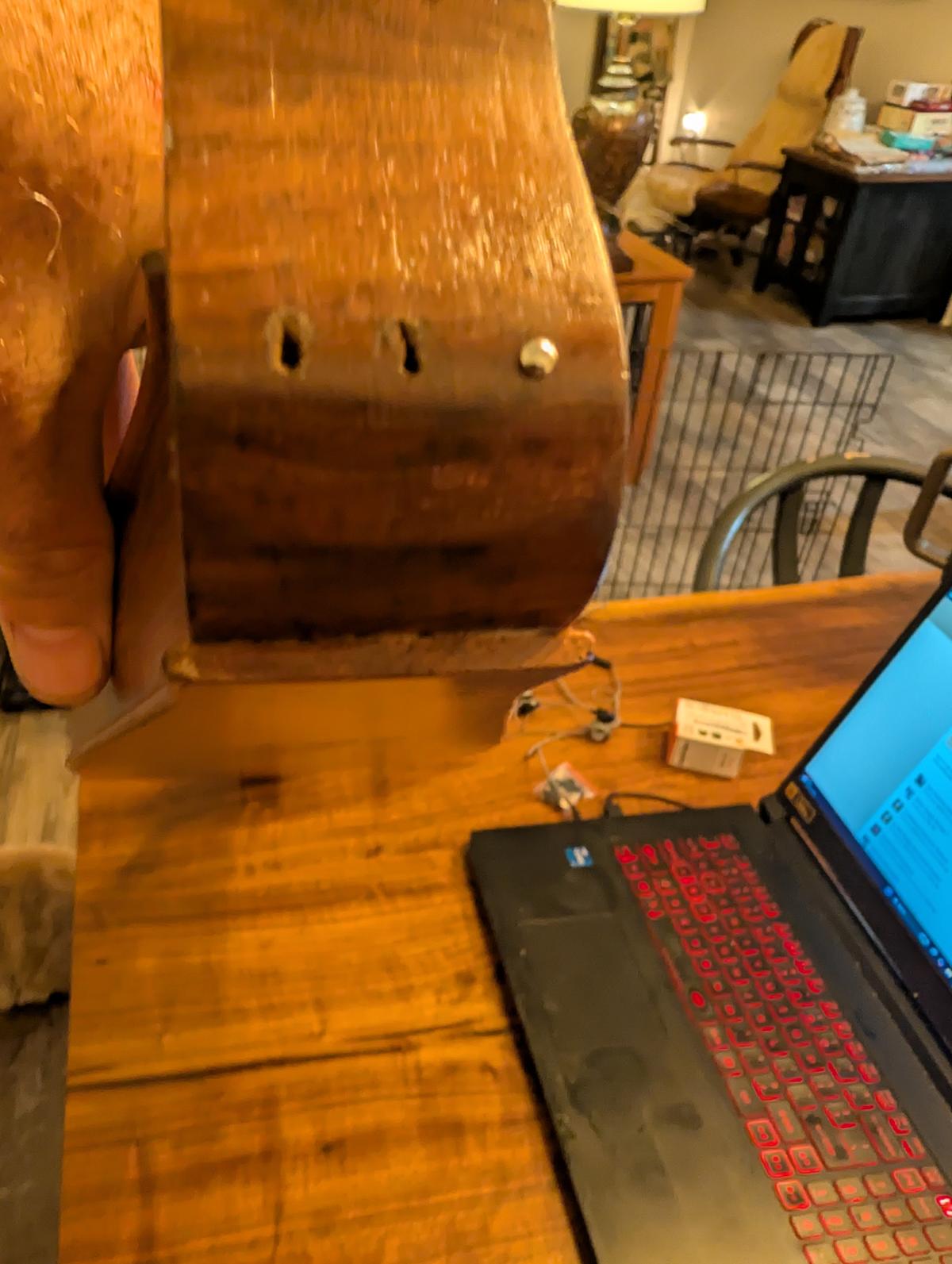
Regarding Nostrings4 image. You can see the elongated holes where the string anchors once were indicating that string tension may have pulled those string anchors out. How would it be to bring the string anchors down to the tail of the instrument. That way some of the string tension will be absorbed where the string rounds the tail and put less strain on the anchors. Also angle your string anchors away from the frets a bit to help with the tension issue. Matt's suggestions for hardened brads is spot on.
Folkcraft offers string anchors. https://folkcraft.com/products/dulcimer-string-anchor-pins-2340171
Regarding using the strings from your 6 string on your Nostrings, they may work. String gauge determination is affected by vibrating string length. If the VSL is close to the same on each dulcimer they might work. You may want to replace all strings on both dulcimers.
Strothers string gauge chart may be helpful. Many of us have found it suggests a little on the light side and add one or two to its suggestions. https://strothers.com/string_choice.html
Best wishes on your repair project. Let us know if you have other questions.
All of these strings may be old or rusty. If they aren't new, consider replacing them with the same types.
Is it physically possible to remove three strings, of course. Will you end up with a payable instrument, maybe. My thought is to leave all the strings, but just strum the first three. Probably not easy when you are just learning, but a thought. (Yes, I have built several six strings similar to the MaxDAD from Folkcraft. It can be done.)
As far as the "No Strings", look for hardened brads to put in the holes at the end. Regular brads will probably bend. Then get loop end strings to string up the instrument.
All of these strings may be old or rusty. If they aren't new, consider replacing them with the same types.
What style of playing are you planning to start with? These dulcimers are most suitable for noter or finger dancing style and playing in a 1 - 5 - 5 tuning (DAA, CGG, etc.). This is because neither dulcimer has a 6 1/2 fret. If you want to play chord/melody style, I would look into have a 6 1/2 fret installed on both dulcimers. The suggestion from removing strings to make the 6 string dulcimer into a 3 string dulcimer seems fine, but the spacing between strings will be a little odd. Eventually you may want to looking into have a new nut and bridge made. Matt's suggestion regarding brads 0n the 2nd dulcimer is good. I would consider filling in the holes and making new ones. I often use #2 round head wood screws 1/2 in. to 3/4 inch long instead of brads. Best wishes on your project.
Ken
"The dulcimer sings a sweet song."
Regarding Nostrings4 image. You can see the elongated holes where the string anchors once were indicating that string tension may have pulled those string anchors out. How would it be to bring the string anchors down to the tail of the instrument. That way some of the string tension will be absorbed where the string rounds the tail and put less strain on the anchors. Also angle your string anchors away from the frets a bit to help with the tension issue. Matt's suggestions for hardened brads is spot on.
Folkcraft offers string anchors. https://folkcraft.com/products/dulcimer-string-anchor-pins-2340171
Regarding using the strings from your 6 string on your Nostrings, they may work. String gauge determination is affected by vibrating string length. If the VSL is close to the same on each dulcimer they might work. You may want to replace all strings on both dulcimers.
Strothers string gauge chart may be helpful. Many of us have found it suggests a little on the light side and add one or two to its suggestions. https://strothers.com/string_choice.html
Best wishes on your repair project. Let us know if you have other questions.
Is it physically possible to remove three strings, of course. Will you end up with a payable instrument, maybe. My thought is to leave all the strings, but just strum the first three. Probably not easy when you are just learning, but a thought. (Yes, I have built several six strings similar to the MaxDAD from Folkcraft. It can be done.)
As far as the "No Strings", look for hardened brads to put in the holes at the end. Regular brads will probably bend. Then get loop end strings to string up the instrument.
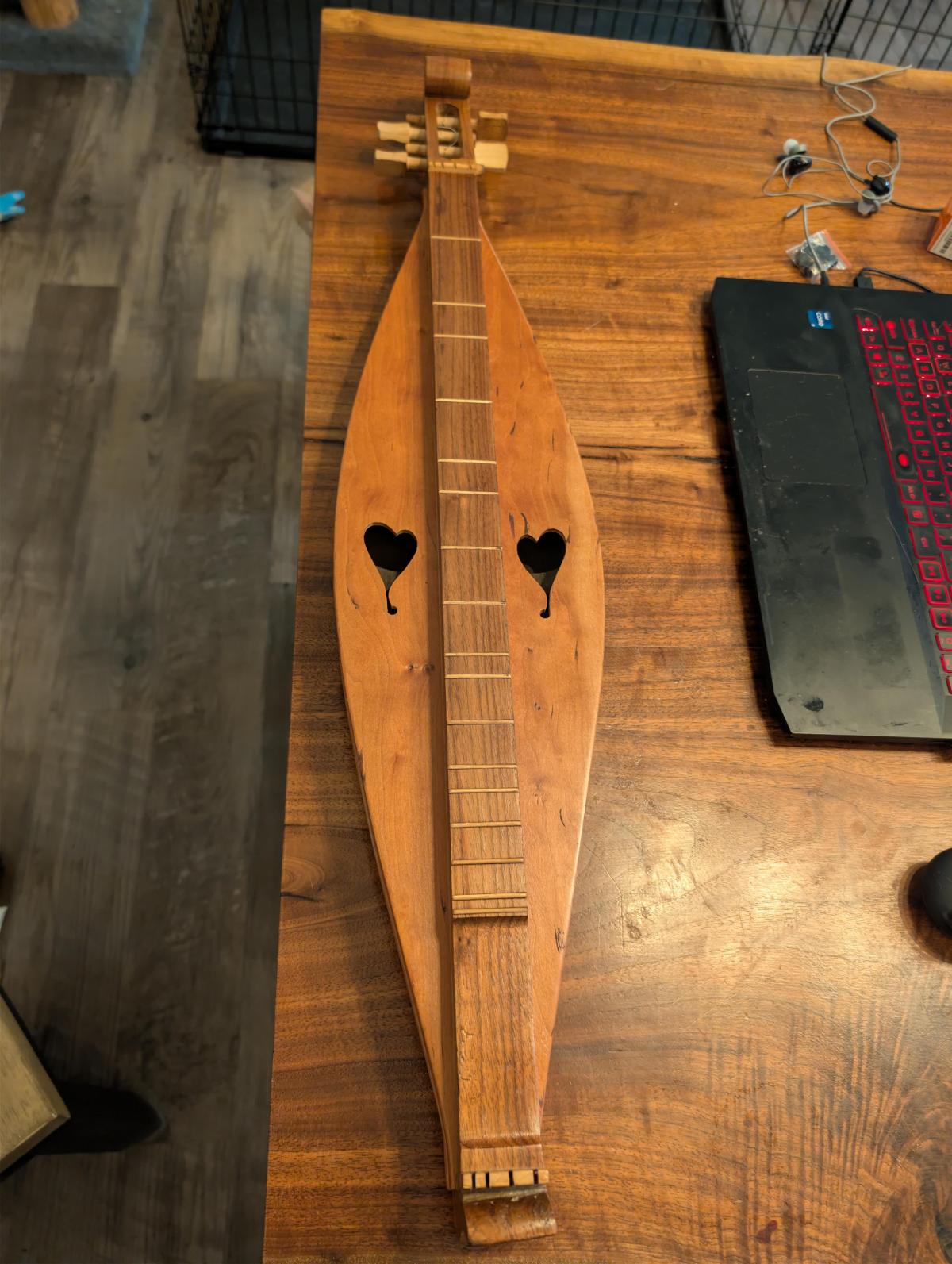
Hello there, I am new to the community and new to dulcimers, so I am learning how to play and maintain them. I recently purchased two dulcimers at an auction and had a couple of questions.
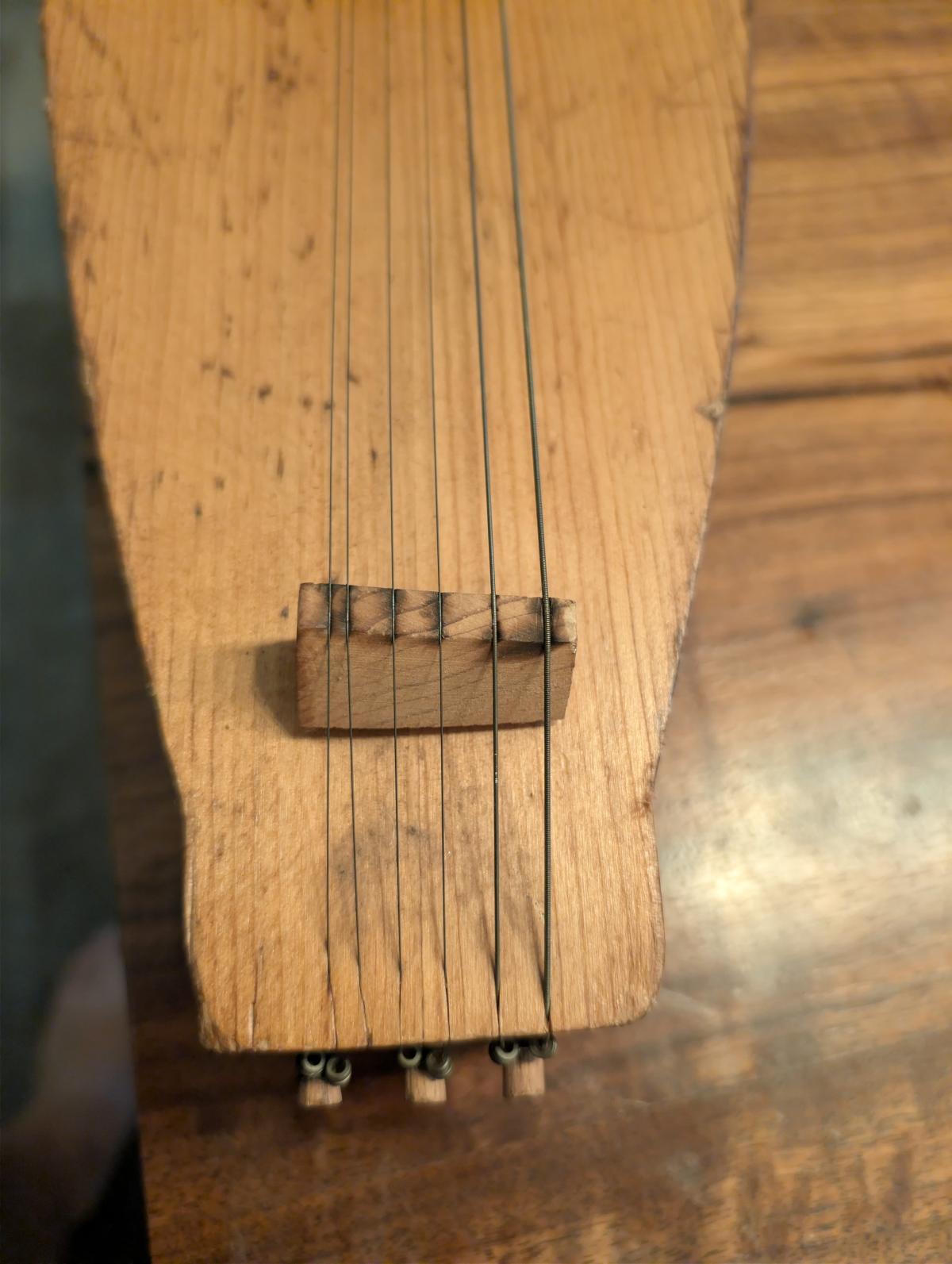
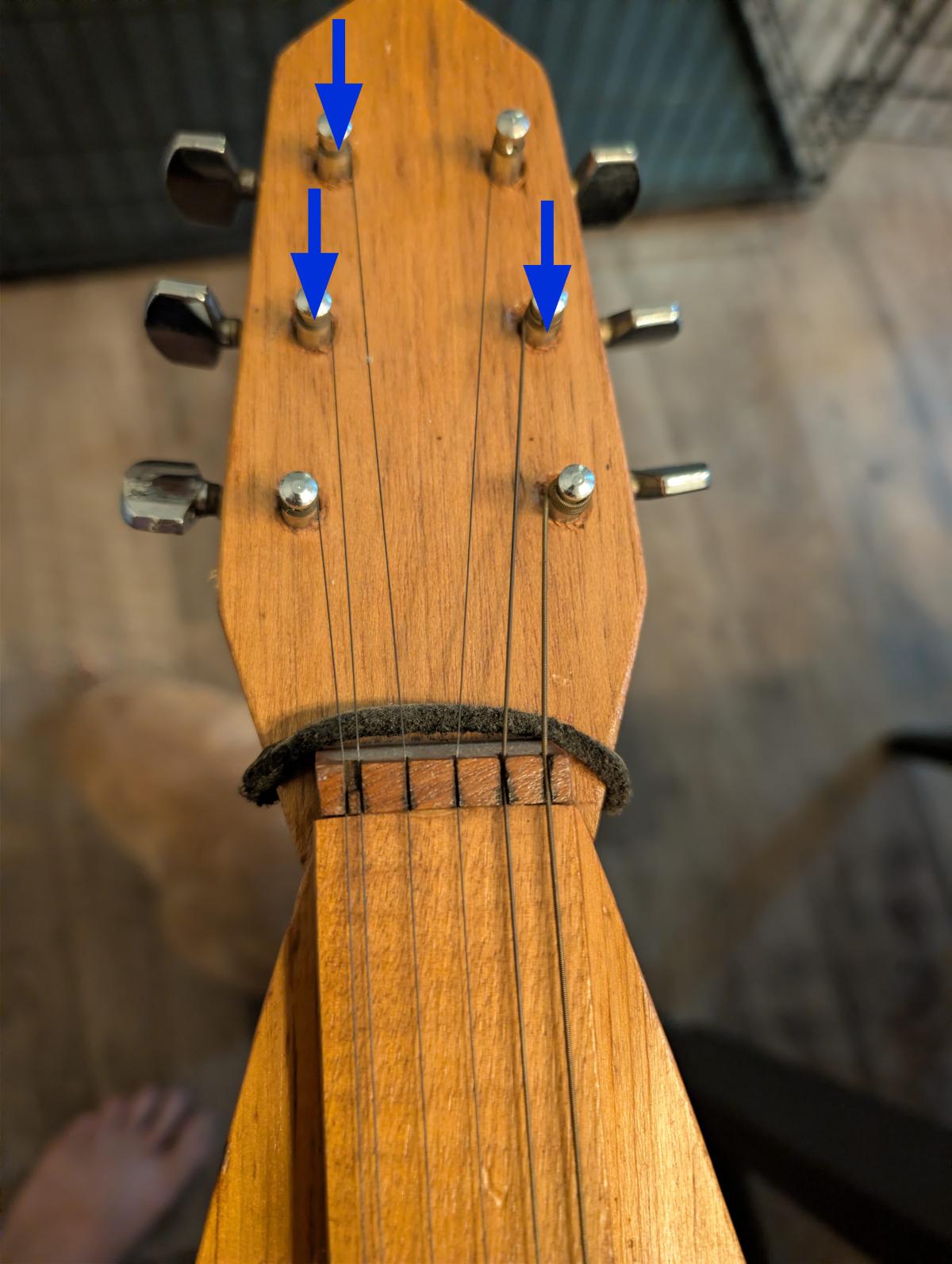
The first dulcimer is a 6 string and everything I have read is 3 strings is more than enough for a dulcimer. Can I remove 3 strings and turn this into a 3 string? From what I had read there are 2 melody, 2 middle and 2 bass strings? I assume I could remove one of each to make this happen, or should I just leave it as 6 string? I will be attaching 4 images of the 6 string, in the last image I have blue arrows showing the strings I believe that I could remove to make it a 3 string?
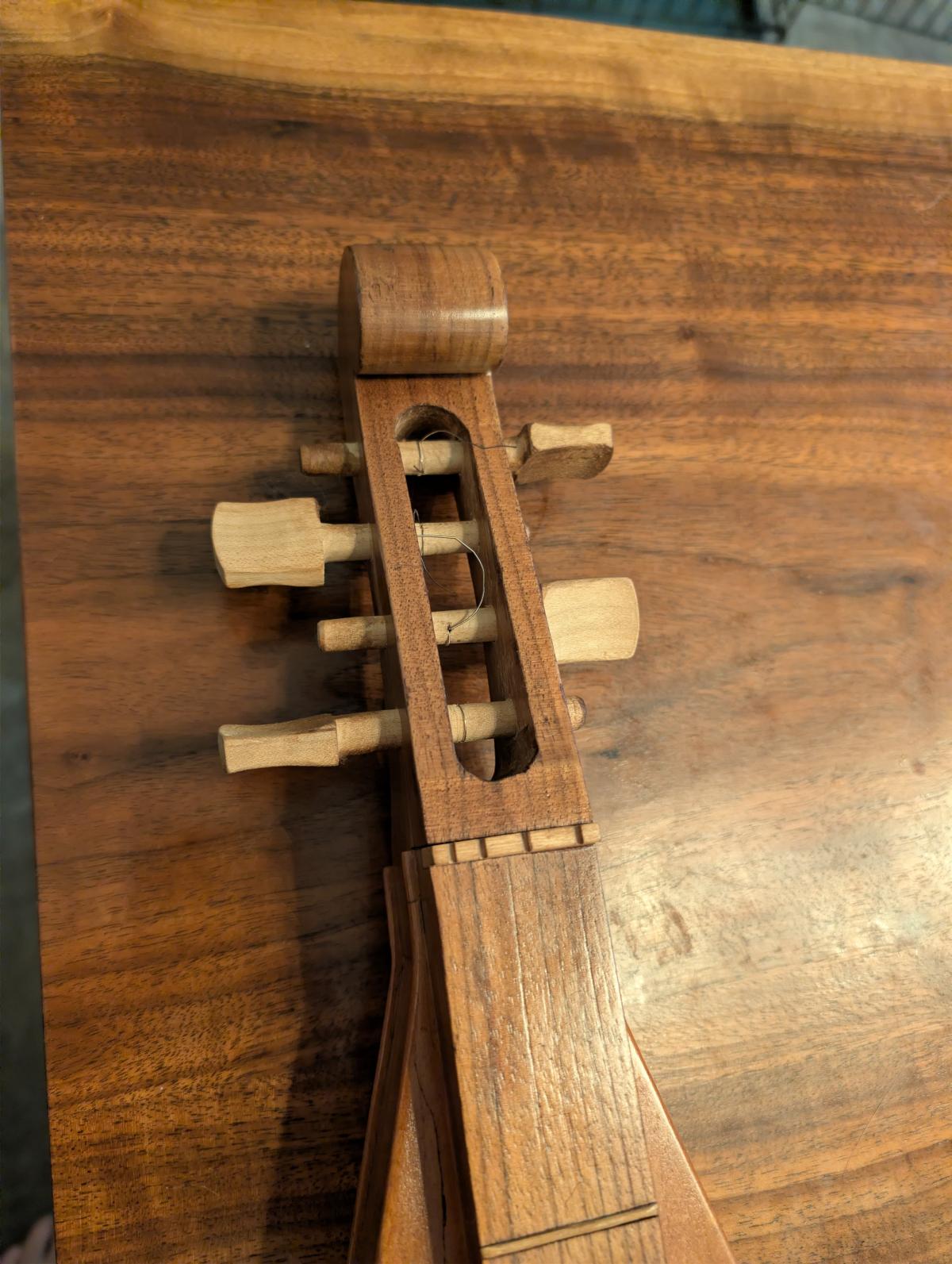
The second dulcimer has no strings on it currently and there appears to be pegs or rods missing from the bottom that would secure the strings? This question stems from the first dulcimer, if I remove those 3 strings that I had pictured, that would give me a melody, middle and bass to string this with, correct? Also in the NoStrings4 picture there is still one little I believe brass nail still in, so my guess would be I need to add 2 more nails/pegs/rods to secure the strings. Also on this dulcimer the pegs at the top are wood. Is there anything I need to know about that, care, process, etc?
Hopefully this all makes sense, if I need more pics, better explanations please let me know. My daughter and I are excited to start learning and see what we can do. Thanks for reading and any help!