
Ken Hulme
Ken Hulme
@ken-hulme
9 years ago
2,157 posts

Laurel -- when I google "dulcimer tuning beads", your avatar photo here shows up!!

marg:  between the Bridge and end of the dulcimer, the strings slope downwards. If you have a bead on that string, and push it towards the end, it will slightly tighten the string.


updated by @ken-hulme: 03/10/17 07:02:38AM
marg
@marg
9 years ago
624 posts

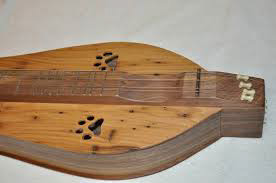
dshombert is selling a dulcimer here on FOTMD & his photos listed looks like it has something like beads you have discussed here. Is that what they are?

marg
@marg
9 years ago
624 posts

Does anyone have a photo of how these beads work, I'm not sure I understand where or how or why.

thanks

Ken Hulme
Ken Hulme
@ken-hulme
9 years ago
2,157 posts

Tuner beads DO work, even in a short area (depends on the size of the bead and angle of string slope.  Flat sided beads are best.  You can even carve tapered wedges similar to a reverse capo to fit between the bridge and the place where the string breaks over the end (or meets the pin).

Banjimer
Banjimer
@greg-gunner
9 years ago
142 posts

I don't have any experience with round beads, but I would assume they would not work as well because only a small amount of the underside of the bead would be in contact with the fretboard, so the bead would be more likely to slip.  As far as the length of the string between bridge and tailpiece, one-inch seems kind of short for effective use of tuning-beads.  The only way to know for sure is to give it a try.  Round and oval beads are inexpensive and you are not making any irreversible changes to your dulcimer by trying.  Try it on one string to see what happens.  If the bead holds and it can be wedged toward the tailpiece to make small changes in tuning, that's all you need.

Banjimer
Banjimer
@greg-gunner
9 years ago
142 posts

Actually, most fine-tuning beads are simply very small blocks of wood with a hole drilled through the center.  They are placed on the string between the bridge and the tailpiece and require a string that angles downward slightly from the bridge to the tailpiece.  The tuning bead slides up and down the string.  The main idea is to wedge the tuning bead between the string and the fretboard as the angle of the string takes it closer to the fretboard.  As the tuning bridge is wedged between string and fretboard it increases the tension on the string slightly allowing one to fine-tune the string.  Tuning beads are normally associated with instruments utilizing wooden friction pegs, which can be difficult for beginners to tune.  Guitar-style geared tuning pegs and planetary pegs do not need tuning beads.  If you want to see examples of wooden tuning beads, try googling an image of a Keith young dulcimer.  Tuning beads were a standard feature of Keith's mountain dulcimers.