Talking with Geoff Reeve-Black
General mountain dulcimer or music discussions
Thanks, Redmando, I always enjoy your interviews!
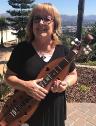
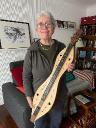
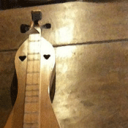
In the latest of my "Conversations with Mountain Dulcimer Players" I chat with Geoffrey Reeve-Black about his UK dulcimer dealership and he tells me about some of his interesting instruments.....
https://mdconversations.blogspot.com/2023/11/11-geoff-black-from-herefordshire-uk.html
I hear you Wally
. I had an aunt who had perfect pitch (and a Steinway piano worth about as much as my house!). When my uncle was learning a right-hand picking pattern for the banjo, she didn't mind the repetition of the picking, but she couldn't stand that he was always practicing in the same key. So he used a capo and would just change keys every few minutes.
Using capo to change key on the fly seems to be a good idea.
I finally (OK, I'm slow and not the brightest light on a Christmas Tree), figured out how to avoid the aggravation.
Since I have some issues with my right hand, (think lousy Rugby player 50+ years ago) being used to strum so I used to always string up for left handed play. A bit frustrating and all that goes with it, such as chord charts etc. So............I learned to play Galax style.......4 d strings and a noter........makes no difference how you hold that critter, works just fine. So I recommend you give that a whirl and if it doesn't suit 'ya you can return to that "bac'ards ciphering." You can also finger pick a unison Galax stringed instrument and finger dance too. Listen to Phyllis Gaskins and you'll be amazed what that style of play can do.
Few of the lefties I know string their dulcimers the other way around. If your dominant hand is doing the complicated task of fretting, and your off hand is doing the simpler task of strumming, that's a good thing.
Some re string their instrument to help improve their learning curve.
I've had these silver plated classical guitar strings sitting in their paper envelopes in a bucket of spare strings for probably 3 years now. Finally decided to sort through it a bit and I found two separate strings which had each turned rainbow colored! The variety of colors is crazy and I was wondering if anyone knows more about this. Ive heard of strings getting a duller color over time, but these look like a full on art project. Thanks in advance,
Nate
That interesting phenomenon adds flair to an on stage performance.
Thank you very much, Wally!
You can test if it is sulfur based oxidation by doing this, (it works primarily on sterling but you can give it a try...........)
You need.......
a ceramic bowl lined with aluminum foil, shiny side up
a tablespoon of baking soda
a tablespoon of salt and some hot water.
Put just enough water in the bowl to dissolve the baking soda and salt and cover the item you want to clean up.
stick the silver thing in it and see if the sulfur flakes off after a few minutes and moves to the aluminum foil. Dry whatever you stuck in there with a towel and see what you have. I know some jewelry folk put the soda and salt on the item and then pour the water on it.......my sister used to add tiny bit of dish soap on her sterling Native American Jewelry at the shop she had years ago, then buffed it up. She said it takes a bit of practice to get the consistency correct but it works after about 5-15 minutes of soaking as I recall.
Is a dulcimer with maple top, sides and back considered to be a good sounding, durable dulcimer?

So, in my mind, let a guitar be a guitar, let a banjo be a banjo and let a dulcimer be a dulcimer.
This is my feeling as well. I play (or played) several fretted chromatic instruments. The dulcimer is unique in its diatonic tradition. I find it simple, yet challenging; which in turn provides a refreshing approach to my music.
That said, I respect others who have personal and valid reasons for choosing to play a chromatic dulcimer.
@Lisa-Golladay 's post covered the practical pros & cons quite well.
TRADITION!
When asked about dulcimer with “extra" frets, Jean Ritchie replied “In a strict sense it has a different finger board, it’s not quite a dulcimer anymore.”
You can find all the notes in the dulcimer's range, but you have to be willing to re-tune at least one string to do so (takes less than 30 seconds, with practice).
If you want a chromatic instrument lay a guitar on your lap and play that. Or I can build you an "acoustic lap guitar". Just don't call it a dulcimer. Part of the essential definition of Dulcimer, to many of us, is the diatonic fretboard.
If you are playing mostly "classic dulcimer songs" especially from tabulature rather than SMN, it will be 'more difficult' because the fret numbering convention is different, and you'll have to find the fewer diatonic frets among the plethora of chromatic frets. You won't be able to simply count 1,2,3,4... to find a tab numbered fret. With a chromatic instrument that becomes
1/2,1,1-1/2, 2, 3, 3-1/2, 4, 4-1/2, 5, 6, 6-1/2,7......
Also, IMHO the 'sound' of a chromatic "dulcimer" is different when you slide from note to note -- because of all the intervening chromatic notes between diatonic notes -- I hear those slides as 'muddier'...
Yes, I agree with Jean Ritchie. For me, the dulcimer is diatonic in nature, anything else is not quite a dulcimer.
Let's see your performance to enjoy.
download all my dulcimer music for free at dulcimerbob.com
I just happened upon this. Art Garfunkel has such a lovely voice, and presents songs so beautifully. I have loved this song since I was about ten.
Hi all. I was just having fun re-reading this thread...I think I call mine the herd, though perhaps I should say the flock, because I tend to give them bird names...
A few days ago at my ballroom studio (where I dance, not which I own
) we did a "quadrille." It reminded me of scenes from Jane Austen movies. We were one person short of two group of eight; I suggested calling someone in from the street, but instead they used a large balloon of Mickey Mouse as a place holder (but he couldn't go round the circle weaving between the "follows," aka the ladies. Actually I think Mickey was a follow, he would have needed to weave between the leads).
Anyway, it was fun. In ballroom we don't usually do such organized formation. It's just a bunch of couples waltzing or foxtrotting and making sure to avoid colliding with each other.
I'll have to see whether (or where!) there is a contra dance here in Los Angeles county. You know there's gotta be one.
It's always a great time to get interested in banjos. (or dulcimers!)
Well Ken, I'd suppose that is 6 years of skill developed!
Shannon -- you do realize this thread was last editied 6 years ago, don't you?
@DaveBerry, beautiful music, talented artists, and awesome video. Thanks for sharing!
Hi All,
I'm new here and looking for examples of videos or audio of dulcimer and mandolin played together in an ensemble. I hope this is the correct place to put this. I love Appalachian Mandolin & Dulcimer by Butch Baldassari & David Schnaufer. My latest project shown in this video (thanks for the comments many have made) is more of an ensemble encompassing multiple genre's I'm more interested.
Thanks much for this wonderful site.
cheers,
Dave
https://daveberrymusic.net/home
Hi All,
I'm new here and looking for examples of videos or audio of dulcimer and mandolin played together in an ensemble. I hope this is the correct place to put this. I love Appalachian Mandolin & Dulcimer by Butch Baldassari & David Schnaufer. My latest project shown in this video (thanks for the comments many have made) is more of an ensemble encompassing multiple genre's I'm more interested.
Thanks much for this wonderful site.
cheers,
Dave
https://daveberrymusic.net/home
I bet the lack of videos of dulcimer and mandolin playing together is now pushing you to make a video of it.
Many thanks for sharing the interview, Steve!
Does anyone have information on these dulcimers? It is 3-string, tuned DAD, and elliptical shape. Amazingly sweet sound. My sister had 9 that she used when teaching. All now sold but one and I have a potential buyer but would like any information available to provide to the buyer.
I play banjo, also. I started with guitar in '66, banjo in '68. But after starting to learn dulcimer in '90,I really got more interested in banjo again after hearing clawhammer players playing with dulcimer players. The combination just feels right to me.
Paul
It's never too late to start over!Different combinations of instruments have appealed to me, too, Paul. Back in the seventies I thought that Appalachian dulcimer and synthesizer would make a great combination. Go figure.Kate and Anna McGarrigle used a variety of instrumental mixes, even dual clawhammer on "Excursion a Venise" in concert (you can find it on YouTube), with Kate and sister Jane. The Transatlantic Sessions (lots of it on YouTube) feature a variety of North American and British Isles instrumental combinations. Banjo and dulcimer sounds like a great mix. A friend once gave me "The Best of Just Friends", a dulcimer CD by George Haggerty from Vermont, and it's filled with combinations: dulcimer with guitar, tin whistle, concertina, fiddle, bodhran, banjo, mandolin. The Fuzzy Mountain String Band had dulcimer in among all those fiddles and banjos.Hmmm ... How about banjo, dulcimer, and Northumbrian smallpipes?Messing with the banjo could be the musical equivalent of working on your bicycle. The Orpheum has been "tweaked" lately with head tightening and replacing the bridge with the one that came with the banjo when first purchased. If the sound needs to be "plunkified", stuffing something between the head and dowel stick works well. The old metal mute also completely changes the tone.
The combination of instruments in use guarantees some excellent tunes for dancing.
Hi, Matthew! It's good to have you here on this site. Lots of info and music to be learned. If at some future date you'd like to try your hand at playing a historic reproduction of early noter-drone dulcimers (some of us call them "dulcimores"), there are a few builders of them on the site. Have fun!
I agree with Ken. That's a great interview. You did a good job. Thanks for sharing it.
Ken
"The dulcimer sings a sweet song."
Hi @matthewlyon and welcome to FOTMD. Glad to hear you've come back to the mountain dulcimer again. And certainly, playing a dulcimer with really high action would be more comfortable in a noter style.
Hello all, thought I'd post an introduction here... I realized that my earlier attempt was on my own personal profile page!
I'm recently returning to playing dulcimer; I played back in the late 1970's as a teenager and play several other instruments (guitar, banjo, uke, fiddle, Celtic harp, tin whistle, etc) and currently lead a community ukulele group with my wife.
I'm playing noter/drone style pretty exclusively with an interest in traditional diatonic music from a variety of sources from Appalachian old-time to bagpipe music and European folk of various types. My wife surprised me with a dulcimer earlier this month and it's very well suited to noter style... 29.25" VSL, pretty high action and no "extra" frets, it's purely diatonic. It's kind of a mystery as to how old it is and who built it. Very folksy craftsmanship, but the frets are accurate and it sounds good, so noter style it is!
We live in western Montana where dulcimer players are few and far between but I'm a childhood transplant here from Southern Illinois with many generations of folks from Kentucky... perhaps there's a dulcimer player not too far back in my family tree. Really enjoying browsing the forum, it's a great resource and so much knowledge here! Cheers, ML
The weather in Italy will be lovely next March. Wouldn't it be nice to have a mountain dulcimer festival there? Read on, in my "Conversations with Mountain Dulcimer Players" blog:
I've made and played a number of all maple dulcimers over the years. Durable certainly; it's maple after all, not Aspen or Balsa wood. A bit harder than walnut or cherry.
"Good sound", like "Beauty" is in the eye/ear of the beholder. What you consider "good" might not be so 'good' to me or someone else. I prefer a "highly silvery" sound, where others prefer a more "mellow" tone like a baritone uke or guitar. This is why we highly recommend you hear the dulcimer you're going to buy.
Thank you so much for the words of wisdom! As usual, they are much appreciated!
You do indeed see lots of dulcimers made entirely of a single hard tonewood, most commonly walnut, but cherry and maple as well. They are not as common as dulcimers with one of those woods for the back and sides and soft tonewood such as spruce, cedar or redwood for the top. The top plays a bigger part in the sound than do the back and sides, so an all-maple dulcimer would, as Strumelia says, have a bright, crisp tone. Additionally, it would likely have exceptional sustain. I believe Linda Brockinton mainly plays an all-maple McSpadden specifically for the extra sustain to enhance her soft, fingerstyle play.
Speaking further about sound box sizes- I also have an all-curly-maple hummel (mtn dulcimer like in many ways) which has a very large and deep sound box/body... and even though it's all maple it has a big resonant mellow tone. My maple mtn dulcimer has a very shallow depth body, and thus its voice is crisp and clear, less 'mellow'. They are both all maple but very different body dimensions and so have different tones.
"Good" sound can mean something different depending on personal taste. Both my all-maple instruments sound wonderful, but they sound very different from each other!
My Keith Young curly maple dulcimer is all maple, even the fingerboard, and it sounds great and is in perfect condition after 26 years. I used it for this site's logo . Maple has a nice crisp sound, as opposed to slightly 'mellower' tone of walnut or spruce for example. It's also pretty hard, so (I'm guessing) would be a little less likely to get dinged. That said, I feel the volume and dimensions of the sound box tends to be a bigger factor in the tone of the sound than the type of wood does.
Is a dulcimer with maple top, sides and back considered to be a good sounding, durable dulcimer?
Reminder: Members are allowed to have no more than two threads at any given time in our For Sale forum. Please contact me or another moderator for help in removing threads you no longer want active. Thanks!