Thanks, Dusty. I have seen European spruce; especially on my tours of the Martin guitar factory. I didn't know it was Norway spruce. Thanks for that information.
Ken
"The dulcimer sings a sweet song."
Thanks, Dusty. I have seen European spruce; especially on my tours of the Martin guitar factory. I didn't know it was Norway spruce. Thanks for that information.
Ken
"The dulcimer sings a sweet song."
Ken, I think the term "European spruce" refers to the same species, Picea abies. That term is quite common among high-end guitars. A search for that term at the Music Emporium, for example, gave me 62 results, including many Martin Custom Shop models. I doubt any of it comes from that Italian forest, though.
I've never seen Norway spruce (at least designated as such) for sale in all of my visits to lumber suppliers. Our neighbors had three Norway spruce taken down in their yard perhaps 30 years ago. Had I known about making a sound board out of it I might have asked for a log. However, I doubt that a tree grown in central Pennsylvania at an elevation of 600 feet would produce a good growth ring pattern. It is an interesting article. Norway spruce is acceptable as a building material. Evidently 2 x 4s and other sizes of construction lumber are made from Norway Spruce. It is knotty. It would probably be easy enough to find a section clear enough for a violin top, but there would be a lot of waste in any log.
Ken
"The dulcimer sings a sweet song."
Dusty, do I see a trip to Italy for some Norway lumber in the near future?  If the violins sell for $23M it seems you could ask a measly $1M for a new dulcimer made from the same wood. I'll stick to teak, oak or cherry for mine since I have a nice supply of each.
That growth pattern is unique. I'm going to experiment with some of my own wood. My next one will be some New Zealand Pine. Not sure why they call it pine. It is very dense wood with no sap. Dries nice and clean. The grain pattern is beautiful.
https://www.nationalgeographic.com/environment/article/stradivarius-violins-tree-ring-analysis
Interesting stuff. I don't know why Stradivarius violins are worth so much, but I think I can predict that based on the findings summarized in that article, wood from Norway spruce grown in the Val di Fiemme forest will be worth a whole lot more than it was before! 
How can I get some of that wood for a dulcimer soundboard? I have dulcimers made with Sitka spruce and Adirondack spruce, but none with Norway spruce. Hmm . . .
A new article on National Geographic site...
https://www.nationalgeographic.com/environment/article/stradivarius-violins-tree-ring-analysis
Wow, I step out for a spell and look what I’ve missed!
“Why do you play so high?” said the nut on the road. Great information about reverse capos.
Wish I were equipped to build my own scheitholt but learning about construction is still quite useful. Fascinating stuff.
Thank you for the helpful forum links.
As to the German language, there’s a charming expression ascribed to the Bavarians (roughly equivalent to German backwoods folk) that my mother often quotes: “Take your comb out of the butter - company’s coming.”
I beg your pardon for the late introduction.
- Madeleine
Wally, your post and info would be terrific over on the inverted capo thread!:
https://fotmd.com/strumelia/group_discuss/93/the-false-nut-upon-the-road
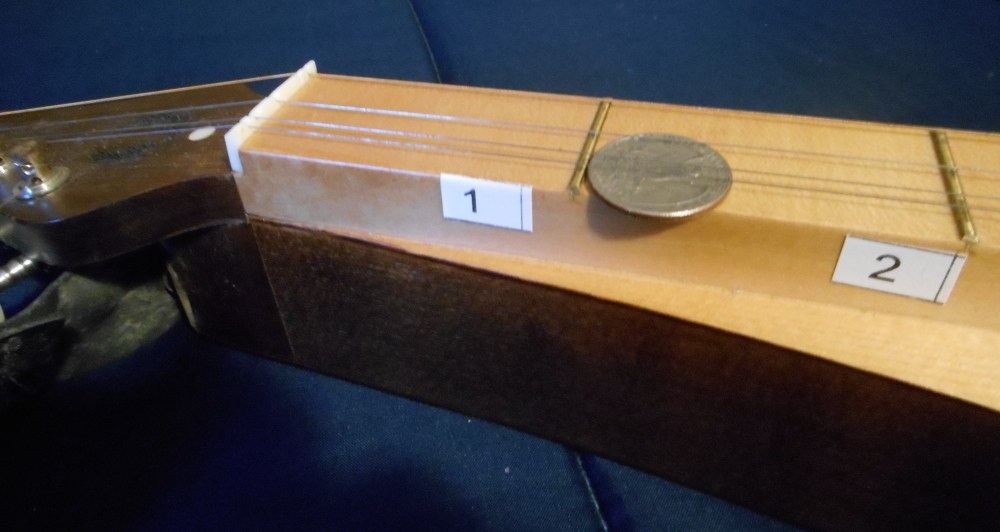
When I set string height on dulcimers, I now use a Quarter just above the first fret as a height gauge. (1st photo)
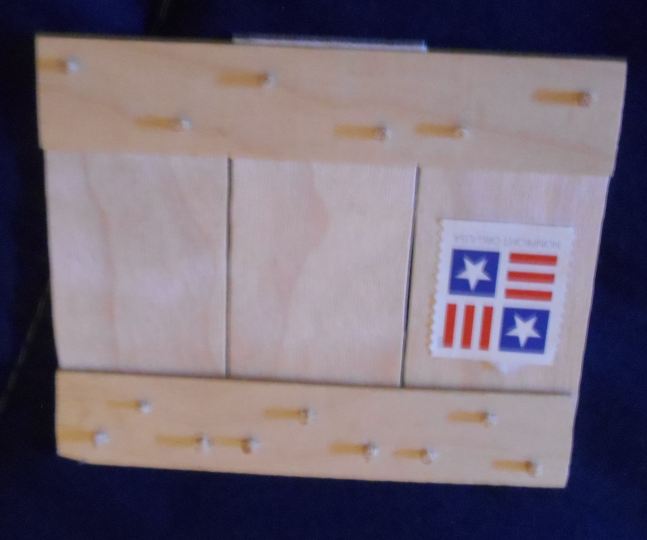
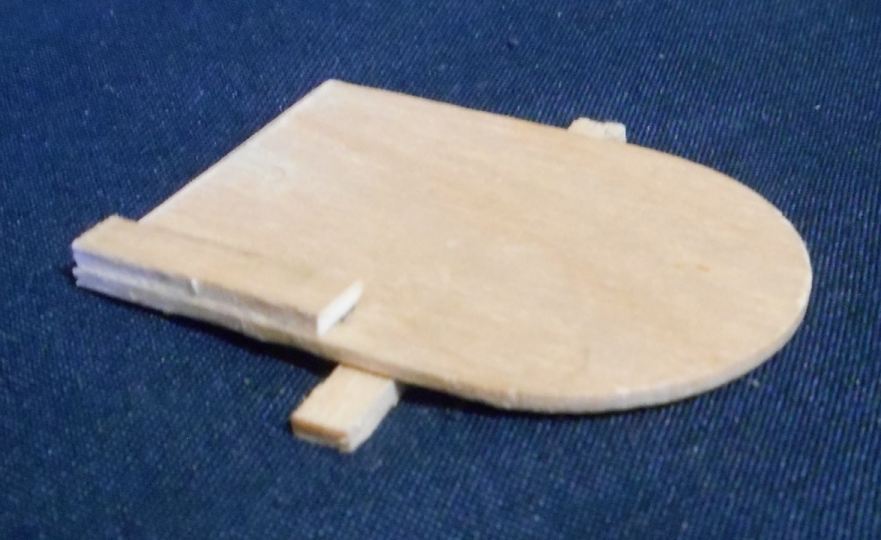
When I saw the posts about making an "inverted capo" I thought "well, then we want to lift the strings two Quarters." I happened to have a demonstration piece I had made for a class on wood construction. It was to which demonstrate that you can make very small wood-pinned structures. It was made from Craft Strips and bamboo tooth picks. My immediate thought was "those Craft Strips look like they are about a Quarter thick." (2nd photo)
I shoved a corner of the demo under the bass string of a nearby dulcimer and found the thickness was about correct.
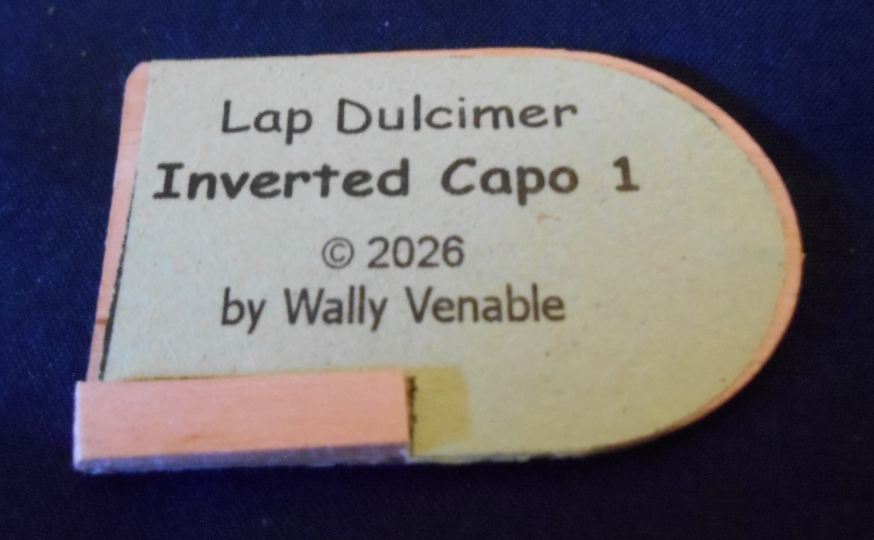
I made a trial build using parts cut from a Jumbo Craft Stick. (3rd photo)
My trial version worked as built on many of our dulcimers. The notable exceptions were one with a 1 5/8 wide stick and several which needed it to be raised by the thickness of a piece of cereal box.
My "final" design has only the base plate plus a short pseudo-fret. I can add a cross piece, as on the trial build to suit an individual instrument. On about half of them I have added a cardboard riser. I also added an ID label and sprayed them with a clear coating. I will be giving them away in classes. (4th photo)
You are free to make similar capos, just don't copy the label.
On my first two capos with the cardboard risers I attached the cardboard with Elmer's Glue. Big mistake, the high water content warped the base badly. I then found that Glue Sticks do a good job and are very easy to apply to either the base or attachment.


To bring this thread full circle....Tony Strad had the right Idea calling his instrument the "Violin" the word flows off the tongue with the feeling of an aria....
"SCHEITHOLT" Sounds as if your ancestry has just been maligned.....or you should hand the speaker a kleenex....
Is there such a thing as Scheitholt acquisition syndrome...
I thinketh not.
I like that idea Strumelia. Thanks for suggesting it.
Paul, I'm going to copy our discussion so far and paste it in that discussion "Has anyone made a scheitholt" in the Builders' Group.
Ken
"The dulcimer sings a sweet song."
Hi Ken and @Shopdad , it might make more sense to continue your scheitholt building discussion here in this discussion:
https://fotmd.com/strumelia/group_discuss/2841/has-anyone-made-a-scheitholt
That way, people in the future looking for info on this subject will be able to more easily find it. 
(you'll need to JOIN the Builders' Group there is you have not joined it already, to see the full discussion and participate)
Good morning Ken. I'm back with some Q's about your Zitter build. I am looking at the pics you posted and I have a few design questions. It's not my intention to make one just like yours but I do want to keep it as authentic as possible.
1. Are 5 strings typical or a personal choice? I am finding several models with various number of strings.
2, I see the tuners are straight peg and not reared, are the unfretted strings tuned like a dulcimer or all the same? I guess that would make them all drone strings.
3. I see the tuners are located at the end of the fret board and not on the custom head stock. Is that typical or can I make mine part of the head stock. I believe this design would be considered a "chordophone" style. Some of the models I find have multiple strings, some fretted and some not. Some don't even have a head stock at all.
4. Did you add any interior braces? With the small sound box I figured braces may affect the resonance. I could use just some curfer moldings on top and bottom of top and lower panels.
5. I am finding different length and width measurements. Can I assume that is also the builders choice?
I will attach a design drawing for you to view and let me know if it is close enough to call it a Zitter, Scheitholt
Paul, I am happy to look over any plans you create for a scheitholt. If you are interested, I can share the dimensions of the one I made. It isn't difficult to make; a simple box with a peg box on one end. It would be easier for me to share all that information by email. If you aren't comfortable sharing your email address here, you can click on my name and send a private message.
Ken
"The dulcimer sings a sweet song."
I hope everyone had a good Memorial Day with friends and family. I thought I would have some string time but I was in charge of the smoker. This is a great thread to follow. I get to express my lack of knowledge and gather a lot of smarts from others. Here's to a fresh beginning to DAA tuning
Ken, I will be working on plans for a Scheitold. I will pass it on to you before going into the build since you have already built one, if that's OK.
Walley, Strumelie, John, thanks for the input also. Lets keep this thread strumming. 
At one time I thought I would shape a piece of wood to fit over the fret, cut the tang off of small piece of fret wire, and superglue it to top of the wood piece. I opted for a lot less work.
Ken
"The dulcimer sings a sweet song."
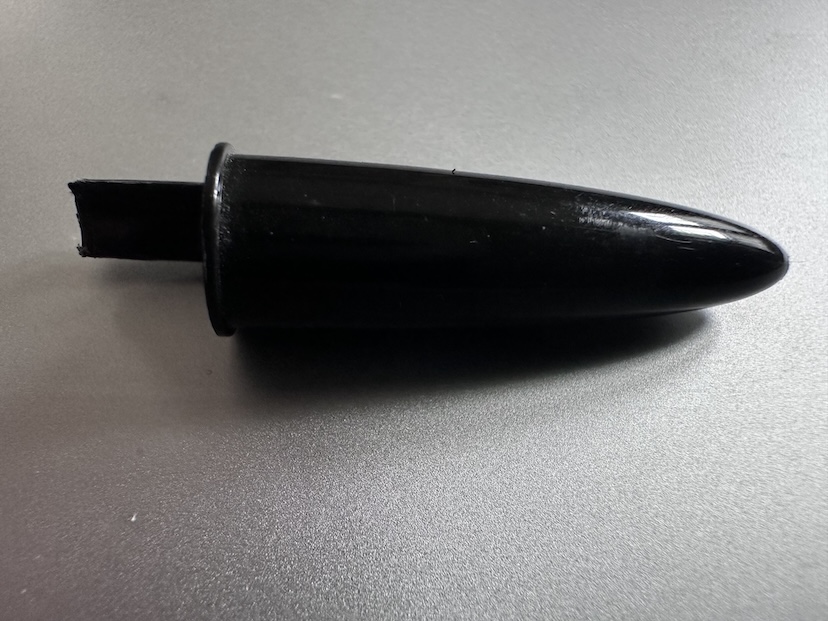
Paul, here is a photo of the reverse capo I use. It is the cap from a BIC pen. I cut off the clip end so it goes under the bass string. Some folks also shorten the cap end as well. I haven't done that since it sits on the side of the fretboard away from me it doesn't interfere with my playing. Plus it gives me ample room to handle it.
Ken
"The dulcimer sings a sweet song."

Wow! this is another reason I love this Site. It's 6:30 AM and I have put this old brain in a scramble already. Here's my plan, Ken, All the different tunings you mentioned brings me to change my home made tear drop to CGG. I changed it from DAD a while back because It's too high for my bass voice to sing. I play all three strings on several of the songs I play and now, with CGG, I find more variation from the melody to the bass (but less from harmony to bass)
Strumelia, What a great post on the advantages of DAA. I am familiar with the modes playing guitar. (started playing late in life with that too  ). Since we're skinning cats, I too, will have some fun with the "false nut" suggestion. Obviously it should be just a hair higher than the permanent nut. I have to admit, at 6:30 AM I had to read some of it several times between sips of coffee. I have saved the post in my Music folder as I am sure I will refer to it often.
Ken, you are fortunate to have groups to join, I have tried to get a few folks around here in Central Florida. The closest group has fallen apart, the others are an hour away. My guitar friends would have started earlier but the guitar wouldn't fit in their crib.
Thanks for the information on "reverse capos." I'll definitely give that a try.
Paul, nice to meet you! Yes, the hook holds the second string down and only that string. It presents a unique harmony to any tune you play. Strumelia directed you to the advantage of DAA tuning. I play in a many tunings. I started out in CGG, moved to DAA, and now play in many tunings including DAd, DAC, DAG, aaa, ddD, EAA, etc. I currently play with some friends who enjoy playing in DAA. Up until Covid hit I was also in a group that played exclusively in DAd. I'm not one who has a problem changing tunings.
Ken
"The dulcimer sings a sweet song."
That gives me an interesting idea.
If I was to install two hooks at the first fret on the bass and middle strings, I could shift into "Capo 1 tuning" for minor key tunes and still have the full range on my melody string(s). Remember I play DAA tuning with noter-drone almost exclusively. I might build one that way or try the mod on a really cheap instrument.
Since there is more than one way to skin a cat...
You can temporarily raise the pitch of one or more strings without using a conventional capo by either pulling a string down and under a little hook as described (a technique used by banjo players for the 5th drone string, using a tiny model railroad spike), OR by using a 'reverse capo' or more accurately a 'false nut' that is placed under the string to raise the pitch or just one or two or more strings without retuning the strings. It is then easily removed when not wanted.
Here's a good description and discussion of this method, with photos:
https://fotmd.com/strumelia/group_discuss/93/the-false-nut-upon-the-road
Wally, that's a good idea. I use a reverse capo (one that lifts rather than compresses) on the base string to raise it to E so I can play some tunes in EAA. This idea is used by banjo players who install HO railroad spikes at the 7th, 8th, 9th, and 10th frets to capo the fifth string when they use a banjo capo on one of the first four frets. I've done that on my banjos. I've never tried it on a wound string. I think there would be enough spike to go into the fret board to hold the base string. If you decide to use the HO spikes and don't have any on hand, let me know and I'll send you some. I probably have five hundred or so.
Ken
"The dulcimer sings a sweet song.
What's the advantage of DAA rather than DAD? It seems it would loose some tone variation when using the bass string. Never tried it, Hummm! I could tune the Hughes to DAA and see what it sounds like.
Here is why I like DAA tuning and the advantage it gives to me.
Ken Longfield said:
"A notable feature of the scheitholt is that under the second string at the fourth fret there is a hook which you can slide the string under and raise its pitch. "
That gives me an interesting idea.
If I was to install two hooks at the first fret on the bass and middle strings, I could shift into "Capo 1 tuning" for minor key tunes and still have the full range on my melody string(s). Remember I play DAA tuning with noter-drone almost exclusively. I might build one that way or try the mod on a really cheap instrument.
I read that note in the article but it didn't make sense to me. So if I understand it correctly, the hook holds the string down on the fret as a continual note change and only that string is raised. Oh! my real name is Paul.
At present, I am busy making a John Deere tractor for the wife's doll house. They (daughter) have a collection of old stores and shops with a lot of stuff in them. A whole new story in itself but unrelated to dulcimers.
The Scheitholt article is very interesting (log, fire wood) I guess that means a person could use what ever is at hand for the material. . From the pic of several instruments you singled out #8. From the measurement at the lower/left the instrument must be about 48". Your is made from pine with 4 strings. I'm assuming you made the staple frets. pretty cool.
Number 1 looks very interesting (longest one in the pic). It appears to be about 7 ft. Looks like another easy build except for the string arrangement. That may be difficult to set up unless there is a good diagram somewhere. That would not be good if it turns out to be a "piece of junk" (not sure of the German translation for that)
That's fine, Shopdad. It is interesting to note that the wire frets on the scheitholt go under all the strings. A notable feature of the scheitholt is that under the second string at the fourth fret there is a hook which you can slide the string under and raise its pitch. I made this scheitholt out of a pine. Years ago when I was living in Maryland I purchased a pile of walnut lumber at a sale and this plank of pine was in the pile. It has been in the rafters of my garage in Pennsylvania for 43 years, so it was well seasoned. To me it has a tinny, nasal sound. Someday I'll get around to recording something on it.
Ken
"The dulcimer sings a sweet song."
So what appears to be the fret board is actually the sound box or body. The frets appear to be staples as are the originals from what I read. Nice job on the tuners. What kind of wood did you use? I'm thinking it may sound similar to my strum sticks since there isn't much reverberation in the small box. Volume-wise, my strum stick is probably have that size box but I made the sound hole larger.
I saved the pic in my "Music File" for future reference if that's OK.
Shopdad, there is an interesting story regarding the scheitholt reproduction. I wrote an article for DPN, with some help from Ken Hulme, regarding the term scheitholt. It was to be published in the December, 2025 issue. I had submitted it August, 2024. We were camping in summer of 2025 and I was telling our daughter and son-in-law about it and remarked that I'd never seen a scheitholt. They challenged me to make one.
After a couple of months of research I came up with the measurements and developed a plan. I made it from a plank of pine I had up in the rafters of the garage.
The article is to come out in the May, 2026 issue of DPN along with the story of building the scheitholt. The May issue's release date was pushed off until sometime in June. If you want to read the article as submitted it is available: here.
Ken
"The dulcimer sings a sweet song."
Shopdad, here is a link for the scheitholt: Praetorius scheitholt . And here is a link to one reproduction zitter I made: zitter .
Ken
"The dulcimer sings a sweet song."
Wikipedia sez:
Zithers are typically played by strumming or plucking the strings with the fingers or a plectrum . In the Hornbostel–Sachs classification system, the term refers to a larger family of similarly shaped instruments that also includes the hammered dulcimer family and piano and a few rare bowed instruments like the bowed psaltery , bowed dulcimer , and streichmelodion . Like an acoustic guitar or lute , a zither's body serves as a resonating chamber ( sound box ), but, unlike guitars and lutes, a zither lacks a distinctly separate neck assembly. The number of strings varies, from one to more than fifty.
Ken's PA German zitters are arguably very close relatives of Appalachian Dulcimers and/or sheitholts, not the Austrian zither of Third Man Theme fame which looks like a hammered dulcimer.
A grand piano is similar to a bowed psaltery ??? When talking dulcymores, you can hardly trust the American English language without using a huge number of words.
Hey Ken, pictures would be great. I am especially interested in the zithers and the scheitholt, (Wow, spell check didn't like those words at all). Since I am not familiar with those instruments I am on my way to Google for some education.
It appears the fret board is similar to a dulcimer without any 1/2 frets on the Scheithold. Only one or two strings are fretted as the rest a drones. When it's tuned, are all the unfretted strings tuned alike? Looks simple to build, I may make that my next project, but I may need a go-to for some info
The Zither looks complicated, I have played on a Hammered dulcimer before and the zither looks similar.
I believe you may have some FolkCraft dulcimers in your collection too.
I only have 5 and have a couple favorites when I take a trip or even play at home. I can't imagine trying to decide which one to take or play from a large collection. Sometimes I like to take a strum stick for accompaniment. They sound like banjos, in a way, but much easier to play.
I have to ask, which ones are your favorites?
I did a quick recount today. I'm happy to say that I only have 21 mountain dulcimers at the moment. In addition I do have four PA German zitters and a reproduction Praetorius scheitholt I made.
Ken
"The dulcimer sings a sweet song."
You will have to let us know
how you are going to convince
her to move into the addition, so you
have more dulcimer space.....
I think I just realized why some
pronounce it " dul- ci- MORE"...
Good ones, Wally and Shopdad. John you have recognized the beginning of the problem, if indeed one considers it a problem. Has anyone found a cure or end to it? It seems every time I sell one or give one away I accumulate a few more. I think I have it under control. For the last few years I've been about to keep the population around 23 or so.
Ken
"The dulcimer sings a sweet song."
"My only dulcimer, SO FAR....."
Therein lies the first symptom of the affliction...
If DAD is Dulcimer Acquisition Disease, then DAA can be Dulcimers Always Accumulate.
A couple of other interpretations of DAS and DAD are Dulcimer Acquisition Syndrome, Dulcimers Are Sweet; and Dulcimer Acquisition Disease and Dulcimers Are Delightful.
Ken
"The dulcimer sings sweet song."
I believe DAS is Dulcimer Addiction Syndrome or something like that. I believe there are many acronyms out there for most every thing. I am a fossil hunting guide and when someone brings a rock for an identity check I tell them is a "leaverite", which means, "leave'er right there". There are a multitude of instruments out there in attics, storage sheds and places not conducive for the delicate construction. A "card carrying" DAS keeps a sharp eye out for them.
John, points well made and well taken. New, so not sure what DAS means. My only dulcimer so far came from an auction site with the business cards of its original owner (now deceased) still in the case - it was special to be able to look her up and know something about the life of the instrument.
Shopdad, what a wonderful thing to bring life back into an instrument that had such a rough start. Sounds like it’s a beauty today - complete with mermaid fishtail.
Thank you both for your experiences and insights.
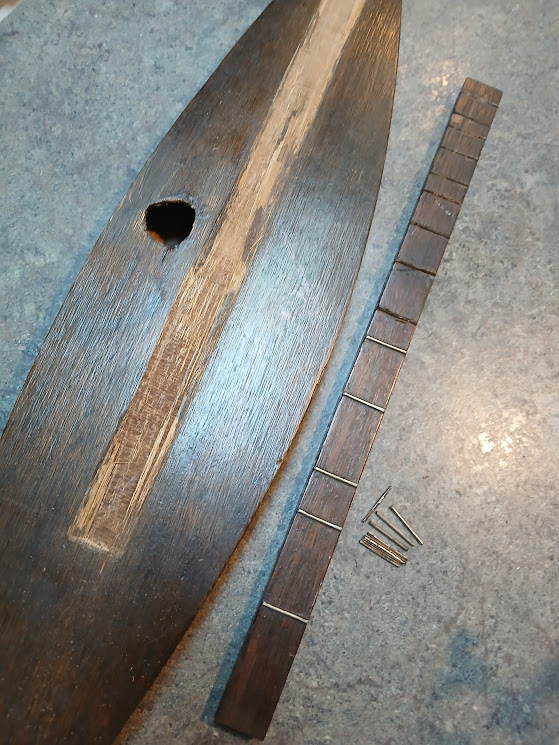
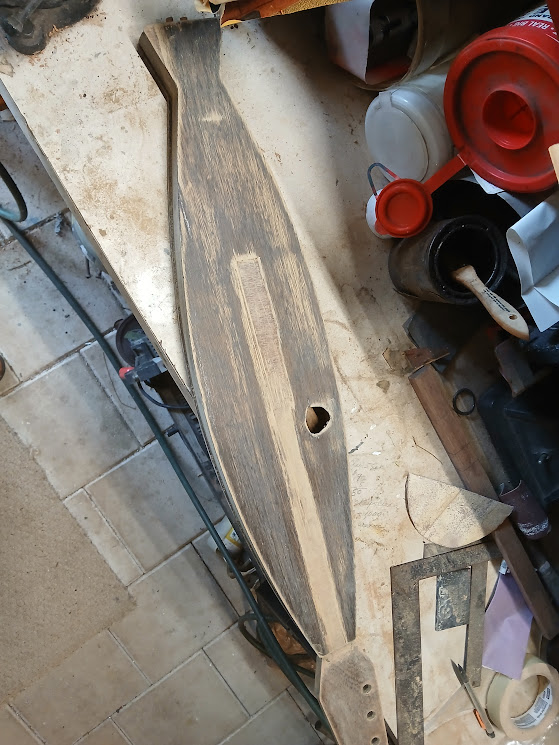
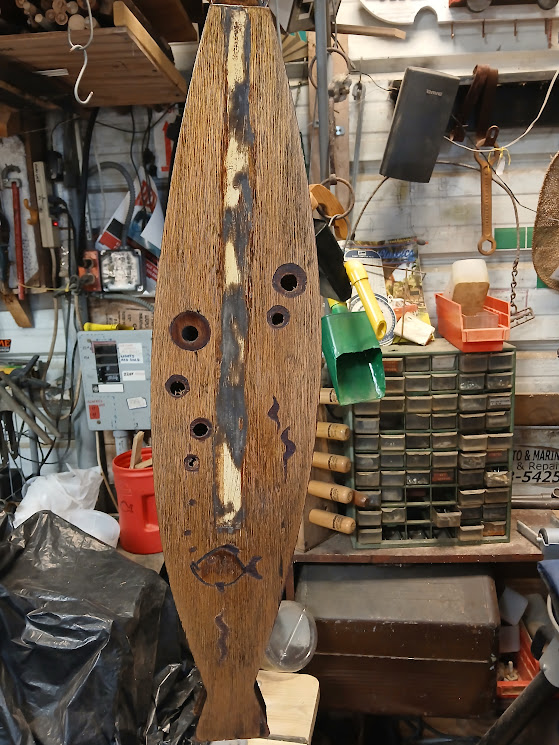
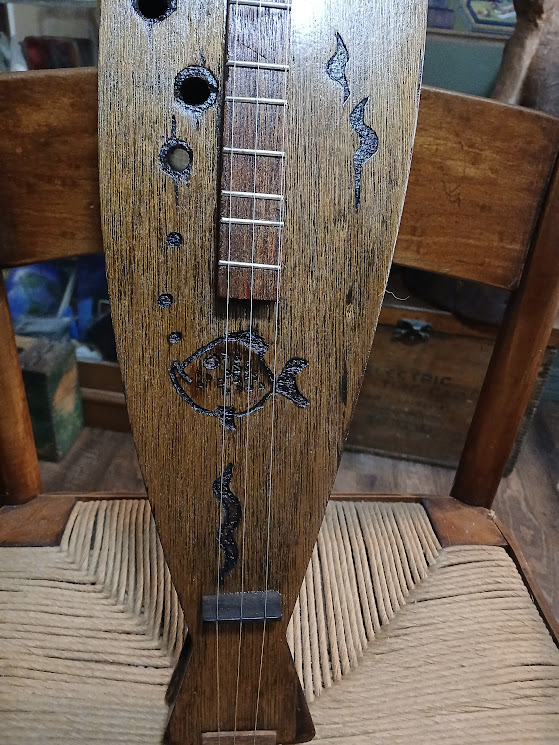
Canard, (sorry, about the impersonal address since I'm not familiar with your name). I purchased a Hughes dulcimer on line. sight unseen. When I received it I realized it was truly "a sight" not to be shown off. It was later, labeled as a "wall hanger". The frets appeared to be what a youngster installed in the dark. The sound hole reminded me of the cartoons where the mouse ate it's way through the wall. The long and short of it, Its no longer a wall hanger. After removing the fret board, planing the frets down and cutting new fret slots. I added new frets and tuners. The mouse had to find another place of refuge and it plays like a song. Yes, there should never be a wall hanger. It was crafted to play, not to view as a relic decor. Hughes built the instrument and had his own "fishtail" design which, to me, Is his way of adding identity to an instrument that should bring melody to a silent world.
Thank you John, Very interesting comments. I am pleased to read the idea of adding some info to the inside label. When I built my Cedar Creek kit I added some notes as to where I purchased the kit and when I build it. All my homemade dulcimers have my own comments. The date is as important as the builder. I did all this for my kids and grand kids never giving a thought to other owners years down the road. I'm glad they have an identity now.
The handful or so of the violins Tony built, have been so far removed acoustically from the original build that we may never know what they sounded like as he intended. Polished, re polished, cracks and cleats added and necks modified over the centuries... And even today, in blind comparisons, expert musicians can only discern them from modern fine violins about 50% of the time. But yet the "value" remains....
I think it is due more to the history being held in ones hands, THIS is one of the few HE made, etc. On a smaller scale our dulcimers carry the same value system. One of Joni Mitchells dulcimers would surely sell for more based on its history, not the sound. Likewise, an $11.00 Hughes kit dulcimer, goes for more when the builder inscribes " To my Darling Laura-1973" ...
I would [almost-still thinking on this] encourage players to add to their stories. a simple note inside that "factory" dulcimer that says "bought on our trip to Branson....Bill and Kate Jones 1996" or" played with the Sandusky Strings" adds value to whatever the instrument brings on its own. It may seem a little hokey now, but imagine the same sort of writing on an instrument 100 plus years old. We are all in line...and the line keeps moving...
I know many of you have the DAS, and as such, probably have several instruments that perhaps have no makers mark. They are a prime place to start. Help give them an identity, if only to help someone in the future. "Barn find/2023/Virginia".
One of the finest violins I've had the pleasure to restore, had to have little patches made to cover where the drywall screws held it to a restaurants' wall.
'
The reason that Stradivari’s instruments continue to have a high value is that they have been in continuous play by master musicians since they were built. If they had only been stored by collectors, no one would have had the opportunity to hear their quality and over time, they would have been forgotten. They would all have ended on trash heaps.
Likewise, when instruments by the Meltons and other great builders of mountain dulcimers languish in thrift auctions where they are cracked or otherwise broken, many end up on the wall at a grill pub or in a dumpster behind a Goodwill. No one will have a chance to handle them and learn from how they were crafted, or the opportunity to restore them to life so that others can participate in the living history these instruments embody.
Bringing to attention those master-built instruments in peril of being lost is important to the continuity of our national musical heritage. Those who would try to stop this do a disservice to not only the dignity of these instruments but to the makers and players who have created and delivered the legacy to us all.