Possible Source of Wood for Instruments
General mountain dulcimer or music discussions
I'll check those Robin. I know the white ones are not ivory :( I used to do a lot of scrimshaw work and would love to have ivory to piddle with.
I think chorded zither (autoharp) makers will use an old piano to get wood for the pin block.
Sam, if the old piano has real ebony keys, those are of value.
This is an issue with me. At the old place ... mom's old piano is just sitting there. It's been years. The keys now stick and it's out of tune. I've tried so hard to find it a home. I've offered it for free so many times and in so many places. It's very old now and shows it. Not that beat up, just old.
I've often thought of dismantling it and salvaging the wood. It's very expensive to get it milled though. I can buy dulcimer supplies much cheaper.
So unless there is sentimental value, I don't think many old family pianos will be recycled. It's a shame too. I'm sure that many have beautiful wood in them.
Thank you so much Dusty for the tab for Boys of Wexford , I will try it out and let you know... not home much today but sometime this week! and thanks to Ken for pointing me to Banish Misfortune tab! You guys are great
Don't forget, Bruce did write the following:
"We have some great resources like our tablature, articles and other items not directly associated with a user account that needs a place to live. I’m going to look for options of how best to make these resources available in perpetuity."
Bruce may well be making plans to house the Tabs and articles someplace online himself.
John, I see over at ED that one person has volunteered to take the site over, but I'm not sure everyone understands how much work is involved and how much technical savvy it requires. A team of people with the right range of expertise might be able to do it, but the number of people who have that expertise, have the time available, and have an interest in dulcimers is pretty low. I have not given up hope that the right group of folks might step forward, but I also think that the rest of us with our own websites will have to be more involved in the future to fill the large void ED will leave.
The FOTMD moderators and I are going to be keeping the discussion about ED closing focused in one thread, so people won't get confused by multiple ongoing threads about the same subject.
Please follow Dusty's link below to the active discussion where anyone can post about it. I'll lock this thread now.
Thanks for understanding!
@linda-boies, we are all in shock about this development. Please see an earlier discussion about ED closing . Lois has explained how to use the "Wayback Machine" to find material from expired websites. Hopefully all the resources available on ED will still be around even if no one can be found to maintain the current site.
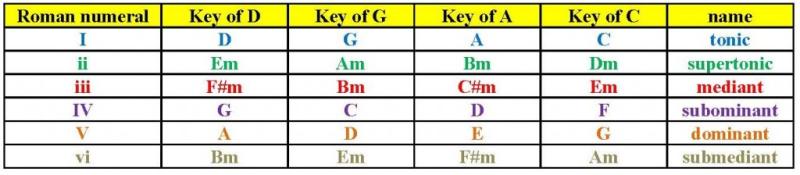
Paula, I've been wanting to learn Boys from Wexford myself, so I began the process of transposing the sheet music to D and arranging some basic harmonic accompaniment. You can see in the attached pdf what I've come up with so far (I call it a "work in progress," or WIP). It should get you started. From here my process will be to listen to as many versions of the song as I can to hear when there should be minor chords instead of major chords. And then I will begin adding the "filler," meaning the arpeggios and other minor embellishments to fill in the spaces when the melody takes several beats. If you have any luck with this tab, let me know.
@paula-brawdy , there is plenty of sheet music for Boys of Wexford available online. Most of it seems to be in the key of G. It wouldn't be too hard to transpose that to D. But also note that Leo is playing a dulcimer with four equidistant strings. I'm sure you could figure out how to play the tune in regular DAd tuning, but it won't be exactly like his. Also, he uses the 1+ fret to get a C chord in Banish Misfortune.
Here is Leo's version for reference . He is a member here, so you might consider contacting him directly.
Banish Misfortune is in the Everything Dulcimer Tab collection:
http://www.everythingdulcimer.com/files/tab/banish_misfortune.pdf
Hopefully we will somehow be able to save Everything Dulcimer before it goes away June 1st!
I would love to find mtn dulcimer tab for the Boys of Wexford and banish misfortune...I think they are traditional tunes... Does anyone have these tunes... I have been listening to Leo Kretzner play them on youtube!
Perhaps a member, or a group of members, can consider taking the reins of ED in the future? Is this a possibility?
Thanks for the link, Dusty.
Yes, the tab archive at ED was a great resource for beginners. I learned a few tunes that way when I was first starting out before I gained the confidence to figure songs out on my own. I do hope that database is retained somehow.
But everyone should know that ED is not the only site to maintain free dulcimer tablature. I list 9 such sites on the Resources page of my website, and I'm sure there are others. (If you know of any, let me know and I'll add them.)
So sad. That like this site has been a breath of fresh air for those who love the dulcimer. Will sure miss the tabbed music.
Strumelia, is there any way you, we, could pick up that site if no one else does? I believe it is the most important website for tabbed dulcimer music; not to mention the wealth of general information.
Kusani, I was just as surprised as everyone else to find out about this today. Right now, everybody (myself included) likely needs some time to wrap their heads around it all. In any case, it's not really my place to insert myself into.
In the meantime, as others have suggested, people should take the time to download whatever Articles they are interested in on ED, and probably also a good idea to just take an hour or three to go through the TAB collection there and download your favorites. Saving your favorite articles and TABs will go a long way towards feeling a little more grounded. Lois' reminder is also good, in that most pages on ED will be still somewhat accessible through the internet archive.
The tab there is what lots of players want, but I just fell into a 3 year-old discussion here about tunings. It mentioned a DAA chord chart that went into several keys. A search sent me to a discussion on Everything Dulcimer by Stephen Seifert as he was developing a new handout about DAA chords. From there I went to his website & his 3 charts. I am pretty sure I've downloaded it in the past, but just to be sure I printed it out again. Since the site won't really plan to add anything, now's the time to prowl Archive.org on Feb 24, 2018 to see if it's complete.
I've also found the more people prowl a site there, the easier it stays to find it.
Strumelia, is there any way you, we, could pick up that site if no one else does? I believe it is the most important website for tabbed dulcimer music; not to mention the wealth of general information.
Thanks for posting this site. I just tried it out, great. They are up to Feb 24, 2018 at this time.
It may be an alternative the ED admins could use/recommend if necessary.
Everybody needs to get good at using the "Wayback Machine" at https://archive.org/ . By the time it shuts down we need to locate the date with the most complete scan of the site so that people can go to that date to prowl for an article or tabs.
As a storyteller I do that with a site that was a rich source of story suggestions but no longer is online.
I just went through the articles on ED and downloaded those that I thought I might want to review in the future. Ron Z has posted that he is no longer accepting any new content (articles, tab, events, members, etc.) so what we see there now is all there will ever be.
I'm shocked by this news.
Everybody needs to get good at using the "Wayback Machine" at https://archive.org/ . By the time it shuts down we need to locate the date with the most complete scan of the site so that people can go to that date to prowl for an article or tabs.
As a storyteller I do that with a site that was a rich source of story suggestions but no longer is online.
Here is where you can get more info:
http://everythingdulcimer.com/discuss/viewtopic.php?f=3&t=34074
and here:
http://everythingdulcimer.com/ed_end_of_life.pdf
Thanks for the suggestions. I started with Herdim and they are not for me. I have now bought some firmer picks - Dunlop Tortex, Gibson, Everly Star, ... You name it I've got it or ordered it
Again, thank you.
I have no idea how it was supported financially but it could be a great loss if not picked up by somebody or some group. June 1st. isn't that far off...... Strumelia??????
A valuable site is closing shortly -
http://www.everythingdulcimer.com/tab/
Personally, I'd play it for a year before investing even the small amount in a new nut and bridge and installation. Learn what it sounds like and plays like "as is" before doing any tweaking. Most "shops" won't know squat about repair/replacing dulcimer nuts and bridges anyway. If you must, buy a bone nut/bridge and D.I.Y.
I look forward to hearing you make it sing, Stewart!
I agree with Matt -- please start another discussion topic about "other tuning"...
Other tunings,..., many. This might not be the best forum to find people who can best discuss multiple tunings. As a start, try tuning each string down a step so that your instrument is tuned CGc(c). You can play all the same music, just everything will be slightly lower in pitch. Many players find DAdd slightly too high for comfortable singing.
If you want to explore more tunings, I would suggest looking through the books written by Don Pedi.
I am also a MD beginner and had problems with a high action of my dulcimer - after many detailed tips from very kind members here we took off the bridge, sanded it down approximately 2 mm (little by little - testing it repeatedly) and put on thinner strings which means 0.20, 0.12 and 0.09 - and it works much better now and still sounds good to me.
Since we have no dime and nickel here in Germany I took a 5 and 10 cent coin - but just as a kind of reference point.
Love this song. Thanks for posting it!
I have a ( Dulcimer Factory dulcimer ) and the action is very good, no problem with pressing a fret or hammer-on's or slides, etc.
If you think it is the action, easy fix. There are post I'm sure on here about lowering action or you could take it to a guitar shop if no dulcimer people are around to help.
Glad you found a way around the problem, enjoy your dulcimer adventure
Egad! Thanks for the quick come-back! Your peg-box detail showed me something about my dulcimer that I did not know until just now. Your peg-box is obviously three-piece: Although the joining is as good as it gets, the grain is a dead giveaway (not implying that it is obnoxious or anything of the sort). I looked very closely at mine again and sho'-nuff it's three-piece too, except in my example the grain pattern and colors make it almost indiscernible - I don't know if that was deliberate or luck of the draw.
I'm curious, if you would further indulge me, about the nut end of the peg-box: Does it open under the nut into the body?
Comparing our examples with Jennifer's, I see that ours have a flat land between the distal end of the peg-box cavity and the scroll-head, while Jennifer's scroll-head drops straightaway into the peg-box cavity. I don't know if that represents a design change (Jennifer's is the most recent build) or just some experimental variation that Bill indulged in. As for design appeal, I guess it depends on the eye of the beholder. Regarding a practical purpose for eliminating that land, the only thing that comes to mind would be to shorten the overall length a bit.
On the tuners, from your latest photos it looks like I found a durn good match for you. A little polish on what you have and one would be hard pressed to tell the difference, old from new (if the dimensions match, that is). If you elect to replace the broken tuner be sure to leave that extension in the small hole opposite the mounting hole. Not that you necessarily need it - do it just to keep things "as was" as possible (I think it's intended to reduce lateral stain on the peg shaft). As for any adverse affect on collector value, if you keep the broken key, the instrument can be returned to where it was when it became yours. I have this ongoing project dulcimer (a Carstanjen courting dulcimer) that was unplayable as found and after crafting new nuts and replacing the fixed bridges to floating bridges now sounds pretty cool except for a body rattle problem caused, I'm sure, by unbound braces. Anyway, so far, everything I've done can be undone should some future owner want it that way - but from there it would become a wall-hanger only and/or an audio torture device. I'll be talking about this project soon in a dedicated post cuz I do need some advice on where to go from from where I'm at.
Moving on, as a three-course four-string with melody doublet, you could convert by cutting new string notches in the center of the bridge and the nut, but personally I'd hate to see you do that and rather have you opt to leave it as a four course, with or without the doublet. Of course, with the set-up you now have you can do a D-A-dd three-course with a somewhat awkward string spacing yet optionally swap to D-A-d-d four-course by simply loosening the inner string of the doublet, moving it over to the high drone slot, then re-tuning - no string removal required.
From your photos I see you may already be afflicted with the dreaded DAD syndrome. There's something to be said for someone who already owns a three-course trying a four-course. A four course is somewhat harder to master (and at first can be confusing), but it does have a different voice and to me anyway variety is a fun plus, if not the spice of life.
Well, I see I've droned on much longer than I intended to. So I'll close now with a thanks for the follow request - I'm flattered.
Here you go, Jim! Yep, I totally understood about the name and initials!
Linda, now what made you think I was in any way eager?
No problem with the photos, five minutes with a photo editor and they look just fine. I'd sure appreciate detailed oblique shots of the key box and bridge area though.
You may have misunderstood prior commentary about Fleming's cursive signature. Both Jennifer and I said the first letters were hard to decipher. Jennifer thought "HB" for her example, while I assumed "Wm" (based upon an assumed abbreviation for William). I'm pretty sure Jennifer would confirm "HA" is possible (and hopefully she will respond). As for me I already conceded that the first letter has always looked more like an "H" than a distorted "W" and that the second letter is lost the the cursive "F" which starts the last name - so "HA" is far and away more probable than my original long standing speculation. As the grave stones confirm "William" was Fleming's second middle name and he went by the nickname "Bill" (which was what he used in our introduction) thereby filling in all the missing pieces of the puzzle. Using a second name as a call name is not especially rare, especially among Scandinavians. My full name is Arthur James Hedman and I've gone by James (or Jim) since birth. My grandfather "Pete", a Swedish immigrant, was Edward Peter Hedman. A little twist with Bill Fleming is that "William" was an "extra" second name and he apparently did not reference it in his signature - which probably explains why all my previous searches for a Bill Fleming were in vain. So much for the confusion about the signature except maybe the underlying date, which in all three cases is of the form "mm-dd-yy" - dashes not slashes, and with the year abbreviated to last two digits.
Another expository indicator provided by the photos is the spacing of the melody strings on all three dulcimers. They're closer together than any other doublet that I've seen on a dulcimer. A tad closer than even a 12-string guitar... more like what you'd find on a mandolin.
I really like the figuring on the book matched bottom of your dulcimer. The nut looks to be a replacement. I can see that the nut is displaced to the right, probably because it is not glued and the missing "high drone" is causing it to pull that way. It also looks like the nut profile does not quite match the nut slot, but maybe it's just an artifact of the shadow cast by the nut being displaced. I don't know that Bill used anything other than hardwood for nut or bridge/saddle. At least I have no recollection of that being an option on my custom build. I have a nice piece of vintage black walnut with your name on it if you'd like a replica of the one on my dulcimer. I extend this offer to Jennifer too, if she wants a replica floating bridge/saddle.
About that broken tuning key for the "high drone", you might want to consider moving the inner melody string to the now empty nut and bridge slots, giving you the four-string (no doublet) configuration that Jennifer used in her beautiful rendition of The Ash Grove . In other words change from the original "D-A-d-dd" to "D-A-d-d". Another alternative would to replace that broken key with one like the following:
======
======
A little pricey perhaps, but there's a good chance that the your original keys are Grovers and these appear (except for the patina) to be a very close match. The specs, including a diagram, are on the web page cited. I know you only need one, but I don't know if the vendor would sell you a single key (you could always call and ask). Or maybe there is a kind builder/repairman reading this that could help you out.
As for what you paid for your Fleming, all I can say is wow! What a find! If you should decide to sell it, let me know, PLEASE!