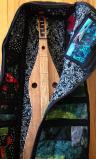
Has anyone heard of, or familiar with Loren Powell Dulcimers?
General mountain dulcimer or music discussions
It sure looks good George. How does it sound?
It sure looks good George. How does it sound?
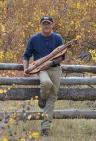
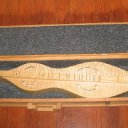
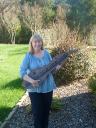
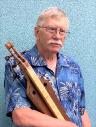
In my ongoing search and quest for vintage and hard to find dulcimers, I recently stumbled across a Loren Powell dulcimer, He was from Greenfield Ohio, 1931 to 1999, built dulcimers as a hobby but was supposed to be pretty decent at it, here's a couple photos, has anyone ever played, or owned one, know anything about them? The wood on it looks nice, top and sides looks to be quilted maple, really like the wood case. Thanks in advance once again.
I had hoped to get to Palestine, TX, and meet and jam with Jerry some day. My condolences to Margaret and their family.
Thank you. Bryan
Bryan, sorry I couldn't get back to you earlier; I was out-of-town on a business trip.
You are right that picks are a personal choice and what works for one person may not work for another. When I first got a dulcimer I bought a bunch of those triangular Herdim picks but didn't like them at all (too thin, too big, too pointy). So I eventually went back to the Dunlop Tortex picks that I settled on after years of guitar playing. They come in various shapes and thicknesses. I prefer the standard shape. I use the blue 1.0 mm picks when I've been playing a lot but sometimes use the green .88 mm picks when I haven't played in a while. When I first started on the dulcimer I think I used a lighter pick, but as I've gotten more comfortable with my technique I've moved to slightly heavier picks.
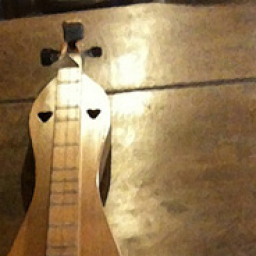
Part of the trick to my style of play--which is admittedly a guitar style and not a traditional dulcimer style--is to hold the pick between my thumb and the side of my index finger such that only the very tip of the pick sticks out. That way a lot of the pick is in contact with my skin, making it steadier in my hand. If I am only strumming and not playing single notes, I might let more of the pick stick out, but to play careful single-note runs as in fiddle tunes, I find I need the control that comes with allowing only a bit of the pick to stick out.
Heavier picks require a softer, more controlled touch, so most beginners have trouble with them. But they are also more precise. Just imagine the pick as it hits a string. The very tip of the pick will bend, so that it strikes the note slightly after you have made the picking motion with your hand. The thinner the pick the more the delay between your intended strum and the sounding of the note, since the pick bends more. So not only does the note sound after the beat, but the snap-back of that bend produces a more pronounced pick clack. For these reasons I prefer the thicker picks, in particular the blue and green versions.
Play around with this stuff and with different picks for different styles of play. I would never tell anyone to play like I do unless you purposefully want to play in a guitar style. I did a flatpicking workshop with FOTMD member Erin Mae (formerly Rogers) and she dumped a whole bunch of different picks out for us to play with, including one made of genuine turtle shell and one that was one of the $75 BlueChip picks. Each one had a different feel and a different tone. But at one point she did admit that before she got serious enough to spend on those expensive picks, the Dunlop Tortex was also her choice (sorry, I don't know what style or thickness she preferred).
Of course, if you get tired of all this, you can always just play with your bare fingers!
I never had the opportunity to meet Jerry, but one of my dulcimer playing friends met him and said he was a very nice guy. I have their East Texas Jam CD and it sounds like they all had such a good time while making it. I'm sure he will be missed by his family and those who knew him.
Aye Robin, it's true. Those Big Bushy Feather Head Eagles were like the Spotted Owl -- they had a very limited natural territory around a place called Plymouth. The first settlers that came over found out that not only did the head feathers make first class zither picks and strummers. But the Brit settlers at Plymouth were the real cause of the extinction of the Big Bushy Feather Head Eagles-- they discovered, accidentally mind, that those eagles tasted exactly like Spotted Dick. The species went extinct within a fortnight!!
Susan, thank you for the suggestion on leather picks. I am expanding my pick selection and ordered the leather and also thumb and finger picks. I believe I will try learning finger picking soon.
Thanks guys for your expansive knowledge on everything we want to know about picks,  No really y'all are very helpful...you got me picking.
Very sorry to hear about Jerry's death. You couldn't have found a better guy or more fun to be around. Condolences to all of his family.
I didn't know of Jerry, my prayers are with his family.
Just a few thoughts here.
First, thinner picks have a lot more pick clack than stiffer/heavier picks. In general, beginners start with thinner picks and as they get more experience and control they move to heavier picks. Anyone annoyed with pick clack might simply try heavier picks. Your playing will become a bit more precise in the process.
Second, you can minimize pick clack (but not get rid of it entirely) with a different technique. Hold the pick loosely, not tightly in your hand, and think of it as gliding over the top of the strings rather than getting into each one and really plucking it.
Third, some folks claim that pick clack always sounds louder to the player than it does to the audience. I supposed you could test this by making a series of recordings with the mic in different places, but I've never tried myself.
Fourth, a leather pick (or those felt picks that some uke players use or even rubber picks that I use for an acoustic bass) would all have less pick clack than a plastic pick, but that doesn't mean they are equally versatile. Although I think you could probably strum OK with a leather pick, I am not sure you would have the control to flatpick, meaning playing long single-note runs. So if you always strum across all the strings it might work OK, but if you want to play a fiddle tune or a filler lick the leather might not provide enough precision.
I encourage everyone to experiment with as many different types of picks as possible. Eventually you will find the one for you. I use a standard guitar pick (the Dunlop Tortex picks) and the only ones that I prefer more than those are way too expensive (like the BlueChip picks that range between $35 and $75 for a single pick! 
 ).
).
Dusty, I know picks are a personal choice;however, I would like to know more about the specific Dunlop Tortex pick you use? Which "model" is it? Any help would be appreciate as I am always trying to find a pick I like better than the one I have.
Thank you. Bryan
Did not know Jerry, but, my prayers to his family .
What sad news. My sympathy goes out to Jerry's family and friends. Jerry influenced a lot of dulcimer players.
Ken
"The dulcimer sings a sweet song."
Though I never met Mr. Wright, Margaret's 12 Tunes series helped get me started on mountain dulcimer.
I offer my sympathy to the Wright family.
Sorry to hear about Jerry. I met him at Old Pal 3 years ago. Nice guy.
I'm not sure how many are familiar with the Wright family from Texas. Jerry Wright passed away on March 12th. He had been ill for a while. He played music with his wife Margaret and sons Hollis and Lloyd.
I have a friend who deals in used jewelry. He sometimes gets Amerindian or psuedo-Amerindian pieces. Many of those use bear claws. I keep trying to tell him they are eagle talons and he needs to give them to me so he won't be arrested. No, I haven't been able to convince him to do that yet.
Seriously, there are some who claim Amerindian ancestry who have boasted of having eagle feathers. Some of us who are members of Federally recognized tribes have been trying to get the Guv'mint to enforce this law, but for some reason they haven't done it, at least not yet.
Thanks to all for your valuable input......I ended up purchasing a Sweet Woods possum board and am happy with it - however, I don't use it as much as I thought I would and I'm not really sure why!
Lately I've been using the solid wood case I made for my Knopf Thomas replica as its' "possum box". Take out the dulcimer, latch the lid, turn the box over (latch side down), and I have a perfect sound box for the instrument. I made the box from four lengths of 'craft wood' from Home Depot -- I think it cost me $15 all up.
The Thomas has integral feet, which makes it simple. You could do the same thing by attaching a couple of 'stand-offs' across the outside width of the bottom
Basically possessing eagle parts of any kind is illegal unless you are a registered member of one of the recognized NA tribes.
"The Eagle Feather Law provides many exceptions to federal wildlife laws regarding eagles and other migratory birds, to enable Native Americans to continue their traditional spiritual and cultural practices. Under the current language of the eagle feather law, individuals of certifiable American Indian ancestry enrolled in a federally recognized tribe are legally authorized to obtain eagle feathers. Unauthorized persons found with an eagle or its parts in their possession can be fined up to $25,000."
I've done a bit of looking because I love finding quills to use for plectrum.
http://blogs.findlaw.com/law_and_life/2015/05/if-i-find-an-eagle-feather-can-i-keep-it.html
It is sure I could not pick up the feather of a bald eagle. It seems much less clear about a golden eagle.
@ravenmadd-garcia A quill does make a wonderful plectrum! I, too, find feathers on the ground. And I know nothing of Golden Eagle feathers being off-limits.
EDIT on 3/18/16-- Important information, including info regarding eagle feathers here:
http://www.gpnc.org/raptors1.htm
i used an old ironing board at various venues for years.......demonstrating and selling dulcimers. i think i still have it in the shed. anyone close
who would like to have it let me know
I have never suffered any problem what so ever with my shoulders. I did have some hand, wrist and elbow pain in my strumming arm (I'm a righty) until my arm got used to the idea. I think they call that 'muscle memory.' I make my own picks from plastics from household items or packaging from various products. The only commercial pick i would use is the Fender triangle (large). At least that is the only one i have used that I way comfortable with.
Yes, well I had a brand new looking 30 year old one - at least until I started using it as a possum board lol. Robert also makes a good possum board - and much better looking than the ironing board.
I'll second Cynthia's ironing board. Off course finding an ironing board today is almost as hard as finding a possum board. Playing standing up allows you to swing with the beat.. Robert.
I was so saddened to hear about this yesterday. He was a gentle soul, and mentor to many of us!
Vicki, I used a small ironing board with a couple of pieces of wood which worked great. Also a walnut board with a couple of pieces of wood with rubber bands around them to hold them on. Frankly the ironing board worked better lol.
Ahh - one of my favourite topics! My advice would be to try every material you can get your hands on. Try every type of grip. Try every strumming style/direction.
I'm constantly looking for the right tone and feel for each piece of music I play and each situation I play it. Before I record a piece of music I'll have gone through at least half a dozen right hand options for picks and strumming styles to find THE tone for that piece of music at that time. I think that developing your own tone is fundamental to learning the instrument.
I have a number of 'picks' in my box including off-cuts of boot leather shaped and sanded in various ways, thick goose quill ends in various cuts or uncut, pieces of wood made into strummers, long 'whipping' quills and, of course, the thumb strum. I also carry a few guitar picks of various grades but rarely use them (although I do in some situations, particularly when playing chord melody tunes in DAd).
Leather can give a nice rounded tone but it all depends on how the piece is shaped (as with all picks). I get free off-cuts from our local shoe repair shop.
The three right hand techniques I use the most because they usually give me the best tone for my style of playing are the vertical quill butt, the horizontal whipped quill and the thumb strum. A good percentage of early dulcimer players used these techniques a lot too - because of the tone they generate for noter drone playing.
So I would recommend spending a lot of your practice time trying different picks and strumming styles.
Try this experiment: Put your right hand behind your back and hold down a note or chord with your left hand - listen to your dulcimer. Then put your left hand behind your back and strum your dulcimer with a pick in your right hand - listen to your dulcimer. From that you can decide which of your hands it is that actually makes the sound come from your instrument - and that's the hand you want to spend 90% of your time developing 
(You've got it! In general we spend all our time focussing on the wrong hand when we practice!!!!!)
Robin
Jessica Coumeau has some great instruction on how to avoid the clack on her video, How to play the Mountain dulcimer, that is posted under her profile. Anyone can benefit from listening to her instruction, especially those of us who try to avoid the clatter and clutter that we usually get caught up in. In my own experience, I have always tried to play using a guitar sort of methodology, which simply does not do the dulcimer justice. Any way, check out Jessica's videos, you won't be sorry..........she is an amazing player and top notch musician. It's all in the technique......and we are all still working to improve it.