
Changing from pegs to machine tuners

Nate
Nate
@nate
7 hours ago
445 posts

I often suspect that the masters of old might be a little surprised to know that we buy special drill bits and pencil sharpeners to make a nicer facsimile of what they had to settle for out of necessity. I wonder if I showed Uncle Ed a piece of nickel fret wire, then told him that lots of us enjoy using staple style frets even though we have easy and cheap access to fretwire, if he'd be confused.

At the same time no matter how many modern tools and conveniences we have, I'm still drawn to simpler methods, because I love that the dulcimer is so versatile and adaptable to whatever level of skill and materials the builder may choose.

I suspect Strativari, if given modern tools would use cymatics, microscopes, carbon fiber, low gear ratio tuners, CNC, lasers, and everything else the modern world can afford him to make instruments more precise to his goals


updated by @nate: 04/17/26 04:43:19PM
John Pettreemusic
John Pettreemusic
@john-petry
12 hours ago
94 posts

  I've been rehabbing and re homing instruments for years to kids and families...only in these last few years doing it as a way to lose money faster by opening an ETSY shop and going to dulcimer/folk festivals....

 Most of what I aquire come from resale shops, garage sales, or the broken relics from the closets of dead hippies... 

I've yet to find a dulcimer that doesn't have a sweet voice. Some sweeter than others, yes. I wonder if Stradivari would have used cardboard, birch plywood and titebond if he had them available, instead of scraping chunks of maple down to 3mm with his hands.... Then using machine tuners instead of sharpened sticks.

I really wish these old instruments could talk, I'd love to hear their tales. To see what the builder was thinking (or why?) 

Nate
Nate
@nate
13 hours ago
445 posts

My thought is that, it would be nice to save the original pegs in case they ever want to reinstall them in the future, but most people probably wouldn't have any desire to do that.
I'm not a big fan of wooden pegs, but I can't deny that they look a lot better. Maybe if you used those giant cello type pegs, it would be easier on the wrists and still look nice.
I say just switch to machine tuners unless maybe it's a really pretty one.

Wally Venable
Wally Venable
@wally-venable
13 hours ago
146 posts

If you are selling them as musical instruments, the first concern should be how do they sound. If the sound isn't better than a cardboard one, they're not worth the cost of new pegs. If they don't sound better than an Applecreek 100 or a 1960s Korean one, they're not worth $100, and your labor cost probably isn't a good investment.

Prospective buyers must be given an opportunity to sit down and play them to hear their voice. Saying "I don't like the tuners" is an easy way to just brush off the vendor.

I have cardboard and Applecreek instruments for beginning classes, so I'm not knocking them.

And there's nothing wrong with wallhangers as decoration, just treat them as such on your display.

Strumelia
Strumelia
@strumelia
15 hours ago
2,418 posts

Good cartoon, John.  lolol
I certainly don't know your situation or how you get these dulcimers that you are trying to then sell in your 'booth', but in general-  I've always been of the opinion that if you prefer a dulcimer with machine pegs for some reason (in this case easier to resell?), then it's easier and cheaper to just get a machine pegged one to begin rather than to convert an older dulcimer with wooden pegs. I'm sure I'm missing some aspect here though.

I do like to see old dulcimers with wooden pegs left as they are (if they are playable)... especially since there are plenty of newer machine peg dulcimers all over the place for those who prefer them. In my view one day someone will seek out and fall in love with the old dulcimer in its original condition and they will know how to work with and enjoy those lovingly made wooden pegs. That's just my personal view, free to ignore!   :)


--
Site Owner

Those irritated by grain of sand best avoid beach.
-Strumelia proverb c.1990
John Pettreemusic
John Pettreemusic
@john-petry
yesterday
94 posts

Better now I hope...original

John Pettreemusic
John Pettreemusic
@john-petry
yesterday
94 posts

Oops


updated by @john-petry: 04/16/26 08:20:18PM
John Pettreemusic
John Pettreemusic
@john-petry
yesterday
94 posts

Truly do appreciate your comments....I agree those mechanical pegs are nice...but at over a hundred bucks a pop...

Well that's not gonna happen. 

Thank you one and all.original

Ken Longfield
Ken Longfield
@ken-longfield
yesterday
1,354 posts

If the dulcimers are "revival" instruments, mainly post 1950, I don't see any problem in modifying it. I would look to be able to undo the modification if necessary. I have a very early Folkcraft dulcimer (1962) but don't value as much my 1931 James Edward Thomas dulcimer. I think instruments made by individuals should be valued more than instruments built in group shop. Having said all that, you run a business. Do what you think is necessary to move your inventory. You are not keeping them as an investment. And anyone who thinks of owning a mountain dulcimer as an investment probably is kidding themselves.

Ken

"The dulcimer sings a sweet song."

Richard Streib
Richard Streib
@richard-streib
yesterday
279 posts

I  understand the hesitation to  "cut up" a wonderful historical instrument. It does seem a shame. And like John says, the violin looking mechanical pegs look fairly authentic and are easier for old hands to tune. I have had to go to those due to some severe degenerative arthritis in my thumbs.

I guess it comes down to how valuable the instrument may be one day to donate to a museum for its place in history or whether to make it "playable" for the present and sacrifice some of its historicity.

John C. Knopf
John C. Knopf
@john-c-knopf
yesterday
452 posts

John (good name), you have many options from which to choose. 

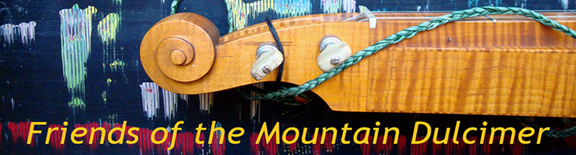
The most popular option with my customers is to replace the wooden tuners with either "Perfection pegs" by Knilling or Pegheds, which are a similar product.  Both of these mimic ebony violin pegs, but have secret mechanical guts in them which allow for very smooth and very accurate tuning.  They can seem expensive at first, but I hear that they save a LOT of tuning headaches for regular players.  Those with arthritis and other hand issues LOVE them!  And they look like wood pegs.

Machine tuners work well, but I think they are a "visual jar" to the smooth historic lines of a fine dulcimer.

John Pettreemusic
John Pettreemusic
@john-petry
yesterday
94 posts

Need to pick some brains, get some opinions...

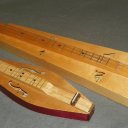
 Seems I get quite a few older, 70's 80's era instruments that are quite nicely put together, except for the fact that they have wood pegs for tuners. I appreciate the craftsmanship, and history,  but if no one will buy them, they are relegated to be discounted wall hangers.  Most players that visit my booth at shows distain pegs, in part due to older hands....

  Sawing off the pegs (as plugs for the holes) and installing machine tuners seems the way to go. 

  But I don't want to "cut up" history either.....

What say you all???