Forum Activity for @rod-westerfield

Rod Westerfield
@rod-westerfield
11/05/09 05:59:30PM
109 posts

Only 10 to go till 200 members


OFF TOPIC discussions

wow only 2 new members to gain and it's 300 member party time.. everybody get ready...way to go Strumelia who would thought....what a site...
Rod Westerfield
@rod-westerfield
11/02/09 11:28:19AM
109 posts

Only 10 to go till 200 members


OFF TOPIC discussions

I've been enjoy Apple cider here lately so I'll have a couple gallons chilled and ready...
Strumelia
@strumelia
11/02/09 11:13:29AM
2,416 posts

Only 10 to go till 200 members


OFF TOPIC discussions

razyn said:
In case y'all aren't counting, it's almost time for the 300-member international picnic and dulcimer jam.
Pickles and cookies, hmm... what else would be good with that?I have some home made apple sauce!


Gosh, it seems like just yesterday when we hit 200!

Dick
razyn
@razyn
11/02/09 11:07:31AM
51 posts

Only 10 to go till 200 members


OFF TOPIC discussions

In case y'all aren't counting, it's almost time for the 300-member international picnic and dulcimer jam.Pickles and cookies, hmm... what else would be good with that?Dick
Strumelia
@strumelia
09/25/09 08:41:15PM
2,416 posts

Only 10 to go till 200 members


OFF TOPIC discussions

Rod Westerfield said:
Only 2 left ta go.... so here are my cookies ready for the party... sorry didn't have the the stuff for no bakes... so we have banana nut cookies...
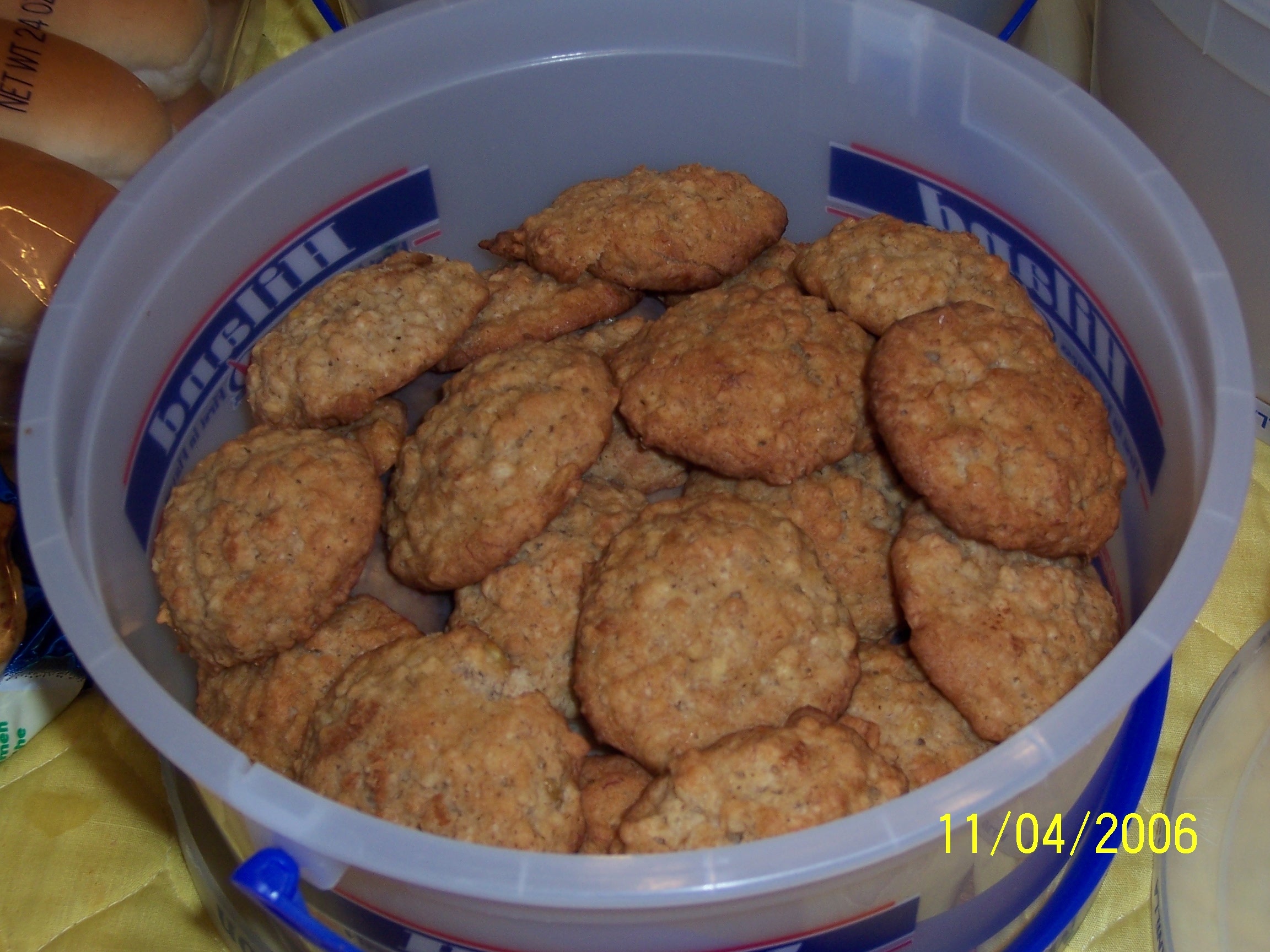
Ok Rod, I see those hot dog buns in the background.... yer holdin' out on us, aren't you ?!Oh...wait...11/04/2006...? Think I'll pass on those cookies! =8-o
Rod Westerfield
@rod-westerfield
09/25/09 12:36:22PM
109 posts

Only 10 to go till 200 members


OFF TOPIC discussions

Only 2 left ta go.... so here are my cookies ready for the party... sorry didn't have the the stuff for no bakes... so we have banana nut cookies...

Rod Westerfield
@rod-westerfield
09/23/09 10:34:21PM
109 posts

Only 10 to go till 200 members


OFF TOPIC discussions

Ok I'll bring no bake cookies this time... a few on here know about the cookies...maybe then you'll only be in Cookieonian for awhile.... lol
Strumelia
@strumelia
09/23/09 07:26:14PM
2,416 posts

Only 10 to go till 200 members


OFF TOPIC discussions

Yer making me blush now, 'Mo'.OK so yesterday I made the pickled beets and the bread&butter pickles already for the virtual block party 200 member celebration :
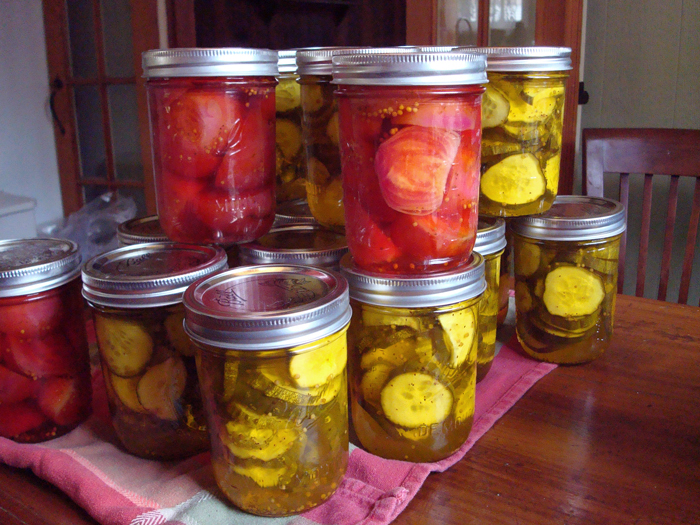
Who else is bringing what?Jim Fawcett- how about some of your pure home raised honey?Anyone else got something to bring?Mo, can you bring something besides your wheat-a-pix this time?- last time they got my innards all gummed up and I was stuck in mixolydian for a week! =8-oLet's see some pictures of what folks are bringing to the imaginary FOTMD Big 200 !.... :DAnd who will be our surprised 200th member? Give them a party hat and a noisemaker!


updated by @strumelia: 05/06/25 11:41:48PM
Rod Westerfield
@rod-westerfield
09/23/09 05:53:55PM
109 posts

Only 10 to go till 200 members


OFF TOPIC discussions

Wow the family just keeps growing... only 10 more and 200 members... so what are we going to do to celebrate? .... thanks Strumelia for starting this gathering of friends now family....3 cheers for our leader...
updated by @rod-westerfield: 10/27/19 12:02:25PM
Doug Berch
@doug-berch
09/30/09 02:40:19PM
1 posts


Terminology is always so interesting.What I call a "standard dulcimer" refers to my usual body shape and the dimensions of various parts. Each one I build tends to be unique even when they are a standard model as this is the way I prefer to work.I consider a custom dulcimer to be a variation on my standard, usually involving extra frets, number of strings, choices of wood or figured wood, scale length, fingerboard width, etc.I also make the occasional "one of a kind" dulcimer which may be larger, smaller, a different shape or structural design, etc.I set the standard for my "standard dulcimer" very high so sometimes I think that if I made a model and called it a "performance model" it might be confusing. Some people might think that the "standard dulcimer" is not as good as the "performance model" or some such thing.
Ken Hulme
@ken-hulme
09/25/09 08:47:42PM
2,157 posts


Performance Dulcimers are the ones that hang on the rifle rack in the back window of your high-performance pick'emup truck!
Foggers
@foggers
09/25/09 07:18:45AM
62 posts


Thanks for asking the question Shas as I had wondered too. And thanks Lisa for an illuminating answer!
Strumelia
@strumelia
09/22/09 05:45:38PM
2,416 posts


Many luthiers use the term "Performance Model" or "Concert Model" to name their high end models that have the best quality tuners, ebony fretboard, larger soundbox, a built-in pickup, and various other combinations of stuff that make the instrument 'superior' or different in both practical and aesthetic ways. Naturally all these features tend to cost more.None of the features will actually make you a better player, and some don't even make the instrument sound better. Some of the features might make better instruments for playing in a performance or concert setting. Others might not.As we all know, everyone's idea of what sounds 'better' is different. I used to be very impressed by big resonant boomy dulcimers with deep tone. Now I prefer light silvery tender sounding dulcimers with more shallow soundboxes. Our tastes all change with time.Nothing wrong with buying a fancy high end dulcimer if that's what you want and it has features you want for your playing. :)
updated by @strumelia: 02/03/16 01:06:13AM
Rod Westerfield
@rod-westerfield
09/19/09 12:12:19PM
109 posts


Ken it is set up... the first 3 strings are a normal dulcimer arrangement, if you play the last 3 strings you have a bass dulcimer, if you use the 3 middle string it is a baritone... yes the strings are equidistant.... how do I play..hmm still experimenting with that...I have used a noter and let the other strings drone, have chorded which was fun figuring out chords to use all the strings... have just played sets of 3 strings... this is Gary - Prussia Valley's Extended range dulcimer...the melody can get lost if your not careful... I have even tried fretting the melody and 3rd string at the same time... the choices are wide...
Ken Hulme
@ken-hulme
09/19/09 10:12:17AM
2,157 posts


Rod - you've got two strings on your Bass course; plus two strings on the Middle Drone course, and only a single melody string? Or do you have 5 equidistant strings on that Baritone? How do you play? Chord Melody? Accompaniment chords only? Sure seems like the volume of that single melody string would get lost among all the other sounds.
Rod Westerfield
@rod-westerfield
09/19/09 12:06:28AM
109 posts


Yeah and some of us even have wackier set up... I have a 5 I guess to describe would beB' M' B M m it is tuned D' A' D A d.... came be played many ways but yes it might be i little wacky to some....lol
Ken Hulme
@ken-hulme
09/18/09 05:22:46PM
2,157 posts


Shas - basically most dulcimers have three "courses" of strings - Bass, Middle and Melody. Any course can have 1, 2, or even 3 strings. B M m is common (3 strings), as is B M mm (4 strings, doubled melody). Sometimes you'll see BB M mm for a 5 string and the two bass strings can be equally thick, or one can be a thin string tuned an octave higher than the other. BB MM mm is a six string - sometimes called a "church" dulcimer if it has a deeper and wider body for a louder sound.Then there are those wacky 4-equidistant string dulcimers which can't seem to make up their mind if they're a uke or not! They really are ideal for people who specialize in fingerpicking or flatpicking with the right hand, but cornfusin' for the rest of us!
Rod Westerfield
@rod-westerfield
09/14/09 06:54:11PM
109 posts


Thanks Greg I had c# then retyped and oops... Greg Gunner said:
Rod's answer explains things pretty well with one exception. In the Key of "D" the 7th note of the scale is a "C#", not a "C".

D-E-F#-G-A-B-C#-d

His explanation of the relationship of the numbers in the tuning designation to the letter names for the notes is right on.

Greg
Banjimer
@greg-gunner
09/14/09 06:49:00PM
142 posts


Rod's answer explains things pretty well with one exception. In the Key of "D" the 7th note of the scale is a "C#", not a "C".D-E-F#-G-A-B-C#-dHis explanation of the relationship of the numbers in the tuning designation to the letter names for the notes is right on.Greg
Rod Westerfield
@rod-westerfield
09/14/09 05:30:56PM
109 posts


yes and no... if you have 4 strings with the melody strings close together then...yes you look at as being 3 strings... but some people play with 4 strings equidistant.. so that would be the 4 string...in regards to 1-5-5 and 1 -5-8those are the notes in the scale you tune to for example..Key of DD E F# G A B c dso in 1-5-5 you get 1=D 5=Ain 1-5-8 you get 1=D 5=A 8=dKey of CC D E F G A B c1-5-5 1=C 5=G1-5-8 1=C 5=G 8=chope this makes sense, if not I can try to explain more...
updated by @rod-westerfield: 01/26/16 11:31:12PM
folkfan
@folkfan
02/02/10 04:00:50PM
357 posts


Well, I think I can handle your 1st question about labeled in the Key of D. Look at the note that the tune resolves in. If it's a 3 then play DAA, if it's a 0 then play the tune in DAd. The Ionian scale pattern traditionally began on the 3rd fret of the diatonic dulcimer, so the d you would need to start your scale would be found at the 3rd fret. With a true Mixolydian mode tune the scale pattern starts at the open string or 0. If, however, your dulcimer has a 6+ fret, you can start the Ionian mode pattern at 0 as well. If a tune in Ionian uses the 9th fret in DAA, you'd use the 6+ starting the scale at 0. If the tune doesn't use the 9th fret in DAA, then it doesn't matter about the 6+, you can play the tune from 0 on a strictly diatonic dulcimer anyway. The lower notes of the tune (below 3 in DAA) will have to be played on the middle string.Question 2. Tuning the instrument to itself. Tune the bass string to a pleasant note, not too tight, or mushy so that it buzzes. Bounce up and down on the string, does it still vibrate well, can you fret it with out too much pressure. This will become your Open string note or Key note (call it the key of X for unknown, if you like). Go to the 4th fret and sound that note, then tune the other strings to it. Now in tuning the other strings you will need to get a feel for when you are going too high or tight. The string starts resisting going up (you turn the gear but the note doesn't seem to want to change), it doesn't vibrate as freely, it becomes too tight to press down on. If these things start to happen, down tune immediately or BOING is the next thing that will happen. Years ago when my hearing was better, I'd try for DAA and usually end up with C#G#G# if I wasn't using a tuner. I've learned to keep extra 9 volt batteries on hand at all times now, as I tend to forget to turn my tuners off. :-( And as to changing strings, if you want to change from one key to another and depending on how sensitive your hearing is will probably determine if you want to change strings. I use a guage that I can go from CGG to DAA with no problem, but DAd is stretching it. And that is what happens when you change keys frequently, your strings more quickly lose their ability to hold the notes. They simply wear out faster. Some individuals will swear that they hear a difference in the sound of DAd and DAA, I don't. And they prefer different gauges for those note changes.Question 3 the final d in DAd indicates that it is an octave higher. Yes, you are correct.
Strumelia
@strumelia
01/25/10 11:14:47AM
2,416 posts


Dan, it actually is an issue with banjos, I can say that much. That's why many banjos have compensated bridges. Dan Daniels said:
Interesting postings about incorrect fret placement or sharping up the finger board. As a luthier with 28 years behind me I've never heard the argument that string gauge effects intonation. You may be pressing too hard or sharping by bending but more likely your frets are incorrectly spaced.
Maybe string gauge does have something to do with sharp notes but this is the first place I've ever heard it!Just my thoughts on this very early Monday morning.
Strumelia
@strumelia
09/15/09 05:05:34PM
2,416 posts


Shas Cho said:
"The perfect is oft the enemy of the good."
I like to tell my husband "If you were perfect you'd just make me look bad." ;D
Strumelia
@strumelia
09/15/09 03:08:08PM
2,416 posts


Ron Hanes said:
The toughest thing for me to learn was that It's never gonna be perfect , its a series of small compramises that you finally settle on as acceptable.
Wise words, Ron. And so true of all the various things in Life, right? :)
Strumelia
@strumelia
09/15/09 03:02:51PM
2,416 posts


Shas writes:""I just ran over the strings with my electronic tunerand was a bit alarmed to discoverthat the middle string (currently tuned to A)is sharp already at the first fretand becomes increasingly sharper as I move up the fretboard.The other three strings are true right up to the 9th fret.Is this a flaw, or is it inherent in the system?""Hi Shas, there is reason for this, and it is true of most stringed fretted instruments....The thicker the string, the more it will tend to sound sharp when the thinner string frets a true note. Most frets are set so they will be noting the truest for the all-important melody string.So then you'd ask me- But why then isn't it my thickest BASS string that has the most sharpness problem?The answer is that it's really your MIDDLE string that is thickest. The middle string is thicker than the CORE string of the wound bass string. The winding around the bass string does not contribute to this effect. So really, the middle string is your thickest core wire, and has the most issue with fretting true to note.Us banjo players struggle with this and use compensated bridges to help lessen the difference in the tiny sharpness we hear when fretting the middle string. Again, our heavy wound bass string has less problem than the thickest middle string.The GOOD NEWS is that you are HEARING this sharpness- that means you have a good ear!! ;DMany people do not hear the slight differences in pitch trueness at all. Rejoice and take pride in your accurate ear!One more minor point- many beginners press down too hard when fretting, and this worsens the problem even more, by pulling/stretching the string all the way down to the wooden fretboard as opposed to simply being pushed down enough to make good fret contact. This extra stretching makes the string even sharper when fretted. Work on developing a lighter fretting touch, and fret the string just to the left of the intended fret, not in the middle between two frets.
Rod Westerfield
@rod-westerfield
09/15/09 10:42:23AM
109 posts


the other big thing with being slightly flat or sharp... is that slight variation in your finger placement can change of your reading by several cents... so don't be to worried about minor shifts as you go up and down the fret board...
Dave Holeton
@dave-holeton
09/15/09 09:47:36AM
13 posts


ShasI have worried about the same thing on all of my instruments. I have checked tuning at different fret positions on my dulcimers and guitars and found them at each fret to be off a little from the expected pitch. Some of my instruments are back on pitch by the 7th fret (dulcimer, maybe 5th or 12th frets on guitars) but a few never come back. Some strings do better than others along the way. I think instrument construction makes lots of compromises and the strings selected and the fret positions are close enough on most instruments (hopefully within a few cents on each fret for each string). Since strings can be of different sizes and age on an instrument, perfect pitch at each fret for each string might require constant adjustment. The fret for one string might need to be a little higher where the same relative fret for the next string might need to be lower. As the strings age, both strings may require the same relative fret position. I think the luthiers that construct instruments most of the time use accepted fret/bridge/nut placements with given string sets and most instruments are close enough. If I find a string that is too far off as I check it going up the fret board on any instrument and it causes the instrument to sound bad, I might consider getting a new string and/or a different size string.ThanksDave Shas Cho said:
Oh, but I want to understand it ALL!
Immediately!
;=)

I just ran over the strings with my electronic tuner
and was a bit alarmed to discover
that the middle string (currently tuned to A)
is sharp already at the first fret
and becomes increasingly sharper as I move up the fretboard.
The other three strings are true right up to the 9th fret.
Is this a flaw, or is it inherent in the system?

Hmmm...
I just did the same experiment with my ukulele
and the C and A strings become sharp at the first fret
and this sharpness increases up the fretboard,
but my G and E strings remain true to the 12th fret.
I never knew that before...
Foggers
@foggers
09/14/09 11:29:24PM
62 posts


Hi Shas - It is the size of the strings that put limits on what you can tune them to.Its a general rule that the thickness (gauge) of a string will dictate what note is produced over a certain string length, at a particular level of tension. If a string is quite slack it will buzz and give a muddy kind of sound; there needs to be enough tension to give volume, clarity and sustain. Obviously if the tension goes too tight then the string will break, (and there is also the risk of damaging the instrument if it is not braced for such high levels of tension.) So to keep a good balanced tension, thicker strings are used for the lower notes and thinner ones for the higher ones. The gauge of the string will put limits on how highly it can be tensioned. So for the usual kinds of gauges used on a dulcimer, the possible range is probably C-G.Which key you may wish to play in could be dictated by a number of factors such as your own vocal range if you are playing to accompany your own singing, or needing a common key such as D, C or G if you want to be able to jam with players of other instruments using a repertoire of popular folk/old time/bluegrass/country etc.
Rod Westerfield
@rod-westerfield
09/14/09 11:17:49PM
109 posts


What you don't want the Music Theory 101 evening class...LOL but she is right I can't even remember all the key that I have played... just start simple and keep adding... oh no there's math again..LOL....
Strumelia
@strumelia
09/14/09 11:04:11PM
2,416 posts


"but the key will generally be between C and G."No, you *can* tune to any key you want- you just have to figure out which tunings/octaves to use so you don't break strings. Some people also use capos to change key without retuning and without putting much stress on the strings."most" common key these days is D....but you are by no means restricted to D. Not that it's so terribly complicated, but there is way more to learn here than can be explain in one or two paragraphs.Learn a few things at a time- it will slowly come together for you. :)
Ken Hulme
@ken-hulme
09/14/09 07:05:24PM
2,157 posts


Shas - "tune to any key you like" with the provisio that if it breaks the note is too high!Part of what that was trying to say is that if you are playing by/for yourself, and not with other dulcimers, the actual key note of the bass string doesn't matter. Jean Ritchie and a host of others have said to tune the bass string to some note that sounds good with your voice; then tune the other strings relative to that note.I jokingly call those the "incestuous" tunings - because they're "relative" to the bass string. ............... never mind...Ionian Mode - relative tuning. Tune the bass string to something that sounds good. Fret the bass string at the 4th fret and sound that note. Tune the middle and melody strings to that note. If that bass string was tuned to D, you have DAA.
Strumelia
@strumelia
09/14/09 04:54:49PM
2,416 posts


"When I see D-A-d,does this just indicate that the second Dis in a higher octave?"Yes. when we write out tunings, such as either DAd or 1-5-8, the first letter or number is usually the thick bass string. The last letter or number is the melody string (or strings as in your case). The middle thing is the middle string.The melody strings are usually in the octave that's higher up from the bass string octave.If your pair of melody strings are tuned up to the high 'd', then I suggest that you NOT tune them higher than the next note up, or 'e'....they might break.So that means if you want to tune to the key of F you would tune NOT to FCf, but you'd choose instead to tune the melodies DOWN to the F below their original d, not up. Then you'd be in FCF, but it would be pretty floppy sounding. Many dulcimer players for this reason avoid the key of F. The key of G is usually 'ok' by tuning GDG.You will be using TAB written for '3 strings'- think of your melody pair as one string. the tab written for 4 strings is meant for 4 equal-distant strings, no pairs.
updated by @strumelia: 02/14/16 09:00:11PM
Bill Lewis
@bill-lewis
09/14/09 09:14:11AM
48 posts

Strings


Instruments- discuss specific features, luthiers, instrument problems & questions

Thank you Phil for the info. Next time i order strings i'll give your suggestions a try.Thanks, Bill
Phil Myers
@phil-myers
09/14/09 07:29:57AM
29 posts

Strings


Instruments- discuss specific features, luthiers, instrument problems & questions

Bill, on juststrings site, click on guitar strings and then single strings. They will all be ball end. I use the juststrings brand for the melody and middle and Elixir for the bass (the phosphor bronze nanoweb coated are really nice!). The gauges I use are .012,.015,.024. You can order several at a time and save on shipping.
Rod Westerfield
@rod-westerfield
09/11/09 04:09:52PM
109 posts

Strings


Instruments- discuss specific features, luthiers, instrument problems & questions

Bill you want plain steel in the small sizes .010, .012., etc..... the .022 that's where you have several choices... you can have nickel or bronze wound... I prefer the sound of bronze wound... also you can get string that are coated to help make them not squeak so bad.. (Elixir is on brand) that is what I personally use... hope this helps..
Bill Lewis
@bill-lewis
09/11/09 03:54:18PM
48 posts

Strings


Instruments- discuss specific features, luthiers, instrument problems & questions

Okay, HELPPPPPPPPPPPPPPPPPPPPPPPPP. Now that i got your attention, looking at the juststring.com site, i get totally confused. Which isn't hard sometimes. It has bulk strings in plain,steel coated and so on. I just want a size .10, .12 .14, and .22 gauge strings. Could someone help me out. Thanks alot.Bill
Bill Lewis
@bill-lewis
09/11/09 11:28:46AM
48 posts

Strings


Instruments- discuss specific features, luthiers, instrument problems & questions

Thanks, i know they are not specifically made for Dulcimers. Just couldn't remember if it was Banjo or what other strings would work. Thanks againBill
Strumelia
@strumelia
09/11/09 11:22:33AM
2,416 posts

Strings


Instruments- discuss specific features, luthiers, instrument problems & questions

Hi Bill,String 'sets' for dulcimers aren't really strings that are make just for dulcimers. They are simply strings of a standard length (either ball end or loop end) that are selected to form a certain set of gauges that would be appropriate for a dulcimer. Such sets of strings are the same kind of strings they would use to put together a set of strings for the banjo- since they are the same length...just different gauges (thicknesses).Thus, if you know what gauges you like on your dulcimer, you can simply order like 6 or ten single strings of each thickness. It actually comes out much cheaper this way.Last time I got strings, I ordered a 'pack' of ten loop end banjo strings of the .010 gauge, for example. now I have plenty whenever I break a melody string! :) All these 'banjo' strings are the VERY SAME strings they use to put together sets of dulcimer strings.So you could order their single ball end banjo strings in whatever quantities you want, and just put together your own 'sets' of dulcimer strings. ;) TIP- order twice as many melody strings- they break most often.
  701