Ken Longfield:
....So, I'll ask two questions. Is there any interest within the mountain dulcimer community in learning the history and traditions of the instrument? Should clubs and festivals be encouraged to provide this information to their participants?
I look forward to seeing what everyone here thinks.
Ken
"The dulcimer sings a sweet song."
Kenl, in answer to your first question, yes, there is significant interest in the history, and even more in the culture of the mountain dulcimer for this dulcimer player. Learning the history, culture and traditions of the mountain dulcimer greatly enhanced my appreciation for the mountain dulcimer and the sweet song of this wonderful instrument.
Perhaps sharing my personal journey with the mountain dulcimer will explain what I mean, and lead to the answer to the second question.
My first exposure to the mountain dulcimer was at Walt Disney World Epcot Center in 1991. Walnut Valley Dulcimers out of Burns, Kansas, had a wheeled kiosk exhibit outside of the Americana section. I had never heard, nor heard of, a mountain dulcimer. The salesperson demonstrated some simple tunes noter drone style. I thanked him, picked up a brochure and continued on my visit. In 1993, I contacted Walnut Valley Dulcimers wanting to purchase a dulcimer. I had picked out the Wild Mountain model in their brochure and asked about it. They did not have one in stock but would build one for me.
When I received that first dulcimer, I attempted to play it with the instructions provided, but being new, I did not do too well. I would “play at” it from time to time but I never fell in love with the music. I really did not know what it was supposed to sound like, but it just did not resonate with me. Because of this, I did not play consistently. Over the ensuing years I took some lessons from a couple of different instructors but that did not make my dulcimer sound like I thought they should.
It was a really odd phenomenon in those years of my dulcimer journey. I had an idea in my head about what I thought the mountain dulcimer should sound like. At that time, the only times I had ever heard a mountain dulcimer was at the display table at Epcot and a few sound clips on internet sites selling dulcimers. The Walnut Valley Wild Mountain model sounded good to my ears, but somehow not just right.
As time went on, my thinking became, “surely there has to be a dulcimer that sounds like I think it should.” I acquired 14 different dulcimers from makers such as Blue Lion, David Lynch, Warren May, Ron Ewing, June Apple, Cabin Creek, and McSpadden, eight being commission builds.
During these years, I attended many dulcimer festivals. I came away with lots of tab, dozens of chord charts, and all sorts of instructions about how to finger pick, do slides, bends, and pull offs. During the “talent show” part of the festivals on Saturday nights I heard a lot of great music. Invariably, as I drove home on Sunday, I would think over the festival weekend and wonder where was the dulcimer sound that I thought was supposed to be there. Granted it was good stringed instrument music I heard, but had I listened to a recording, my ears may not have identified the music as mountain dulcimer.
It was about 2015, if my memory is correct, when I purchased some books by Jean Ritchie and by other writers which mentioned not just the history of the dulcimer but the culture that defined the early mountain dulcimer. I was fascinated about the development of the mountain dulcimer in the hills of Appalachia and the integration of the dulcimer in the culture of those mountain folks. These people lived hard, lean lives, many times barely scraping by. They found comfort, peace, connection, hope, and resilience in the music of the mountain dulcimer. This dabbling in the history and especially the culture, of the dulcimer renewed my interest, as quite honestly, I had all but given up on the mountain dulcimer as the instrument for me.
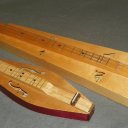
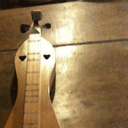
In this setting in 2016, having tried 14 different mountain dulcimers all of the more modern design, a new-found friend suggested I try one of his “traditional mountain dulcimers.” He told me it had staple frets, 3 strings made of music wire, no 6.5 fret, had some of he design features of dulcimers built by James Edward Thomas of Kentucky, and had a hand rubbed oil finish. So more out of desperation than desire, I accepted his offer to build one for me.
When I received that dulcimer in the mail at a cost a good bit less than I had paid for any of my prior dulcimers, I was honestly not expecting much. Opening the box, right away I noticed it was feather light. And, it just felt like it was destined to make music. Wow! Was I ever surprised. I laid it on my lap and strummed it a bit; the sound immediately resonated with my heart. It sang with the sound I had long sought. At once I felt a connection to the culture of the dulcimer which I had been reading about.
I was a member of a club which has a wonderful blend of Mixolydian and Ionian mode dulcimers with tab written to accommodate both modes. When I showed up at the dulcimer club with this new “primitive” dulcimer, the expressions on the faces of the club members said it all; “What has happened to Richard?” They were accustomed to me playing the beautiful Blue Lion Jean Ritchie model or the graceful Ron Ewing aorell dulcimer at our weekly club meetings. After their initial shock, they could not believe the quality of sound that came from the all poplar Betty model.
Over time, all of my modern design dulcimers have found new homes. I have acquired a number of additional traditionally designed mountain dulcimers, all but one with staple frets. Now when I pick up one of my dulcimers to play, I am back in the hills and hollers of the Appalachian Mountains in the midst of the culture where it all began, enjoying the music they played and enjoyed.
For me, the turning point was understanding the culture which in turn opened wide the music of the instrument to me. I think this would have happened if my heart had been happy with the more modern style of the mountain dulcimer music. The culture made the difference for me in my dulcimer journey.
So for question 2, I would say yes. Clubs and festivals just may find, as I did, that the history, culture and traditions of the dulcimer may enhance the dulcimer experience and journey of the members or attendees.







 ) to
) to