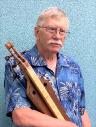
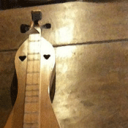
Here's my problem...
Instruments- discuss specific features, luthiers, instrument problems & questions
If it sounds half as nice as it looks, you got a great deal on that dulcimer, Derik! Michael Fluegge is a well respected luthier.
If it sounds half as nice as it looks, you got a great deal on that dulcimer, Derik! Michael Fluegge is a well respected luthier.
Thank you both! I never actually thought there was something 'wrong' with the dulcimer... much more likely that it's my lack of knowledge. Nevertheless I'm reassured that there's a workaround - this is all learning and thats what I want - I have a VERY low boredom threshold...
And its nice to know that I haven't wasted my money; after all, I parted with a hundred pounds for this lovely thing... including its polished wooden case... I think I got a bargain!
Derik, this is not a problem, at least not in the sense that there is anything wrong. What you have is a traditional diatonic fretboard. I have not seen the video by Brett Ridgway to which you refer, but he was surely playing a dulcimer to which a 6-1/2 (or 6+) fret had been added. There is nothing wrong with your dulcimer. That is how traditional dulcimers were fretted.
To find the major scale, tune DAA and start on the third fret of the melody string. Going up the fretboard, it will be obvious. Don't skip any frets.
Alternatively, you could tune DAd and start on the open string (which is what I assume you were doing). But instead of playing the 6th fret, play the 9th fret on the middle string. Then complete the scale on the 7th fret of the melody string.
The traditional method of playing the dulcimer involves leaving the bass and middle strings to drone and playing the melody on the (you guessed it!) melody string. In that style of play, you re-tune the melody string to get the right mode for the song you are playing. So a song that uses the major scale (ionian mode) you would tune 1-5-5 (or DAA in the key of D). But for other songs, such as Old Joe Clark or Going to Boston, which use the lowered 7th (mixolydian mode), you would tune 1-5-8 (or DAd in the key of D), and for others that sound kind of "minor" such as Shady Grove you would tune 1-5-7 (aeolian mode or DAC in the key of D). And so forth.
A lot of modern players (such as myself) play dulcimers with the extra fret added, but many traditional players prefer the original diatonic fretboard such as the one you have. Theoretically, you could have someone add that extra fret to your dulcimer, but please contemplate not doing that. What you have looks to be a stunningly beautiful instrument (I love the purfling and the ebony overlay!), and you may want to keep it in its original form.
Even if you decide not to limit yourself to traditional modal music and the traditional melody/drone style of play, you do not need to add that extra fret. As I've suggested above, the note you get with the 6+ fret on the melody string is found elsewhere, so there are always workarounds.
Your instrument is gorgeous and there is nothing wrong with it-- the fretting pattern is a pure diatonic pattern. Tune the dulcimer this way: the string farthest away from you (on the bass side) to D and the middle string and melody strings to the A above the bass string. Then, begin playing the major scale at fret 3 on the melody string.
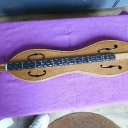
So, following on from my post in the 'Introduce Yourself' forum here is the dulcimer I bought earlier this week. Its beautifully built and I know enough about other instruments to recognise real luthier crftsmanship when I see it. According to the label inside it was built by Michael Fluegge in April 1983 and is an H6 model, no, 83.
I have had a look at Brett Ridgway's introductory lessons on Youtube to get me started. In the very first lesson he demonstrates how to play the tonic scale by going up the fretboard fret by fret omitting only the sixth; there should be two short frets before the octave - but I've got only one! The tonic scale is fine up to the fifth degree, the sixth is flat before I reach the octave at the double-marked fret. Cn anybody tell me where I'm going wrong please?
@derik-palmer Welcome to FOTMD! Many of us here well past sell-by date and more than a few have experience with other instruments.
Hello - I'm new!
Well to be more specific, the flesh is definitely past its sell-by date but although I play guitar, double bass, keyboards, autoharps and mandolin I'm very new to the dulcimer. I bought one this week and I'm still not entirely sure how it happened; it wasn't really by accident, probably because the lockdown here in the UK has got me looking for something new to do, and also because all my life (I'm 73) I have suffered from Oscar Wilde Syndrome - I can resist anything except temptation... 
Anyway, I now have a very nice luthier-built dulcimer and straight away I've encountered a puzzle. Since there's a specific forum for discussing particular instruments I'll post the problem and some photos there. If you feel like heading over, taking a look and giving me the benefit of the hive mind I'd be awfully grateful...
What a great project! Thanks for the posting, Ken-- so good to see!
Thanks to everyone for the warm welcome, you really make me feel like home.
Probably my questions will start soon.
Have a nice day!!
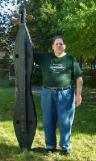
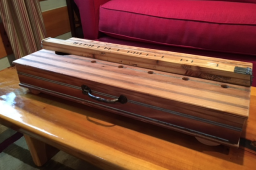
Eleven pounds, eleven ounces in the box. Probably 8 or 9 pounds? You can play it on your lap if you have a large lap.
I remember sitting at a light in California's Silicon Valley and wondering what were those bushes of flowering plants. They were geraniums!!! Ever since I find our northern pots of geraniums too puny.
(My mom was one of those who loved to identify plants and birds. Years later, as a children's librarian I re-discovered When the Root Children Wake Up. Audrey Wood wrote this classic in 1941. Nowadays there are new illustrations, but either way it's a great way to introduce children to knowing plants.)
Have you weighed it John? I'd be interested in knowing how heavy. I assume a box like that really needs to be placed on a table to play, right?
Thank you, Lisa! That's the effect I was trying to achieve. I raced through the construction, only to be stymied at the end by the string attachment to the screw eyes! And finding a box big enough to send it in!
I do love the look of that one in poplar, John! It looks very 'old traditional' for sure, especially with the tin overlays.
Doggone cool, John! The new owner is in for lots of fun playing this beauty!
Being from Tennessee I, also, just had to made a Tennessee Music Box.  It was a fun project and have been asked to demo it on a few occasions.
Being from Tennessee I, also, just had to made a Tennessee Music Box. It was a fun project and have been asked to demo it on a few occasions.
That's funny, but you have to quickly change the subject before you are asked to ID any other plants. Many years ago I had a friend who was an expert in native Californian plants. We would go hiking and she would spend the whole time identifying plants. Maybe in the two years we were together I learned three plants. But there have been a few moments similar to Randy's in Mexico when in a group of people I was able to say something like "what a nice example of a zauschneria californica" to the amazement of those in attendance. And yes, I then quickly changed the subject: "How about them Cornhuskers?"
That's funny Randy. ;D Yeah sometimes a subject will come up with plants or animals where i coincidentally just happen to know some exact obscure factoid that's being discussed... it can be very impressive, and so fun when that happens.
My wife had a Bougainvillea houseplant and set it outside in the summer. It did well and I took a casual interest in it and we would talk about it occasionally.
I was in Mexico with friends and we would walk to breakfast. The first day I noticed a Bougainvillea plant climbing a fence beside the road. A few blocks long.
The second day someone said look at that beautiful plant on the fence wonder what kind it is?
Nobody spoke up so I said "it's a Bougainvillea".
I felt so knowledgeable!.
Doggone cool, John! The new owner is in for lots of fun playing this beauty!
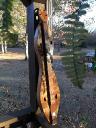
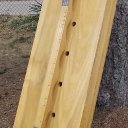
This is a just-completed, all-poplar, authentic Tennessee music box. Really heavily built, but it sounds great, nevertheless! It has an amber shellac finish, and etched metal nut and bridge plates. Tuners are screw eyes from the hardware store, and the frets are fence staples! That's the way it was done in 1885. Enjoy.
True, Ken! Indoor plants are a tonic for the soul in the middle of cold bleak grey winters of non-tropical areas. I remember when i lived in Puerto Rico i did not bother much with indoor plants- it was far easier to just have them out on the 'balcon' or in the yard.
When i was a child in NYC, like most bohemians my mother would plant leftover avocado seeds and we'd marvel at our resulting two foot tall avocado 'tree'. I couldn't believe the gigantic avocado trees in PR! 
One of the things I love about living here in SW Florida is that what Northerners keep as house plants down here are yard plants. We have a Schefflera across the street that is 20+ feet tall, 75 ft tall ficus, and air plants bigger than basketballs among other good "indoor" plants.
You are all welcome. I subscribe to Google Alerts that lets me know when the word "dulcimer" appears in a news report. Much of what Google links to is junk, but once in a while there is an interesting news story. I wasn't sure how many people would see it, so I decided to share it here.
Dusty, I remember reading something about that project in Northern California. I can't remember if it was on a website or a link to an article somewhere.
Ken
"The dulcimer sings a sweet song."
That's a great story, Ken. Thanks for sharing it. There was a similar program at a small town in Northern California where they also included math instruction in learning how to lay out the frets.
Lois, I know a little something about houseplants, but I'm certainly no expert. I know nothing about crotons. Misting is good for some plants and not good for others, so you'd have to look that up. I've found it soooo useful to punch up searches on Youtube like "care of philodendron", "care of rubber plant". You'll find great tips on caring for specific plants that way... plus some of the vids are fun to watch!
I do know that it's generally advised to not repot a plant for a month or two when you get it- to allow it to settle first from the shock of moving to a new location.
Thanks for sharing Kenl. Great program. I agree there needs to be more programs along this line.
That is awesome! Sure wish I could have done that as a kid. A great way to get them excited about woodworking, music, art, etc. Thanks for sharing, Ken.
This story from Minnesota appeared in my email today. I thought some of you might be interested in this project. https://www.hometownsource.com/morrison_county_record/mol-students-build-their-own-musical-instruments/article_ccf9c80c-8024-11eb-8ef3-33ff1a8b2e99.html
It would be nice to see more schools doing this.
Ken
"The dulcimer sings a sweet song."
Quick Dumb Question: It sounds like spraying might fit this plant giving it a daily mist. Does that make sense. This plant is very tiny in a tiny plastic pot sitting in the scooped out area of the previous plant's dirt. I see the tiniest of roots trying to stick out of one hole.
Thanks, John. On the back of the DVD box, mine says it includes the booklet and I see a clip inside the case that would have held it. Otherwise, I’d have had no idea that one existed. Keeping my fingers crossed!
Wendell, I have the same set of 2 DVDs that you have, but I don't recall ever getting a booklet with them.
Hi everyone, I need your help. I was fortunate enough to recently acquire a two DVD set of How to Build a Dulcimer by Keith Young. The booklet that originally came with the DVD set is missing. Does anyone know where I could possibly get one or a copy of one? I may never build a dulcimer but since I own a Keith Young dulcimer, the DVD is almost like getting to meet Mr. Young. I realize these aren’t common and would appreciate any help anyone can give me, thanks.
Ah, well the usual advice given for that double-pot situation is that you water it thoroughly like once a week or so, let it drain for a few minutes and then dump the excess water out of the outer pot... so that the potted plant is never in standing water. Think of the outer pot (with no hole) as simply a way to protect your table rather than being a water reservoir. Waterlogged soil is deadly to houseplants. I learned only recently that roots need air as well as water, otherwise they start to rot. Just like us I guess!
Yeah it's funny but all plants do have a life span. And it's amazing how you can make new baby plants from offshoots, splits, and cuttings.
@venni , that's impressive, good for you!
Many of us here never actually become highly skilled players, but hopefully we all do find joy in playing a humble instrument at home, even if we only play for our own selves. Music is such a tonic. :)