John Stockard Dulcimer
Instruments- discuss specific features, luthiers, instrument problems & questions
Thanks Dusty.
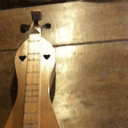
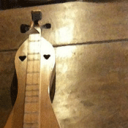
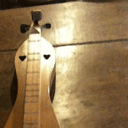
I fixed the spelling in the title. And yes, John Stockard produced very elegant dulcimers with impeccable intonation.
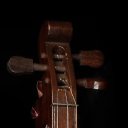
VERY nice! I really like the headstock neck area....impressive.
Thanks for sharing.
Thanks Ken. It is obviously a John Stockard dulcimer. Misspelling error.
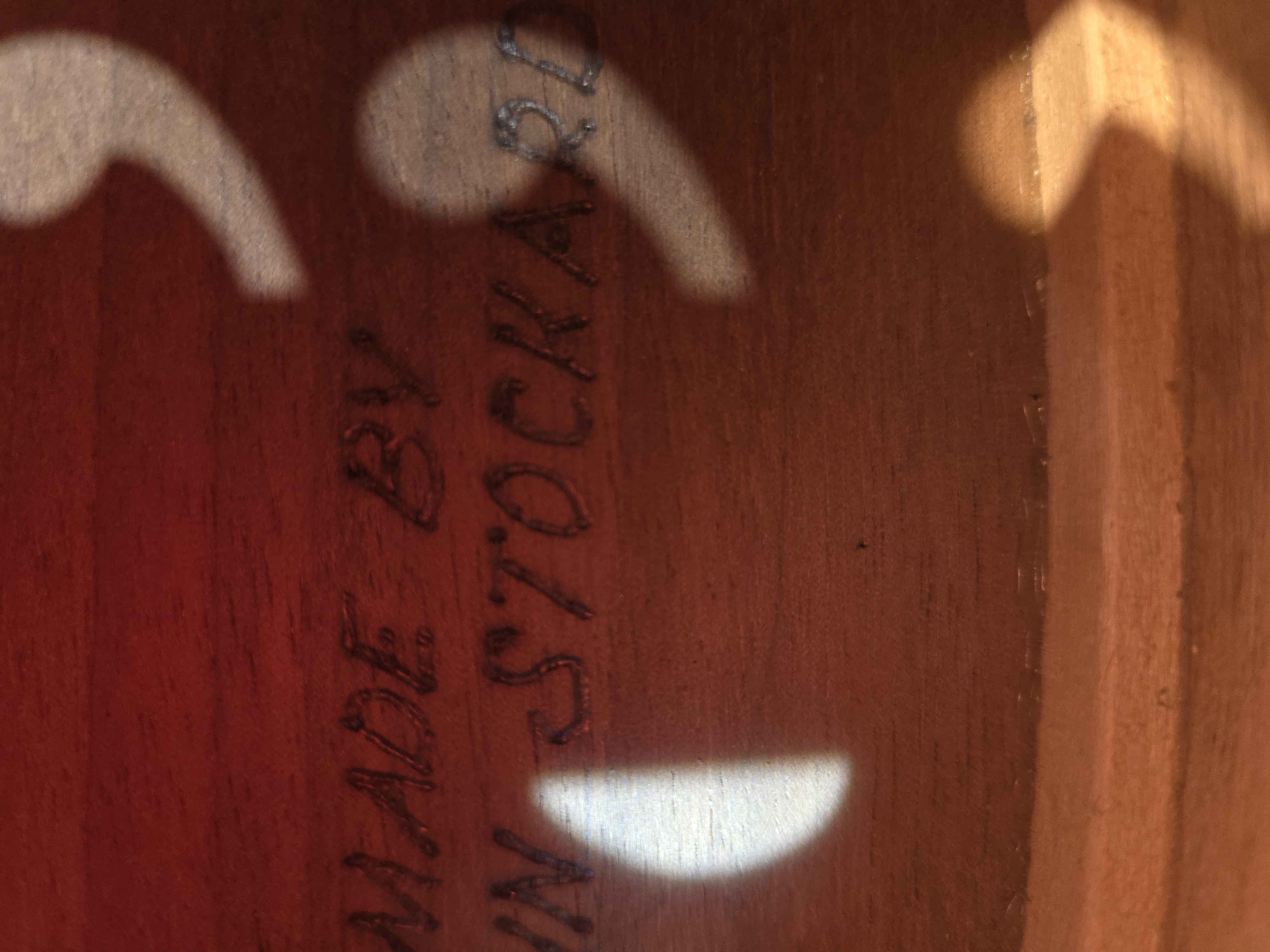
Old Dawg, you might want to check the name of the maker of your dulcimer. The photo of the label says it is made by John Stockard. He was a builder in Georgia.
Ken
"The dulcimer sings a sweet song."
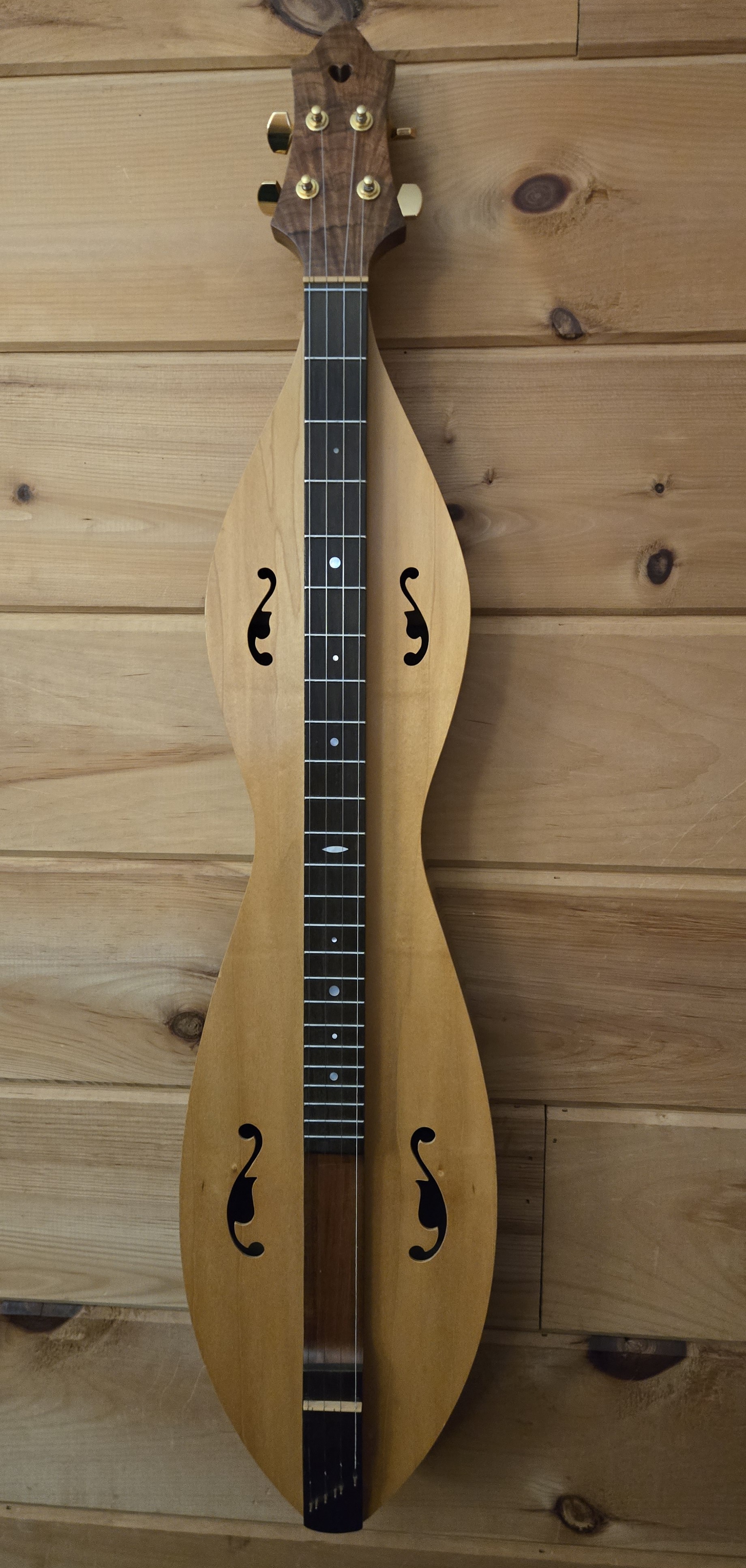
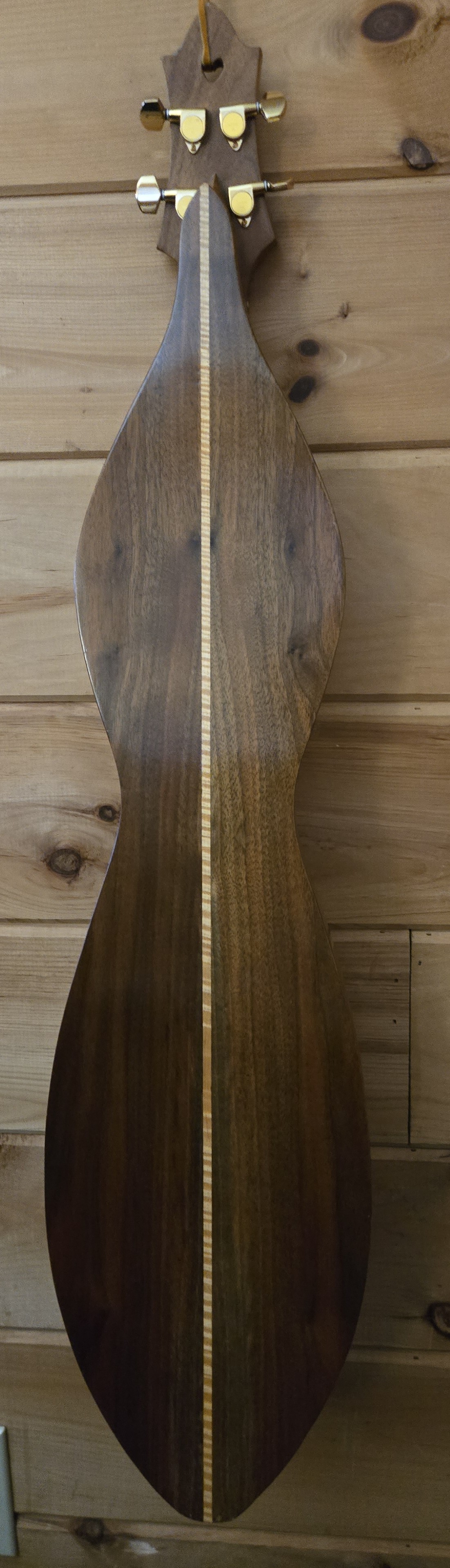
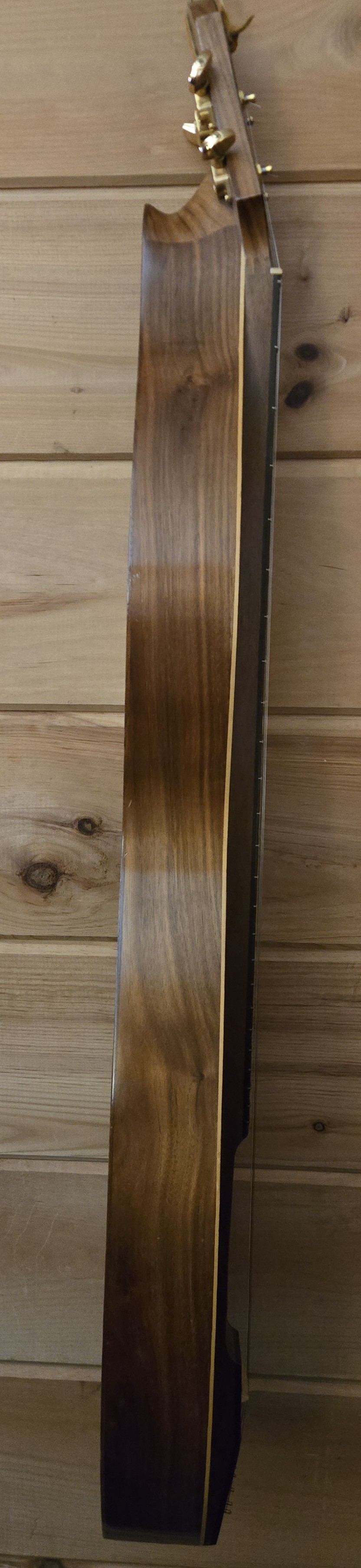
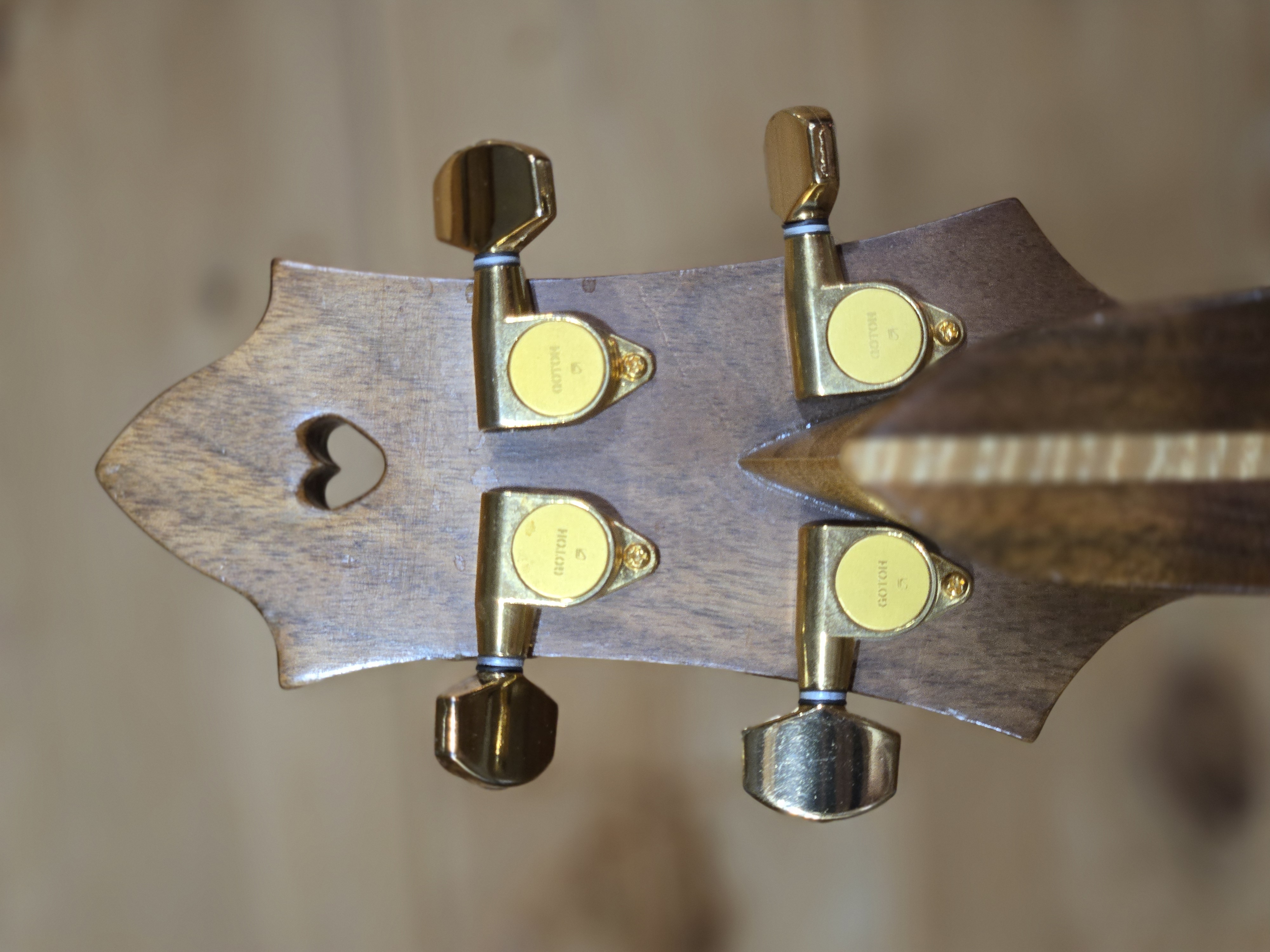
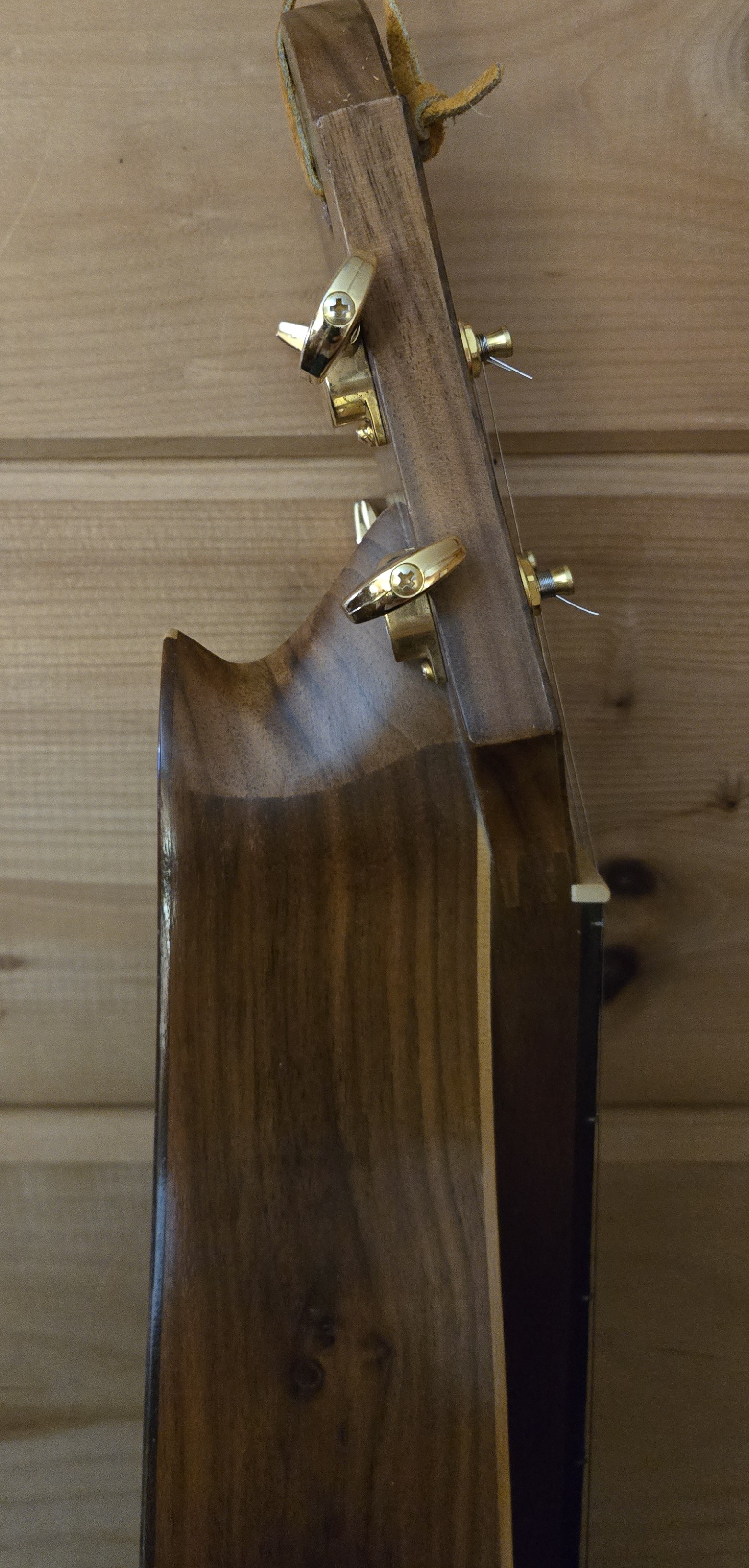
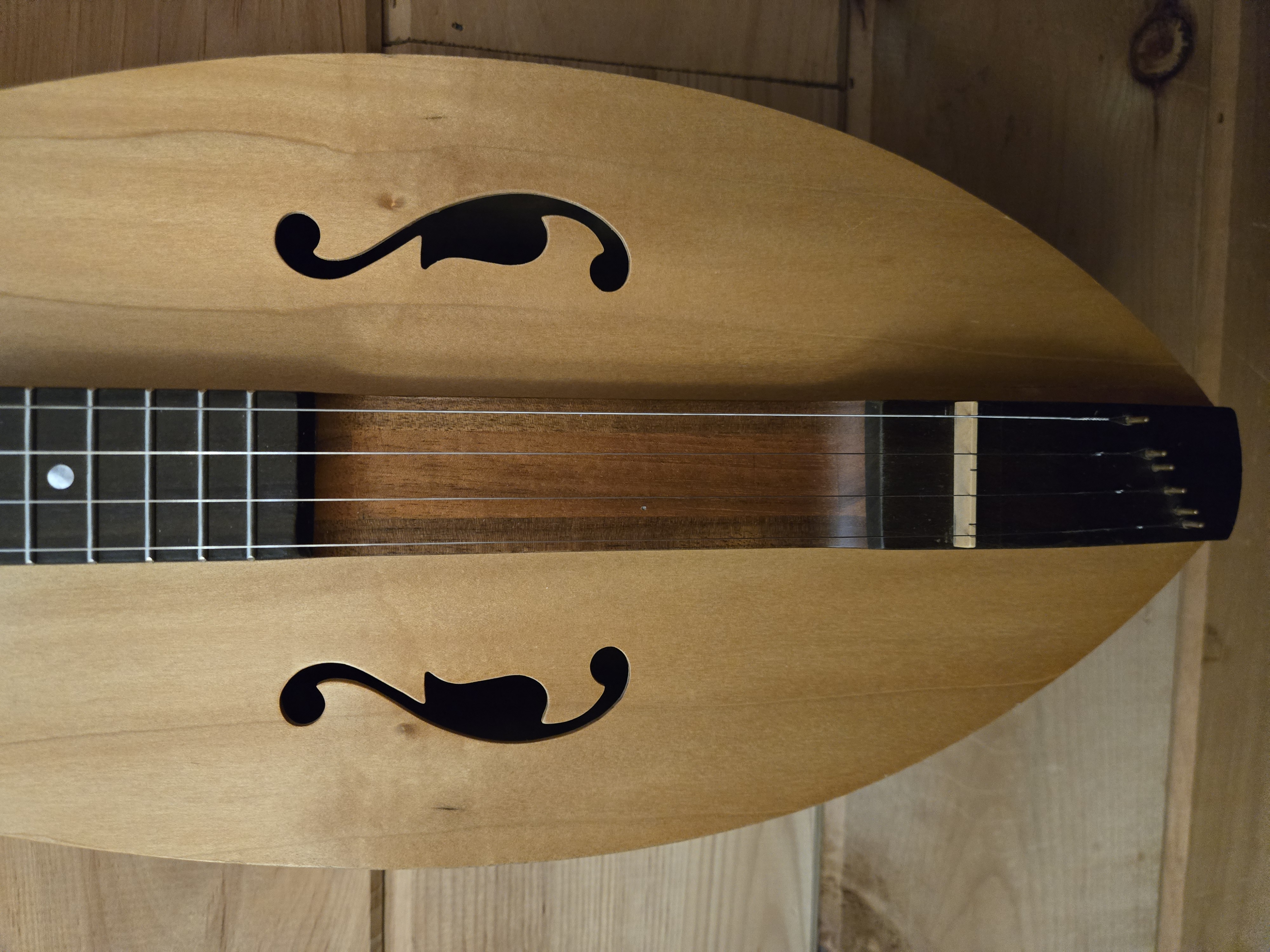
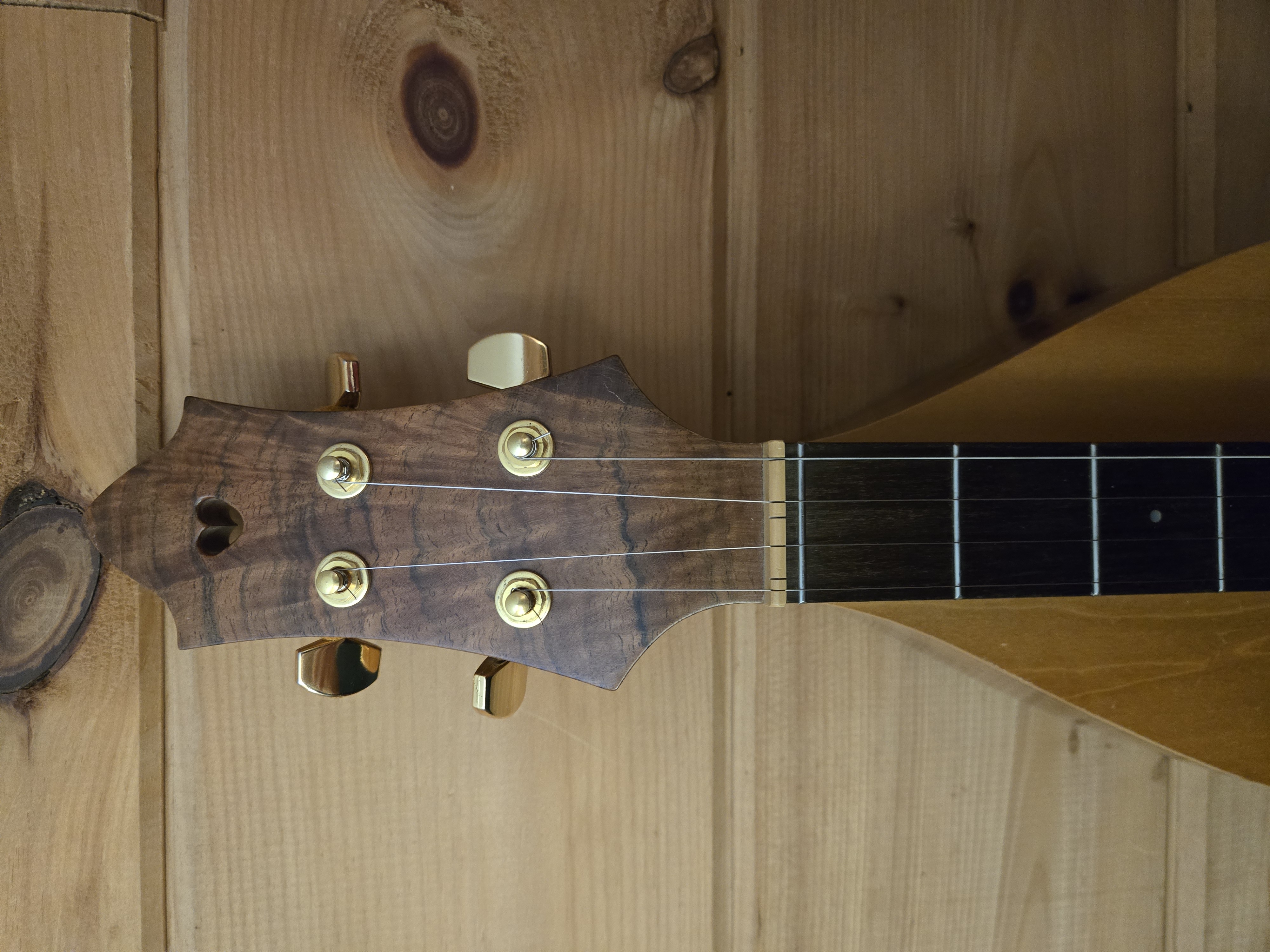
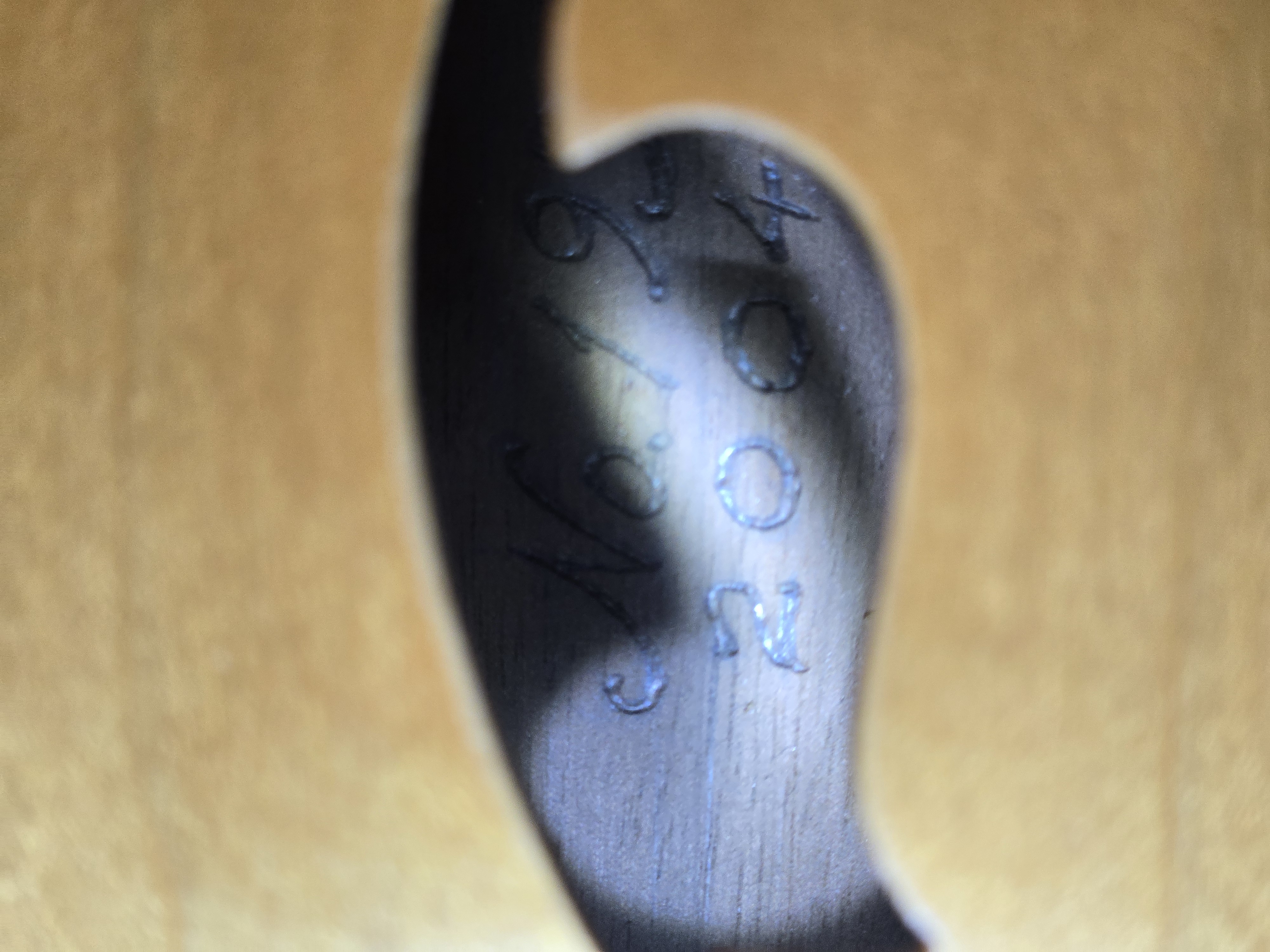
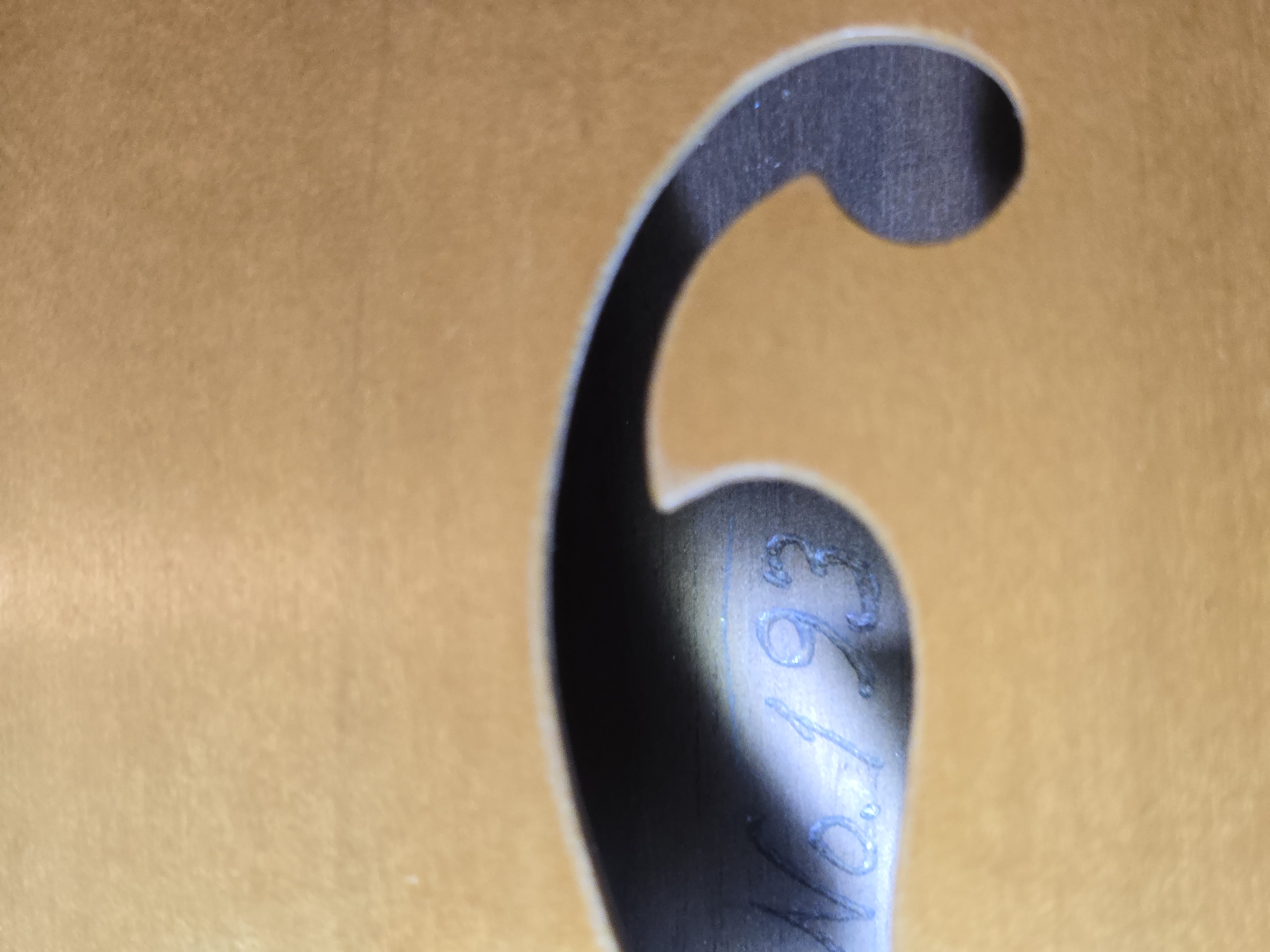
Many years ago I contacted John Stockard about building me a dulcimer. He told me he was no longer building but he would be willing to sell me one of his personal instruments. I bought it. It came in a "well traveled; soft case. The dulcimer was in excellent condition with minor wear. If I remember correctly, he called it his concert model. It has a beautiful, full round sound with excellent sustain. It is 38" long. The bouts are 8 1/4" and 6 3/4". It has gold Gotoh tuners. Attached are some photos I took this morning. Thanks in advance for any responses.
https://www.amazon.com/Imelod-Contact-Microphone-Ukulele-Mandolin/dp/B01M5IB4X7
This one is nice in that it has only a 10 inch lead so you don't have wire hanging all over. The lead is braid instead of plain plastic. "looks" like some of the more expensive ones.... That being said, I know of no manufacturer that uses a different piezo element in its' pick ups.The plastic housings may look different, but electronically and mechanically they ALL are the same. The price points are based on marketing, not what is inside. And at under 10 bucks it is sure worth the trying either way......
I would suggest perhaps using a small square of "alien tape" to affix to the dulcimers top, no worries then of double sided tape marring your good looks.....
Since apparently amplification isn't allowed, you may want to consider a particularly loud dulcimer. Some dulcimers are quite a bit louder than others. There are a lot of options depending on what kind of tone you prefer. In general, larger dulcimers that can support heavier strings will often be a lot louder than smaller instruments, however if you are looking for something portable, you may need to compromise.
Remember to "dab" the area...don't "wipe", In case there is residual pencil marks etc,you don't want to rub them off.
I've exposed some "made for xxx" or dedications and poems over the years....Enjoy the quest!
That’s a great idea John. I’ve repacked the dulcimer so won’t be able to try that until I get back home with it in two weeks. I’ll let you know if I’m able to read anything.
Here's a handy page concerning busking/playing/performance on NYC subways:
https://www.mta.info/agency/arts-design/music/subway-performance-rules
You'll have to obey their stated rules on amplification (since you mention 'pickups').
A hardshell case might be good to protect your dulcimer while moving around/crowded stairwells, rain, etc.
One cheap solution might be to buy or build a wooden "possum board" to put your cardboard dulcimers on while playing acoustically... such boards do help increase volume and resonance, without electronics. You could make one to fit your existing instruments pretty easily. Do a site search here for "possum board" and you'll find lots of info.
I'm thinking about starting to busk in the NYC subways in the next few years (if/when I ever get the courage). Right now I have two Backyard Music dulcimers with cardboard soundboxes—one diatonic, one chromatic—but would love to acquire a more grown-up instrument with a built-in pickup that isn't TOO nice to the point where I'd worry about it getting broken in the subways. Do you have any recommendations? Should I instead get a guitar pickup for the cardboard dulcimers I already have and do my best with one of those?
Asking for a friend. We play in a group and sometimes need to plug in for a local performance. My friend has a wonderful 26" walnut/sycamore McSpadden. She meant when she ordered it to request a pickup, but didn't look at the order form closely enough and it was didn't happen. We live in Alaska, so not feasible to take it to Mountain View. Sending it in to add a pickup probably also doesn't work, as this is her main player and there'd be a least a month down time. So, do any of you have recommendations for an external pickup? I'd probably be interested myself for some of my more vintage dulcimers (for instance, I have a lovely 1991 teardrop Blue Lion). Thanks in advance.
Paula, I'm glad that you finally were able to connect with your Chet Hines dulcimer. Enjoy it. Let us know what you find if follow John's suggestion.
Ken
"The dulcimer sings a sweet song."
That is SO nice! I always wished some of these instruments could talk and tell the tales of the past....Yours comes pretty close! A water wet q-tip brushed over the old scratches may bring out enough contrast to read them...It'll evaporate with no harm done...
Sometimes comments get embedded in forums on related topics. Here was one place the video was posted , in a conversation on the popularity of the dulcimer.
I clearly was not using the search function correctly. I was very surprised to not find anything and will have to try again. Thanks for the reply!
An update on my Chet Hines Dulcimer!
I was able to make it back to Texas today and am at my in-laws house where I had the dulcimer delivered. I finally got to see it in person.
I had also found a copy of his book and had it delivered to their house as well.
imagine my delight when I discovered on page 111of his book a picture of my very dulcimer. The grain is very distinctive and there’s no doubt it is my dulcimer. I’m so very excited to own this wonderful instrument.
it does look like there may be an inscription visible through the lower sound holes. They look lightly scratched into the inside perhaps with a nail or an awl. I can’t be positive as there is little contrast between the inscription and the wood it’s on. Once I’m back home in Portugal I will try and see if I can bring that out.
cheers everyone and thanks for your help with this project!
paula
There are a few other places around FOTMD where people discussed this video. I am more impressed with Seyfried's singing than her dulcimer playing, but it's all pretty impressive. And it's great to see the dulcimer get some mainstream attention.
I know this isn't super recent - I think it was about a month ago. (If someone posted about it on here already, I missed it, and do apologize.) I'm not up on TV shows or celebrities, but I enjoyed watching Amanda Seyfried play and it is fun that apparently the dulcimer got some recognition. 
If they ask you to "jam" ....It's not the strawberry kind......
Thanks all for the comments. I'm only about 45 min north of the Janesville group, and they're quite active and welcoming online. There's a smaller group here in Madison, who are mostly all in the Janesville group as well. During my online chatter with the Janesville group I've identified several other folks near me who want to join up. I've already got an invite to a member's house this weekend to go over a few tunes. The community seems welcoming, relaxed, and just what I'm looking for 👍
Ah, the DAD malady has struck. That is "dulcimer acquisition disorder." Thankfully it is not fatal.
Seriously, I have a number of dulcimers. For the music I play I have found a particular song may sound better on one than the other. I have one tuned DAA, one in EBB, one in DAC, etc. So enjoy adding to your collection. The more you have the more time you get to spend playing and enjoying them all. The Warren May dulcimers are great instruments and expertly crafted.
Thank you for posting this. I'm also a beginner, and also happen to have 2 very similar dulcimers (though not from the same builder). I think I will do exactly as you mention, and keep them in different tunings. I'm just starting to learn about and practice that, and I will be able to spend less time tuning that way.  I can keep one in DAA, which I've used most, ready to enjoy things I already know, and use the other for DAD, and whatever comes next.
I wistfully think about some day having a flat-headed one......
And then there were three......That's how it starts.
If you are not in a dulcimer group, try and find one. https://southernwisconsindulcimerclub.com/about/
This group is in Janesville, don't know if it's close to you.
Offer lessons? Offer to stumble along with another novice, learning together? The music may not sound great, but the fellowship is nice....
Hello all,
I have a very "spoiled" problem! Just starting out on the dulcimer with an hourdrop all-walnut model by Warren May that I bought from him last year: 6.5 fret present (as I think all his models have now), currently tuned to DAD. I then fell in love last week with an hourglass poplar model with a lot of green color, absolutely beautiful. It's currently being finished up in his workshop; admittedly an impulsive purchase which now leads to my questions ;)
Obviously I'm a novice and barely know what I'll end up needing/liking. That being said, how do I best take advantage of having two dulcimers by same luthier, each with a 6.5 fret, 4 strings, same length/size, different woods and different shapes? I know the woods will have different warmth/brightness, etc. Maybe keep the poplar in DAA? I'm interested in noter/drone playing although also joining a club nearby. Any thoughts appreciated! I'm quite probably over-thinking this as I don't have the second dulcimer in my hands yet!
PS: every time I need to restring, I wistfully think about some day having a flat-headed one 😉
Thanks Ken for your reply - I can easily obtain bottleneck type slides here where I live, so it's the rod I'm looking for.
Dusty, this is terrific news! I'll make the donation and send you a PM right away. 
This is a great thread, and what a great old dulcimer! Beautiful wood too.
Just my 2 cents, but for a fragile old dulcimer like that at 28" scale length and a peghead that will need either bracing or restoring, I would put on melody strings of 0.010 gauge, whether you decide on a C tuning or a D tuning. These slightly thinner strings will not be quite as tight tension on the old instrument. I might put 0.010 melody, 0.010 or 0.16 middle (Dad/DAA) and a .022 bass. middle. I'm assuming you'll maybe try to put in original type wooden tuning pegs after renovating the peghead. You could go with real nice Whitner viola pegs which would look just like old wooden pegs but would tune like machine pegs, like butter.
Okay, great, thanks! You're certainly a wealth of info about all of this...glad we have connected. I will follow your advice and try those string gauges, and will experiment with tunings, etc. Thanks again!
With a 28" length I think you would do well with 0.012 for the melody string (the one closest to the player), the same gauge for the middle string, and 0.022 or 0.024 for the bass. Your dulcimer does not have a fret between the 6th and 7th frets. Therefore you will need to play in the 1 - 5 -5 tuning. To play the in mixolydian mode you need what we dulcimer builders and players call the 6 1/2 fret. As to accompanying your singing voice, the bass string gives the key. When you tune it to D and the other strings to A, you are in the key of D. Tune the bass to C and the others a fifth above that (G) and you are in C. You can play in E and still keep the other strings at A. You'll need to find what works for you through trial and error. When you get to this point you can start another forum with a question about this as I'm not singer and I'm not the best authority on musical theory as it applies to the dulcimer.
Ken
"The dulcimer sings a sweet song."
Thanks Ken. Well, I don't know if that's more than I want to know, but it's more than I knew I needed to know! So, I've measured the vibrating string length of my dulcimer, and it looks like just a little over 28" (maybe 28-1/16"?). Given that, would you have any advice as to what tuning I might want to use? I'm not sure how to decide that, but would it relate in any way to my voice range (assuming that I sometimes might want to sing along with my playing)? If so, I have a fairly low range (not sure how to classify it...have never had formal voice training, etc.)...for example, I often sing the bass line in choral songs, and I often end up tuning my guitar down a full step to be able to comfortably sing certain songs (if I don't want to otherwise change keys, etc.)...does that help in any way?
As for the nut & bridge, I agree with you that the Wilcutt example definitely has metal for those two parts, with notches for the strings cut into them, etc. The nut on mine is somewhat worn and chipped, but it is definitely some kind of wood, and it looks very similar to the rest of the wood on the dulcimer (and it also has notches cut into it). (And as I think I said previously, the bridge is missing, so I'm not sure what it was made of.) I think I should be able to fashion some kind of wooden replacements out of the various varieties of hardwood scraps that I have in my shop.
As for moving to friction tuning pegs, I have found some different versions that might work, both on the International Violin Co. website, and on Amazon. I will keep looking around for options before ordering any. And I still might try and make them myself, since I would ideally like to replicate the shape of the knobs on the originals.
Thanks again!
Thanks Nate. I have various hardwoods as well as bone blanks for guitar saddles & nuts that I could maybe use. I also have the reamers, which I use for installing guitar tuners. Will do some online searching for the pegs themselves.
Thanks again!
Well, in discussing the tuning pegs I forgot all about your other questions. It does look like the nut is made of metal. Perhaps it is a piece of sheet metal (steel)? In the Willicut photo the bridge looks like brass. As far as strings go we need to know the vibrating string length to calculate what you would use. Measure from the inside edge of the to where the strings touch the bridge. You can calculate string size by using the Strothers string calculator. You can find it here . You will also need to know what notes you will use for each string. When Dixon was making dulcimers the accepted standard was C - G - G. Today the standard is D - A - d although many people still play D - A - A (an octave higher than the old standard). Sometimes these tunings are referred to as 1 - 5 -5 and 1 -5 -8 tunings or Ionian and Mixolydian. The former tuning has a scale beginning on the 3rd fret while the latter has the scale starting on the open string. That may be more than you want to know at this point.
Ken
"The dulcimer sings a sweet song."
On one hand, if you particularly wanted to install a "zero fret" made of metal that is an option. Common materials for dulcimer nut and bridge are very hard woods, bone, and plastic.
For the pegs, others might be able to provide insight, but pegs of standard sizes are super cheap and "peg hole reamers" as well as "peg shavers" might be useful tools to use
Mike, I have one of the Hall brand pyrex glass noters that Amazon used to sell. Here is the listing explaining that it is no longer available: Hall dulcimer noter . That is the exact model I have. It was given to me when I bought my first dulcimer about 14 or 15 years ago.
It is well made and very pretty. It produces a very bright tone and slides around like butter on a hot skillet, although my noter skills are pretty poor, so I can't do a good demo. I have trouble avoiding the fret wire.
I never use it. If you pay for shipping plus make a $10 donation to FOTMD, it is yours. Send me a personal message if you're interested. I would package it up and get some estimates on shipping before you have to commit.
Hey fellas. End of the day update here...
I appreciate all of you who have weighed in to help me solve this puzzle.
So, I was able to remove the tuners, by heating up the posts with a soldering iron enough to soften the glue holding the wooden knobs to the shafts, so the knobs could be removed, and then the tuning machines removed from the box. Upon inspection (and touching with the iron), that is definitely lines of solder down the plate of each tuning machine. As I've reflected on it, although I'm new to dulcimers, I find it hard to imagine that this was the original tuner installation...I bet John is right that this was a re-do by some owner of it before it came to our family (although I had thought we were the original owners). I found another Arthur Dixon dulcimer that was sold by Wilcutt Guitars in Lexington, which clearly has the traditional friction tuning pegs (see attached photo)...BTW, this one is numbered 87, whereas mine is 42), and the knob ends on the pegs are identical to the ones on my dulcimer. I can't imagine that mine is the way Mr. Dixon installed tuners on his earlier builds, and then he went back to the traditional friction pegs later. I'm thinking that some previous owner wanted to put geared tuners into it, so they cut off the knobs of the pegs, and mounted them onto the shaft of these geared tuners. And in answer to some of your comments, it appears that the gears were facing down, and the metal rods were soldered to the top side of the plates (and there were no screws used, I guess because there was no way to use screws in the plates themselves). Also, in answer to John's question, yes, the holes do go through to the other side of the tuner box, just like in the Wilcutt example (which also seems to confirm that mine was not the original tuner configuration, because the geared tuners wouldn't have required the holes on the other side of the box).
All that being said, I think I would like to restore it look more like the one sold by Wilcutt, with the traditional friction tuning pegs. Do you all have a source for such pegs? (I could possibly just make them myself, but may want to buy them.) And thanks, John, for your suggested solution...I may go that route if the traditional tuners don't work out.
Finally, any answers to my other two questions below, about strings and materials for the nut & bridge? Its pretty clear from the Wilcutt example that the nut & bridge are metal, like fret wire...although on my dulcimer, the slots are wider and deeper than typical fret slots, and the nut appears to be a thin slice of wood of some type (the bridge is missing).
Thanks again for any and all continued help!
Mike, are you asking about a solid glass rod or a cylinder that you put your finger in like you would use for playing slide guitar? If it is the former, do a search for glass stirring rods.
Ken
"The dulcimer sings a sweet song."
If nobody has one, or is not interested in selling, the big question is: does anyone still make them? Amazon has some "no longer available" items but that's all I can find on the web. Any help hugely appreciated!
I decided to look at some Dixon dulcimers. Here are links to two photos of Dixon dulcimers:
https://heritagedulcimers.wordpress.com/2021/06/05/arthur-dixon-1897-1978/
https://willcuttguitars.com/products/arthur-dixon-dulcimer-used
Neither dulcimer has tuning machines. The are wood pegs. Could it be that someone else decided to add the geared tuners?
Ken
"The dulcimer sings a sweet song."
Thanks, Nate. I see that I didn't pay attention to that in the original post. It seems like an awful lot of work compared to installing them the conventional way.
Ken
"The dulcimer sings a sweet song."
It reminds me of the saying "If you do what you know then you'll know what youre doing."
Perhaps this concept was more familiar to the person who installed these tuners so its what they opted for. More than once ive seen people fix instruments in strange ways because it was their first instinct.
I cant imagine what exactly was going through their mind, but it would make sense to me if someone was "winging it."