Intermediates
General mountain dulcimer or music discussions
Here's what I wrote in my blog about the Tab vs. By Ear debate nine years ago:
https://dulcimer-noter-drone.blogspot.com/2009/04/tabis-it-bad-or-good.html
Here's what I wrote in my blog about the Tab vs. By Ear debate nine years ago:
https://dulcimer-noter-drone.blogspot.com/2009/04/tabis-it-bad-or-good.html
It's really nice to be able to play by ear, not a "slave" to tab. But the main question is: Who's having fun? Hopefully, everyone. I've only been to two dulcimer jams, and that was in my 1st year of playing. I'll tell you what's what. I've never seen such a large group of people having so much fun. And 90% were looking at tab while playing. Do it your way.
One of the peculiarities I see among many of the others in my dulcimer group is an over-reliance on tablature. They are slaves to it. They don't hear the music -- they only play the notes. I play by ear primarily, and if I can't quite get it, I go through the tabs note by note. I play a lot of chords and link them with melody notes where possible. More and more often I actually look up at the standard musical notation rather than the tabs. There's a lot of information there.
That's my story, and I'm stickin' to it. . . . Bill in NM
Geckostar, the way I get these kinds of wanted items is that I set up a 'saved search' on Ebay that will send me an email alert the moment something with my key words pops up for sale. I've gotten very lucky using this method to get particular instruments I was hoping for, a couple of times!
BTW... welcome to FOTMD! 
Only week 2, but still going strong with HASfit. :)
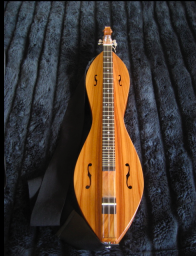
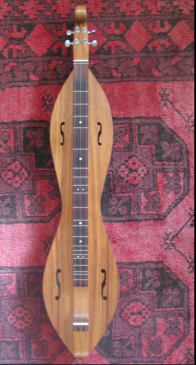
Hi everyone. This is my first post here in FOTMD but I sure am having fun so far. I have recently seen some photos of some beautiful dulcimers built by Bob McGowan. Is anyone familiar with his work or even own one of his instruments? I think he lived in the Memphis, TN area somewhat recently. Does anyone know if he is stilling building dulcimers?
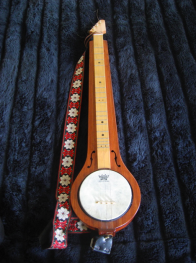
Hi Geckostar97, I have two Bob Magowan mountain dulcimers that I play regularly (a baritone chromatic dulcimer and a non-chromatic standard style), and my husband has a Magowan "jocimer" (banjo/dulcimer). We love these instruments! If you get a chance, get yourself a Magowan instrument and enjoy! 
That sounds like a good program, @Hugssandi !
@Dusty-Turtle I remember watching some Chinese cooking show on tv long ago, and one of the secret ingredients was... ketchup! I followed the recipes from the show and the result was pretty awesome. 
Thank You Ken. The links are very much appreciated.
Hi John-c Welcome to our wacky and wonderful world. I've added links to a couple of articles I wrote years ago, which you may find useful as you start your dulcimer journey.
I Just Got A Dulcimer, Now What? is an illustrated glossary of dulcimer terms (so we all speak the same lingo), plus answers to many beginner questions about tuning, playing, care and feeding of your new instrument.
Get Noterized is a beginner's guide to playing the dulcimer in a traditional (non-3-finger chord) style.
Uncontrite Modal Folker is a discussion of musical Modes and Modal Tunings and how they apply to the mountain dulcimer.
NSThoreau, I have the same exact same old Dulcimer Shoppe kit. It has a 28" scale length, and the tuners had a hard time holding the strings. I changed the tuners years ago, but my dulcimer still has a bit of a problem holding its strings at high tension. Not exactly sure why that was, but I wasn't about to spend another amount of $ on a third set of tuners, so I left it with my replacements, which are working ok. The instrument is made from quite thin wood.
If you continue with the problem, I might suggest you change to .010 strings for the melody strings rather than .012, since the thinner strings will be at a lesser tension. You also might want to try tuning to the key of C rather than D, which helps as well to reduce the pull on the strings.
Hello everyone. I'm John from Lawrenceburg, KY. I had a dulcimer back in the 80s. Not sure who it was made by, but learned how to play with a noter a little. I don't think at the time I really understood or appreciated the instrument so I traded it off, and my interests turned towards the guitar. About 3 years ago I purchased a Psaltery at the Gatlinburg craftsman fair and have enjoyed learning it. Just recently I came across a John Kinniard Dulcimer (pics attached). I sent John an email and did get a response. He was very surprised that I found one of his, but as I understand it he only makes very high end guitars now. I have a renewed interest in the Dulcimer now, and basically lost my mind over them. Purchased a McSpadden off ebay and anxiously waiting it's arrival. BTW if anyone has any info or experience with the John Kinniard Dulcimer please share.
Enjoy your Sweet Song dulcimer. Like John, I've assembled a few of them. They are a nice dulcimer. I do like the walnut ones.
Ken
"The dulcimer sings a sweet song."
I suppose I'm one of the "Strange Ones" that names their dulcimers. I have "5" with names (4 of them are named after my wife's grandmothers and mine). Louise, Lola, Gertrude & Mary Francis. My Tennessee Flat Box is "Jesse James" - named after my father (Jesse) and my wife's father (James). We never had a son to name J.J. --- 3 daughters instead and Holly, Krista or Bethany just don't sound like dulcimer names.
That's great that you could pick up that dulcimer "for a song". McSpadden/Dulcimer Shoppe makes a nice kit, and I've assembled several of them. Mine came out well each time. The plans are clear and the materials are good, unlike some other kits that I won't mention. Congratulations, and enjoy the newest addition to your family!
It's not a McSpadden kit, I have one. The sound holes are too big, the holes on the large bout are at the 12th fret [McSpaddens are at 14th] and the fretboard looks to be too wide.
My husband sent me a link to the Facebook marketplace yesterday. There was a dulcimer for $40. I felt sort of sorry for it and checked to see if it was still available. All I had to go on was that there was a label with a date of 1976 and that it was from Arkansas. I picked it up today. The owner bought it in the 70s, played a bit then just kept moving it with him. He decided it was time to let it go.
It's from the Dulcimer Shoppe, March 1976 and the label says the builder was A. Morris. It's walnut plywood, with those metal pegs that are slipping right now. And it needs new strings. Can I call it a McSpadden?
Thank you, Strumelia. I'm doing the August Foundation schedule from HASfit.com, and it is a perfect, safe startup. All the vids are free on YouTube, too! Solid program. I'm sore, but it's been a good week! Tomorrow = rest day.
Ken & Terry, I'm sure you will enjoy this soup. Don't be afraid to fiddle toward the finish and get the flavor just the way you like it. My wife actually adds ketchup, something I was radically opposed to until we were dining in a Mexican seafood restaurant in San Francisco one day and I saw someone adding ketchup to their own. If I overdo to the lemon juice or clam juice I will sometimes add some tomato paste. My wife and I both enjoy spicy food, and if we are the only ones eating I'll sometimes cut up a fresh jalapeno into tiny pieces, but you have to be careful with that since hot peppers vary so much in strength. Prepared hot sauces are easier to control. You can play around and see what you like. Bon appetit!
Good recipe there Dusty! Cold soups are a great thing to serve in the summer. I make several kinds, and may have to add your simple Cocktel de Camaron to the repertoire.
My wife has a big birthday tomorrow--the half century kind--but she and our kid are at Lake Tahoe kayaking and paddle boarding in the Sierra sun. So in anticipation of their return later today, I whipped up (little cooking involved) one of our favorite summertime dishes: coctel de camaron , Mexican shrimp cocktail. This is a cold soup, and the genius is that the base is spicy V-8 juice! The only cooking is the optional stage of boiling the shrimp. You can used pre-cooked shrimp, in which case there is no cooking involved, but I like to add some of the water the shrimp was boiled in to add extra flavor. This is a super tasty, super easy, very low-carb dish that takes a lot of prep only because of the time it takes to chop vegetables.
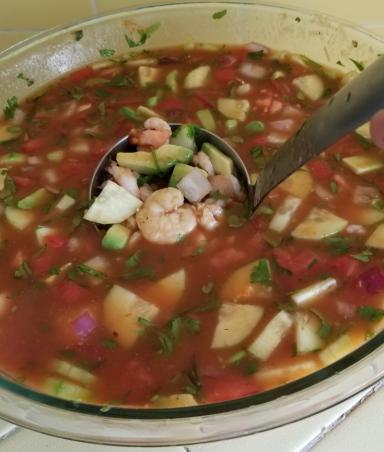
Ingredients (portions are flexible):
Spicy V-8 juice -- clam juice -- lemon juice -- shrimp, bay shrimp, or prawns -- chopped tomatoes -- chopped cucumbers -- chopped onions -- chopped avocado-- chopped fresh cilantro -- whatever spices you like (I use onion powder, garlic powder, lemon pepper, and salt).
If the Spicy V-8 is too spicy for you, use regular V-8 (or mix the two together). You can always add hot sauce such as Tabasco at the end, or offer it to be added to each bowl individually. It can stay in the fridge for a few days, so you can make a big batch to last, or serve it in small cups as a great appetizer for a barbecue or other warm weather soirée.
Excuse me . . . I'm gonna have some now . . . 
In some skills, I'm rank beginner. In others, I'm intermediate or above. Two things I'm always learning: the instrument, what it allows and its limitations and my ear. If I were to attend a workshop, I'd try to place myself in a workshop which would expand my knowledge of the mountain dulcimer itself and how I hear it.
Although noter/drone is the only style in which I play, exploring its limits is really fascinating to me. :)
Even the most basic beginner has wonderful things to teach a highly skilled professional. Over time, expert musicians can forget the bright joys of 'newness' one experiences when playing music for the first time. They can lose freshness and objectivity and not even really be aware of it. A beginner can remind us of why we play music to begin with. A true gift!
I've always felt that the idea of distinct levels of beginner/intermediate/advanced are very subjective and hard to separate. Also we all tend to undervalue our own abilities.
@dulcinina , if the music you make brings joy to the lives of others, then I'd say that's the only proof you need that you are indeed a 'real' musician in the truest sense. I wish we could just agree to add the joy factor into the criteria by which we 'judge' whether people are musicians or not. To me, that's so much more important than whether someone can read music or play in various keys. 
This discussion spoke to me in so many ways. I lead a small group of players because I just wanted to have someone else to play with. They consider themselves beginners and in some ways they are because of being new to the dulcimer. One is a retired music teacher (voice) the other played the piano. They know music theory. I do not. But I could get them started and they have taken a couple workshops. They are slaves to the written tab. They won't deviate or experiment. My other two players in the group just go with the flow.
I know the more musically trained get frustrated with me but I said at the outset "I am not a professional musician." I can get you started. But you know what? After reading this discussion, I say I am a musician. I play to satisfy myself, I play at the Alzheimer center and in nursing homes and I don'obsess about mistakes.
All really top notch musicians make mistakes. My mentor, a pianist and graduate from Julliard who knows nothing about the dulcimer, has trained me to keep playing regardless of mistakes and told me countless stories of famous musicians who make mistakes. Oh gosh, I'm rambling. I am going to have my group read this discussion and hopefully they'll relax a little bit.
And my friend from Julliard wants me to teach her the dulcimer. I am inspried by so many of you on this website. Thank you for all the insightful comments. Dulcinina
That's a great perspective, @john-keane. Instead of worrying about whether you have the skills for a workshop, consider whether the workshop has the skills you seek.
Nicely written John. I've always told people to go to classes which appeal to them, regardless of the rating. You may not master the topic now, but six months or a years down the road there will this "Aha!" moment when something you learned in the past finally "fits" what you're doing.
The topic of level "labels" has been a source of interest to me since the time I filled out paperwork to attend my first dulcimer festival years ago. This was a long time before Karen and I had any notion of traveling the country performing and teaching workshops. We were just professional musicians (on other instruments) wanting to learn how "not to stink" on this wonderful new instrument that we had discovered a few months earlier. We both figured out rather quickly that the level labels didn't really work for us at all. Even though we had less than a year of experience on the mountain dulcimer, we had a lifetime of musical background. We found that, as we looked through the course offerings, we seemed to fit (in most cases) anywhere from novice to advanced (depending on the class). The selection process and trying to declare a level label for ourselves was excruciating UNTIL we changed our perspective. We decided to approach the selection process in a "where do we want to be" manner rather than the "where are we" fashion. This decision literally changed our lives. Yes, it was scary. Yes, we were sitting in classes with students who had been playing for many years as opposed to our few months. Yes, we understood that the instructors wouldn't wait for us to "get it" before moving on to the next topic. With all of that said, we had a look at the payoff part of the dulcimer journey. We learned skills and tricks that we couldn't do well at the time, but we could go back home and practice them. We learned that the mountain dulcimer community is very helpful and accepting, and we met people all of those years ago who have become some of our best friends on this planet. ALL of this happened by changing our perspective concerning level labels and totally eliminating the frustration. I tell students all of the time that perspective is a weird and wonderful thing. Some might marvel at how people can come from all over the country yet sit down and instantly make beautiful music together while others might complain that all these people do is sit in a circle and play the same twelve tunes for a week. It's all about the perspective of the observer. We cannot control labels developed by others and where we fit (or not) into these categories, but we CAN control the perspective at which we view these labels and approach them in a manner that will benefit us (as players) the most. Sorry about the novel, but this is a topic near and dear to my heart. Please don't be afraid to venture into a workshop that a label declares is too difficult for you. The information will benefit you greatly if you take it and develop the skills at your own pace.
Just put the instrument on your lap. Play something. If it sounds good, do it again. If it doesn't, try something else. Don't be too ambitious, just try to find the melody for all those nursery rhymes we learned as kids. You'll get those melodies in a short amount of time and will be able to figure out more complex ones later on.
This is the very essence of learning any instrument. By continually experimenting with what sounds good and what doesn't, you build your intimacy with the instrument. And like any other skill, if you practice 15 minutes a day, you will learn your instrument. Your brain begins associating certain sounds with certain shapes and it starts to snowball. Before you know it, you are writing tunes and able to jam with confidence because you know your instrument.
Terry, ages ago I gave away my harmonica and the book I bought as I just couldn't get it. Wish I could as it's a small very portable instrument.
At the risk of turning this into a different topic, I agree with the practice part even though I never could get the hang of getting a harmonica to play just a note at a time. <Ptooey!> My Ionian playing of Christmas carols comes closest to this.
Memory and knowledge of what you want to play are a major factor. Also those of us who go beyond just a melody are probably dissatisfied with not being able to flesh it out.






 Uncontrite Modal Folker.pdf - 92KB