The Positive Thread...
OFF TOPIC discussions
Ken that's great news! It must feel so good to have your heart working properly now. 
Ken that's great news! It must feel so good to have your heart working properly now.
 YAAAY! Since your dulcimer probably isn't heavier than 8 pounds, you can keep picking it up as it's obviously helped you so far, Ken! If you have a bass or otherwise heavier instrument, let it be your incentive for playing again in May.
Dusty, sure, as long as I don't have to lift anything heavier than 8 pounds. Are you paying for my round trip airfare and other expenses?
Ken
"The dulcimer sings a sweet song."
Ken, I am happy to see your good news!
If PA is anything like OH, the thing which makes a person eligible for helping someone move is owning a pickup truck. It must be different where Dusty lives (than where I live). :)
That's great news, Ken. We're all delighted to hear it.
So can you help me move this weekend?
Today I saw my cardiac surgeon for my first, and as it turns out, my last post op appointment. I am doing so well with my recovery that he does not need to see me again. I can drive again. I still need to be cautious of lifting things for another 2 months so I do not damage my sternum. My heart is in great shape after the mitral valve repair. Look out world, I'm back! LOL
Thank you to all who offered good wishes, prayers, notes of concern , and phone calls during this time. It is greatly appreciated.
Ken
"The dulcimer sings a sweet song."
Lisa, you have a beautiful instrument. Bob Mine did excellent work. I do not think those cracks were there when he built that dulcimer. I think They are a function of age and humidity. I can't tell if they go all the way through the peg head or are just surface cracks. If the latter, let them go. If the former a little bit of thin super glue in the crack and some clamping will fix the cracks. Put new strings on it, tune it up, and play it. Enjoy your "new" dulcimer.
Ken
"The dulcimer sings a sweet song."
Lisa, this YouTube video shows a Mize dulcimer purchased in 1992 that has the same tuning pegs as yours. I think they are original.
About twice a year I treat my dulcimers to a rub down with Howard's Feed N Wax. The stuff is inexpensive and you can get it at any hardware or home improvement store. Here is Bing Futch demonstrating how he treats his instruments with the stuff.
If this were my instrument, I would clean it up, add the Howard's, and then put on new strings. I bet it will sing!
I agree with John. Those cracks do not look serious at all. They might have been caused by excessive aridity. Does the wood feel dry to you? Perhaps you could treat the whole instrument with some Howard Feed N Wax. I bet you it will help rejuvenate the wood.
Thank you for your response. I will search online for the product you recommended. The wood does not feel particularly dry to me. Depending on the light, the cracks are not as visible. That is why I did not see them at first. Maybe treating it will help. Would you try to go ahead and tune it as is? Also, what do you think of these pegs? Do you suppose they're original? The reason I ask is I read he mainly used wood pegs. Or maybe that was earlier than this 1984 instrument.
Lisa, the late Bob Mize was a legendary, quality builder of mountain dulcimers. There is no question about that. The number 1922 is probably the serial number, or build number of that dulcimer. Bob was very prolific. The crack you indicate on the peghead should cause no problems if it's glued properly. Mostly it's a cosmetic issue. How fortunate of you to find this beauty!
Thank you. I did read that and decided to purchase based on that information. My concern arose once I noticed the cracking. Could it have possibly been sold this way? I ask because the rest of the instrument is in such excellent condition. I have not attempted to tune it for fear of damaging it further. Also, I do not know how to tell if it is properly glued.
I agree with John. Those cracks do not look serious at all. They might have been caused by excessive aridity. Does the wood feel dry to you? Perhaps you could treat the whole instrument with some Howard Feed N Wax. I bet you it will help rejuvenate the wood.
Lisa, the late Bob Mize was a legendary, quality builder of mountain dulcimers. There is no question about that. The number 1922 is probably the serial number, or build number of that dulcimer. Bob was very prolific. The crack you indicate on the peghead should cause no problems if it's glued properly. Mostly it's a cosmetic issue. How fortunate of you to find this beauty!
I joined this site a few years ago after picking up an inexpensive dulcimer. I later realized it was most likely made in China. Following advice from this site, I changed the strings, and I could never get it to stay tuned. I spoke to someone fairly local to me and it was going to cost far more to make the instrument useable than what I paid so I eventually gave it up.
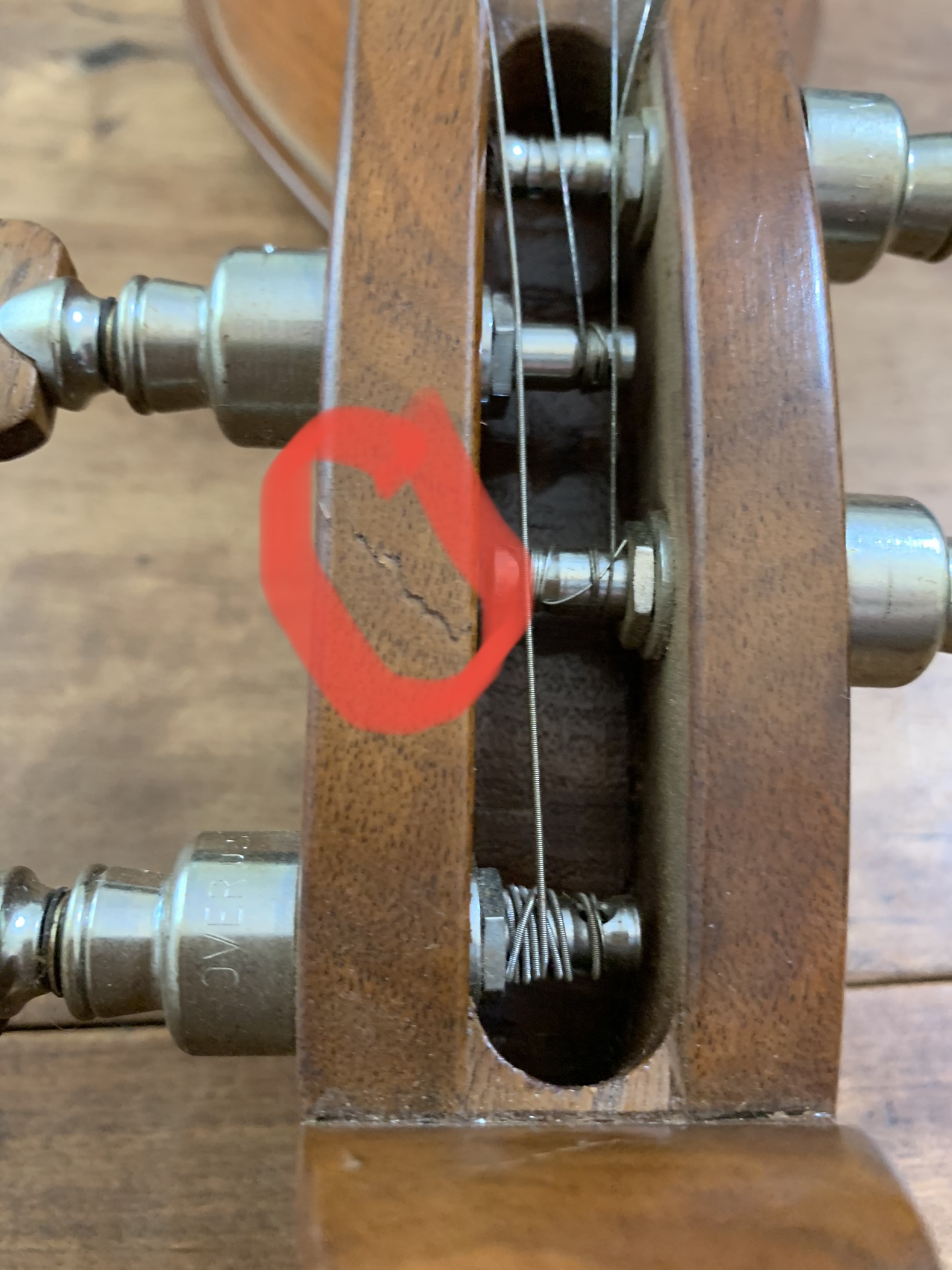
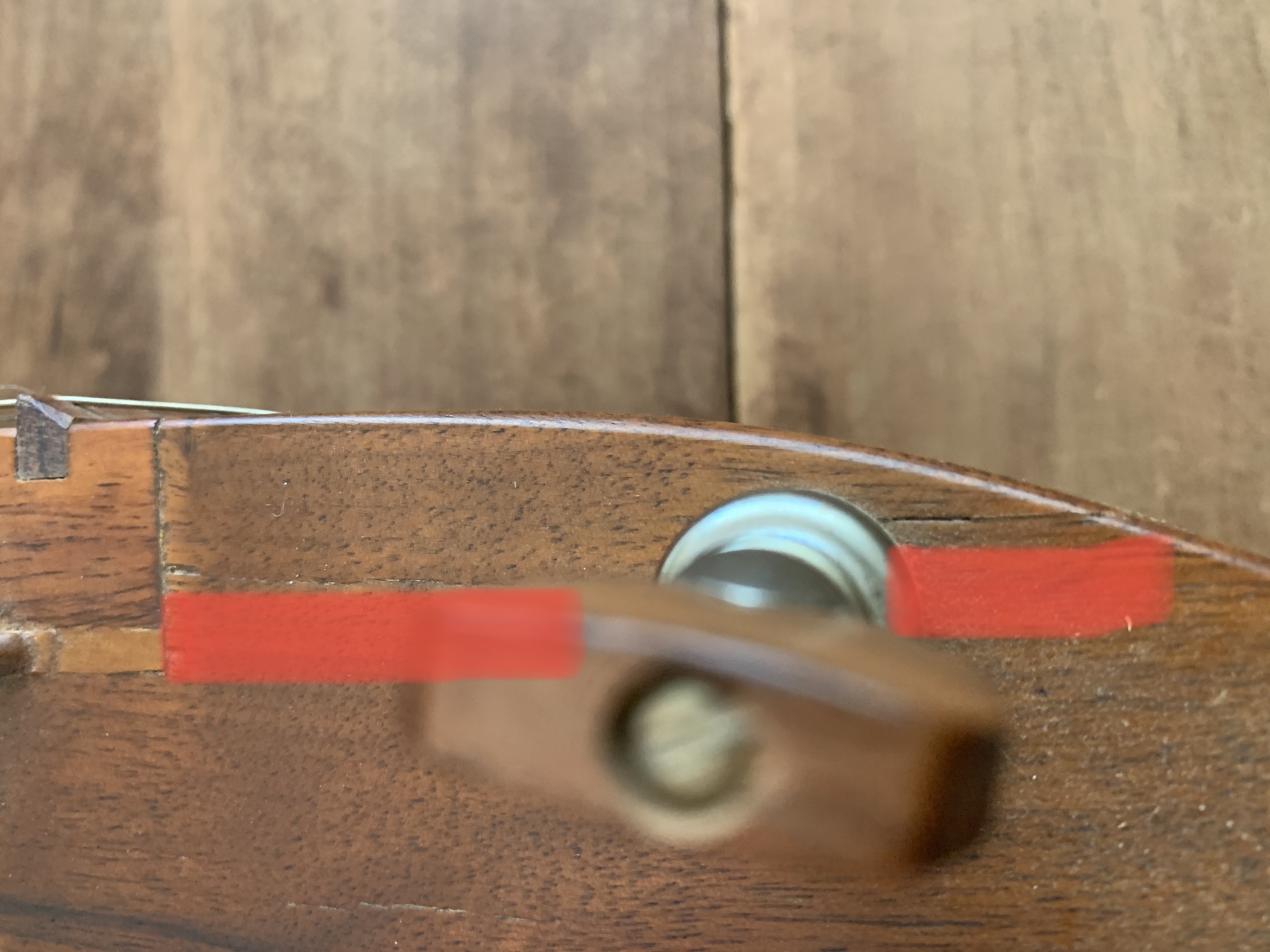
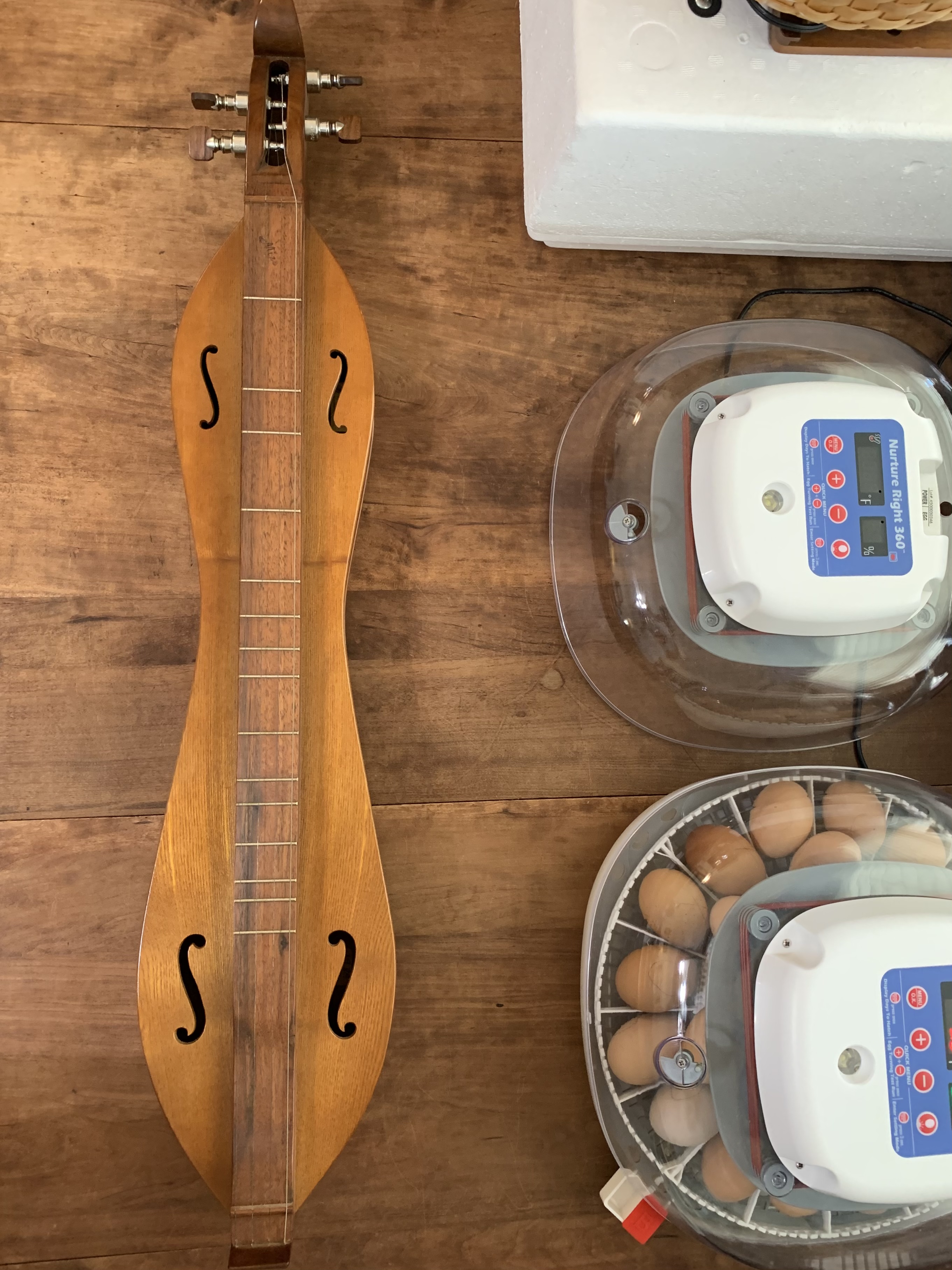
Yesterday, I happened upon a 1984/1922 Bob Mize dulcimer. I have no idea what the 1922 means. I researched the maker’s name and felt like this might be an instrument I could learn to play. I attempted to look it over well, but once I paid for it and got to my vehicle I noticed a place in the wood in the peg area. I can’t tell if this occurred when the instrument was made or if it was broken and repaired. The instrument has no other marks on it and I don’t know that it has ever been used which makes me think it happened when it was built. My concern is if I have wasted money. Are these cracked looking places going to make this unplayable? I appreciate your feedback. 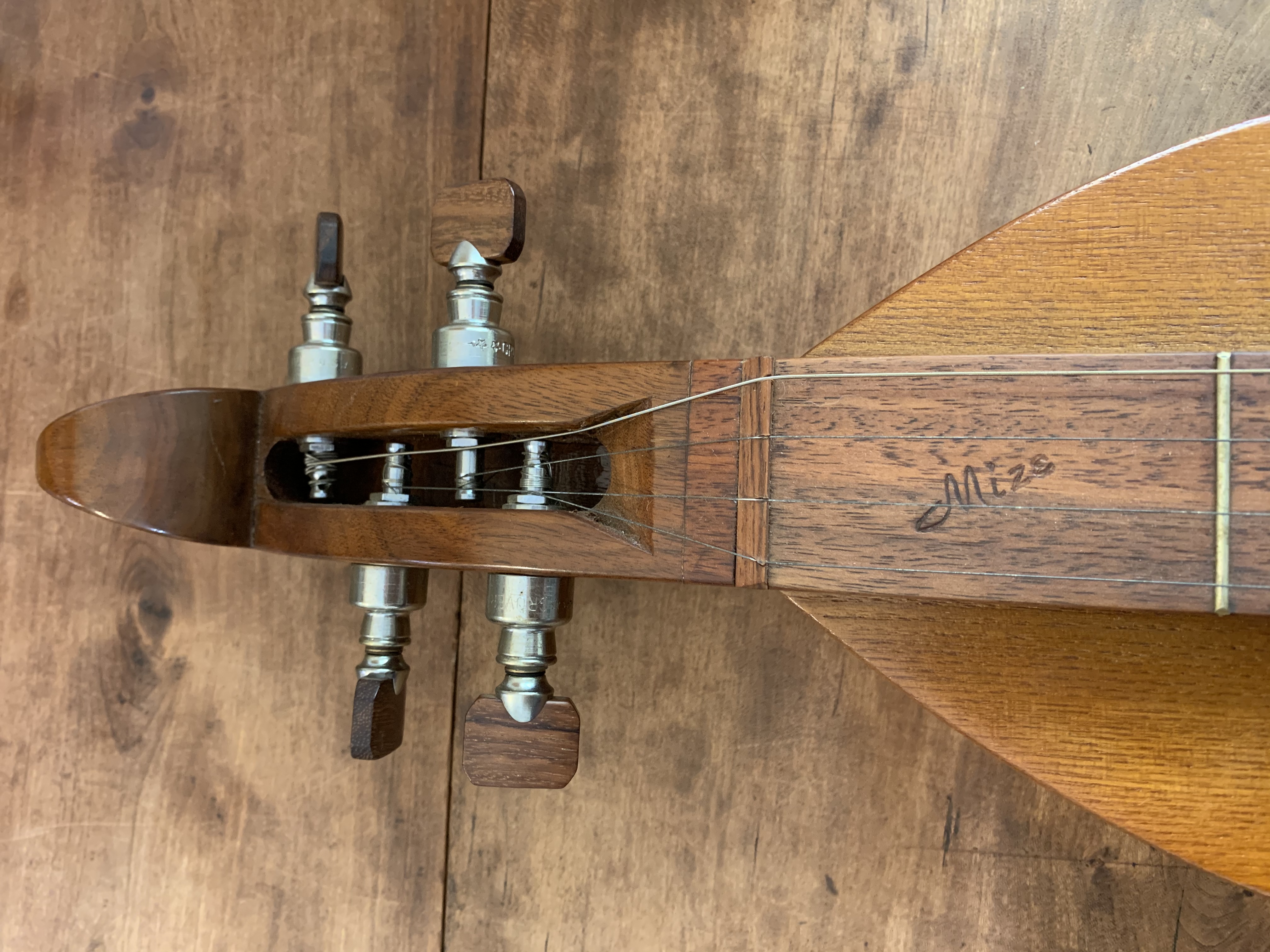
I have not yet registered for an on-line festival. I do get together with a few folks once a week on Zoom to play. The reason I haven't participated in these festivals is that I don't go festivals to take workshops. I go to visit with other builders or for conversation during and between workshops. I no longer feel the need to accumulate more tabs or pick up new playing techniques. It is the informal visiting and spontaneous jams that I enjoy most at festivals. Also, most festivals do not offer workshops that meet my interest in the history of the mountain dulcimer and its predecessors, the music of the mountains, or playing techniques that apply. Having said all of this, I am looking at participating in a festival in April which includes my interests.
Ken
"The dulcimer sings a sweet song."
Thanks for the info. I will experiment with cloth to see if that helps... But I bet the felt on the Legacy Straps will solve it. I'll be getting one soon.
Good idea. Happy to help...thanks to Dusty too.
Thanks for the info. I will experiment with cloth to see if that helps... But I bet the felt on the Legacy Straps will solve it. I'll be getting one soon.
Excellent point, Strumelia, about the specific thread titles! I do try to do that.
Dusty, thanks for mentioning the DPN festival directory! Actually, back in October I found a link to it on there, and before I knew it I was signing up for the Stephen Foster Dulcimer Retreat!
Hi Dusty! Yes, Wayne is a lefty. We lucked out when we visited McSpadden years ago that Jim Woods just happened to have a prototype of a courting dulcimer for a lefty and a righty. I knew we just had to have it.
And thanks for your continuing support for the podcast! 😎
Good point, @strumelia.
@ocean-daughter, you might want to check out the Festival Directory maintained by Dulcimer Players News . It lists nearly all the upcoming dulcimer festivals, most of which are online at the moment.
You guys seem to have figured things out nicely, but one more little tip- whenever you do start a new thread somewhere, it really helps to give the thread a very descriptive title. An example: instead of naming a thread "Strings?" it's better to be more specific like "Help with string gauges for baritone". This enables people to zero in on discussions of interest to them while they browse the forums. It also helps people in the future who are searching the site for answers, maybe years from now. :)
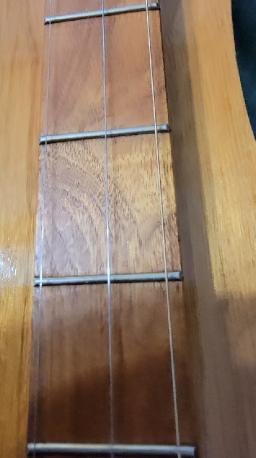
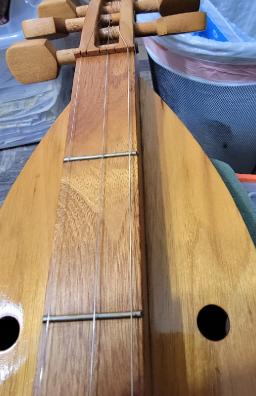
I wanted to give an update. I was using this dulcimer during some Quarantune workshops, and while listening to the instructor(s) I was kind of idly scraping at the adhesive with my fingernail Well, by the end of the second workshop, the adhesive was just about gone! I rubbed at the remains with my finger to finish the job. The fretboard looks great now, and I'm happy to say there were no rectangles to show where the fretboard had darkened around the labels.
On the subject of adhesive, I have another dulcimer, a Black Mountain by Dave Johnston, that had residue where a strip of duct tape had been put across the back for some reason. (It came to me via eBay, so the prior history is a mystery.) I tried a bit of cooking oil on that, and also scraped with an old credit card, which was quite effective. The dulcimer needs refinishing, so I am thinking of contacting Mr. Johnston to ask for his advice.
Hi again Dusty! I guess my topic is more like the good/bad of online festivals. Sometimes the organizers haven't posted their event on the event pages--maybe they need a publicity person to do that  --so posting there wouldn't be very effective.
I'll try starting a discussion in the General forum. Actually I have managed pretty well with the technology. And I'm so grateful for the chance to keep getting inspired without having to travel. I hope to get in on the Berkeley Gathering in a couple of months!
Once again, Ocean Daughter, I want to commend you for thinking about this issue rather than just posting somewhere arbitrary.
You are right that FOTMD works very differently than Facebook, which often centers on a constantly scrolling stream of recent posts. We do indeed try to organize things here so that people can find material (hopefully) rather easily.
There is in fact a listing for the DAA virtual dulcimer festival in the Festivals/Gatherings area. You can find it here . However, you'll notice that other than a few comments I made, little discussion is found there, and that listing will disappear a few days after the festival ends.
If you want to start a a general discussion about the good and bad of online festivals or something like that, I would suggest using the General Mountain Dulcimer or Music area in the Forums. But if your question is really specific, like what kind of equipment you need to be able to take part, you might consider joining the Technology/Software/Amplifying Group and starting a discussion there. Note in general that we have lots of groups on specific interests, but you can only see the full discussions there if you join the group.
And just to warn you, I have taught at a few online festivals and attended a few as well, so I will likely join your conversation wherever you post it.
Okay, thanks, Dusty! I'll have a quick look at the previous pick discussions, and see which would be a good fit.
Hi Ocean Daughter. Many people--especially those new to the site--would just start a new thread, not bothering to look to see what people have already discussed, so I applaud you for even noticing that there are many older discussions that are still relevant to our concerns today.
My suggestion would be to tag onto an older thread if that discussion is really close to your own. We don't need a dozen discussions all about how to avoid pick clack, for example; one will do. And one advantage to adding to an older discussion is that everyone who took part in that original discussion will be notified about your comment, so you are likely to get responses pretty fast. And don't worry about how long ago a thread was active. You can rejuvenate it!
But if your topic is is just loosely on the same general subject as an older thread, then you might start a new one. Too many discussions start on one topic, a topic clearly identified in the subject line, but then people tag on semi-related comments, and the discussion meanders too far from the original idea.
Either way, once you post your comment will show up on the main Activity Feed so people who log on will see it.
(Another question!) This weekend I'm attending my fourth virtual festival (the one hosted by the Dulcimer Association of Albany), and I was wondering about chatting about virtual festivals on here. I haven't seen any discussions of festivals. Is that something that would be okay to post about, and where?
Is there a place on FOTMD that I just haven't found yet, or do people mostly do their chatting on the Facebook page of the particular festival? Or in the other Facebook dulcimer groups? I feel like a forum gives a place for more "focused" chat, in that the threads "stay put," whereas Facebook posts are sometimes harder to track down (and sometimes I don't have the mental energy for Facebook!).
Hope to see some of you "in" Albany!
I have been doing a rather extensive project of trying out picks on my dulcimers to see what sounds I liked, and wanted to chat with forum members about their pick preferences. I know there are some older discussions about this. Do you prefer that I tag onto one of the older ones, or should I start a new one?
I personally feel that if it's been a couple of years since a thread was updated, I'd just as soon start a new one rather than add onto an old discussion. But I know that different forums have different feelings about this.
Wayne's a lefty! Patricia, I've been looking at the picture of your McSpadden "courting" dulcimer and trying to figure out why you don't just call it a double dulcimer since both fretboards go in the same direction. Then I remembered: Wayne's a lefty!
That looks like a beautiful dulcimer, by the way.
And I've really enjoyed the last couple of episodes. Each one is a gem.
Actually, my daughter worked in the honeybee dept during her studies at Cornell before I kept bees. But... it's true I kept a couple pet tarantulas at home before she went off to college. 
I think it's super cool that your daughter is cultivating a plant collection in her room during the pandemic.
No surprise that the daughter of a beekeeper became an entomologist.
When i was a kid I wanted to be a naturalist when I grew up, but life got in the way. I guess that makes me a nerd. My older daughter does have a degree in entomology.. I suspect in part because i taught my kids to look under rocks and logs in the woods for bugs and spiders. :)
I was able to pick up a super cheap plastic spray misting bottle today while buying bread at our farm store. I misted my big split leaf philodendron 'Monstera'. 
I like the gnarly roots of the Ginseng ficus, too, but I wasn't sure my daughter would. And yes, that was Bubbles's favorite gift this past holiday season, although she thinks that makes her a nerd. 
Yes that's the same company (in tennessee) that my bonsai will be coming from Dusty. In fact, I had a hard time deciding between the ginseng ficus and the Golden Gate ficus they offer... they both look appealing. I decided i really liked the weird bulbous roots of the Ginseng one, though the Golden Gate definitely looked more like a real miniature tree. I like that they have a section on their website specifically for easy care/beginner bonsai trees, since no hobbyist wants to waste a chunk of money on plants that need expert care. Wow, your daughter must have been thrilled to get that gift from you!
The one I got my daughter is also a ficus, specifically a Golden Gate ficus, which is a variety that does well indoors. It came in a ceramic pot and was packaged in a remarkably careful manner such that not only were the plant and the pot protected, but the soil was held in place as well. I got it from an outfit called Brussel's Bonsai. I see they sell a Ginseng grafted ficus as well.
That's interesting that both of you mention bonsai... because last week I ordered a little bonsai tree online, and they are supposed to ship it out today. This is the first time I've ordered a live pant online and of course I worry about the cold but apparently they pack and insulate it very well and hopefully it will arrive without damage.
Do you two know what kind/species of bonsai trees you got?
The one i ordered is a ginseng ficus bonsai. Technically, the gnarly root is a ginseng ficus, with branches of a smaller-leaved ficus species grafted to the top of the roots. So, the best of two different ficus species together. I find that fascinating. Apparently, "ficus" is Latin for the fig tree family, which i didn't know.
I've had one cactus-like succulent for 14 years now, and it has slowly grown huge. It's a Euphoria Ingens/candelabra cactus (really a succulent). I repotted it only once when i first got it, and my plan is to finally repot it once the weather gets warmer. It'll be a monumental job, because the thing weighs about 35 lbs now and is about 4 feet tall. It's pretty impressive now. I'll need my husband's help in repotting that one!
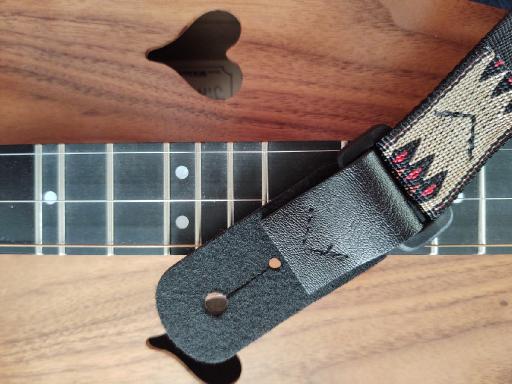
My stake make a lot of noise while I play. Are these straps quiet?
If you look at Dusty's response, he suggested that maybe the noise is coming from the movement of the strap end against the dulcimer. I just looked at the Legacy Strap end tabs where they connect to the strap buttons. On the Legacy Straps, they have a soft layer (felt-like) on the inside of the tab. I think this might solve any noise issue, if that's where the noise is coming from, for you. Here are a couple pictures that might help.

My teenage daughter has filled her bedroom with plants during the pandemic. She currently has over a dozen in there. And its a small room. Some are on the floor. Some hang from the ceiling. Some are on her desk. Some just sit on top of books. Since she attends school via Zoom from her room, I think they offer some comfort to her and liven things up.
Although we complain about going stir crazy, it's nothing compared to what folks have to deal with in places that get a real winter. We still go outside nearly every day to do yardwork, walk the dog, or just go jogging. But still, the houseplants help brighten up the space where we all go to work and also enjoy our life. One of the plants is a small bonsai I got her over the holidays. It seems to be doing well so far.
Thank you for the update, Dewey. Don't forget to change it's position from time-to-time so it darkens all over and not just on the top and one side.
Ken
"The dulcimer sings a sweet song."
The mystery of wood has been solved. Cherry doesn't darken if it's not exposed to light. This was in a case in a closet when it wasn't being played. Bob Lazenby contacted me and it is cherry. Upon doing some follow up reading, you accelerate the color change by exposing it to natural light, so....it is definitely darker today than it was yesterday. I'm going to hang it on the wall when it's not being played and let it age and darken.