The Positive Thread...
OFF TOPIC discussions
Thanks, John. I like that a lot. Did you come up with that yourself or is that some ancient Chinese saying or something?
Thanks, John. I like that a lot. Did you come up with that yourself or is that some ancient Chinese saying or something?
To "Dusty Turtle" & all of my friends at FOTMD:
"Like the turtle may you float in the hard times
and bask in the good!"
"To bask in something is to take it in, receive
its warmth, or bathe in its goodness."
Vocabulary.com
Great post from @Lisa-Golladay. I particularly agree with her thoughts of: "I suspect that newbies are overwhelmed by the usual festival offerings. It's one thing to navigate a busy festival in person; online everything looks harder. The website, the downloads, the class schedule grid, how will this work, do I need a webcam, will my internet connection be up to snuff, am I a "beginner" or a "novice" and can I trust this site with my credit card number? Really it's a lot to handle.
I believe LisaG is so right in that. Dulcimer festivals are intimidating to begin with in person/pre-pandemic, ...and full pandemic/zoom festival online scheduling and commitment is enough to scare away many potential beginners would are not absolutely determined. Note my use of the word potential. Beginners who have not yet bought a dulcimer can join FOTMD and learn a gazillion things and get encouragement from dozens of people before they even touch or order an instrument. So much to explore, learn, listen to, watch, and ask!
But in an online dulcimer zoomfestival, potential beginner players (some of whom may not even have dulcimers yet) would have pretty much nothing to actually do. I would think the experience would be confusing and discouraging.
I've always noticed that the majority of new members here on FOTMD tend to be brand new beginner players. As a lark, I just now explored the 12 most recent new members' profile descriptions as of today Feb 21 2021.
Of the 12, only 3 had been playing mtn dulcimer for a while already... and of course they all owned dulcimers.
That left 9 others. All of those described themselves as either a new beginner or had not even gotten a dulcimer yet. Of those 9 beginners, 7 already had a dulcimer or had ordered one and were looking for help in learning to play. Two did not make clear whether they had a dulcimer yet but they still said they wanted to learn to play and were beginners.
So, of the random sampling of 12 new members, 3 were already dulcimer players with some experience, and 9 were beginners new to the dulcimer and looking to learn to play.
The most critical thing is getting their attention in the first place.
Marketing always boils down to three questions:
Who are the people ready and willing to become your customers?
Where/how do you find them and get their attention?
What can you offer to meet their needs/wants?
You want to target beginners, but that's a big group and not clearly defined. Let's do some market differentiation.
Total newbies: Do not play an instrument, do not own a dulcimer. They show up at festivals or club meetings because a friend brought them, or they stumbled across an event that looked interesting. Where are they? Everywhere, but it's hard to find a lot of them at once. What do they want? They want to see, hear and (ideally) get their hands on a dulcimer. They haven't fully bought into this, so they can be scared away if you make dulcimers look too difficult or too expensive.
What can you offer them? Maybe an online concert. Maybe a 1-hour class where you show a few dulcimers, play a few tunes, talk a little about how to play, and answer questions. Make it free and easy to register. This audience is not motivated to scroll through a half-dozen web pages about festival schedules, workshop descriptions and registration forms. The kiss of death: "This is too hard, I'll just skip it."
Folkies: Whether they play, sing or just listen, we know they are actively interested in folk music. Where are they? Folk festivals and websites. What do they want? They probably have a vague idea what a dulcimer is. The message they need to hear is 1) they can learn to play one and 2) they can use it to play music they like.
What can you offer? They might pay to attend online concerts, especially with name performers and a mix of instruments. I've met a lot of folk music fans who profess no interest in dulcimer because they think it's too limited and can't play with other instruments. I would be sure to show them a wide range of playing styles and mixed ensembles. After the concert, point them to an online festival where they can learn how to play. The kiss of death: "I should learn guitar instead."
Musicians: They already play other instruments. Where are they? At the music store, the coffeehouse, online forums for their instruments and music genres. What do they want? A new instrument that's fun to learn... or expands their musical horizons... or ideally both.
What can you offer? As noted, the usual beginning dulcimer class isn't a great fit. At the Old Town School of Folk Music here in Chicago, they offered (pre-Covid) a popular one-session class called "Fear of Commitment Mandolin Workshop" for guitar players. Attendees borrow a mandolin for the duration of the workshop -- and they can buy mandolins after class ;-) Lots of people sign up because what have they got to lose? A few bucks and an afternoon, and it might be fun. The kiss of death: "This is a waste of time."
Unfortunately, all of these groups share a big problem: They Do Not Have a Dulcimer. What can they gain attending an online workshop? In live classes you can provide loaners, but how do you put a dulcimer into their hands over Zoom? It's relatively easy for people to find a guitar to borrow, and a beginner ukulele costs 50 bucks. Dulcimer availability is a major issue that limits how much outreach you can accomplish online. This leaves one more group of beginners who are, I believe, your best target audience:
People who have a dulcimer but aren't playing it. They bought it on a whim, they inherited it, or a roommate has one that looks good on the wall. Where are they? Could be anywhere, start with the folkies and musicians and maybe retirees. Contact sellers and ask who their buyers are. What do they want? Encouragement and a path to follow.
What can you offer? Super-easy classes and a supportive environment. Not a huge time commitment; if they were motivated to spend time on dulcimer, they'd know how to play by now. A single-afternoon workshop? A four-week introductory session? Drop-in play-alongs that do not require advance signup? The on-ramp can't be steep or they'll go away. The kiss of death: "Nah, this is for real musicians, not a duffer like me."
If you've managed to read this far, you're probably noticed I didn't recommend a full online festival for any of these audiences. I might be wrong, but I suspect that newbies are overwhelmed by the usual festival offerings. It's one thing to navigate a busy festival in person; online everything looks harder. The website, the downloads, the class schedule grid, how will this work, do I need a webcam, will my internet connection be up to snuff, am I a "beginner" or a "novice" and can I trust this site with my credit card number? Really it's a lot to handle.
I think it's possible to design a beginner-friendly online festival. It would need a super-simple website and registration process. Heavy promotion on well-targeted social media and websites. Great instructors (of course). At ukulele festivals, full membership can be expensive but there's usually a beginner class that's free and does not require advance registration. Just show up and we'll get you started. That's probably the best promise we can make.
For those who haven't watched, this show seems to be a continuation of a series on making your own "dulcimer" sandwiched in between a few songs by the second incarnation (1970) of Steeleye Span just before release of their second album Please To See The King.
The hosts idea of a dulcimer was to make a fretboard stick that would use a table top for resonance. I seem to recall this being reported as being done in Appalachia with standard dulcimers on occasion.
I only know Garry from our phone conversations over the years when I placed orders with him.
Ken
"The dulcimer sings a sweet song."
Who has experience with virtual, multi-instrument folk festivals today? Are there instrument specific "booths" or tracks? To me, and I'm pretty sure the younger generations agree, virtual festivals can provide exposure to new sounds. To be a "newbie", you have to have heard a dulcimer and want to make that music, too. After that decision is made, the internet makes the rest of the journey much easier.
Many members who were on Bruce Ford's EverythingDulcimer forum will remember Richard Troughear's sound experiments with mountain dulcimer. The following is a link to a photo and information about the first mountain dulcimer Mr. Troughear built while in military service in Vietnam. (Thanks to Anne Bowman, who shared the link on Facebook!)
Ken and Robin, thanks for your comments.
Ken, that's cool to hear you have a history with Legacy Straps. Do you know Garry, then?
Other points in response to others:
@dan, isn't it interesting that even around the turn of the twentieth century, the dulcimer was viewed as a disappearing instrument that represented a romanticized past? The dulcimer had only been invented a few decades earlier and was already seen as 1) very old; and 2) disappearing. Both assumptions were wrong.
@sgarrity, your experience at Quarantune mirrors my experience when I first attended a dulcimer festival. I had only been playing a few months and could not wrap my head around the diatonic fretboard. But because I had played other instruments, I did not need instruction on how to strum or how to fret the strings. It was really frustrating to find a workshop that fit my abilities. But those in-person festivals had something that Quarantune lacks: a chance for socialization. In between workshops, during lunch, and at the end of the day during the long jam circle, I was able to just meet other people, learn about their different playing styles, ask questions about the various instructors, and more. Quarantune lacks the social networking that is usually the most fun part of in-person festivals. There are ways to approximate that social experience at online festivals, though perhaps not at festivals as large as Quarantune. Anyway, to your original point, now that I teach workshops on my own, I often attend workshops not expecting to learn some new technique, but to see how other people teach. Most dulcimer players very quickly become informal teachers, as the many discussions here at FOTMD demonstrate.
@ken-longfiled, your experience is similar to mine. My monthly dulcimer club has grown online, but by picking up experienced players from around the country (and even a few from overseas) rather than gaining any newbies.
There are ways to approximate informal social interactions at online dulcimer festivals. Some of the smaller, regional ones have been doing this. At the Berkeley Dulcimer Gathering we thought very hard about how to do this. We had a Zoom "homeroom" where everyone gathered in the morning for informal chitchat, and Erin Mae Lewis was the "homeroom teacher." She broke us into smaller groups of 4 or 5 and let us interact a bit. I think that happened three times, so everyone got a chance to meet some of the other attendees. Then we also gathered in that same space at lunch time for an open forum when people could ask questions or just make comments. And at the end of the day, we gathered in the homeroom for a "jam" which, because of the limits of distance technology, was more like an open mic song circle, with different people taking turns playing songs. Others could play along, if they wished, and I certainly did. That homeroom was also open all and each time I popped in there were a few people chatting. At one point someone asked me a specific question about how I played a tune, and Erin Mae just moved us into a private room so we could have our conversation without forcing everyone else to listen to us. It's certainly not the same as being able to sit down with someone with dulcimers on your laps and share music, but I found the social interactions--even online--to be the most gratifying part of the event.
I found this discussion interesting. Since the pandemic I have had no orders for dulcimers from beginners, but I have made several for people who already own dulcimers. I have two folks waiting for instruments and once I get the go ahead from my cardiac surgeon, I will be back in the shop working on them. Over the last year I got together several times with dulcimer friends where we could social distance outside and still play together. Once a week I get together with a group on Zoom from another website. The leader plays the tune and the rest of us mute our microphones and play along. Leadership changes depending upon the song we are playing. So far no beginners.
I have not participated in any of the online festivals mainly because I don't go to festivals to take workshops but to jam and for the fellowship. I have stacks of tab from previous festivals and am no longer interested in attaining more. My interest has changed over the years from chord/melody style to noter/drone and exploring the history of the dulcimer. In other words, I'm more interested in interacting with people at festival, then participating in workshops. At in person festivals I have spent a good amount of time informally teaching beginners about their instruments. I don't think that can happen at online festivals, but having never attended on one, I may be wrong.
I agree that in this pandemic we need to be creative in attracting and teaching beginners. There are not many at the moment, but people continue to pick up dulcimer playing.
While not a total beginner player, I’m certainly new to the dulcimer world. I easily found info on the Quarantune festival. Facebook, love it or hate it, is a good place for sharing that kind of info. People will find you if your info is out on the web.
So then you are wanting to reach newbies while the quarantine is in effect? Maybe contact some social media influencers. If you can find one that supports the idea that a musical interest is good for people maybe they will put the word out. Maybe they would do a video of them getting some lessons showing how easy it is to learn.
Thanks, everyone, for your thoughts on this. Perhaps I should have specified more explicitly that my concern is about recruiting newbies while our festivals and club gatherings are online. I agree with many of the suggestions about setting up booths at other kinds of musical events, and we should do that once social distancing guidelines are no longer needed. But when we were able to meet in person, every festival I've ever attended had a decent crop of people who had never played before but were given a loaner instrument to use for the beginner workshops. Some of those people became enamored (as are many of us, I assume), eventually buying their own instruments and joining the community.
When my local dulcimer club was meeting in person, I almost always had a least one newbie every month. I specifically offered the first hour for a free beginner lesson, which allowed us to incorporate new people. I would always bring an extra dulcimer for them to use, too. Since we met at a music store there were often people who would see me setting up or playing a tune and ask about the instrument. I would sit them down, put an instrument in their lap, and show them a tune.
As my original post explains, similar spur-of-the-moment decisions could get newbies to come to festivals. I remember one newbie who borrowed a dulcimer I had brought as a loaner, completed her first workshop, and then asked me if she could buy it from me. I didn't sell it to her, but pointed her to a table where there were indeed dulcimers for sale. She bought one and is now a regular at regional festivals. That kind of experience could happen with in-person festivals, but it is not apparent how to replicate it online.
If we are all isolating at home and not interacting in music stores or town squares or the campus quad or the local coffeehouse, how can we reach people?
My fear is that the large, successful dulcimer festivals like Quarantune are great for providing the professionals an opportunity to make some money, which they badly need given the lack of gigs, and for allowing the many existing dulcimer enthusiasts to share their love of this humble instrument. But they do not appear to be good vehicles for the recruitment of newbies. Only people who already know about the dulcimer and already have an instrument would even know to register.
I've got to go now to send out an email about my dulcimer club's meeting later this month. No newbies will be getting my message.
sgarrity, i think a lot of the desire to encourage new players is due to how easy it is to teach someone the absolute basics. As a beginner mandolin player, my fingertips are always in pain and i struggle with anything past the most basic chord shapes. Practice is brutal and I've often been told it's considered to be a relatively difficult instrument, I'm only learning due to a strong desire to eventually have it in my repertoire.
It is a great feeling to speak to someone who is sure they just don't have the skill or talent to make music and just by sliding one finger around get them having fun making beautiful music on the dulcimer. So many times I've shown it to a friend or family member, got them messing around with it, and next thing I know every time I see them they are wanting to mess with it, until I eventually just give them one.
This seems to be a uniquely dulcimer related question. I’ve been playing mandolin since college, so 20+ years now. I’ve attended camps, workshops, and festivals across the country. And while I’ve helped new players many times I’ve never tried to get someone to play the mandolin. Or guitar, or banjo, etc. In the dulcimer world there seems to be a desire to spread the word about the instrument.
I attended the recent Quarantune online festival. Overall it was really well done. But for me personally the quality of the classes was kinda meh. One instructor was excellent. Another really good. The others seemed focused on just walking you through tab. I could have taught the stuff in the beginner and novice classes.
I think the untapped market is people who are already musicians of some kind.
There’s no real polite way to say it but dulcimers have a bit of a stereotype in the music world. It’s seen as the “easy” instrument for retirees to take up. I’m 42 and I was the youngest person by 20-30 years in most of those classes. I’m 100% for everybody making music however they can. But it needs a wider audience.
I agree that, when other multi-instrument festivals exist, there should be dulcimer workshops for beginners, possibly linked with an opportunity to loan the "cardboard dulcimers." (I remember attending a festival where that offer was made. I also remember thinking it was one instrument I wouldn't be trying!)
Beyond that, possibly dulcimer festivals would offer at least one FREE beginner workshop.
...as for newbies, I don't know.....
The dulcimore is a unique survival of antique musical instruments, and needs explanation. It is oblong, about thirty-four inches in length, with a width at its greatest of about six inches, becoming smaller at each end. Three strings reach from tip to tip, the first and second ones tuned to the same pitch, and the third one forms the bass string. Two octaves and a quarter are marked Out upon the three-quarters of an inch piece of wood that supports, and is just under the strings on the top of the instrument. The Mountaineer "toilers pickin'" it by means of a quill, with which he strikes the three strings at the same time with his right hand, over the gap at the larger end, at the same time using in his left hand a small reed with which he produces the air, or his "single string variations." The music of the dulcimore resembles that of the Scottish bag pipe, in that it is weird and strange. Under its spell on,e finds himself mysteriously holding communion with the gossamer-like manes of the long-departed souls of the palace of Lady Rowena Trevanion, of Tremaine. The dulcimore is rapidly becoming a thing of the past, because the Mountaineers are becoming ashamed'of the musical instrument that stands, with many other things, on the dividing.line between two civilizations. Only a few of them are extant. Within a few more years and this strange old relic of by-gone days will pass, to keep company with
The harp that once thro Tare's Halls
The soul of music shed,
Hangs now as mute on Tara'a Walls,
As if that soul were fled.
The Kentucky Highlanders from a Native Mountaineer's Viewpoint
By Josiah Henry Combs;
J. L. Richardson and Co.,
Lexington, KY 1913
This is exciting! Steven I remember pix of that checkerboard TMB too. How great to have a choice of three historic repros to bring to events. You are indeed fortunate. 
It might work to have a “dulcimer booth” at other events or fairs. It would give teachers a chance to do hands on instruction for newbies.
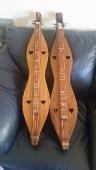
Thanks, guys! This'll be my third dulcimore from John....his first Will Singleton, a Tennessee Music Box with checkerboard on the back, and this Thomas replica!  .....I like his historic reproductions!
Dusty;
I kinda think you identified one of the primary sources of beginners in your original post, current dulcimer players interacting with potential players. It seems there is a need to motivate us to point new folks to appropriate 'sites. 
@strumelia and @robin-thompson, you both may be correct that many small dulcimer festivals were struggling before the pandemic. Especially if the organizers were growing older, it would be understandable that if no one else took over, the festivals would have to shut down.
But the two annual dulcimer festivals that I had been a part of were growing slowly each year over the last 10 years. And each year there were a certain number of people who showed up having never played a dulcimer before and needing a loaner. Their new-found excitement really energized everyone.
But the online festivals mostly lack those newbies. It is one thing to sit someone down, hand them a dulcimer that's already in tune, and show them how to play a few simple tunes. It's another to convince them to get a dulcimer, find a comfortable spot in their home, turn on Zoom, and trust that you'll be able to teach them. The online festivals require a level of planning that mitigates against the recruitment of newbies. I recently heard from the Dulcimer Association of Albany, which is holding its annual festival online next month. All the intermediate and advanced classes are full but there are plenty of openings in the beginner classes. Hmm ...
My monthly dulcimer club used to start each month with a free, one-hour, beginner lesson. Almost every month one or two people would show up who had never played before. And after the beginner lesson, our group play would start with more accessible tunes, so the beginners could play along, at least a little, and become part of the group. But now that we are online, I don't hear from beginners at all.
I wonder if we should start advertising dulcimer festivals on banjo and fiddle and native American flute sites or elsewhere online where we might start that spark in potential players. Then perhaps we could set up a network of people around the country willing to loan a dulcimer to people who want to give it a try.
Here in Ohio, one festival which was fairly large with well-known players traveling to teach there folded before pandemic hit. The people who organized the festival-- a monumental job-- decided to do so no longer. The folks on the committee were all in the over-50 age category.
Also before pandemic hit, another fest which used to be well-attended scaled way back and, I think, the reasons had to do with all the folks doing the work were older people.
Relatively speaking, the population of the mountain dulcimer world is an older population. There are great young people in the mountain dulcimer world yet the bulk of the population of players of which I am aware is a decidedly older population.
I seem to recall that for a couple of years before the pandemic hit, there were various in-person dulcimer festivals that folded due to not enough attendees. Knowing the reason for that might give a clue as to how to turn that trend around. What was causing this slow decline of dulcimer festivals before the pandemic?
Lisa, your plant points toward the promise of spring.....Robert
1. Glaringly obvious advertisement/schedule on a club home page.
2. I believe there is some way to boost internet search hits on the 'net.
3 Maybe Strumelia can come up with a way to advertise beginner classes, maybe a group or forum? I'm not sure the 'beginners group' would work very well because all posts move along in time, and sticky's [if made available] would eventually overload it. Maybe a new tab, 'Classes' at the top of the Home page, where the listing is for forums, members, rules, etc.? Inside could be all the different 'flavors: club, individuals. free, paid, beginners, advanced, n/d, finger,pick, flat pick, genres, etc.
At most dulcimer festivals, beginners--even those who had never held a dulcimer before--represented a decent minority of those in attendance. I once convinced a stranger to come to a festival after she saw me walking down the street with a strange instrument and asked what it was. On another occasion, I was driving to a festival with a friend who convinced her daughter to join us. When we picked up her daughter, we convinced her roommate to come, too. Both of those were spur-of-the-moment decisions the morning of a festival.
On a few occasions I've taught the rank beginner classes, what I call "Mountain Dulcimer 101" but what @steve-eulberg calls "String Side Up." (Steve is obviously far more clever and humorous than am I.) At the Berkeley Dulcimer Gathering we always made sure to have a beginner track, so newbies would move from the rank beginner class into a second class on beginning repertoire and then perhaps an introduction to basic chords or something like that. I always felt great pride in helping someone who had never played before realize the joy of making music.
But now that so many festivals have moved online, the presence of beginners has decreased enormously. Are beginners the roadkill on the dulcimer's cyberspace highway? A quaint relic of a pre-digital age?
Obvious obstacles exist. Beginners have to plan ahead of time to register and get an instrument. We can't just pull them off the street and put dulcimers in their laps.
It would be easy to assume that when the pandemic is over, dulcimer festivals will go back to the way they were, with everyone gathering in the same place at the same time. But I doubt that is the case. Smaller festivals have been able to reach a much larger audience by going online, and at the same time they've saved money by not having to pay travel expenses and rent venues. And many attendees at online festivals are not the same folk who attended live festivals, but because of location, mobility or other issues, they can only attend online. I moved my local dulcimer club online, but now at least half of those attending live thousands of miles away and have urged me to continue with an online gathering even after we can meet in person again. We have found new dulcimer players in our move online, but we seem to have lost access to beginners.
Online festivals are here to stay. I see our biggest challenge to be recruiting beginners.
So . . . what can we do to recruit beginners to dulcimer festivals and other online gatherings?
I am sure that people who can explain the difference between the aeolian and the ionian modes should be able to come up with some ideas.
Wow, @steven-berger, lucky you! John fashions those upside down hearts just right and I know it'll sound great.
Enjoy your new Thomas replica, Steven. I look forward to hearing a tune or two on it.
Ken
"The dulcimer sings a sweet song."
That's a beautiful dulcimer, John. Steven, bring that baby the next time we can all gather in Berea. Nina
Thanks, John! It looks great....hopefully, it'll warm-up a bit by the time I get it!
I eat with unamplified spoons. Will that get me on TV?
The solid body electric dulcimer played with a noter is a nice juxtaposition of tradition and modernity. Like talking on a cell phone while riding a horse-drawn buggy.
Interesting that they take a break from music to put some fretwire into a fretboard. I can't imagine that on American TV.
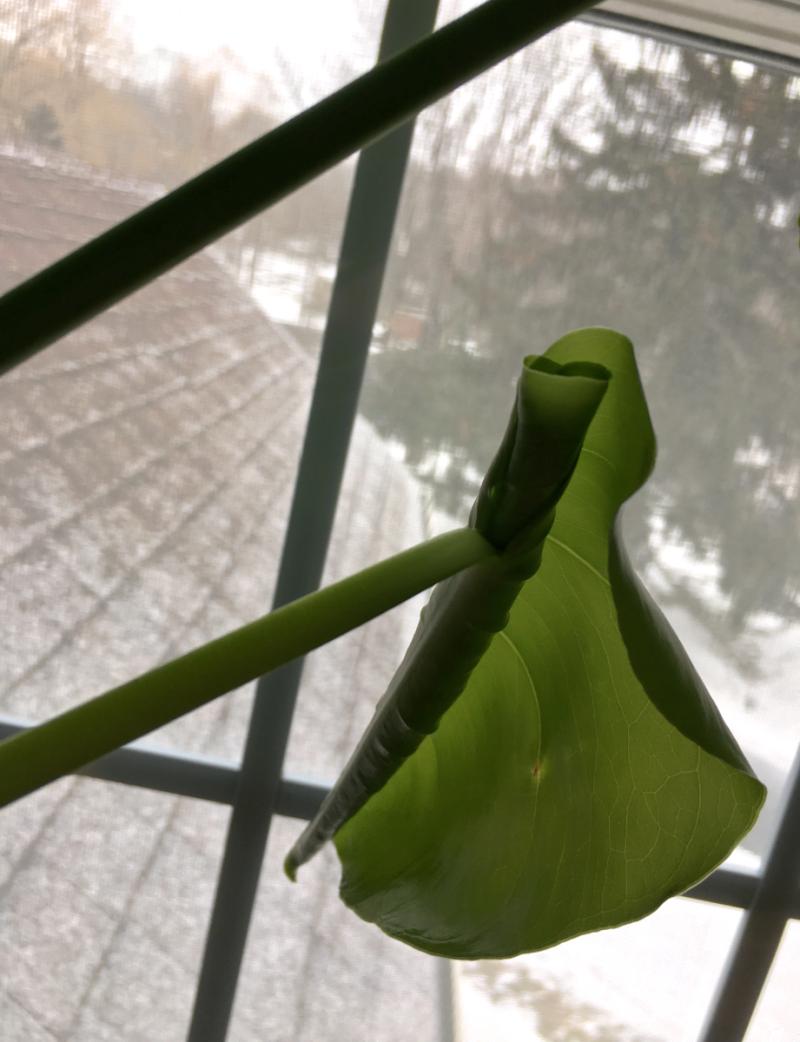
The tropical plant in my office is unfurling a new leaf. It looks so fresh and full of promise, especially now in front of the window pane with freezing snow and sleet falling on the other side only inches away... I love in the morning when the sun comes through the green leaves. The unfurling leaf reminds me of when a butterfly emerges from its cocoon and opens its wings.
John, I'm sure the new owner will be as happy with this Thomas reproduction as I am with mine!
Ann