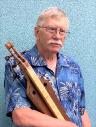
Hungarian Citera played with a noter
General mountain dulcimer or music discussions
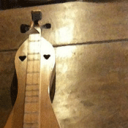
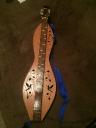
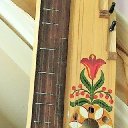
For anyone interested here is a link to my citera pictures on public access stored on "Tinterweb"
https://flic.kr/s/aHsmf7tizc
For anyone interested here is a link to my citera pictures on public access stored on "Tinterweb"
https://flic.kr/s/aHsmf7tizc
The factory was a furniture factory apparently so they would have a variety of local timbers available.
I have myself pondered the same question and suspect the frame is perhaps Ash which is generally easily carved, light in colour and not too heavy
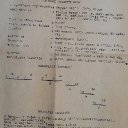
I am trying to attach some detail pictures but I first have to remember how BB system works and where they are stored meanwhile this is the Hungarian info sheet from 1981
A major bright side for me is extra time with my teenage daughter. In normal times the last thing she would want to do is hang out with her parents, especially now that she and her friends are getting their drivers licenses. But we spend lots of time together every day; I'm grateful for that.
I've also gotten to know dulcimer players from around the country in Zoom gatherings of various sorts. My "local" dulcimer group is no longer local as about half of the attendees each month are from all over the country.
Still haven't learned to sew, though.
Looking on the bright side- I'm guessing we have all become better cooks this year! Also maybe more knowledgeable and reading more? Perhaps started a garden, built things, or learned to sew, or bake?  I know I've been doing most of those things over the past 10 months.
Hi, all, up here in Ontario we are locked down again. We are finding that deliveries of the Pfizer version of the vaccine are going to be delayed a bit because of changes in production in Belgium. So the Provincial health authorities are talking about delaying second shots to 48 days after the first. Not happy about that, because of course the clinical trials approvals were as far as I know predicated on there being 3 weeks between doses. Lots of disagreement on that in the medical community, (which I follow because I worked in the hospital system up here for 35 years.) The only other vaccine approved by Health Canada is the Moderna. Johnson and Johnson is possibly going to get approved, no idea when. Astra-Zenica will be coming from Britain if it gets approved, but they are now racing the increased-contagion variant so who knows when.
Since I am retired from the hospital for 11 years now I am no longer covered by the health-system workers line, so no injection for me yet. At 74 years 5 months I am just a bit under the Group 1 line too, but that may change. Sandie is younger by 2 years but asthmatic. We will see if that makes a difference.
At this point, frankly, I would take the Cuban, Russian or Chinese versions. The wait is killing people!
In Arizona the governor checked on when the reserve vaccines that were released by the Government were going to arrive and how many. He found out that there are NO reserve vaccines, never were, and that nothing is coming. For Me I am waiting for the Johnson and Johnson single dose product. Too many unknowns about the second dose at this point, if there ever will be one, for the Pfizer or the Moderma. There also is the Astra Zenica coming. Needless to say I will have to wait anyways, if I ever do receive it, probably by 2022 for my age group. By then we will either know if the vaccine works, especially for the new B117 version.
Welcome to FOTMD, @nateprentice. You might try using a strap on your dulcimer. If you keep the strap tight enough, you have a lot more control over the positioning of the instrument on your lap and don't rely on your lap as much.
Thanks. I actually fashioned one using some brown paracord I had hanging around. It connects at the head with a bow knot that stays there, and attaches at the tail using a Marlin hitch knot, which is adjustable.
Well, here in Kentucky it is spitting snow and cloudy. I'm envious of those who get fresh fruit out of their yards. We are in the roughest and poorest part of the state in the hills. Very limited on fresh vegies and fruits.
We got our first vaccine injection last Monday. We are both over 70 and vaccine is crazy on how it's being given out. We are supposed to follow up with a second injection on Feb 1st for it to be effective, but not sure if it's going to be available now. If we can't get it then it's been wasted.
Some healthcare people are still not getting it. I don't know what that's about. The governor says things like, "we have given out more injections than we have vaccine." I tried to sort that out and know I don't understand the new math, but somehow that just doesn't compute for me.
Trying to stay busy by cooking. If we don't get out of this pandemic we won't be able to get out of the house because we can't fit through the door. I did make homemade bread which was great. I love doing that, just hate the clean up. It sure makes the house smell good.
I try to play at least a few tunes each day on the dulcimer to keep my fingers in shape since I sure haven't managed to keep anything else in shape. I tried changing some old tunes around and that's been fun some times. Some times a musician friend will call and we all feel about the same just wanting to get out and play.
I know I'm not alone in the world so reading all your comments help. I just hope and pray we all come out of this a little kinder and caring, but then most everyone in the dulcimer world already were.
BJ
Thanks Strumelia for seeing my cleverness. All joking aside, I wanted to share this with others for it took me a long time to discover how to do this. For those who may be interested in the three chords I use: F, Bb.& C my fingering for them is as follows: Starting with the top string and with the capo on the third fret: F= 3 3 3 or 5.3 3 Bb= 6 4 3 C= 4 3 4. btw I found that fingering the F chord on the dulcimer is a lot easier than on the guitar. I am afraid arthritis is catching up on and that is one more reason I am thankful for the dulcimer.
John, I look forward to hearing that from you! It's clever how you figured to first tune to C and then capo on 3 to get into the key of F. I think the key of F is probably the most problematic key to tune to on a typical diatonic dulcimer with 26-28" scale. Good for you! btw I too find it way easier to sing in F or G than in D.
I am trying to identify a vintage dulcimer made entirely of butternut, but the luthier used small wooden pegs to hold the sound board onto the frame. The pegs go into the support frame. I will post pictures, but I have no references to pegs / dowels approx 1/8" being used. Whoever made this loved butternut.
I am working on the hymn: "What a Friend We Have in Jesus". Hymnals have it in the key of F with one flat which puts it in a good singing range. I put my dulcimer into F by capo-ing on the 3rd fret while the strings are tuned C G C. I have worked out the three basic chords F, B, and C to accompany my singing of this hymn. I'll do the video of this hymn for FOTMD soon for you to hear and see what I have done.
Hello All,
The fruit tree post was wonderful . Our 3 Meyers Lemon Trees are heavy this year & so is our pink grapefruit tree :) I’ve been busy in the kitchen & put up 12 pints of Lemon marmalade . It takes almost a full day for only 6 pints . We have tried to encourage our neighbors to pick—but most of our usual pickers are staying indoors because it is cold & rainy. Also everyone in our neighborhood is having a bumper year for lemons —so it is difficult to find them homes :)
My good dulcimer news is I’ve been having fun experimenting in EAA & working out many A old time tunes —having fun with Grub Springs Waterbound Shenandoah Falls & Crockets honeymoon :)
Also had some frets pulled on my black walnut MMD & greatly enjoying playing it again :)
Here is some of our good news for this year (not going to mention any troubling or sad news because we all got plenty of all that )
1. Bob & I are finally going to be grandparents —Violet Juniper Hyder is due in February . This is our Daughter Natalie & Husband Will’s miracle baby & is the only grandchild on either side of the family . So far she is growing well, active & healthy & looked good in the genetic testing too —she’s already 4 lbs & the size of a cauliflower :) and Bob has quit drinking so he will be allowed to hold her—which is improving his health too :)
2. Bob & I have been fortunate in we live in Tallahassee which is easy to stay inside & to also have outdoor activities that are isolated in natural beauty —so we have not caught the virus . We got our first vaccines last Saturday from the local health department & have our follow up on the 30th :)
3. Looking forward to camping & festivals this summer & hope we’ll all be out & about & picking again :)
Hope everyone here is safe & well & picking a few new happy tunes too :)
Love & blessings,
Mary Z. Cox
Dusty, how wonderful that you have backyard oranges and lemons! What a blessing for health! I'm grateful to be able to buy the world's best fresh apples here here in NY. Long ago when i lived in Puerto Rico my neighbor had a HUGE mango tree and my kids and I ate them by the shopping bag full. 
I believe age 65 and up is group 1C. Lots of states have opened up for that group now, ahead of the original plan... including CA and NY state where i live. However, for example in our county there are 60,000 people, yet the govt has only been sending our county 300 doses per week for the past month and a half. Major fail. You can see where that's going... at this rate I'll die of old age before I get vaccinated! 
Hopefully vaccinating people will be given higher priority and speed soon. I can't wait to get mine!
Here in California, vaccines are available (in theory) to anyone 65 and over. But I think that's group 1B, whereas 1A are the frontline healthcare workers and those in assisted living facilities, and they haven't even gotten to all of them yet. But the next group is those over 50, so I'm hopeful that within a couple of months both my wife and I will be able to get the vaccine. Plans are already being made for mass vaccination sites in the parking lots of sports arenas, where you'll drive in and get the shot right in your car. Like drive-through fast food.
And I won't brag that we have two orange trees bursting with fruit here. The biggest one is a navel orange tree on my neighbor's property, but it's about 30 feet tall and he can't possibly eat all its fruit. Every week or so we go over with a ladder and pick a bunch. We have a smaller tree of valencia oranges, which are harder to peel and better for juicing. We also have tons of meyers lemons this time of year. Those are a cross between lemons and mandarin oranges, and have an almost tangerine-like sweetness. They make the best lemonade. For some reason, my lime tree fruits earlier, so there's nothing left now, although all three trees flower at the same time.
Strumelia; sadly had I been there your poor husband would have had to share all of his treats.
Here's to covid vaccines coming to a pharmacy or clinic near to all of us in the not so distant future! 
I try to plan my supermarket trips so that I hardly ever have to go- like once every three weeks or so. Between big trips i do occasionally stop into our (much smaller) local farmer's market to quickly pick up a few fresh things like bread, milk, eggs, and apples.
Today was one of my big supermarket trips. It's a big project, especially when I get all those bags of stuff home! Pretty much takes up half a day.
There are things that we so much savor, now that we don't have them as often. For example this evening it was sooo nice to cut up a gorgeous juicy navel orange and eat it slowly- it was so good! And my husband was excited to have a tub of real guacamole to put some in the tortillas he likes to make for himself, along with his favorite pepperjack cheese. And we now each have 2 pints of our favorite Ben & Jerry's in the freezer as a treat! Brian's is always ChocolateFudgeBrownie, and mine is CherryGarcia.
The pandemic has taught us to really appreciate fresh food and having access to it.  We're lucky indeed.
David, can you tell what type of wood is used the construction of you citera? It looks like some of it might be birch or maple. BTW, thanks for sharing the video and the photo.
Ken
"The dulcimer sings a sweet song."
It is interesting to see the underside fo the citera. The board with the holes in it reminds me of one of my zitters that has a board with two holes in it, but rather than being perpendicular to the top as the one in the citera, it parallels the top. The woman who plays in the video is a very skilled player. I enjoyed her smile at the applause when she finished playing.
Ken
"The dulcimer sings a sweet song."
They are apparently all constructed in a similar fashion with no back and need a table for a sound board
This is the underside of mine which was made in the government factory
[img] https://www.flickr.com/photos/99248490@N05/25298908127/in/album-72157693231671105/ [img]
Dave your citera looks delightful! 
This one is mine [in case the picture is lost]
In the beginning of the video around 0:22 when she comes on stage you can get a glimpse of the instrument.
How wonderful this is!! Delightful and amazing in every way!!
Love how an entire crew of men reverently bring the required playing surface to the Little Queen. 
She deserves to be worshipped. The Hungarian Bonnie Russell?.. arguably even more skilled.
BTW I want that skirt, for contra dancing. And her faceted garnet necklace. 
I have just returned to FOTMD and saw this wonderful insight into my citera which I am ashamed to say I have never done anything with since I bought it on Impulse in 2018 [Un-played and very cheap]
Mine is tuned to open G and a noter on the diatonic half of the finger board would work but how you could adjust the noter to play on the chromatic half of the board I find difficulty in imagining!
Perhaps I have found another lockdown task?
@nateprentice, I liked listening to your Soundcloud link! Welcome to FOTMD!
Welcome Nate! As Dusty says there are ways to keep the dulcimer more stationary. Another option besides a strap is a stand or lap-height table like a TV tray that supports the dulcimer so that you do not have to.
Welcome to FOTMD, @nateprentice. You might try using a strap on your dulcimer. If you keep the strap tight enough, you have a lot more control over the positioning of the instrument on your lap and don't rely on your lap as much.
Hi all! I’m Nate Prentice from the Philly suburbs.
I’ve been playing Dulcimer for about 2-3 months so far. I play multiple instruments, but am no expert. For now I’m learning the keyboard and trying to get the hang of the angle of my hand on the lower frets when playing chords. I have a short lap, so it is work. I’m trying to create a small Xmas album as a gift to friends. Here’s a sample:
https://soundcloud.app.goo.gl/hgoZWw8ZWLrvNSSd8
Nice to meet you all.
Nate
John, you're right that since tab has the lower notes up higher and the higher notes down lower it can be confusing for those of us who learned to read standard music notation. When I teach newbies I remind them that if you just lay tab flat in front of you, the three lines are in the same order as the strings on your dulcimer, so it's not as unintuitive as you might think at first. What's reversed is the dulcimer itself.
Most of the tab these days has both standard music notation and dulcimer tablature, so you can see the relationships between them. I try to envision that kind of tab as bookmatched wood, as though they are mirrors of each other.
Yes, TablEdit does automatically what you are talking about. When you put the tab into TablEdit, the software automatically identifies the corresponding notes in standard music notation. If you don't care about saving files, you could download the free version of TablEdit. The free versions just limits you to 16 measures or something like that. BUt you could always print out a song and then start over, using the free version forever.
But I'm not the best person to answer your question. I can use tab or standard music notation as a reminder of how a song goes, but when I play I can't follow either one. I have to look at the fretboard and play by ear. I can't really sight read very well at all, though that's a skill I greatly admire.
Sometimes I have found that reading dulcimer tabs can be confusing. If you use three lines to represent the three stings and say you are in a 1-5-8 tuning your lower notes may be on the middle of top line. This is the reverse of regular musical score. I have found that if I use my chromatic tuner (Korg) it tells me what note I am sounding on the dulcimer so then I can translate this into regular musical score. It makes it easier to tell which note is really up or down. I know that there is something in Table Edit to help you here and there are probably templates that can help in translating tab to musical score or vice versa. I have found that using the chromatic tuner is a simple way for me. Perhaps others have other suggestions?
To give you an impression of the sound I just uploaded my take on Greensleeves on lute guitar:
Greensleeves on lute guitar
The recording is quite rough and my playing has room for improvement but it should be sufficient to get an idea.
I like to rough the staple board and let it set in the shop for about a year, you will know if it's going to have any movement in it by then. I too relieve the bottom with a forstner bit.
I share my musical noise places, too, so understand. :)
I prefer quartersawn wood, with the grain running at close to right angles to the FB.
I also hollow using a Forstner bit, but with holes leaving 1/4" or less on either side, and nearly touching down the line, and I seldom get any warp. I've had solid boards warp in almost every direction possible. I think a flahysawn fingerboard glued up before drilling holes helps with stability.
Bill, this is not quite a response to your question. My fretboards have an intermediate step between hollow and sold. I use a forstner bit and drill 3/4" holes every inch. Occasionally, the fretboard will warp after drilling the holes. So far, nothing I can't fix with careful sanding.
I prefer that the grain runs horizontal to the soundboard. Again, I have not done any testing of alternate grain patterns. Now that you mention it. I will try running the grain the other way on my next build.
Well I also share my noise on other social networks and I'm a kind of number nerd (no wonder I studied Computer Science) so I'm intigrued to find out how many of my Facebook-Friends etc actually molest their ears with them 
For fotmd I just uploaded the files via Audio upload. A small inconvenience but it could be worse.
Jost, don't concern yourself with the number of plays/stats on Soundcloud; I'm guessing they are really only meaningful if you are trying to make money off your recordings. If you wish, try putting your settings there back to "Public" and if your account allows it, disable public comments.
Thanks Robin, this explains a lot. I got 150 plays for my tracks during the first day. Would be quite flattering If it had any real meaning. So it just shows that sound cloud is better in attracting spammers then actually do something against them.
I changed the privacy setting to get more realistic stats. Sadly this resulted in invalid soundcloud links here  And I can't change the url here to the new ones, so I will have to delete and readd them.
Thanks again for the answer
Jost, I have taken to disabling comments on SoundCloud. I, too, have experienced what you describe.