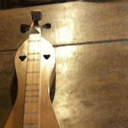
New McSpadden Flatwater Dulcimers
General mountain dulcimer or music discussions
The Flatwater looks and sounds great! Thanks for the information, @susie!
No problem. Thought it would be fun for people to see.
The Flatwater looks and sounds great! Thanks for the information, @susie!
No problem. Thought it would be fun for people to see.
The Flatwater looks and sounds great! Thanks for the information, @susie!
At $265 it's not a version of a $75 cardboard dulcimer! Call it an Entry Level instrument. Good to see though that they're being more frugal -- using not necessarily uber-attractive pieces of wood for their own builds.
I know it's not a version of a $75 cardboard dulcimer! THEY were explaining in the video how it came about. They wanted to create something like a cardboard dulcimer. But through the process, they decided they wanted to take it a step further and have the quality of a solid wood instrument. They even admit that they never accomplished the task of creating a cardboard dulcimer. The video gives the whole story and they call it like it is. (The link works for me, because I have a FB account. I'm not sure it it works for everyone.)
At $265 it's not a version of a $75 cardboard dulcimer! Call it an Entry Level instrument. Good to see though that they're being more frugal -- using not necessarily uber-attractive pieces of wood for their own builds.
Scott, I've attached here what I have so far. The A part is pretty good but I don't really have feel for the B part just yet. Because the tune is in A mixolydian you can't really play it in a drone style tuned DAd or DAA since the drones should be A and E rather than a D. In this arrangement, the chordal accompaniment is always found below the melody, so if you just want to play single notes, always play the highest note.
And if you have suggestions for revisions, let me know. I'm going to keep working on it and if I decide major changes are necessary, I'll re-post here.
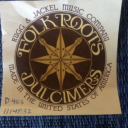
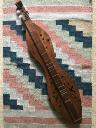
McSpadden will be releasing their new Flatwater dulcimers this friday (Black Friday). It is their version of the "cardboard" dulcimer, though it is of better quality, made of solid woods. It will have a 26" vsl and will have 3 strings. This is their way of creating a simpler, less-expensive dulcimer using woods that they wouldn't otherwise be able to use on their standard dulcimers, because the pieces of wood wouldn't be big enough. It will start at $265, which includes a case. They will be choosing the woods out of their supply and will use the woods that sound good and look good. They announced it on Facebook today. I have no affiliation with McSpadden, but just thought I'd pass this along to the group.
https://www.facebook.com/McSpaddenDulcimers/videos/1082866002137021
I was wrong. The tab I have from Steve's book is "Squirrel Heads and Gravy". I can't believe I never noticed that "Squirrel Hunters" and "Hail Against the Barn Door" are the same tune, as I have loved the tune for years. Gettin' old I guess....Lol! Dusty, I would love to have a copy if you don't mind. Thank you so much!
Though he hasn't built any in some time, Jim Good made some carved dulcimers which would have a curved back. There are clips of him in the dvd The West Virginia Hills - A Tribute to the Dulcimer from Augusta Heritage Center (at Davis & Elkins College) working on one of them (I think)-- been awhile since I've watched.
Thank you Dusty. I actually think I have tab for "Squirrel Hunter" in one of Steve Seifert's books, but I will have to check after work. I'll certainly let you know.
I have experimented with the side to side curve, trying anything from no curve to 1/2 inch. Getting the back to curve more than 1/4" almost always causes the back to crack. A technique that helps with this is to bend the back when the wood is raw and apply a penetrating finish. This seems to fix the bend in place.
Instead of a curved back, I angle the sides making the tail 1/2" deeper than the head.
Scott, the same thing happens to me all the time. I hear a piece of a tune and want to learn it but then at some point realize it's way more complicated than I thought. Once I spend hours tabbing out a long Irish tune, going note by note, and then with about two measure left I realized the melody went way down below the bass string, so it wasn't even possible to play on the dulcimer. I was so frustrated!
I have tabbed out in a chording style playing across all the strings one of the versions of The Squirrel Hunter that I found in SMN. It is pretty similar to Hail Against the Barn Door. If you're interested, let me know. I'd be happy to share it so long as you understand that it's a work in progress. When I tab out a tune I don't know that well I have to play it a bunch before I get the right feel, and then I adjust the tab based on how it felt under my fingers. I don't quite have the feel for the B part of this tune yet, so the tab will surely evolve.
I agree with Dusty.
When I said I have different keys covered, it's because I have standard dulcimers that I mostly tune to D; a baritone that I mostly tune to A; and a Ginger (small dulcimer) that I mostly tune to G. Of course, any of them can be retuned as needed. So I like having several different types of dulcimers (voices). Also, the McSpaddens are the traditional, less-deep style; 2 have galax backs and are deeper bodied; and one is in-between (and also has a pickup installed for small gigs). So like Dusty, what and where I'm playing often dictates which dulcimer I play. Two dulcimers usually accompany me to festivals.
First, let's keep things simple.
The most common keys in old timey, folk, or bluegrass jams are C, D, G, and A. With a standard-sized dulcimer tuned to an open D (DAA or DAd), you can obviously play in the key of D. You can capo at 3 to play in G or capo at 4 to play in A. And you can tune down to CGc or CGG to play in C. (And there are other ways to get those keys as well, without switching instruments. You could, for example, tune DGd to play in G, although if you chord and/or fret across all the strings that tuning will require some adjustments.)
So for 90 percent of your playing--even in multi-instrument jams--you only need one dulcimer.
However, I will be honest that I often bring 2 dulcimers to jams. One a standard dulcimer and one in the baritone range. The standard size dulcimer can usually be tuned anywhere between C and E. The baritone can usually be tuned anywhere between F and A. If we add the half steps in between those ranges, we get 10 keys, the only ones missing are B and Bb. And you can finagle (is that how you spell that word?) around to get those keys as well. For example. if you tune a standard dulcimer up a half step to Eb, you can capo at 4 to get Bb.
So there is no need to get multiple dulcimers for multiple tunings and multiple keys. Even without using a capo, you can get 10 of the 12 possible keys with dulcimers in two tonal ranges. (One of my baritones can get up to Bb as well, but be careful and wear protective goggles if you try that on your own.)
However, I have several dulcimers. Why? I find different kinds of playing sounds better on different kinds of dulcimers. I love my Blue Lion for fingerpicking, but don't think it sounds so hot flatpicking. I love my Modern Mountain Dulcimer for flatpicking, but find the action is too low and the strings too close together for fingerpicking. I have one dulcimer that originally came with six strings, and it sounds great on those tunes with tons of strumming. But playing more nuanced arrangements with lots of precise picking and lots of hammer-ons and pull-offs, those double strings just don't do the job.
So don't go buying different dulcimers for different tunings or different keys. It's completely unnecessary. However, you may find that as your playing evolves, you develop different preferences and one or another dulcimer may be great for one tune played in a certain style but not for other tunes. Getting multiple dulcimers to please our preferences, though, is a luxury, not a necessity.
There are two curved backs of course which can be utilized separately or together. Curve from fore to aft; and curve from side to side. Each by itself is easy enough to incorporate into a design. I've seen dulcimers with 1/8" rise from side to side or head to tail. Several builders incorporate one of these two techniques to help direct the sound upward (to what degree this is successful I don't believe anyone has subjectively proven).
A 'bowl back' is hard to accomplish unless the builder starts with a thicker plank and "carves" the bowl shape into what will become the inside of the instrument. This is done the same way a violin top is carved -- with chisels, rasps and sanding. I don't know anyone who does this for backs-- it is certainly time consuming -- but Ken Bloom does it for the soundboards on his bowed dulcimers, but not, I think on the back.
I have noticed several builders are making their dulcimers with a curved back. Of course bracing would be needed but when you speak of the curve, how much deflection are you working toward? I can see where the curve should reflect a little more sound to the top and if the top were isolated from the fretboard you might get a little more volume.
Any thoughts would be appreciated
Bill R
Irene, the NAF journey can be a lot of fun. Congrats on your new HS flute. I had a low E for awhile, but it was one of 3 flutes I recently sold. They sound so haunting.
Ken, I hope my idea of the case helps you out. I first did one for my tin whistle, years ago.
Re the case, I don't store any of my flutes in their cases...it will only be used when I go to festivals or travel in the motor home. My NAF's remain out on stands so they can benefit from the humidifier I have in my music room. Storing it in that plastic case wouldn't be a good idea.
I like your flute case. Great use of PVC. I'll have to make a couple of those for some of my handmade bamboo Mirliton flutes.
WOAH, did this post take me on an adventure. I have just bought a HIGH SPIRITS native American flute and love the lowness of the E. I sapose I should have gotten a "entry level" A. but loved the sound and look of this one I got in Hannibal, MO. (big Native American store, been there for 32 years) I've been thinking about this for about 20 years. well, not getting any younger....So when this post came up....I've done some exploring and it's just begun. Thanks for the info herein. Love the case you made as well. aloha, irene
oh oh....Maybe the bridge was supposed to be movable!!!!! I NEVER glue my bridges down. I adjust intonation of my dulcimers by making my bridges FLOATING. I know there's been discussions on this before. And I know that some ONLY glue them down or make a little trough to set the bridge in. However, when I've found these old home made dulcimers and fixed 'em up......OFTEN that little trough is way off and that dulcimer was never in tune. Before you glue it down, string up the dulcimer. The strings will hold that floating bridge down. Using a app on your phone or a tuner....... On the lowest string first pluck it to a D or C........ THEN pluck the 7th fret. If it is a perfect octave, your bridge is in the right place. I go even further to see if the 14th fret is 2 octaves perfect. Now if it's SHARP, lower your floating bridge by moving it away from the top of the dulcimer. If's it's FLAT, move that floating bridge up. ALL IN TINY MOVES. Now you can do that with each string after that. Sometimes you'll have the bridge too high....sometimes too low. And as we've talked on here before. Your string height up at the NUT of the dulcimer should be close to a DIME (money) distance. Down at the lower strumming part of the strings, it should be about a Nickle's worth of distance from fret wire to the string.
I read this over and over, I sure hope this is clear. Please anyone help correct me if this doen't make sense. I've loved it when I've made fixed bridges on repair dulcimers become floating bridges. I "think" I hear the dulcimer say, "whew, finally I'm in tune!!" The dulcimer surely has a sweet tone when they are IN TUNE!! aloha, irene
Holly, get the regular TiteBond, not TiteBond II (which is waterproof and therefore very difficult to remove by heat or steam, in the event of needed future fixes on the dulcimer)
The first OLD PAL music festival I went to in Palestine, Texas 4 years ago one guy said to me..."the key of D is the same in Dad or Daa, so just play your noter style and we'll do our chording" What a wonderful time I had. That was my first dulcimer festival. I sure hope we can meet in 2021. aloha, irene
Titebond it shall be. Off to the hardware store...
Thanks, Ken and Ken!
Thank you, it was fun. I used a piece of 1 1/4" PVC that my husband had left over (the flute fits perfectly in it). I cut it to the correct length with a chop saw (which gave it a nice clean, square cut). Then I got the two ends from Home Depot. I put an 1/8" thick felt stick-on pad in the fixed end, so the flute would have padding there. Then I glued on the two ends with PVC glue. In the end with the screw cap, I rolled up some foam, and tucked it on the inside of the cap and wrapped it tightly with electrical tape. That provides the cushion for the flute on that end and takes up the excess space that that end has (because of the way those PVC ends work). The printing on the PVC was the harder part. To remove it, I tried Acetone (nail polish remover) as suggested on YouTube. It lightened it, but didn't remove it. So, my husband said PVC glue would remove it. So, we smeared PVC glue on the printing, then removed it quickly with a paper towel. Wa-la, it worked. It takes off some of the sheen, but I redid the glue thing on the whole tube to make it consistent. I added some music stickers I had from a previous project.
Susie I'm curious- the white circle right on the end of the scorpion's tail- is that a hole used for playing?
Very nicely done PVC case!
No, that is an inlay....it is a 6mm Kyocera Opal cabochon. Nice catch!
Re the case, thank you!
Susie I'm curious- the white circle right on the end of the scorpion's tail- is that a hole used for playing?
Very nicely done PVC case!
Since I recently downsized my NAF collection by 3, I thought I could justify (and try out) one of High Spirits new Spirit Flutes. This is from their Astrology line (mine is Scorpio) Their Spirit Flutes are not double chambered flutes, so they take a little less effort in blowing. This is in the key of A (it is 14" long and is made of Spanish Cedar). I love the fact that I have a flute without a fetish now, so it will be of less concern when traveling. In fact, I made a "hard case" for it out of PVC (that was fun to do). These don't have quite the volume that a standard NAF has, but the tone is quite nice. It plays just like a double chambered NAF.
When i used to go to old-time music festivals and gatherings a lot, I'd often bring two dulcimers or two banjos:
One dulcimer I'd use for the keys of C and D (tuning up or down one step on all strings), and the other dulcimer I'd use for the keys of G and A (tuning up or down one step on all strings).
I'd often do the same with the two banjos.
Why? Because going between the lowest key (G) and the highest key (D) sometimes means retuning a string by four whole steps up or down, and that's a real big jump which can result in more stressed and broken strings if you do it often. It 'can' be done, but is frustrating to do back and forth in the setting of jams or if folks change keys too often. The alternative was to use capos, which I try to avoid because I dislike the sound and feel.
Sometimes, to avoid bringing four instruments, I'd bring a dulcimer for C and D and a banjo tuned for G and A.
One minor point- I'd like to mention that beginners often think that DAd is a completely different animal than CGc. Or that DAA is a completely different animal than CGG. They balk at having to 'learn a different tuning' and all that entails. They don't realize that it's really the same tuning but simply one whole step up or down, and it will play in the keys of C or D. That means they can use all the same fingerings and frets in the key of C as they are already familiar with in the key of D. They can follow the same Tab numbers, and don't have to learn new stuff. They'll just be playing in the key of D or C. Same is true for the (1-5-8) tuning pair of DAd and CGc. If you are comfortable playing in DAd you already know how to play tunes in CGc... Likewise for the 'pair' of (1-5-5) tunings DAA and CGG.
I have several tuned DAA, a few more tuned DAd, and at least one tuned CGG. Those are the tuning I use most of the time, but I do retune for other tunings. I think I currently have 12 mountain dulcimers and four under construction; two of which I will keep. I also have four PA German zitters.
Ken
"The dulcimer sings a sweet song."
I'm guilty too. But hey, it keeps our passion fun and exciting. I've also changed dulcimers when my interests have changed. I've met some wonderful people through the sale of outgoing dulcimers. I have to admit though, I'm pretty happy with what I have right now. With my group, I have different keys covered, but also acoustic amplification and travel. Since my first (and longest) passion is fingerstyle guitar, I have a whole other "problem" (GAS). I have 5 dulcimers and 7 guitars.
Let's see... 7 dulcemores and 1 dulcimer; in two different keys and four tunings.
yep, many of us have more then one dulcimer. I make them and sell them sometimes. I also have fun finding them all sad and neglected in some antique store or elsewhere. I bring 'em home and fix 'em up and loan 'em out to folks that would like to learn. soooooooooooo fun. So yep. I have them tuned in Daa and Cgg and minor tunings. It's fun to have more then one. good excuse to look for another one for you. oooooooooooooops, aloha, irene
I have my dulcimers tuned to DAd DAdd. So I find a song that sounds better in DAaa, and then there is one in CGcc. Tune, retune, and retune again. How many have dulcimers just tuned to different keys and use that when they find a song? I do have capos but only use them for one song in a set if it has another key.
That other Ken has given you the straight dope.
The "intonation" as you call it is set by the distance from the inside edge of the nut to the face of the bridge. Just don't use epoxy or "super glue" as they are realllly hard to remove if needed. Titebond can be released by an appropriate application of heat.
Thanks Richard for playing this hymn for these difficult times of Covid. Pastor Martin Rinkart's city of Eilenberg, Germany had suffered from plague, famine, and fear. He brokered the peace to settle this "Thirty Years War", and then wrote this hymn of thanksgiving.
Scott, many are the times when I have been enchanted by some tune only to realize later that it was way more complex than I thought. It's then simply a choice whether I tackle it or choose something a little more straightforward.
Holly, from what I can see the photo, the bridge sits on top of the fret board. If you can tell where it belongs from glue spots on the fret board you can glue it back in to place with a little bit of wood glue. I use Titebond original. If there is no clear indication of where the bridge belongs you need to measure from the nut to the 7th fret, double that distance and place the bridge face at that spot. The face is the spot where the strings first contact the bridge on the fret side of the bridge. You may need to lightly sand off the old glue on both the bottom of the bridge and fret board to assure adhesion. It will be good to apply pressure to the bridge while glue dries; usually about a half hour, but it doesn't hurt to let it dry longer. Just make sure when you apply the pressure the bridge doesn't shift position. In my shop I would use a clamp to do this, but if you don't have a clamp, a heavy book or brick or any heavy weight will do. Hope this helps. Let me know if you have any questions.
Ken
"The dulcimer sings a sweet song."