Healthy Living- healthy eating, exercise, weight loss, veggie gardening, etc.
OFF TOPIC discussions
Yum-O! Tomatillo sauce is the spice of life, as they say!
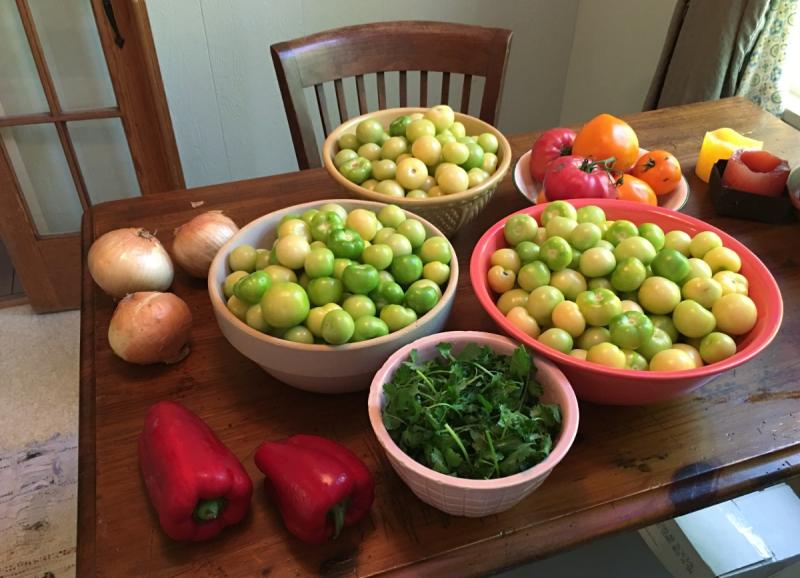
Yum-O! Tomatillo sauce is the spice of life, as they say!
I've been picking a ton of tomatillos in our garden lately. This week I canned 24 pints of green tomatillo sauce, adding onions, garlic, cilantro, and red peppers. There were several other bowls of them than fit in this photo. Now we'll have enough green sauce to last til April or May. 
I played on the balcony for awhile Saturday morning. Realized that was roomier than the front stoop! I played "Wondrous Love," "Nottamun Town," and "Cluck Old Hen," tuned in DAG Dorian.
I posted a video to Instagram, but they cropped it to a square and you can't see the dulcimer! (I didn't know till friends commented.) Ah well! I may not wait a year to do another one.
It's so nice to see and hear about folks playing music outdoors. Thanks for sharing, everyone!
I am glad you were able to be outdoors with your guitar and your McSpadden, Lisa! Hope you get lots of chances to play outdoors during your "bonus vacation"!
I was fortunate here (a Seattle suburb) to have Goldilocks weather yesterday afternoon (not too hot, not too cool, not too breezy, not too still, not too humid--just lovely). And no smoke at this time. Took out my acoustic guitar and my McSpadden and had a great time. Played all sorts of things on both. Then just improvised on the dulcimer for a bit while the grill heated up for dinner. Didn't think to try to photograph or film myself. Oh well!
So nice to see all the posts of people making beauty and joy!!! What a great tradition...
I begin a month of "bonus vacation" on Friday of this week--a perk we get at my legal aid organization for every 10 years of service. I'm past 11 years, just getting around to taking the time off. One of the things I plan to do is get in whatever porch playing I can as long as the weather holds. Something extra special about playing outside!
Irene, you can see a video of me and five others playing in David Bennett's post below. The dulcimers I play in both posts are ones that I made.
Ken
"The dulcimer sings a sweet song."
Friends, it has been so good to see the videos and accounts of PMOTPD-- thank you for sharing them!
Here is the little movie Mark & I made yesterday:
Here's a video Dave Holeton put together and posted of six of us from the TTAD Zoom group playing "Red River Valley" for Play Music On The Porch Day
Carla, that is just wonderful and fun and darling little doggie and background. I hope you play more on the porch with this fun guy more often then once a year. oh happy day. aloha, irene
Here's my little video from Play Music on the Porch Day down under.
First I'm thankful to have a porch to pick on, although it needs a coat of paint. The day was cool and cloudy with a nice breeze.
Lately I've been playing my Galix dulcimer that I neglected for a couple of years. If you never played a Galix, you don't know what your missing.
I played the quintessential Galax tune Fly Around My Pretty Miss. Tater patch, Groundhog, and a favorite of mine although a bit unconventional for Galax style St Anne's reel.
I was hoping it would rain so I could play a little longer but it didn't so I had to get back to work picking sweetcorn instead of my dulcimer. I hope everyone had a nice day. If not we'll then play your dulcimer and things will get better...Robert
Dusty, I'm sorry for that terrible fire in California. here in Nauvoo, Illinois, I live on the Mississippi, we hardly see the sun go down in pure bright color, but it gets caught up in the smoke all the way here. boooooooo. And Ken, I was looking for your video....but cute photo anyway and I like the deepness of that dulcimer. I got out on my porch this evening and had a granddaughter take a video of me on a dulcimer I made.......... on my phone. Still I don't know how to load it on this site. I'll go to FAQ and see if I can figure it out. aloha, irene
I shared music with others in my monthly dulcimer club on zoom today (mostly English country dances), but nothing outdoors. The smoke from the wildfires up the Sierras has blown down into the valley and the air quality is unhealthy. No outdoor music today or outdoor anything for me. I put on an N95 respirator mask just to turn on the sprinklers.
I hope others have been able to share music with their communities.
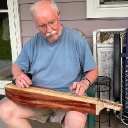
I was busy in the morning and didn't have time to play. It started raining just as I was getting ready to go out on the porch so I stayed inside and watched the Little League World Series. After the games, we had a short respite from the rain, so I went back outside and played a couple of tunes. My wife took this photo of me. I played Lincoln and Liberty, Fishin' Hole, Old Joe Clark, Cripple Creek and, Liza Jane. I use one of my dulcimers I hadn't played on in quite some time. I has a double melody string which I am no longer comfortable playing. It was tuned to DAdd which I have not play in quite some time as I've been concentrating on 1 - 5 - 5 tunings to play noter/drone. I did have a good time playing though.
Ken
"The dulcimer sings a sweet song."
We are stilled barred from playing at nursing homes and our senior centers are still closed. One group I play with did play for an outdoor service of worship earlier in August, but I did not play with them as I was away camping that weekend.
Ken
"The dulcimer sings a sweet song."
Our group in Central Indiana was back to near normal before the latest virus version hit. At first we were playing outside under an entry way but then later was given the OK to play inside as long as we had temperature checked and filled out a questionnaire and wore our masks. Now with the increase in covid again we are back outside when weather permits. Of late we have had some high air temperatures so its a day by day situation. We are scheduled for two sessions in September, probably outside.
Very good question Richard.
Thought I'd ask of the many who play their dulcimers in nursing, rehab, senior living, or retirement centers how things are going? What kind of access are you finding where you are? Any of you back to any where close to pre covid frequency of visits? Thanks.
We'll be playing on our fave porch!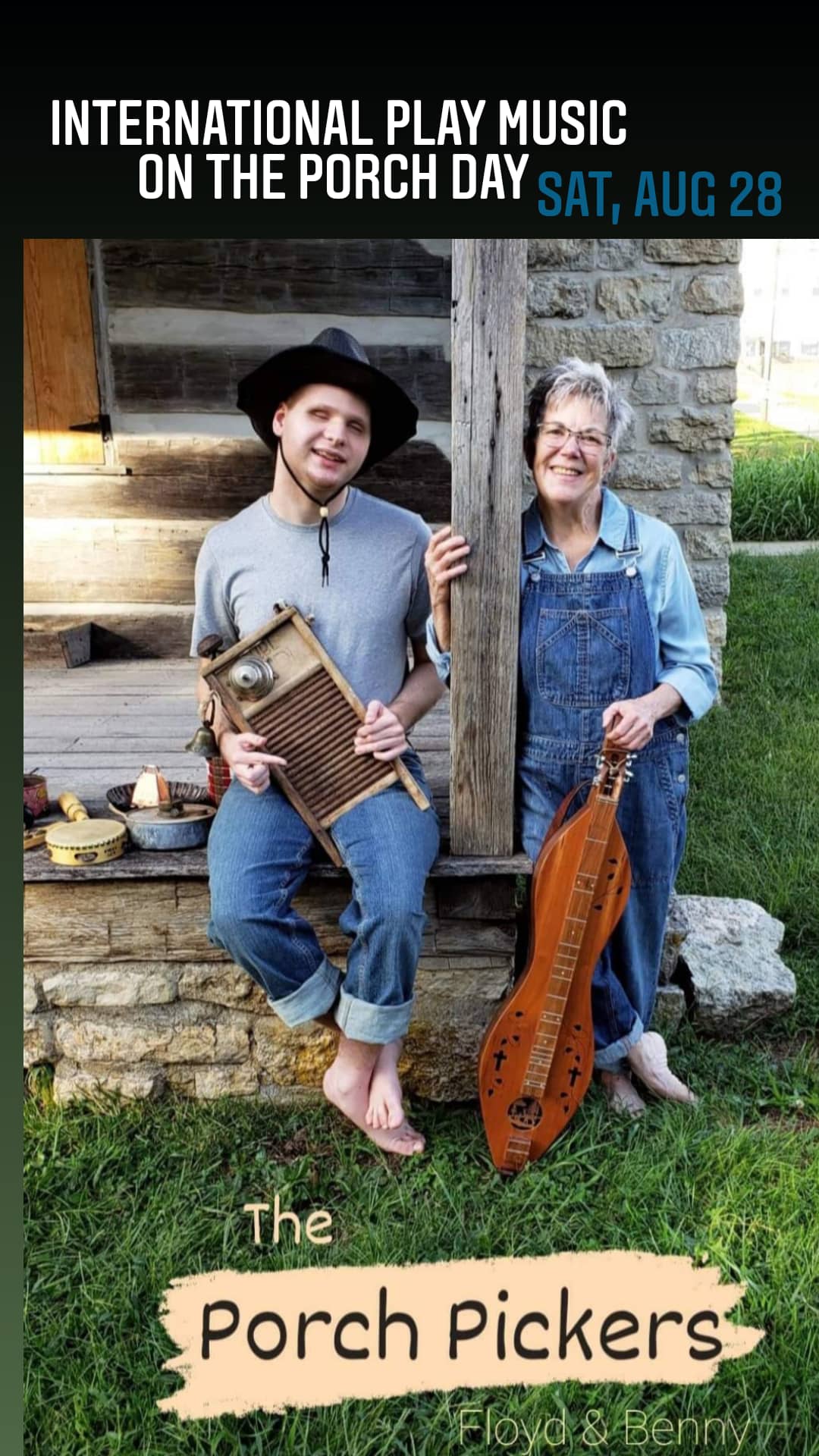
Yes, it is tomorrow.
Ken
"The dulcimer sings a sweet song."
It's this weekend, right? Wooo!
It's a nice read, Ken, and mostly accurate. Thanks for sharing.
This website is connected to the University of Sydney in Australia which may account for some errors like the author identifying the waters off Big Sur as the the Atlantic.
Ken
"The dulcimer sings a sweet song."
Here is an interesting article that appeared in my inbox today. https://honisoit.com/2021/08/ladies-of-the-dulcimer/
Enjoy.
Ken
"The dulcimer sings a sweet song."
thanks for the headsup. It was unpublished! Should be okay now...
The video is “Private” and cannot view it.
Thanks for all the helpful advice everyone. Ken, Skip, Bill, Matt you are treasures. I've yet to fit the gear tuners having decided not to use friction pegs, but I shall try to locate the best spot for the saddle using my electronic tuner. But thanks to you guys I know where to start and what I'm trying to achieve and why.
The nice looking long friction pegs that came with the dulcimer, but have not been dressed, I shall use as noters.
If you know what the VSL is supposed to be (to the nearest 1/10" or .5mm) set the bridge there to start. If you don't know what the VSL is supposed to be, then yes, set the bridge at 2x the nut to 7th fret (not 6+ fret) distance to start.
Use your electronic tuner to test the accuracy of the notes on the melody string side as Skip suggests. Leaving the melody string side exactly where it's supposed to be (make a tiny mark on the fretboard) then check the accuracy of the bass string side of things.
A floating bridge is one that can be moved across the top of the fretboard. The other bridge style fits into a slot. Since you're asking I would think you're MD is set up for a floating bridge. Use your tuner to adjust it to the proper location. Tune the open note, check it at the 7th fret, if sharp, move the bridge away from the nut and repeat
From what I have experienced the total distance could be 1/8 to 3/16 longer than what it computes to be. Set it where recommended , tune it then check the notes at the octave. You may have to move the bridge one way or the other to get it right, then go back and check the original open tuning to see if it is right. You may have to angle the bridge slightly to get the true notes at the octave.
At least wo things are going on here.
In the science of acoustics on a perfectly balanced string in order to increase the tone of an instrument strung to be two octaves by one octave, you would fret the string in the precise middle. On a dulcimer, that would be the seven fret.
Nice to know, but our strings are not perfect. As you fret up the scale, strings tend to go slightly sharp. As an example stewmac.com has a fret calculator for an acoustic guitar (the closest they have to a dulcimer.) For this example, I entered an instrument with a 26" VSL. Stewmac suggests increasing the Treble E string, generally a similar string to our "d" string by 0.091" and the Bass E by 0.219". Doing some calculation, that would leave the VSL for our Treble d string at 26.091 and our Bass D string at about 26.10". Many makers will install the saddle at this slight angle.
For a dulcimer, stewmac suggests setting the break point on the saddle at 26.153" for a non compensated saddle. Stewmac has typically cheaped out on dulcimers and I do not suggest using that number.
If all you are looking for is a quick way to set your bridge, add 0.01" to the melody side and 0.10 to the Bass side when placing your saddle (it is technically not a bridge as so many dulcimer makers insist) and stop reading this post.
If you want a perfectly exact answer, you need to divide those two numbers by the number of frets you would use if your instrument were chromatic and keep adding multiples of the resulting value to the treble and bass sides of your frets. Instead of perfectly parallel frets, you would end up with frets that fanned out slightly on the bass side with the seven fret being 0.0455" further out on the treble side and 0.195 further out on the bass side. The only people I have heard that actually do that are luthiers who sell $30,000 guitars. (And I am sure someone will let me know that they do it on dulcimers.)
Day to day playing, intonation is in the ear of the musician. Dusty's solution is the same as I use, a floating saddle that the musician can adjust so that the instrument sounds best in that musician's ear.
Sorry for the long post. A good answer to your question is not easy and I look forward to reading the other responses.
Hi
I wonder if anyone can help with a query. I have been given a dulcimer that has not been completely finished. One of the tasks is to fit a bridge. The frets have been put in place and I understand the bridge is supposed to be located somewhere around twice the length of the nut to 7th fret. But is that an exact location ?
Blue Lion website says the twice rule will give the VSL ,but "The actual distance from the nut to the saddle is normally slightly longer for proper intonation." I've no idea what that means !
Then I see Dusty has dulcimers with "floating bridges". So I'm a little confused, can anyone help me out.
Thanks
Another thought on the possum board, Mother possums carry their young on their back as the board carries the dulcimer
That a really neat piece of culture I wasn't aware of thanks for filling me in
Like Dan said the name comes from a board used to stretch animal skins for sale. Different sizes for muskrats, mink, racoon, possum, beaver, rabbits. Dad used them in the winter when trapping muskrats and mink to supplement farm income.
Can you help?
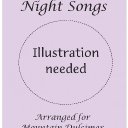
I’ve been working for some time on a dulcimer tab book of lullabies, which I hope to finally have ready by early 2022. I am greatly in need of an illustration for the cover, but since I am not an artist, I am looking for someone who might be able to help me out with this. If you or someone you know might be willing to send me a drawing for consideration (either color or black & white), please contact me at Lark119@Citlink.net. (I have a couple of ideas to suggest, but will welcome any other ideas that might be proposed.) I will be most grateful for any and all drawings which folks might want to submit, and if your illustration is chosen, I will make sure you are credited for it in a prominent place in the front of the book, and will gladly send you a complementary copy of the book & CD. - Lori Keddell
It's a Possum Board for your dulcimer only if it is a separate piece upon which the dulcimer sits upon.
The "false bottom" or Galax bottom" is what we call the bottom attached to the instrument.
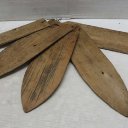
"Possum board" is one of the names for a tapered thin board used in the stretching and drying of animal hides in some regions of Appalachia. Hides were skinned out complete for more money than the belly cut hides nailed to the side of an out building. There are those from outside Appalachia who believe we call them Possum Boards to be cute....