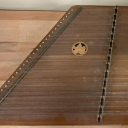
What's the exact difference between a dulcimore and dulcimer
Instruments- discuss specific features, luthiers, instrument problems & questions
"Duckslammer, IIRC comes from a Tom & Missy Strothers ancedote about someone mis-hearing "dulcimer".
I think Ken's correct. It's pretty clear that all those different spellings of what we now refer to as a dulcimer -- delcymore, delcimer, dulcimer, dulcimore, dulcymore -- reflect local or regional pronunciations of the word. Especially among people with low literacy rates, few people would have seen the word in print, so there was nothing like a "standard" pronunciation. In the same way that folk songs varied from one region to another, so would the pronunciation of a word vary.
As for dulciwhacker or duckslammer?
Would doctors and educators be folks of low literacy? Why would they use the term "dulcimore"?
As far as I am concerned, there is no difference between a dulcimore and a dulcimer. They are different names for the same instrument. C.N. Prichard call the instruments he manufactured "The American Dulcimer." J. E. Thomas called the instrument he made a dulcimer. As to where the name originated, it is anybody's guess. One theory is that mountaineers familiar with the King James Bible new the list of instruments in Daniel. One instrument on that list was dulcimer. Since no one knew what a dulcimer was, they adopted the name for their instrument. (Biblical scholars think the instrument called "dulcimer" is really a reed instrument like a clarinet.) Strumelia already mention that the name may have derived from the Latin for sweet (dulce) and the Greek for sound or song (Melos). Who knows for sure? Pretty much all of the early scholarly literature and much of popular literature refers to the instrument as "dulcimer."
Ken
"The dulcimer sings a sweet song."
I've had the opportunity to go through my records and can't find the reference of Uncle Ed using the term "dulcimer". Please share your reference?
Glad to hear your eye surgery is behind you, Ken! 
Those are two really wonderful dulcimers you have there. 🙌🏼
Mountain Mahogany does not grow east of Colorado. It has a Janka hardness of about 3200 -- roughly the same as the Ebonies. Makes great noters, nuts & bridges for Mountain dulcimers, tippers for bodhran, musical bones, and similar projects.
"Mountain Mahogany" is virtually unknown to those of us living east of the Rockies.
I've never heard of it living in Pennsylvania. I see that it is very hard and dense. I should make a good tipper. I sure the shillelagh and walking stick are very sturdy.
Ken
"the dulcimer sings a sweet song."
"Mountain Mahogany" is virtually unknown to those of us living east of the Rockies.
I have some nice, short, Black Cherry planks seasoning in the barn. I split them from short (roughly 30 inch) segments of a fallen tree with a froe.
Mountain mahogany grows in the area where I live. It's lovely wood, I like its properties of hardness and density, and of course it's relatively easy to get, without having to spend extra. A few years ago I found a stand close to my mother's house; in it was a couple of dead trees. I harvested them and from them have so far made a shillelagh, a tall walking staff, and now I'm making this tipper.
Maybe you can finish this today, but why Mountain Mahogany? I should think a limb of Swamp Mahogany would work as well.
KenL, if you didn't have time to make a recording, you should've taken a picture of your workbench to post for IADD! I believe you worked on the dulcimers yet photographic proof may be needed.
I started playing bodhran about 12 years ago, mostly solo along with recordings, though there have been some local groups that I've been playing with occasionally for the past couple of years. My first one broke last summer and I got a new one a little while later, after carving a tipper from a cherry branch. Now I'm carving another tipper from a mountain mahogany branch.
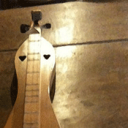
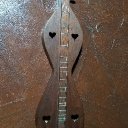
Hi @jazzc... Had cataract surgery yesterday so i couldn't take any pix until today... Here are my two favorite Traditional dulcemores:
Uncle Ed Thomas replica Kentucky Hourglass by John Knopf on the bottom. Traditionally painted flat black.
Above is my Virginia style Hogfiddle by Bobby Ratliff
.
Both have the high-silvery sound of traditional dulcemores rather than the more mellow sound of modern dulcimers
From observing and listening to the IADD posts on Facebook, I say that the movement to celebrate our beloved instrument is gaining ground. Thank you to all who posted offerings for this day. I celebrated by working on a few dulcimers I have in my shop for repairs. I did play a few tunes.
Ken
"The dulcimer sings a sweet song."
I think I've listened to music from 4 countries on this International Appalachian Dulcimer Day.
In addition to friends who shared audio or video here, there was more participation on Facebook than I might've imagined. The spread of the love of the Appalachian dulcimer around the world is, truly, a beautiful thing.
I hope y'all have nice weather for your 20 April music circle, Leo!
Yay Dusty for so nicely imagining a sunny day today in California!! If only.
So many involved in a potential jam today were going to be busy - and maybe they were prescient as things have turned out. The delayed music event will be on Sat April 20, noon-3, in Shelton Park, Claremont, with Doug Thomson leading the songs-and-tunes circle. Bring chair and instruments! All instruments welcomed of course, even hammered dulcimers, lol.
Happy Mountain Dulcimer Days!!
Happy International Appalachian Dulcimer Day If We Never Meet Again This Side Of Heaven played on a 3 string baritone mountain dulcimer (youtube.com)
Happy IADD, everyone! Here is a short rendition of "Tune for a Sunny Day" written by Susan Reid of the Vermont Fiddle Orchestra. I found a simple demo of the tune on the fiddle and wrote a letter to Susan at the asking permission to share it on the dulcimer. I was delighted about a month later to hear from her.
Happy International Appalachian Dulcimer Day, friends!
I just listened to the first offering to celebrate from @macaodha and it's a jewel. I haven't uploaded a tune yet, yet will soon.
Thanx John, Fixed it. y new eye isn't quite up to par yet... another few days before the swelling goes down.
It's t'other way around, Ken! VA at the top, KY at the bottom. That Ed Thomas sure is a beauty!
Hi @jazzc... Had cataract surgery yesterday so i couldn't take any pix until today... Here are my two favorite Traditional dulcemores:
Uncle Ed Thomas replica Kentucky Hourglass by John Knopf on the bottom. Traditionally painted flat black.
Above is my Virginia style Hogfiddle by Bobby Ratliff
.
Both have the high-silvery sound of traditional dulcemores rather than the more mellow sound of modern dulcimers
That's too bad- the music is great, and it's good exercise!
I do live close to Dewey Hall ... but I don't dance :-)
Hi Jerry... so you waited twelve years to introduce yourself here?
Do you go to the monthly contra dance at Dewey Hall?
Hi, I've been a member here for a while, though somewhat inactive, so I thought I reintroduce myself. I live in the Berkshires of Western Mass (right down the street from the Magic Fluke Company, known to ukulele players ... and I am also one of those)! I've been playing and collecting dulcimers since the late 60's. Bought my first one from Hank Levin at the House of Musical Traditions, then on St. Marks Place in NYC (I grew up in Northern NJ). Here in the Berkshires, there is a busking program in the summer, and I've been happy to participate on dulcimer, ukulele and autoharp. I work as a lecturer, so-called motivational speaker, training specialist and consultant. I particularly speak about intentional gratitude practices, and every Tuesday I post a "GratiTuesday" quotation or gratitude reminder on my blog and various other sites. I have always liked the dulcimer ... a lot!
Yay, @dusty! I hope lots of folks do the same, too!
We have an audio recorded and uploaded and will make it "Public" on IADD.
I just recorded a video. I'll be sharing it with y'all this Saturday. I hope lots of you do the same. Happy IADD!
Either my Uncle Ed Thomas traditional dulcemore replica by John Knopf; or my traditional Virginia style Hogfiddle by Bobby Ratliff, Both with staple frets under the melody string and plain (no 6+) diatonic fret layout.
If I had to pick just one, it would be my Folkcraft Custom with a butternut top and walnut back and sides. It has the fret layout I love, a 27" vsl, and a Fishman Prefix Pro Blend pickup with a built in preamp. It has other custom features like the dolphin sound holes and a maple dolphin inlay at the 5th fret and a galax back. It's everything I would ever want and has a beautiful tone.
Either my Uncle Ed Thomas traditional dulcemore replica by John Knopf; or my traditional Virginia style Hogfiddle by Bobby Ratliff, Both with staple frets under the melody string and plain (no 6+) diatonic fret layout.
In her HomeSpun instructional recording, Jean lists many names for the lap-held zither and says its names come from the parts of the country in which you find it. She goes on to say that for her lessons she's just going to call it a dulcimer.
Although I agree with some of your points Wally, as a native born Brooklyn girl raised in Greenwich Village in the 1950s and 60s, and my parents having been 'Bohemians' there who regularly had gatherings of musical friends at home... I must maintain that not a soul ever uttered a word like " Dul-sim-o-wah".
Though I've heard many a Brooklyn and Bronx accent while growing up, nobody we knew ever would have said that word remotely that way. I must object! Your examples sound to me a bit more like maybe.. Bostonian? 😹
Any Appalachian dulcimers in the Greenwich Village or Brooklyn areas in the 1940s-early60s would have been traced either directly or indirectly to Jean Ritchie's arrival in NYC in 1946 from Kentucky (after getting her college degree), and her influence in introducing the humble rural instrument to the modern urban folk revival setting. Even 'Uncle' Ed Thomas (1850-1933) and Jean Ritchie's father Balis and their whole family in the Kentucky mountains called their instruments "dulcimers".
In addition to differences in spelling, there were differences in pronunciation of the name of our instrument. This almost certainly resulted in differences in how it was written.
Some of our earliest references to the instrument come from estate and sales records in county courthouse archives. I can imagine that one of these might well have resulted from a visit to a deceased's home. Looking over the fireplace, the local says "One pit-chuh of the fahm, one of Unkel Har-rah, an' a dulcimah." The town raised attorney writes "1 large painting - $4, 1 small portrait - 45¢, 1 dulcimer - $1.25" the later based on his knowledge of the King James bible, not the object. The written note is in pencil and later transcribed in ink to the public record book.
I can imagine the use of "dulcimore" as having come from the early 1960s folk culture through some proponent in Brooklyn or Grenwich Villiage calling his pride and joy a "Dul-sim-o-wah."
Oral language variations are what they are.
Do we actually have any evidence for early use of the name "dulcimore" by our pioneer scholars? Jean Ritchie's first work is "The Dulcimer Book." Skimming through Ralph Lee Smith's "The Story of the Dulcimer" (2nd ed.) I don't see the word. I don't have a copy of Allen Smith's "A Catalogue of Pre-Revival Appalachian Dulcimers" at hand, but his preference is clearly shown in the title.
By the way, I just noticed that the spell-checker for this website flags "dulcimore" as a potential error.
If I had to pick just one, it would be my Folkcraft Custom with a butternut top and walnut back and sides. It has the fret layout I love, a 27" vsl, and a Fishman Prefix Pro Blend pickup with a built in preamp. It has other custom features like the dolphin sound holes and a maple dolphin inlay at the 5th fret and a galax back. It's everything I would ever want and has a beautiful tone.
I already own my dream dulcimer which is a Blue Lion Acoustic Jam dulcimer. Like Robin’s dulcimer, it is made with a western red cedar soundboard and walnut back and sides. The VSL is 26.25.” I play mostly fingerpicking chord style. The Blue Lion dulcimer is great for that. I guess having some beautiful inlay work would make it even more dreamy. Since acquiring the Blue Lion AJ dulcimer, my playing has greatly improved.
I looked up the dulcimer you have. Beautiful instrument. So glad to hear your playing improved so much since you acquired it.
Dusty's right. In English there were no standardized way to spell anything until some years after the Oxford English Dictionary was completely published (1884-1928) and accepted as the standard (taught in school). Basically between WWI and WWII. And the farther from mainstream society folks were, the more those spellings seem to have varied.
For example, my Scottish Clan name -- Home -- dates back to 1225 -- has at least 28 ways to spell Home, and people with all those different surnames are genetically related!
The Appalachian dulcimer is a folk instrument that evolved in the US from various folk instruments familiar to immigrants, such as hummel, langelik, langspil, scheitholt, epinette, etc. The earliest currently known dated Appalachian dulcimer has a date from I believe the 1830s, but doubtless they were being made in the US somewhat earlier. There are some good dulcimer history books out there that should be read by anyone interested in the background of dulcimers, as currently known.
The fact is we will likely never know exactly when/where/bywhom the American lap dulcimer was precisely 'invented'. Such records were never officially kept by anyone, and folk instruments can be fragile or be stored in barns- many have not survived as long as instruments like violins or pianos that were considered more valuable and thus were better cared for over time. Compared to more widespread commercial instruments, the surviving documentation on mtn dulcimers is sparse.
As to names, like Dusty said there are regional variations in spelling and pronunciation, especially when it comes to informal folk culture. The 'dulcimer' in St James Bible likely refers to ancient instruments that were more like psalteries or hammered dulcimers, or perhaps even bagpipe-like.
There is no Official Rule Book that governs how mountain dulcimers should be called, played, or tuned. Instead, there are musicians, scholars, online fans, and builders who all have their own preferences and ideas on classification, tradition, and features of the instrument. The mtn dulcimer is definitely classified in the broad zither family as opposed to the necked 'lute' family, but beyond that people get into classification and feature preferences that can be relative according to their own ideas.
If I started posting regularly about distinct characteristics of the "Dulcimonium"... then after a few years everyone might well consider that to be a verified and distinct variety of mountain dulcimer, not to be confused with Dulcimores or Galax dulcimers or box dulcimers or modern dulcimers. I could go on about how this or that feature makes something a Dulcimonium or not a Dulcimonium... a dulcimonium must have gut strings, six of them, and have a long triangular body shape and must have wooden frets and zither tuning pins... or else it's not a true dulcimonium.
What I mean is that there is no actual official 'Bible' or rulebook of mountain dulcimers. With enough repetition and enthusiasm, anyone could make Dulcimoniums 'happen'.
BTW please excuse my evening ramblings, ..and know that i certainly don't intend to offend anyone!
I already own my dream dulcimer which is a Blue Lion Acoustic Jam dulcimer. Like Robin’s dulcimer, it is made with a western red cedar soundboard and walnut back and sides. The VSL is 26.25.” I play mostly fingerpicking chord style. The Blue Lion dulcimer is great for that. I guess having some beautiful inlay work would make it even more dreamy. Since acquiring the Blue Lion AJ dulcimer, my playing has greatly improved.
I'm fortunate to own a dream dulcimer, a Blue Lion Jean Ritchie model instrument. Top is Western Red Cedar, sides & back are Walnut. I can't tell you the VSL off the top of my head-- I only play with a noter so VSL isn't much of a factor.