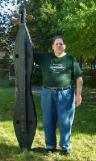
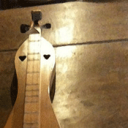
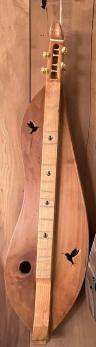
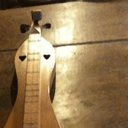
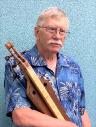
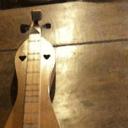
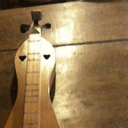
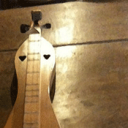
I bought a Sunhearth!
General mountain dulcimer or music discussions
Sounds like you did a wonderful job on those pegs! 🙌🏼
Sounds like you did a wonderful job on those pegs! 🙌🏼
That's wonderful news, Curt! These things don't always turn out so well. That's a good job of peg-fitting.
I looked after Strumelia mentioned checking Amazon and you can buy it new for $22.29, but as John says you can find used copies as well.
Ken
"The dulcimer sings a sweet song."
Betty was a wonderful promoter of southern Appalachian culture and music. I was able to take several classes with her at Dulcimerville. She will be missed by all of her family and friends. Rest in peace, Betty.
Ken
"The dulcimer sings a sweet song."
Thank you for letting us know of this sad news Robin. Betty Smith gave so much of herself to others, through her long life in music.
Hello,
I have installed new rosewood pegs on my Sunhearth (photo attached), tuned it up and WOW! Now I know why Sunhearth dulcimers have such a good reputation. The sound is great!
While doing some research on the internet about Sunhearth dulcimers, I ran into some information, and a photo (attached) that has made me wonder about the originality of the tuners that I took off. While I think that most of us would agree that the rosewood pegs look great, I have found some information, mostly on this forum, that has surprised me.
There was a story about Walter Martin and his dulcimers in DPN Vol 15, #3 (July/September 1989). It was mentioned that he used either gold-plated Schaller or Grover machine pegs OR Rosewood friction pegs. And there is a photo that was taken of some dulcimers hanging in his shop that was posted by Leo Kretzner on this forum previously.
So.... The tuners may of been original. I kept them and can always put them back on, but I do like the rosewood pegs, and since the dulcimer does not have a 6.5 fret, I will probably just leave it in Ionian.
BTW, I bought a good peg shaver, and a set of Rosewood Viola pegs on eBay (Dwain, thanks for the information about the pegs). They were easy to install myself. I think Mr. Martin would be pleased with the result.
Curt DeBaun III
Abebooks.com has several copies available for around $15-$25
I just updated this useful thread by removing some older links to defunct web pages.
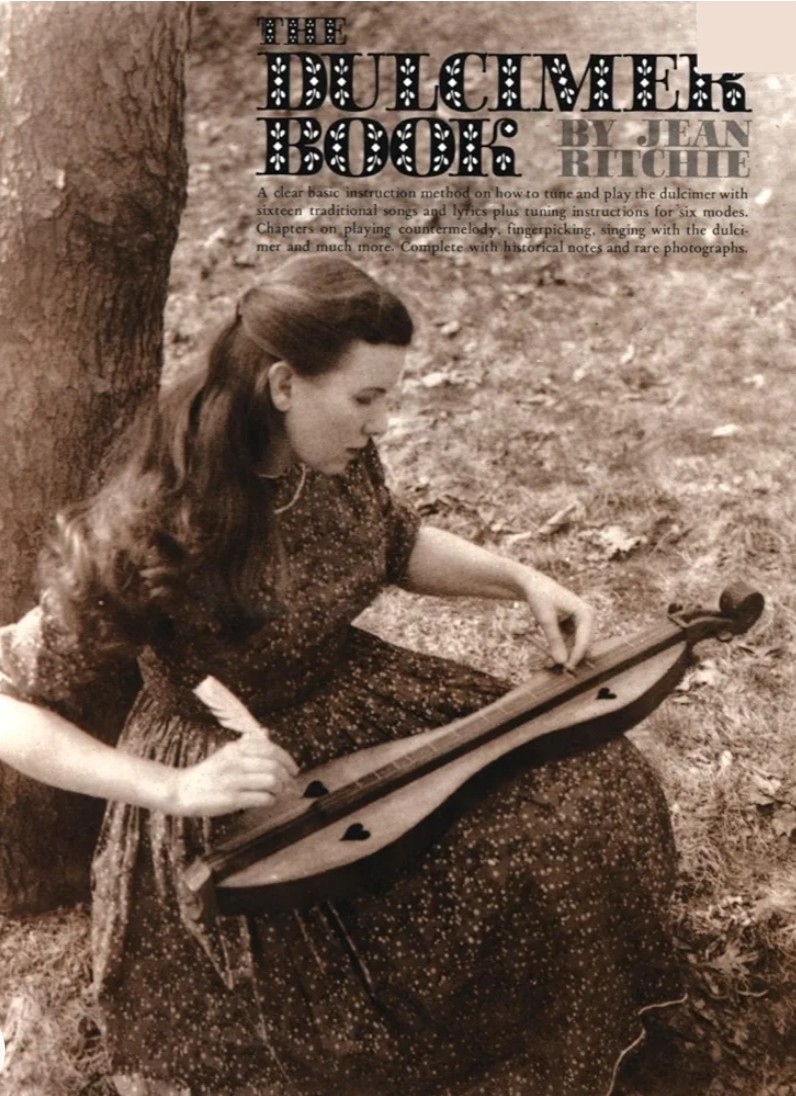
BTW it's very easy to buy Jean's original Dulcimer Book (as Wildcat pictured below) on Amaz*on. Don't overlook buying USED copies of it for sale there as well, to save yourself a few bucks.
If you'd like to hear Jean talking a bit about her life and her approach to playing, I recommend these:
https://www.homespun.com/profile/Jean%20Ritchie
Also, search Jean on YouTube and you'll discover many wonderful recordings.
Yes, Frank, that's the CLASSIC Jean Ritchie dulcimer instruction book. It was one of the first, if not the first book on the dulcimer. Much good information to be discovered in it. Jean also wrote "Jean Ritchie's Dulcimer People" and several other books. Her personal story about growing up is in "Singing Family of the Cumberlands" and is well worth having in your library.
I like this topic, lots of good info. I've also been poking around the @strumelia blog . Great stuff, thank you all.
Is this the Jean Ritchie book I should purchase that's mentioned here?
Thanks,
Frank
The diverse regional variations, such as the flatvele and venleg vele in the north and east, and the distinctive Hardanger fiddle in the south and west, showcase the rich musical heritage.
Frank, you can't go wrong with a Warren May dulcimer. I have one, an all walnut. hourglass. Aren't kids something. My son came to me when he was about eleven or twelve and asked me I could teach him some chords on the guitar. By the end of that summer he was playing better than me. I became a roadie for his band when he was in high school. He went to Berklee College of Music in Boston and majored in film scoring and his primary instrument was guitar. He's a professional musician out in Los Angeles. Enjoy your new dulcimer.
Ken
"The dulcimer sings a sweet song."
@richard-streib. I certainly will take some pictures and post. Yes, thanks to FOTMD, I've read about the issue with the cold temperatures and letting the instrument acclimate to room temperature. When speaking with Gail over the phone today, we discussed the issue as well. She was also kind enough to text me a video about going from daa to dad tuning if I choose to.
Frank, Warren builds wonderful dulcimers both in aesthetics and sound. I know you will enjoy playing it. Post some pictures when you receive it.
A hint: when it arrives if it is cold there, take it inside and let it acclimate to room temp in the box for a couple of hours before opening it. The hardest couple of hours for sure to tolerate.
Warren May builds lovely instruments, lovely both in looks and in sound. Happy strumming, @wildcat !
Welcome to FOTMD @wildcat. That's a really pretty dulcimer you bought! Warren May is a respected maker, I'm sure you will be pleased. 
Hello everyone, Wildcat here. My real name is Frank, but I've been using Wildcat online since the long ago days of AOL.
I grew up in Ulster County NY, with Illinois Mountain as my backyard. I married my high school sweetheart and we raised 2 children and now we have a granddaughter. 19 years ago we moved to the Lake George region of NY. Six months or so ago we moved to Peru, NY with our jobs and we are looking to buy a home. Time will tell...
My son is a talented guitar player and I was a very untalented one! Three cords and the truth... campfire stuff done poorly, but I enjoyed it. My wrist and hand started to make things difficult and I stopped playing.
I really missed it and some time ago I started searching for something easier, eventually finding the dulcimer and the noter style of playing and here I am. I'm hoping to learn as much about playing in a variety of ways as time goes on.
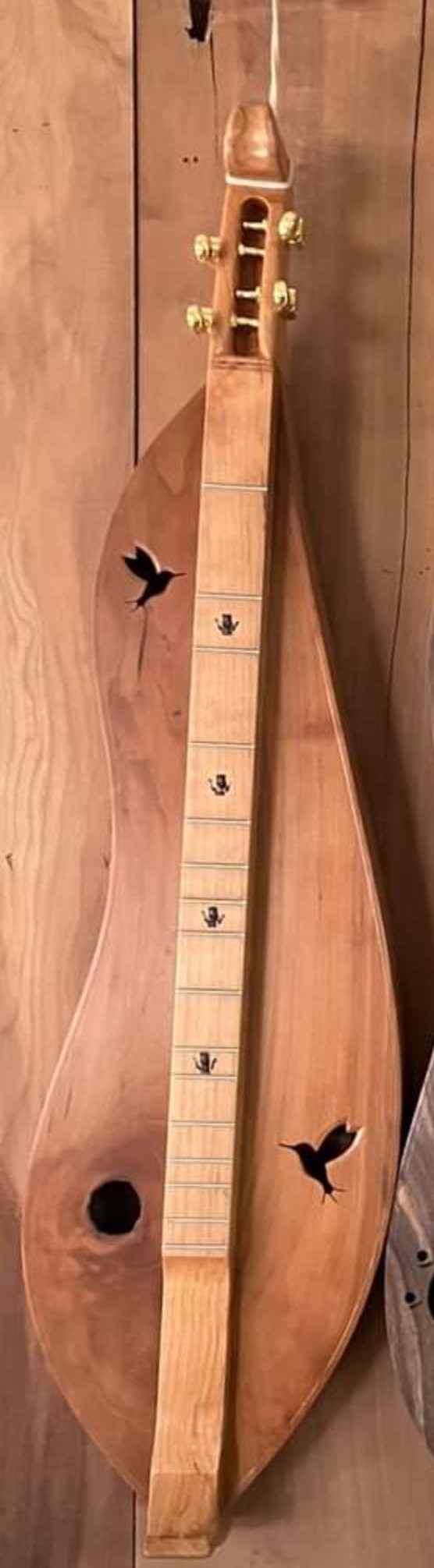
Remembering the "pain" of my first guitar (cheap!) I vowed not to do that again and after a lot of reading and researching, today I purchased a Warren May dulcimer. You can find me sleeping by the mailbox waiting for this...
That was a wonderful video, thanks for sharing. I'm hoping to purchase a dulcimer from Mr May tomorrow morning over the phone.
I own a score books with pieces Compostela by Michael Praetorius. Although he considered the scheitholt a "Lumpeninsttument" ( beggars instrument ), his pieces ( especially the Gavotte dances) work quite well. The score book and arrangements were published by Wilfried Ullrich and are available from him.
So although there might no classic pieces written for the dulcimer there are enough, who work quite well.
I'm still trying to get this Mozart piece right:
A couple cool links:
https://youtu.be/uQaLuklN73Q?si=zt632ssDhTAiSg8d
https://www.conniellisor.com/orchestra/blackberry-winter
It is to be noted the traditional tune Blackberry Blossom is foundational to the piece.
And Steve also played it with "the Charlotte Symphony Orchestra, the Tucson Symphony Orchestra, the Montpelier Chamber Orchestra, the Knoxville Symphony, and many others" according to his website.
Ken
"The dulcimer sings a sweet song."
David Schnaufer " brought the Tennessee music box into the classical arena with Blackberry Winter, a concerto for the Tennessee music box, mountain dulcimer and orchestra which he wrote with Conni Elisor, Nashville composer and arranger. Delcimore, Schnaufer's 1998 CD, features this beautiful piece of music played by the Columbus, Georgia symphony."
https://www.ledorgroup.com/product/blackberry-winter/
Steve Siefert has played this with Nashville Orchestra.
There have never been any 'classical works' written for the Appalachian dulcimer either. Leonard Bernstein has been bust with other projects. IMHO "lower class peasant instrument" is a bit harsh. No, they were not instruments of the major cities -- Vienna, Paris, Milan -- nor were they "favored" by the hoi polloi of those cities and cultures. But that doesn't make them 'lower class peasant instruments'.
There have never been any 'classical works' written for the Appalachian dulcimer either. Leonard Bernstein has been bust with other projects. IMHO "lower class peasant instrument" is a bit harsh. No, they were not instruments of the major cities -- Vienna, Paris, Milan -- nor were they "favored" by the hoi polloi of those cities and cultures. But that doesn't make them 'lower class peasant instruments'.
Yes, we do tend to wander. I'm gad you found the rambling answers to your questions informative.
Ken
"The dulcimer sings a sweet song."
The replies to my initial enquiry have been great and informative...somehow it travelled from the dulcimer to the langeleik,etc...Then through that to "Hangman's Reel"...After listening to a lot of Scandinavian music in the 70's,I figured that Quebecois people inherited a lot of northern music[open tunings,uneven rhythms] through their Norman antecedents ...very far-fetched...then I surmised that metis and native people perhaps played open tunings and odd rhythms because of the influence of Hudson Bay company factors from Orkney[once a Norwegian colony]...very far-fetched....The one common factor about the scheitholt,hummel,langeleik[perhaps not the mountain dulcimer]....they seem to have been regarded as lower class peasant instruments.....there are no classical works for the scheitholt,to my knowledge plus you don't have to take lessons from age four to get good at it...I like that!
I believe one of the event organizers is @Dennis-Waldrop , who is a member here.
He would have to add the event to FOTMD's Festivals section. It's not difficult to do, but I do ask that it be done by someone who is involved in running the event.
Meanwhile, here is the facebook page for this event, if that helps: https://www.facebook.com/groups/448674886231259
What a fascinating glimpse into the musical history of Norway! The evolution of musical instruments often mirrors the changing cultural landscapes.
I will be there Friday. Mostly just hanging out with the vendors. How can we get this event added to the “Events” tab?
Sadly, I have other commitments that weekend.
I'd like to meet some fellow fomd members at the Mt. Dora festival coming up in early Feb. Are any of you planning to attend?
Thank you Jost. I appreciate your posting those links to information about the langleik. That is interesting reading. I especially liked learning about the tuning of the langleik to the key of A. We have a state park not too far from me that is named after Ole Bull. That part of Pennsylvania had many Norwegian immigrants working in the lumber industry. I haven't discovered any references to the langleik among the lumbermen, but there are references to the dulcimer, but in this case it is the hammered dulcimer.
Ken
"The dulcimer sings a sweet song."
Yes, those are excellent books and must reads for folks who want to learn about mountain dulcimer history and context. One part of your question we have not addressed is the use of European predecessors of the mountain dulcimer. Wilfried Ulrich addresses some of this in his book The Story of the Hommel . There are many such instruments in museums in Germany, Belgium, Denmark, Norway, etc.Unfortunately I am not aware of English translations of literature that describes how folks used these instruments. What is clear is that they were "folk" instruments and not considered to be of great value musically. Again, they were mostly played by folks in their own homes for their own enjoyment.
At least Wilfried Ulrichs book is available in English from himself:
http://www.ulrich-instrumente.de/kontakt-links-impress/
https://hogfiddle.blogspot.com/2011/05/wilfried-ulrich-story-of-hummel.html
Some of the information is also available on his website (in German though so you might want to use a translation service like Google Translate, deepl etc).
Now according to Ullrich one of the oldest references of an hommel is the use in a procession (propably with a kind of strap). He also displays a hommel which was built by a carpenter named Adolf Hilke who played it in the local dances until the concertina and accordion took over at the beginning of the 20th century (they were louder than the hommel thus getting more popular soon).
Now my own hommel and galax dulcimers both are quite loud so I guess the actual volume might depend a little bit of the way of building and circumstances.
The norwegian langleik ( https://en.wikipedia.org/wiki/Langeleik ) is interesting as a kind of edge case: It was mainly played by women who tended their livestock on mountain meadows during the summer in their bothys. According to the German wikipedia:
The music played on the Langeleik is divided into dance songs and melodies for listening. The dance songs include the lively and fast dance style halling, named after its home region Hallingdal, the ganger and, in Valdres, Hallingdal and Telemark, the springar, which is played in a strict asymmetrical ¾ time. Several composers adopted the rhythm and melodic forms of springar, including Edvard Grieg in his folk music adaptation Jon Vestafes Springdans Opus 72/2. Grieg was preceded in the popularization of folk music by the violinist Ole Bull (1810-1880) and the composer Ludvig Mathias Lindeman (1812-1887). Lindeman's extensive collection of Norwegian folk songs Ældre og nyere norske Fjeldmelodier ("Older and Newer Norwegian Mountain Melodies") appeared in twelve volumes between 1853 and 1863, with a follow-up volume published in 1867. According to the Norwegian pianist Einar Steen-Nøkleberg, his piano arrangement of the dance piece Springlått contains typical Langeleik tone sequences to be played by the left hand[12] .
Concertante pieces of music belong to the group of klokkeslåtter or huldreslåtter ("Huldrenmelodien", Huldra is a beautiful girl related to the trolls in Scandinavian mythology)[13] .
Here's one I learned from The King Of The 12-String Guitar, Lead Belly. Alabamy Bound
I love playing the call & response.
Here's one I learned from The King Of The 12-String Guitar, Lead Belly. Alabamy Bound
I love playing the call & response.
I love that warm sound 12 string guitars make. Not to mention the additional details it adds to even the simplest chord change.
If you're reading this, and you're a banjo fanatic,
there's a player you should seek out named Kyle Tuttle.
He and I shared a few motorcycle rides, and lived only a couple blocks apart.
A simple google search of his name will bring up a nice overview of his work.
Just yesterday I enjoyed a presentation by Aubrey Atwater at the Dulcimoon Virtual Dulcimer Festival on the playing styles of Jean Ritchie. One important point that emerged was the way Jean accompanied her singing. She neither played the melody on the dulcimer nor strummed chords (obviously), but played a "counter-melody."
Watch her play "Lord Thomas" here , paying attention to what she is doing on the melody string while she sings. She is not playing a harmony in the way we understand it in modern pop music with parallel thirds or fourths that follow the melody, but rather a different melody, one less elaborate than the melody, but a different melody entirely that accompanies (or runs "counter" to) the song's melody. If you keep watching the video to hear "The Cuckoo," you'll hear the same thing.
The counter melody style of play is similar but not identical to our modern use of harmony; it plays a role similar to chord play in hinting at harmonic changes underlying the melody; and it often offers "filler" licks in the interstices of the song's main melody. In other words, the dulcimer is playing three different roles as we define them in modern music.
This is quite a difficult style of play to master, and it has mostly been lost in modern dulcimer playing. When we say that a traditional role of the dulcimer was used to accompany singing, I think it important to point out that it was done in this manner that is strikingly different than the way we use the dulcimer today.
I would also like to point out Jean's right hand. She is picking (mostly with her thumb), sometimes plucking only the melody string, sometimes plucking all the strings one-at-a-time, and sometimes strumming, either all the strings or the two drone strings after having plucked the melody string. This style of play is far more varied than modern playing in which people assume you have to strum all the strings all the time.