
Tunings you like to use on your dulcimer
General mountain dulcimer or music discussions
That's a very good idea and I think I'll stick with that one. I remember early on that just the difference in DAd and DAA was enough for that one string change as to not really be good for either. If the string was bought as appropriate for the lower A, then it very nearly came to breaking and poking my eye out in the process (I always flinch when I hear a string about to break and yes "you can tell" after you break enough of them). Or if you start the other way and get a string appropriate for the higher d, then when detuned to the lower A, the string is very sloppy and the sound not the best in the world up to and including basically unplayable. One last attempt, because by golly the darn books say you can swap tunings all over the place and I bought a string more appropriate for a middle of the range note of B and or C territory. Now I asked for assistance back then and found that for the string length I was utilizing and the notes desired, the B or the C pitch ended up being the same gauge so I was indeed in the middle. I first tuned to the lower A and gave that a try. Still way to loose and sloppy. Sounded more like a rubber band and cigar box type of thing. Then I cranked it up to the higher d and found that I was not flinching as much, but the string was different in feel and hard to finger the higher fretted notes because of the increased tension. Yep that's another thing to consider. The tighter the string tension, the thicker the calluses you'll end up with if you can even fret the higher notes. So the string tuning change was out the window as far as I was concerned and I began thinking of another answer to the problem of playing in two different modes without the hassle of tuning up to or down to the desired pitches.
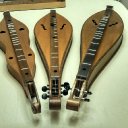
Now folks with a current outbreak of DAD will appreciate this (there are equivilant diseases in the gun shop and are contagious let me tell you) That is, buy one dulcimer for each and every mode you'll ever think you might play in. If you feel that getting different dulcimers a disservice to your learning to play, then buy similar models of dulcimer, but get different looking woods to shake things up a bit. Mama's or spouses if the other way around don't apparently like this disease at all. Nonetheless I had what I needed to explore the "other modes" and found that putting all of my effort into one mode had a direct result in producing a better player in that given mode. The more I spread myself around the less I actually learned. OK at many but good on none it seemed to be. So now with over 46 years of musical experience from that very first day on the clarinet to now and many many instruments inbetween I can safely say that I want to concentrate my efforts solely on DAd (actually GDg, but still Mixalydian and the 158 ratios) and just watch my skills increase. I found the very same thing to be true when my brother and I were in the middle of our "Instrument Wars". Once I got hooked on the Mandolin and it's family, I stuck with instruments that shared the same "fifths" relationship between strings. My brother on the other hand chose to not only go beyond the imediate family of instruments, he went out of the box so to speak bringing in the like of bag pipes, bassoon, melophone, accordion, tenor sax, guitar, and the like with not one instrument having any such similarity between themselves. Needles to say he had a massive slow down and finally had to deep six some of the instruments and just concentrate on a few that he had some aparent skills with. Yep you change the dulcimer mode if even only the one melody string and you've changed the overall makeup of the instrument and therefore made another instrument that you have to teach yourself how to play. The exception to this is if any or all strings tunings are changed yet the player is a noter drone player or owns a Tennesee Music Box with traditional fence staples just under the melody string(s). Then you are only required to play that one string and the others just come along for the ride so it doesn't really matter (other than sound) what they are tuned to or the relationship between them and the melody string Kevin.





 . After all we have Calico, Sawmill, Cumberland Gap tuning... Robert.


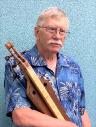



 Their fiddle and bass player Brian found out I play limberjack and told me he always wanted to learn it but didnt know how to get one or get started. I gave him a simple limberjack i had that was kind of an 'extra' I had, and I showed him the basics...he was so excited! You can see him happily holding it in the photo I posted. I bet he would have loved a little dulcimer lesson from you as well. They are all three just like that- so open and excited about music and people.