She moved through the fair
General mountain dulcimer or music discussions
I don't know how to tab this and post it, but I will get you playing this tune even if we go one note at a time - promise!
I don't know how to tab this and post it, but I will get you playing this tune even if we go one note at a time - promise!
If you play the 1 fret and the 2 fret in the same time as called for that 1+ note, it will work. Or just skip the 1+ note entirely....
If you add 3 to the fret numbers to convert from DAd to DAA, as Cynhia suggests, you convert the 1+ to a 4 and won't need to bother. I've played the tune a time or two in DAA, noter & drone style, and it works just fine.
Lynn, I am really new but heard this haunting air many years ago sung a cappella. I just put up the video I did for it. I did it DAA tuning, with the melody starting on the A string 0123 2 3 4 4 31, then on the low D string 3 4 4 4. I think you can get the rest. I didn't tab it out. The best thing about it is that it only needs the drone strings, no chords as it is sung a cappella (just the voice alone). Hope this is helpful to you, I've always loved this tune.
There is a version on Everything Dulcimer in the Tabulature collection, but it's a .TEF (TableEdit) file. There's a free TEF Viewer available if you don't have TablEdit.
I have been very pleased with this pickup that attaches to the sound holes or on the end: Cherub guitar pickup WCP-60G. You can find it on the internet for approx $8.00. There are lots of great reviews. I have tried a couple of others, but this one stays attached wonderfully.
If you are considering having a built in pickup built into your present dulcimer, then be prepared to spend a lot more money. You could contact McSpadden Dulcimers about installing one at a cost of from $125.00 to $150.00, plus shipping there and back.
Good luck.
Hi Derek,
I just noticed your post from last month. Perhaps you have already found an answer to your situation. I'll give my input, just in case you are still looking for an answer.
Hard cases, being heavy, would be quite expensive to ship from the US to the UK. Have you considered a high-quality soft dulcimer case? I use cases from Blue Heron. I have used one of mine for 14 years and have taken it from Florida to Ireland, and to a few US destinations by air, plus taken it around by car. It is still in excellent condition. Being lightweight, shipping would not be such an issue for you. You can check them out here: http://www.blueheroncases.com/
When traveling by air, I pack soft clothing such as socks, underwear, T-shirts, etc. around it for additional padding; then I use it as my carry-on. I would never put it in the cargo hold!! However, I have not had any trouble bringing it onboard; though the shape is longer than the norm, it fits even in small overhead bins just fine.
Hope this helps!
Linda
Hi,
I just saw your post & live in N. Houston area. I keep trying to get to the NHCG Jam's but the only time I made it there, they were having a reunion party. The Jam was yes, very fast. It was great listening to all the different instruments but no way was I ready to try & do anything but open strum. There is a group that meets in Copperfield on Tuesday evenings, if that would work for you. I practice up in the Woodlands, we just finished our Christmas performances, so are not meeting till Janurary.
I wish you luck with the dulcimer
Terry, rest assured that your fingertips will get used to fretting strings and the muscles in your fingers will also strengthen and stretch, making chording easier and easier. It just takes time. You are asking your fingers to perform tasks they've never had to do before.
Have fun and I'm sure you'll progress faster than you think.
I don't know if this will help you, but I just got a set of these the other day and here is the info on them:
Loop end, .023 wound, .014, .010. They say also that their strings provide a chenille wrap to cushion the spot where the string crosses over the end of the instrument. They also say you can get them by mail from them for $12 US postpaid. IF NEEDED you can unwind the chenille from the old string or use yarn or a pipe cleaner if you get strings without chenille from a store. If necessary, you can use strings .001 larger or smaller . A light gauge 5-string banjo set will give you 1 of each string you need for the Strumstick. Ha! That should give you all you need.
I downloaded a freebee called pitch pipe on my smart phone. It will play all 12 notes like a real pitch pipe. I find it remarkably accurate. I tune all my toys with it. There are tons of tuning apps to choose from... BTW a plain old pitch pipe or harmonica is good too... Bob.
With all the cut backs in school funding our children are no longer exposed to classes that teach woodworking, sewing, cooking, etc. I am thankful that my 33 year old son had those classes. Today he is an excellent cook, is able to do simple home repairs including installing all the cabinets in his pantry and can replace a button on his shirt. He is a professional musician. We worked side-by-side to build his 16/15 hammered dulcimer.
Ken
"The dulcimer sings a sweet song."
I agree Pamela. I grew up in a time before computers when every girl and boy was expected to have a hobby and work with your hands. I would be less than half the person today without those hand skills I learned in childhood. I fear its a lesson lost today on our children... Bob.
Every year I make my annual trek to the saw mill to get a load of poplar. 90% gets cut up for making grave blankets. I select the nicer boards for dulcimers and bluebird boxes. Building dulcimers is no big deal once you get the knack. But its still amazing to me that a pile of rough lumber can be turned into a musical instrument. In our world today we place value on so much that is fake. Working with wood and playing wooden instruments helps keep it real... Bob.
Gregg, the link you posted above does not seem to work. (Long links get cut off, but if you use the link function, then you can use a different title and the website stores the longer URL so that it still functions, as I do below.)
However, I did find this article from the San Gabriel Valley Tribune . Is it the same one?
This article was written by Michelle Mills, a friend of Jeanie and I who also dances for our consort at the Rennaisance Faire with swords balanced on her head! www.sgvtribune.com/arts-and-entertainment-20131002/harvest-of-dulcimers-celebrates-the-music-of-the-past
You could do what we did once when we drove 30 miles to a friend's house and discovered we'd left our hammer bag at home. We took a wire coathanger and cut it and shaped it into hammers. Here's a very rough mouse sketch - I'm not sure where the originals are.
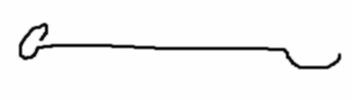
A bit heavy, but they worked surprisingly well. I'm sure you could do the same for a mountain dulcimer, and probably making them shorter would make them lighter, too.
The problem is that the 'hammers' need to have hammer heads. That's why plain sticks don't work, and splits of bamboo would be the same. If you have some 3/4" wide splits of say 2" bamboo, hammers with heads could be sawn out. You could try gluing small block heads onto sticks, also.
This is an unusual request, but I was wondering what sort of everyday items could be turned into those beaters used to hit the strings. I'm involved with some kids getting them to play some music together - as a sort of ensemble. The instruments and music are "folky", cheap and cheerful. A few of the children are the "strings section" - on those lap harps often sold as toys. So far they pluck the lap harps with a pick. But it's occurred to me that you can hit the strings on these lap harps, just like a hammer dulcimer. How would I go about sourcing/ making some kind of inexpensive pair of homemade beaters? Pencils and wooden chopsticks don't seem to work that great. Maybe slim bamboo canes?
Hi Mark, glad you joined our friendly site!
If you join our Beginner Players Group, and look at the discussion forum there, you will see several very helpful threads with suggestions about various instruments that can be great for beginner players. really any well made dulcimer will be fine for a beginner, and the folks you mentioned would be reliable as well. Much depends on your budget. But you may find some helpful advice in those discussions, and you can ask a zillion beginner questions in our Beginner's Group! 
Hi Still haven't gotten a drum, but am planning a little "expedition" to visit this drum maker over the summer - either or both at his workshop and/or a local music and crafts festival nearby in August. I know it's not in your neighbourhood, Lisa, but who knows, there might be other "northerners" on this thread, and anyway, thought it might be interesting. This is his website: http://www.sylvantemple.ca/products/TarBendir.html and this is a little video of his workshop, farm and drums. . Cheers.
You sound just like me Eileen...we both can't resist all kinds of activities and learning processes.... 
Thanks for your update, and yes I saw your Cretan Lyra - very nice! I'm going to learn the rebec the "baby cello" way too as it feels a little easier on the fingering and reach for me. Musical instruments and books - never enough of them and never enough time to learn and read. And now it's back to the veggie garden and its 101 tasks and projects! Not complaining though - it's all wonderful and what would we do without multiple learning curves??
Hi Eileen- great to hear of your latest research and explorations!
Time, yes more TIME is what I wish I had so I could learn to play and the instruments I would LIKE to learn to play! 
I have not had enough time to work on my frame drum as I would like, BUT I did get a rebec-like antique Cretan Lyra with a fiddle fingerboard- that I got on ebay and had it fixed by a luthier to be made playable again...and I actually HAVE been practicing that and enjoyng it a great deal. So that is GOOD. It's much like our little rebecs, with a bowl back too...but with steel violin strings. I play it in my lap like a little baby cello. Still not up to doing a little video yet- it takes a long while to play in tune, like most violin/fiddle thingys do. Glad to hear you got your rebec pegs improved- it really does have a lovely sound I think, with the gut strings.
Hi again after a long while! I was just going to check to see how you were doing on the rebec, and had to laugh when I saw the Frame Drums subject line and this post from you. I've been googling frame drums for the past several weeks, since I saw a local used ad for a north american flute and a bodhran. Then I started researching and discovered the tar, riq, bendir, daff, etc and - of course - started to get tempted! And here you are, one step ahead of me again, but on the same slightly eccentric wavelength! . I've narrowed it down to either a tar or bodhran for a drum. Have you seen the Layne Redmond websites and youtube on frame drums? They seem to be really good. My other "research" has been the 10-string lyre (like this one: The Old World Lyre by Musicmaker,) but it's quite pricey, so will go on just "researching" that for a while - Researching is so much cheaper than ordering! And, (yes one thing leads to another in this musical instrument obsession!) A shruti box in also in the research stage. I'm still playing with my recorder group and loving it, and even taking some lessons, playing a little on the dulcimer but not as much as I'd like, and I got the pegs fixed on my rebec by a local luthier and have made some very small starting steps. More time! Need more time. Anyway, greetings and thanks for posting a photo of your lovely tar. More temptation!
That is a very nice, rusticlooking drum. Good choice on the synthetic head; purists will whine about it, but most purists would not be playing their goatskin drums more than five minutes outdoors where I'm from. On a side note you'll appreciate, I build tackhead minstrel banjos using 12-14" Remo drums similar to this for the body:sturdy little drums that last, look authentic, have pre-attached non-stretching heads, and save a heck of a lot of production time in the wood shop.
Add cross braces to the inside of this drum, and it becomes a bodhran (though the notch would be unusual). Irish drums are usually a little deeper, but not necessarily so. As withmost folk instruments, depth and width are "eye-of-the-beholder" issues; and I prefer them somewhat shallow. I haveconsidered playingunbraced drums before, but prefer the bodhran because of the bracing. It allows you to insert your holding hand in the back of the drum, where it can strike, muffle, or tension the head. And the bodhran does not require a tipper; while it is true that most players use them, you will find some very traditional native Irish performers playing bare-handed.
Good luck, and have fun!