The Positive Thread...
OFF TOPIC discussions
Not exactly good for outdoor activities in my part of the world, but I have no objections.
Ken
"The dulcimer sings a sweet song."
Not exactly good for outdoor activities in my part of the world, but I have no objections.
Ken
"The dulcimer sings a sweet song."
How many do we need for a consensus, can we just stop and agree at the conspiracy level?
P.S. You'ins do know the Black Sheep will refer to this as "Dulcimore Day"...just sayin'
No real need for a poll if everyone thinks that's a good plan, Dusty.
Does anyone have other options they'd like to see considered?
@dusty-turtle, I like it!
OK, folks. I think this conversation has wound down. Perhaps it's time for a vote. Before we go there, how 'bout this:
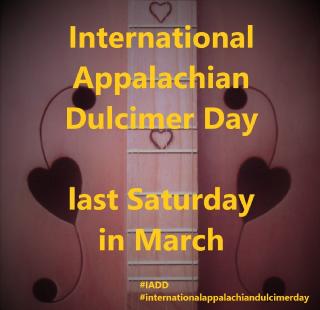
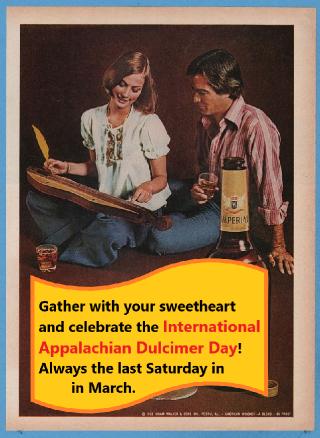
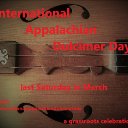
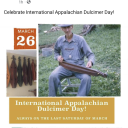
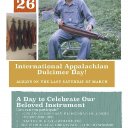
International Appalachian Dulcimer Day: the last Saturday in March
What think ye? If there are serious objections, we can isolate some variables and have Strumelia set up a poll. But I wonder if we might reach a consensus.
Thank you so much for posting this. I was lucky to see Steeleye Span a couple of times "back in the day" when they were in their prime, when I lived in Boston, Massachusetts. Fantastic video.
Jim, John, Ken, thanks for the info. Richlite looks like a good source and I am already talking with them.
The TV show Rockpalast is still running today. It was started in Germanys public radio/tv WDR (Westgerman Broadcasting Westdeutscher Rundfunk) in the 1970s. Every episode features another show from a band/single artist. Most of the times they were actual live shows other times (like this Steeleye Span show) they were recorded "live" in the studio.
For real live shows they often recorded them in the Dortmund Westphalenhalle since the WDR is located in Cologne. Both cities (Dortmund and Cologne) are large citys in the state North Rhine-Westphalia.
The Westphalenhalle used to be quite popular as venue for big names of show buisness.
Youtube has a lot of these shows although mainly all kinds of Rock music.
So looking for Rockpalast episodes will often lead to live material with good audio/video quality :)
I have Richlite fretboards on two of my Martin guitars. You can't see a difference between it and ebony and I think the Richlite lets you slide better than ebony.
Ken
"The dulcimer sings a sweet song."
Etsy and eBay are good sources for micarta. Luthier's Mercantile sells Richlite fingerboards, which looks similar to micarta.
Matt,
I have not made a fretboard from micarta, but I use it for nuts & saddles. I buy that stock from "Texas Knifemakers", but I think maybe they would not handle pieces long enough for a fretboard.
A good place online would be:
https://www.professionalplastics.com
They have many types and colors of micarta - listed under "Phenolics". You would probably want the "linen" grade - itis a very fine weave.
A couple of months ago, I found some blocks of micarta on Ebay that I used for a guitar repair job (internal insert) - so you can check on Ebay. It was very nice material.
Good luck,
Jim Phillips
Wondering if any of you build using Micarta fretboards and if so, where to you source the material?
Interesting dulcimore for sure. I wasn't aware of the fact the Glenns may have helped Stanley Hicks fill orders for dulcimers.
The Glenns apparently made several dulcimer models:
1. A Teardrop Model (1950s)
2. Their Standard North Carolina Model (Based on a dulcimer made by Leonard Glenn's grandfather, Eli Taylor Presnell, in the 1880s.)
3. Their Standard Kentucky Model ( Based on one of Homer Ledford's or Jethro Amburgey's dulcimers.)
4. A Nathan Hicks Model (Based on a Nathan Hicks dulcimer taken to Leonard Glenn by Nathan's son, Lewis Hicks, with a request for two copies for Hicks family members.) This pattern was used to make dulcimers for Frank Proffitt.
The dulcimer in the picture appears to be made in pattern 3, the Standard Kentucky model. It would be interesting to know the explanation for the Stanley Hicks label in the interior. If I had to guess I would say Stanley saw an economic opportunity at a time when he was not yet building the instruments commercially. Stanley was known as an entertainer and often had to be talked into building an instrument.
Incidentally, Paul Dolce ("Slingerland") purchased all of the Glenn dulcimer patterns from Clifford Glenn after he retired from actively making the instruments.
Unfortunately, Hicks dulcimers can also be Glenns! This 1969 dulcimer is a case in point. Doesn't look like a Glenn dulcimer shape - much more Kentucky style - though it has their headstock. Look inside and there's a Leonard Glenn label with a Hicks one rather crudely stuck on top of it! I understand that the Glenns used to 'help out' when the Hicks order book got too long....
Wonderful ! Thank you for posting this. I am long time fan of Steeleye Span, but did not hear this show before. Very enjoyable.
Richard, I'm still looking for a Stanley Hicks dulcimer at a reasonable price.
Regarding the traditional dulcimer builders on TTAD, the list begins with Bobby Ratliff, Dan Cox, and John Knopf.
Bobby builds traditional Virginia style dulcimers and a replica of the McKinley Craft hourglass.
Dan can build just about anything you want. His reproduction dulcimers include the Praetorius scheitholt, the 1608 hommel, a Ben Hicks dulcimer, a Frank Linney Glenn dulcimer, a dulcimer based upon a picture contained in the L. Allen Smith book, and a traditional style dulcimer of his own design based on historic dulcimers.
John Knopf builds excellent reproductions of the Uncle Ed Thomas dulcimer, the Will Singleton dulcimer, various Russell and Melton dulcimers, and the 19th century Tennessee Music boxes.
If you've got a traditional dulcimer in mind, one of the three builders above can probably make your dream a reality.
In addition, TTAD members Ken Hulme and Ken Longfield have been known to build traditional instruments if asked.
Well said greg-gunner. Just depends on the sound each likes in the dulcimer.
Would be nice to have one of the old ones, like a Presnell. So what about those builders on TTAD?
Wondering if anyone knows this luthier. The dulcimer I play is their basic model (I'll attach an image below); I found it online from a private seller and took a chance on it despite being unable to find any info. Got lucky with the quality, considering it's a 20 yr old instrument- it sounds just fine to my ears. I fell for it on account of the handsome fretboard and how I love the simple rectangular shape but hadn't been able to find a mountain dulcimer in that shape that wasn't made of cardboard.
There was a pamphlet in the case with it with some basic info about the luthier and their options, and a phone number (that I'd rather not call if I can help it- dislike being on the phone and I can't find so much as a mention of the Landreys or their dulcimers online so I'd feel weird calling the number). I'll attach a picture of the pamphlet too.
Tdlr; I just wanted to know if anyone had heard of the Landreys or Log Cabin Dulcimers since I own one of their instruments and I've been curious.
Most of the dulcimer builders who grew up in the tradition tuned their instruments for just intonation to sweeten the blending of the melody and drones. Modern dulcimer makers use a different intonation (equal temperament) which blends more readily into triads (3-note chords) to facilitate modern chord melody styles.
The older, traditional "just intonation" gives the most traditional dulcimer sound with the bass and middle drone strings ringing out a constant 1-5 drone against the changing melody. Leonard and Clifford Genn, Edd Presnell, Homer Ledford, A.W. Jeffreys, and a few others continued to use the just tempered scale, and their instruments were made with the drones in mind.
To get one of those sweet sounding "just intonation" instruments like the Glenns made, you need to find one of their instruments in the used marketplace or purchase an instrument from one of a handful of traditional builders. You will find them in the The Traditional Appalachian Dulcimer (TTAD) forum. They build beautiful traditional dulcimers based on the tried and true techniques of the Glenns and others.
Hi everybody,
I already posted about it in the "Dulcimer ancestors group" last summer . I now manged to record a little demo so I will repost here now:
When I visited my parents (they live in East Frisia near the town of Norden) some weeks ago I bought an eight-stringed frisian hummel from fellow FOTMD member Wilfried Ulrich. He is an outstanding artisan and showed me also his other instruments (including several hummels, epinettes, monochords, dulcimers and bowed dulcimers (one even with sympathetic strings!). If you ever visit Northern Germany try to arrange a visit and shopping at his place, you will not be disappointed:
http://www.ulrich-instrumente.de/
I also purchased Wilfrieds book about the history of the hummel, his instruction book and several collections of hummel tabulature. According to him the tabs should also work on a dulcimer.
Since then I try to play the hummel. It's big fun but also quite challenging in it's own.
The fretboard is much wider than on my dulcimer and covers four strings. So I could even use it for learning dulcimer chord playing. That's the nice part.
Wilfried recommends in his instruction book to learn a kind of fingerdancing style. The benefit is, of course, that you can play notes on the other strings. I will need some time for it though since I play my MD only with the noter. So finger dancing is a challenge, but a welcome one!
The other challenge is to get the right strumming pattern to play all strings (including the four drones without fret board) without sounding bad or eleminating the melody strings. On my dulcimer I use the thumb for strumming from the melody strings to the drones and the HEDIM pick for playing from the drones to the melody strings. On the hummel you start always with the melody strings and play the drones just when they fit in (usually at the beginning of a bar). So this is a change as well.
Hello everybody,
some weeks ago I saw an interesting ad in Facebook: A gentleman offered to sale his fender 12 string guitar for 50% of the original price. Since this sounded to good to be true I googled the model.
It turned out to be a "signature model" of some punk musician (thus kind of silly "evil" "Hellcat" and "Skull" inlays). Although the inlays are debatable the reviewers agreed that the sound has much value for money.
And it has a pickup included.
So I wrote the owner a message I would be interesting to try it.
From the first sound I was hooked. He explained to me that he had a kind of serios "Guitar acquisition syndrome" (I feel with him) and needs to downsize his collection.
Good for me, I ended with a great sounding fender twelve strings guitar:
Better quality pictures on my profile page.
And a demo recording so you might get an idea of the sound:
I have a beautiful reproduction of an early '60's (if I remember right) Leonard Glenn made of butternut and walnut. Kevin Messenger built it stating it was his first Glenn reproduction and he copied the woods of the piece he had seen and the fret scale/intonation. Mine has a wonderfully sweet sound in DAA. It does not like DAd.
I once talked with an instrument repair person who thought the the Glenn's scale pattern was miscalculated. This person had been asked to "fix" a number of the Glenn instruments for some of his NC clients wanting to play modern melody-chord style. The Glenn dulcimers simply were not made with DAd in mind.
Thanks everyone for sharing your sage knowledge and advice. I like the idea of a larger instrument producing a more mellow sound. The trade-off is (I'm guessing) that the fret spacing will also be larger - which may be a problem for my small hands. But in any case, I'm happy to learn I won't have to pay for "bling" to get that beautiful dulcimer "ring"!
Hi All
Thanks for the reminder of good times past!
I have a few Glenns and I would want to use 1:5:5 tuning on all of them (DAA or CGG) - they really sing and intonate beautifully. You won't get the same effect in DAD,
I endorse everything said about getting wooden friction pegs 'unstuck' and how to get them to work properly as they did when new.
As for the chestnut top, I think I have a few candidates. The first is one of my earliest Glenns and still a firm favourite - a 1983 dulcimer which has an interesting letter from Clifford about choosing secondhand American chestnut! The second is from Leonard and not wormy, but I think still chestnut. Both are some of the best-sounding Glenns I have - a light but stiff tonewood.
That's me Strumelia -- Retro Ken!
And additional thanks to @geoff-black for starting this real nice thread over ten years ago!
-I wonder Geoff- do you still have your wormy chestnut Glenn? Any photo you could add for us? Would love to see your thoughts on this dulcimer of Kevin's.
Wow…thank you everyone for your incredible advice! I’ve learned so much and every reply was so helpful. And thank you @strumelia for reducing my photo size.
It's a good question and you have received good answers. In the end, what is most important is that the dulcimer appeals to you and makes you happy when you play/use it. If you don't like the instrument for whatever reason, you aren't going to play it. Some people like fancy inlays and bindings, others don't. Some like hourglass shape, and others don't. If hourglass dulcimers with beautiful woods are aesthetically pleasing to you go for that, because that is what you will enjoy playing and it won't really matter whether you have a flat or scroll peg head.
Ken
"The dulcimer sings a sweet song."
That Clifford Glenn dulcimer is beautiful; a real treasure. You've been given good advice, so I have nothing to add to it. Just enjoy the dulcimer.
Ken
"The dulcimer sings a sweet song."
Wow, @kevin63, your Clifford Glenn is a beauty!
Friends, I hope I haven't shut-down conversation about an Appalachian Dulcimer day of celebration!
I think of the roots of the Appalachian dulcimer and how folks used the instrument-- at home or church or another community event of some kind. Since we're not near any clubs, jams, gatherings, etc., pretty much all we do with making music here at our house stays home or close to home. Whether there is something "organized" or the event is more of a grassroots/several shoots sort of thing for an International Appalachian Dulcimer Day, I plan to celebrate our dear little instrument on a given day.
It's pretty cool how @dusty-turtle came to raise the idea of a day of celebration!
That dulcimer is lovely! (btw Kevin I reduced the size of your pix- they were way off the page)
Not having a 6.5 fret, I would strongly recommend a 1-5-5 (DAA, CGG) tuning... would make your life way easier in playing tunes without running into 'missing' notes.
I highly recommend the "Peg Drops"- for both sticking and slipping pegs. The drops seem to correct all woes with stubborn wooden pegs. They are made from liquified rosin and they make my wooden pegs behave beautifully- holding tight when i want but also moving smoothly and not getting stuck.
Since the peg ends are not actually sticking out from the pegbox, use a little dowel with a bit of fabric over the end (to cosmetically protect the peg ends), and tap them inwards as Greg said. Tap lightly with a little hammer and increase only as needed. Make sure the dulcimer has been for several hours in a room that is not too cold or too dry when you do this. Never put the instrument anywhere near a stove or radiator.
The only Glenn dulcimer I ever saw in person was from the 70s and as I recall was quite petite and slender. Use the Strothers string calculator! If it's a petite dulcimer you may not want a standard string set.
Most dealers in old items consider "antique" as anything 100 yrs old or more... and "vintage" to be something between 50-99 yrs old. 'Retro' is a term people nowadays use for something like 20-40 yrs old.
A 1975 dulcimer would now be 47 yrs old, and personally I'd call it vintage.
KenH I'd call you and myself vintage as well, but maybe you'd prefer Retro Ken? lolol
@steven-stroot Perfectly fine questions!
There are no DQOTD!! There are only questions which you haven't gotten answers for yet.
I agree with virtually everything Dusty has said below. Buy/build the size, shape and wood combinations which appeal to your eye and ear. Know that bodies with more "cublic inches under the hood" (more internal volume will tend to have a more 'mellow' sound guitar-like sound; where thinner, small volume instruments will tend to have a higher, more 'silvery' sound reminiscent of the early (pre-1950) dulcemores.
I only disagree with Dusty when he says scroll heads a pain in the @ss to use.
A properly designed scroll head (open on the bottom to make stringing easy) with properly fitted and matched pegs and pegholes, is not hard to use but does require a bit of getting used to, unlike the 'instant gratification' of geared tuners. That said, there are geared tuners which look exactly like wooden pegs ('planetary' tuners) which can be installed on any scroll head instrument -- the best of both worlds.
I won't call a 1975 dulcimer "vintage" -- that would make me an "antique"! Those earlier post-revival instruments, for the most part, weren't designed with DAd home tuning in mind. That doesn't mean that the pegs won't hold that tuning. It just means that if you are absolutely set on DAd as the home tuning you will want to experiment with different gauges of melody strings -- instead of the .012 which comes in a package set, you may want to try .011 or a .013
If you are playing with others, then DAA or Ddd would be good home tunings. If you play mostly by yourself, as I do, then the key of C (CGG or Ccc) might fit your voice better.
I find that those Bagpipe tunings (Ddd/Ccc) have an advantage on dulcimers without 6+ frets, similar to the advantage that the 6+ fret gives to players who prefer DAd/Chord Melody. Ccc/Ddd gives us the ability to easily play in two or more Modes without re-tuning.
Beautiful Dulcimer Kevin63. The Glenns intonation seems to favor DAA tuning. I have an earlier Glenn reproduction that is very sweet in DAA.
Regarding string gauges to use on a Clifford Glenn dulcimer, I have found that standard string sets sold by GHS or other manufacturers will work just fine for D-A-A tuning. Bass = .020-.022, Middle = .012, Melody = .012.
If you have trouble with peg slippage in D-A-A tuning, lowering the tuning one whole step to C-G-G may solve the problem.
If you want to use D-A-d tuning, I'd recommend a string gauge of .011 or .010 for the melody string(s).
To loosen the pegs try tapping them lightly on the end (tip) of the peg shaft that protrudes through the peg hole. The idea is to reverse the process used when tuning wooden pegs. To get the peg to hold its tuning we force it into the peg hole to create more friction. To "unstick" the peg we tap it back out from the opposite side.
For pegs that keep slipping, you can use a product called Ardsley Peg Drop Compound. Usually a single drop on the area of the shaft that rests inside the peg hole is all that's needed.
For pegs that are sticking you can use a product called W.E. Hill Peg Compound. It comes in a tube very similar to a tube of chapstick in appearance. Remove the string, rub some of the W.E. Hill Compound on the shaft, and reinsert the peg into the peg hole. Test the peg to make sure it is no longer sticking, restring, and you are ready to go.
Both products (or something similar) can be purchased online or directly from a music store that sells and services violins.
If you play a dulcimer with wooden pegs, these two products should be part of your dulcimer maintenance kit along with wire cutters, fingerboard oil, etc.
Mostly just eye candy, Steven. Surely the shape of the dulcimer has some effect on the sound, but it's probably so negligible no one would notice. The type of wood also has an effect on sound, but on the list of variables that effect sound, it is way down there. I'm sure I can tell the difference between a Pritchard replica and a Blue Lion, but I doubt I could tell the difference between a Blue Lion with walnut body and a Blue Lion with a cherry body. Certainly whether the wood is figured or has beautiful grain patterns influences its looks, but not necessarily the sound or playability of the instrument.
Scroll pegheads look romantic but are a pain the arse to use. Flat heads are much more practical. A scroll head can increase substantially the time it takes to change strings. If you like the look of scroll heads, that's a compromise you have to make, although some luthiers such as Terry McCafferty try to create the best of both worlds by combining the two .
So much of this kind of thing is in the eye of the beholder. I like the look of ebony (or those artificial versions like micarta) overlay on the fretboard. I think the contrast between the dark black of the ebony and the lighter color of the other woods is striking. But I also find ebony easier to fret since it's so hard. And it's also resistant to scratches, which means something to aggressive flatpickers. So to me, anyway, ebony overlay enhances both the aesthetics and the performance of the dulcimer.
Your question isn't dumb at all. On some level, it's something we all have to address when buying an instrument or any product, really. That early 1960s Dodge Dart might look better with the stripes on the side, but that paint doesn't make the engine any smoother or more powerful. However, whether you have a slant 6 or a V8 engine probably does. Some years ago I bought an octave dulcimer from David Beede. He used to offer the option of adding turquoise purfling on the soundboard , and I thought it looked great. But when discussing with him whether I wanted to add it, he referred to it as "jewelry." And as soon I started thinking of it as "bling" with no purpose, I decided against it.