2021 Berea Traditional Dulcimore Gathering Details
General mountain dulcimer or music discussions
Steven's gonna wind up in Florida and wonder where everyone is. 
Steven's gonna wind up in Florida and wonder where everyone is.
I'll be there with mask and vaccination card...don't forget to bring any necessary paperwork, folks...and a few dulcimores! Now I gotta get the oxen and wagon ready for the big trek...Wagons EAST!!!
You taking the scenic route, I thought it would be north?
I'll be there with mask and vaccination card...don't forget to bring any necessary paperwork, folks...and a few dulcimores! Now I gotta get the oxen and wagon ready for the big trek...Wagons EAST!!!
You taking the scenic route, I thought it would be north?
I'll be there with mask and vaccination card...don't forget to bring any necessary paperwork, folks...and a few dulcimores! Now I gotta get the oxen and wagon ready for the big trek...Wagons EAST!!!
And I'll be packing my illustrious J. E. Thomas replica Cumberland dulcimore, which will be won by an attendee! Plus a few other things of possible interest and/or sale. Should be a great few days, folks!
I agree with everything Dusty said! 
No worries at all Jost. The activity feed changes all day anyway as other things get added.
Hey @jost. Well first of all, the people who worry about dominating the activity feed are never the ones who need to worry about dominating the activity feed, so think no more about that. The Moderators do have the ability to delete an item from the Activity Feed, and sometimes we do that when one person uploads several audio and video files and then edits them all, but in your case, a few items in that feed is nothing to worry about.
We have discussed getting rid of some of those boxes that show up when you upload an audio text since they are not displayed publicly. I suppose we could also find a way for them to be shown, but since so few people use that feature it has never been an issue. In the meantime, you have two choices if you want to share lyrics. One is to put them in the description. That will display, but will require significant scrolling on the part of the viewer. The second is just to add another comment in which you put the lyrics.
Don't be ashamed. Just the fact that you posted your concern here shows you to be a good dulci-citizen. 
Hello everybody,
I uploaded an audio file and noticed that no lyrics where shown. I also noticed an typo in my description. Thus I edited the description and tried to move the lyrics to "audio text". Lyrics are still not displayed I guess that's just the way it is. I can live with it but will not enter the lyrics the next time.
I'm however shocked that every edit ended up on the Home screen of fotmd. Is there any way I can disable this kind of spam from me? If not might some of the moderators or admins remove them?
I'm quite ashamed since this looks like a scream for attention (which it's not I assure you!)
Best regards, Jost.
I'll be there with my mask on as well. I'll have some dulcimores to exhibit and maybe some other stuff to show. I'll have a video projector with me if anyone has something they want to show that way.
Ken
"The dulcimer sings a sweet song."
Registration is closed. We have 34 attendees! A good time will be had by all -- espcially watching Dan with his bells on!!
I'm another person interested in a copy of Randy Wilkinson's Elizabethan Music for Dulcimer. Thankfully became aware of him while enjoying the sendinthemusic.com 5/15/21 jam video; see 19:54 mark where "Gentle Maiden" tab is shared and attributed to Randy.
I'll be there with bells on, and a mask!
I don't know why, but last week Berea College requested that Gathering attendees either be vaccinated or have a negative Covid-19 test 72 hours before arrival. We're sorry if this inconveniences some people and we understand if you choose not to attend because of the College's request. But our goal is to keep everyone safe.
I also enjoy Mary's banjo and dulcimer playing.
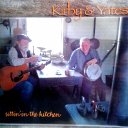
I'd like to share a banjo duet that AlKirby and I recorded alittle over a decade ago. Al is playing Scruggs style and I'm playing clawhammer style. Our friend the late Zeke Mazurek added some fiddleto the mix. This was on our Sittin' In The Kitchen CD.
https://www.banjohangout.org/myhangout/media-player/audio_player2.asp?playlist=1201&musicid=
Yes! Play clawhammer banjo; enjoy Mary Z. Cox’s tasteful banjo playing.
I've enjoyed this thread. Thank you to everyone who shared. Whether you have 1 dulcimer or 10, we share a common love for this beautiful little wooden box with strings.
Have fun! 
Congrats on your new Flatwater, ADK. From what I see, they look and sound great, and have a great price to boot. I think McSpadden has really filled a niche with these new dulcimers.
@lisavb, I'm glad that you and yours have gotten vaccinated. The mass vaccination site near us also operated very efficiently. I'm not sure they were all so successful, though.
When my daughter's school shut down last spring, they initially said it was for a 4-day weekend to do a deep cleaning. Then they canceled the next week of school and then the next. No one understood at the time how long this would last. We all thought it would "blow over," as you say.
I'll have to figure out the best way to accommodate both a small number of people live in person and a larger group spread around the world. But one thing I can definitely conclude: dealing with the pandemic has strengthened rather than weakened the dulcimer community. So many of our local groups had to stop meeting, but now we're connecting with so many more people spread around the country and the world.
That's exciting, Dusty! I envision a world of at least hybrid. One good thing to come out of this has been the online gatherings that have enabled long-distance participation. I treasure my Jessica Comeau workshops. People from all over the country--and outside the US, too!--join. It's wonderful and I intend to participate as long as she holds them.
As to live-streamed concerts...there is an annual jazzfest around here, and they took it online this year. We "attended" a couple of concerts from the comfort of our living room. And we enjoyed them very much. Frankly, traffic and parking are a pain in the butt downtown, and with the live-stream, we didn't have to deal with any of that, just enjoy the concert! We'd do it again even when things are normal.
Just got back from a nearly-a-week vacation. Socially distanced, masked, take-out food only, rented a house, did a lot of driving backroads and photography (which is pretty socially distanced anyway). We were 50% Pfizered at that point. BF got his second shot Monday, I got mine yesterday afternoon. It continues to boggle my mind that, a little over a year ago, I thought this would blow over in a couple of weeks, would be back in the office. Still not in the office, no plans for it at this point, and I sure didn't envision visiting a mass vaccination center and looking forward to a set of shots. The center we used is extremely well run. Bang-zoom, you've been injected and you go sit out your 15 minutes while people keep an eye on you. Very grateful for that center and everyone in it who makes it such a smooth (and even cheerful/pleasant!!) operation.
"The mountaineer 'follers (follows) pickin' it' by means of a quill".
The ‘dulcimore’ is a unique survival of antique musical instruments, and needs explanation. It is oblong, about thirty-four inches in length, with a width at its greatest of about six inches, becoming smaller at each end. Three strings reach from tip to tip, the first and second ones tuned to the same pitch, and the third one forms the bass string. Two octaves and a quarter are marked out upon the three-quarters of an inch piece of wood that supports, and is just under the strings on the top of the instrument. The Mountaineer “toilers pickin'” it by means of a quill, with which he strikes the three strings at the same time with his right hand, over the gap at the larger end, at the same time using in his left hand a small reed with which he produces the air, or his “single string variations.” The music of the dulcimore resembles that of the Scottish bag pipe, in that it is weird and strange. Under its spell one finds himself mysteriously holding communion with the gossamer-like manes of the long-departed souls of the palace of Lady Rowena Trevanion, of Tremaine. The dulcimore is rapidly becoming a thing of the past, because the Mountaineers are becoming ashamed’ of the musical instrument that stands, with many other things, on the dividing line between two civilizations. Only a few of them are extant. Within a few more years and this strange old relic of by-gone days will pass…..
The Kentucky Highlanders from a Native Mountaineer’s Viewpoint
by Josiah Henry Combs
J. L. Richardson and Co.
Lexington, KY 1913
...hope this helps!
Your Spanish dictionary is newer than mine, John!
The Spanish word for "dulcimer", according to the dictionary, is "dulcémele".
I really don't think this a big issue. People along the Pacific coast have played stringed instruments for many years. People buy and play lots of acoustic guitars from inexpensive Asian models to high end Taylors and Martins. These instruments receive no extra treatment for humidity control. The outsides are finished and the insides are not. Build her a dulcimer. The general rule of thumb is that if you are comfortable, the dulcimer will be comfortable.
Ken
"The dulcimer sings a sweet song."
"Dulce" is Latin and Spanish for sweet and "melos" is Greek for tune -- "melodìa" in Spanish. If I were going to make up a Spanish word for dulcimer I think it would be dulce-melodia . Zither is "cìtara" -- a guitar with no neck and a small body.
You could always get a tattoo of a dulcimer and say "See this..."!!!
I live in SW Florida "right next to" the Gulf of Mexico. I fact I lived on a boat here for 10 years. I also used to live on an island on the equator in the far Pacific where the air is reallllllly salty. Never had any issues from that. Of all the dulcimers I've built I only ever had issues with frets raising because I lived where it was dry and the recipient lived where it was damp.
To put it simply, you cannot, just cannot build a wooden instrument and seal it completely against humidity. A normally made dulcimer will not rot/degrade due to ambient environmental conditions. However, hurricanes. typhoons and floods are not "ambient environmental conditions".
How wonderful of you to build your sister a dulcimer. I would think if she has a reasonably "tight" house and does not live with the windows open all the time, the dulcimer may be protected enough kept inside. As exciting as it sounds to sit by the beach to play I probably would not do that. I live in NC with 95% humidity much of the summer with no problem imparted to my dulcimers kept inside the house.
I always carry a pencil, and paper is usually available, and do a rough sketch [for a lot of things]. I would say to most folks that it sounds something like the more treble side of an acoustic guitar [sorry about that ] with less volume and sustain, because that's probably what most can relate to.
Hello all. My sister loves string instruments but has never been able to learn any and when I let her play my dulcimer she had a ton of fun, even pulling it out several times to show friends the couple of beginner songs I showed her. I'd really like to build her one, however she lives in northern California right next to the ocean, so I am very worried about two things:
1 Sending it to her and frets raising making it unplayable when it gets to her
2 It degrading and warping extra fast due to the salty ocean air where she lives.
I would love any and all advice that might help with either or both of these issues.
Thanks y'all for all the help over time
-Nate
I definitely do a very poor job at this when asked. A big factor in explaining it is the level of knowledge the person you are talking to has about musical instruments. I've found that double melody strings are especially hard for non musical people to grasp even when you show them visually how the strings play the same note and are fretted together. I think at the end of the day if people are really interested and you don't have one to show them you should encourage them to look into it, because every time I've ever shown one to someone they are always very surprised when they hear it. The disarmingly simple design of so few strings and so few frets leaves people blown away by the ease at which you can produce beautiful melodies. It really defies most people's expectations and talking about it really doesn't do it justice.
By the way, if you were not aware, the word dulcimer is a portmanteau of the latin word 'dulce' for sweet and the greek word 'melos' for song
You raise a good question. Since you do not always have audiovisual tools at hand perhaps, perhaps a 50 mm x 75 mm picture or photo laminated in plastic you could carry on your person. You might could do front and back, one side the dulcimer the other side someone seated playing it.
As for sound, you have discovered that the dulcimer is capable of many voices. To me its sweetest voice is on a slower song. Perhaps a dulcimer sound clip of a slower melodic song well known to the people of Spain could be loaded to your phone to share the sound that way.
It is likely that many of you will not encounter this problem, but as I mentioned, the dulcimer is unknown in Spain.
I add as a curiosity that "sweet" in Spanish it's said "dulce", so when I say that I play the dulcimer they think something like "sweetwhat?!"
Usually I have a cell phone or a computer at hand, you can show pictures or play videos (that would give for another discussion: "what videos do you play to show how the dulcimer sounds", but I will raise that question another day), but sometimes I don't have at hand any audiovisual example to show what it is and how it sounds.
Then I have to explain what it is and how it sounds. Explaining what it looks like (apart from the different shapes and materials) is easier, what it looks like, how it plays.... (I usually make the joke of "I'm so lazy I wanted an instrument to play sitting down"), but to give you an idea I look for examples of songs, but it's difficult.
If I mention Jean Ritchie, they don't know her (I confess I didn't know her either until I started playing), curiously very few people know Joni Mitchell, which really surprises me.... I usually mention "Lady Jane" by the Rolling Stones, but a lot of people don't know that song...
So, what examples could I use to explain to people what a dulcimer is?
I think Dusty is correct. In 1982 Orthey dulcimers came tuned DAA if I remember correctly. The string gauges would be as Dusty mentioned. When people moved to DAd playing, the middle string probably changed to 0.014.
Ken
"The dulcimer sings a sweet song."
I just got a call from the music shop where I used to host a monthly dulcimer club before we moved online in April or May of last year. As of sometime in June, they will be allowed to host indoor gatherings again. Now I have to establish whether there's sufficient interest. Some of those who used to drive a long way to join us have already expressed that they would like to stay online. Others have joined from around the country and a few from overseas, so I'll either have to do two gatherings a month or perhaps one hybrid gathering. I know they have livestreamed concerts from the music store, but I'm not sure that is interactive enough. Hmm . . .
The tunes we know for Slane/Be Thou My Vision/Banks Of The Bann; The Riddle Song/12th of Never; Twinkle,Twinkle/Baa Baa Black Sheep/Alphabet Song/A Vous Dirai-je Maman; and Aura Lee/Love Me Tender come to mind; but none with more iterations than Rosin The Beau
With those large diameter string pins.... if you can't find loop-end strings, you can make a loop by running the open end of the string through the ball-end and pulling it up tight.
The other Orthey dulcimers I've seen had VSLs of 27". If yours is close to that, a wound bass string around .024 would probably be right. Middle string perhaps .012 or so and the melody string would depend on your tuning. If you are tuning DAA, then keep a .012 for the melody. If DAd, perhaps .010.
My personal preference would be for slightly heavier strings (.026, .014, .012) but those that I list might be close to standard for that size dulcimer.
And as the image suggests, you will need loop end strings, although if all you can get are ball end, you can always remove the ball manually. Just squeeze them gently with plyers and pop them out of the strings.
This is an interesting question. I thought of the "The Ship that Never Returned" which is the basis for "The Wreck Old 97" which is the basis of "The Municipal Train Protest Song" (MTA), which is the basis of "Super Skier." Not quite as many as Rosin the Beau.
With regard to Rosin the Beau, the Limeliters did a parody called "Acres of Limeliters." Randy Sparks and the New Christy Minstrels did a song entitled "Denver" to that tune. I believe it was also the basis for a campaign song,"The Hero of Tippecanoe," for William Henry Harrison. I'm sure there are others, but those are ones that come to mind.
Ken
"The dulcimer sings a sweet song."
We know how common it has been in the folklore tradition to add new lyrics to an old melody. Poets such as Robert Burns did so incessantly, it seems. Woody Guthrie did so, too. I have two questions for you to contemplate: 1) What melodies seem to have been used more than others for new songs; and 2) Have any melodies been used more than Rosin the Beau?
To provide context for the second question, let me point you to the following:
5) Lament of the Old Sourdough
If you have more to add, please do so.
Ex-brass player here! I majored in euphonium and minored in piano in undergrad (was a music education major), and played for several years after graduating. Once I left music ed as a profession, I moved toward instruments that were more fun as a solo player -- piano, uke, autoharp, and now dulcimer. I still love my wind band and brass band music, though, and I still have a lot of connections in the brass world!
If you like folk music on brass, check out Percy Grainger, Gustav Holst, Vaughan Williams, Malcolm Arnold, Edward Gregson, and Philip Sparke. They're the kings of British brass band and folk music!!