Show Us Your Pets!
OFF TOPIC discussions
Strumelia, is there really room for a human on that bed? :)
The 1 1/2 fret does not effect your ability to play chords, just ignore it when figuring out where to place the fretting fingers of your left hand. The 1 1/2 fret may increase the number of chords available to you, but it won't change the fretting positions of those chords already known.
Just be sure to think of that fret as the 1 1/2 fret, and don't be tempted to rename it the 2nd fret. You already have a 1st and a 2nd fret, so the one in between fret 1 and fret 2 is logically called the 1 1/2 fret.
If you take Dusty's great suggestion to use a chord chart, the fret numbers (including the 1 1/2 fret when needed) are clearly indicated on the chord charts.
If you decide to use a capo, it will raise the key and change the name of the chord shapes accordingly, but the actual chord shape formed by your left hand remains the same.
Don, you've gotten some good advice here. As Robin has pointed out, the main keys for folk music are C, D, G, and A, and Skip has explained how to figure out the important I, IV, and V chords in those keys. You can use any chord chart, such as those Stephen Seifert makes available , to learn how to play those chords. You should also be aware of how versatile the barre chord is. I assume you can count to 7 and you know the alphabet.
If 000 is a D chord, then 111 is an E chord, 222 is an F (really F#) chord, 333 is a G chord, 444 is an A chord, 555 is a B chord, and 666 is a C chord. Then we start over with D again at 777. Until you learn more chord voicings, those are safe places for you.
Personally, I prefer to approach this by using a capo, which enables me to play in D, G, and A out of a DAd tuning, and then tuning down a step to CGc to play in C. Then I only have to learn the chord positions for one key but they will work in the others. What I mean by that is that 002 is a D chord when tuned DAd, a G chord with the capo at 3, an A chord with the capo at 4, and a C chord when tuned CGc. So I consider that a I chord rather than remembering four different chord names. The same with the 013. That's a G in DAd, but a C with the capo at 3, a D with the capo at 4, and an F when tuned CGc. I could memorize all that or I could just think of it as a IV chord. I could go on, but hopefully you see my point.
I explain this approach in a document I've attached which was written for a different but related question, and also includes a transposition chart for the major keys. And you can see me demonstrating how to use a capo to move to the keys of G and A this video here .
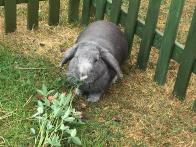
At our house, Wintertime means... cats creating 'impact craters' on our feather bed. Or trying to turn over in the middle of the night but your legs pinned down by a ten ton cat.
Here's what I found the other morning when the sun was shining into our bedroom.
Our two big boys nestled in like Siamese twin pork roasts. Rufus (the red) and Teddy (the grey), who grew up together and are like close brothers even though they're not actually related. When these two are not sleeping or eating, they're tearing around the house while hollering or happily doing body slam wrestling with each other. Boys!
Don;
You can figure out the chords and the notes to each chord using one hand.
Here's how; Looking at your left had, palm up, the thumb = the key note name/I chord name, the ring finger = the IV chord and the little finger = the V chord. To determine the notes to a chord, [you need to know the notes in the scale] ; thumb = base/chord name [root] , middle finger = the 2nd or middle note [Major 3rd] ; the little finger = the 3rd or high note [Perfect 5th] . By the way, the other fingers represent the ii, iii, vi, and vii notes/chords. The real challenge is to find the notes on your MD.
Using a 158 tuning, like DAdd, the basic I [D] chord is 0 fret/open; IV [G] chord is 013/310; V [A] chord is 101. These are the same frets to play the I, IV, and V chords in any key using a 158 tuning. You would have to change the tuning to CGC use this for C or AEA for A, etc. You should go the route of previous posts for a more in depth study.
Don, something which served me well was attending several jams to observe & listen before I ever tried to play in a jam. The skill of jamming-- playing called tunes 'on the fly'-- takes time for some of us to acquire. I know it took me awhile.
Don -- look on the Strothers Chord Finder __ http://strothers.com/chords.html or one of the dozens of dulcimer chord finder charts available to download.
Most of my work starts with 3/4 rough sawn lumber and I work it down from there with a combination of using my surfacer, resawing, and horizontal drum sander, and then hand sanders. Thanks Ken, I'll try to find those ED discussions.
Robert, I still use three thin cross braces but am going to try going to braces that don't go across the entire bottom. Usually my bracing is only for support of the bottom and doesn't touch the top as I rely on the fret board for that support. I do hollow the fretboard to provide more 'open space' inside the instrument; minor addition but I believe every cubic inch helps.
My usual top and bottom thickness is about 1/8", but I try to go thinner than that if I can. As you might have read on this site, or elsewhere, you can get get good sound out of a Tennessee music box even when the top and bottom panels are over 3/8" thick.
Thank you very much, Ken, for the recommendation - I will ask him.
Talk to Jerry Read Smith at Song Of The Wood, in Black Mountain, NC. I understand he has closed the downtown shop, but continues to work out of his home.
I guess I need to add to the description of my "desired" HD that I would like to have the lower half of a 16/15 in order to get the deep tones - with a bottom rail of around 42 '', thickness of around 4'' but only half the height (so only around 8-9 '') - I called this "little" travel one (compared to the complete 16/15) which might be misleading.
If you can find the old ED Discussions by Richard Troughear called An Interesting Dulcimer Experiment, he may have researched and reported on the phenomena. I use 1/8" normally because I can readily get wood already thicknessed to that dimension. Sanding doesn't take off much from that.
I use 1/8" . I tried. 3/16 on my first dulcimers but didn't sound as good. I would love to try 1/16 but then you get into bracing, which might restrain sustain. I think thinner wood would be better if only it were stable... Robert.
I did a search but nada.... so, the question is: What effect does the thickness of the top and bottom of the instrument have on the length of sound sustain? Secondly, what thicknesses do most of you prefer for your tops and bottoms? Right now I am working at 1/8" to 1/10" but mostly 1/8".
I would be interested in a 9/8 hammered dulcimer - but starting with a D3 as the lowest string.
I already have a Dusty strings D45 and a TK O'Brian Travel and would like to have the "advantage" of a little travel one but with the wonderful low tones of a 16/15.
Do you know if there exist these kinds of hammered dulcimers or could you recommend a builder who could build it for a "payable" price?
Hazel's three today. We had a party for her. My grand daughter made her a peanut butter pumpkin cake.
Well, I used a burlap mail sack for a while.
Lass From The Low Countree, by John Jacob Niles, in Aeolian--key of C. I just posted a question about it in the Noter & Drone Group...Maybe I should have posted it here. I'm still learning to navigate the site.
Lady Mary, AKA Palace Grand, is another favorite mournful ballad.
Hi Strumelia,
I believe Cynthia Smith in Orange County area of Los Angeles may be a good contact source for Randy Wilkinson. His arrangements of Elizabethan tunes are still wonderful to play! And his playing was really exceptional. I caught some of his performances at the Summer Solstice Dulcimer Fest in LA in early to mid 1980's. Not aware of what he's now up to.
Best, Peter
"The Unquiet Grave" in Aeolian Mode.
Until you get a capo, you can use a short strip of blue painter's tape to hold the loop in place while you change a string. Probably best not to remove ALL the strings at once. Pull one, replace one... and repeat. If the bridge is not in a slot on top the fretboard, and you remove all the strings, getting the bridge back in the correct place to the nearest millimeter can be a major problem.
I'm really glad I saw your post, Ken. I always used to remove all the strings on my guitar when I changed them out because it also gave me the opportunity to give the fretboard a good cleaning more easily. I have to remember this when I get ready to replace my dulcimer strings!
"Nobody Knows the Trouble I see" and/or "Hang Down Your Head Tom Dooley"
The old ballads, despite being called "Love Songs", are rich with wonderful mournful melodies. Although the old ballads are normally sung unaccompanied, one of my favorites on the mountain dulcimer is "Black Is the Color" in the Aeolian Mode with the dulcimer tuned D-A-C.
Irene, is your second choice for a mournful song possibly "Henry Martin"?
"There were three brothers in Merry Scotland,
In Merry Scotland there were three.
And they did cast lots for to see who should go,
Should go, should go,
And turn robber all on the salt sea.
"The lot it fell upon Henry Martin,
The youngest of all of the three,
That he should turn robber
All on the salt sea, salt sea, salt sea,
For to maintain his two brothers and he."
etc, etc.
I love this song, and play it on the dulcimer (tuned DAC).
For spooky...."Now Anne Bolin was once king Henry's wife, until he had the headsman bob her hair, ah yes, he did her wrong long years ago, and she comes up the night to tell him so, with her head tucked underneath her arm, she walks the bloody tower, with her head tucked underneath her arm at the midnight hour....etc.
There are several in the mournful and sad....1.The Silver Dagger (a man comes to court a girl and her mother's sleeping with a silver dagger.....her daddy was a handsome devil...)...2. The three brothers in Scotland, one had to turn robber to support the other two....3. (I forgot the name,words go)..."I sold my flax, sold my wheel, to buy my love a sword of steel, that he may in the battle wield, Johnny's gone for a shoulder. Shul shul shul a rue...."
I loved singing all of these songs, drove my mother crazy as she was a classical piano teacher. I was a Joan Baez fan. aloha, irene
Don, my guitar-playing husband says for the Keys of A, C, D, and G, especially, it is good to know the I, IV, V chords.
I'll bet those are the same chord progressions that guitar players use when playing accompaniment rather than melody.
Knowing those progressions would certainly save on the reams of paper that most people collect of jam tune tabs and carry around with them. Save having to sight-read or memorize words and tunes as well.
Are there chord progressions I should know for jams?
"Little Margret", "The House Carpenter" - spooky
"Old Black Joe", "The Wreck of the C&O" - mournful
Friends, I just received word that Mike Slone who worked with the Hindman Dulcimer Homecoming in Hindman, KY died. I copied this from the Appalachian Artisan Center Facebook post:
Arrangements for our dear friend and accomplished luthier apprentice, Mike Slone will be at Nelson Frazier Funeral Home. Visitation will be Friday January 4th six to nine p.m. and visitation on Saturday. Funeral will be Sunday January 6th at eleven a.m. with burial in the Slone Family Cemetery.
Mike Slone was a tenacious student of local musical heritage and in particular, of the dulcimers of "Uncle Ed" Thomas and McKinley Craft. In 2012, he began making quality replicas of these significant instruments at the AAC Luthiery and in 2014 was granted a KY Folk and Traditional Arts Apprenticeship Grant to further this work. He became a certified Community Scholar through the Kentucky Arts Council. He was a major contributor and curator of the Museum of the Mountain dulcimer, on permanent display in AAC's Cody building, and he coordinated the Hindman Dulcimer Festival in 2014 and 2015.
Mike Slone was the co-recipient of the 2016 Kentucky Governors Award in the Arts on behalf of the AAC's Hindman Dulcimer Project.
We hold Mike Slone's family in our hearts as we honor the memory of a "true original". A strong voice in the telling of the story of this region.
My sympathy goes out to Mike's family and friends. He was an enthusiastic proponent of the mountain dulcimer.
Ken
"The dulcimer sings a sweet song."
Pets are family!
Dusty Tutle: "As you found out, it can be hard to keep the loop ends on until there is enough tension on the string." I use a set of needle nose pliers to close the loop end so it is just a pressure fit over the pin; it doesn't come off while restringing, but the capo is another good idea.
I didn't think of this. I'm going to try it. I usually use Ken H's method, blue tape.