Cigar Box Guitars
Adventures with 'other' instruments...
This is really nice.
Just a reminder to everyone that we have a Site Questions Forum where you can find answers to many of the most common questions about how FOTMD works:
https://fotmd.com/forums/forum/site-questions-how-do-i
Not sure how to start a forum thread? How to add a video? How to change your avatar picture? How to send a private message? ... take a look there and you will likely find an existing thread explaining just how to do that! If you don't find the existing answer, then add your own new thread in that forum asking how to do a particular thing on FOTMD.
Our site questions forum is the EZ place to get answers on how to use our FOTMD site!
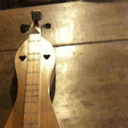
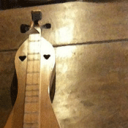
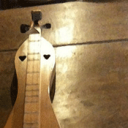
I realize in reading this discussion that seven years ago I promised to post a picture of the dolphin soundholes on my Eedy Beede octave dulcimer.
Since David makes his dulcimers in Florida, the Atlantic dolphin soundholes seem appropriate. What you can't tell in the photo is how small they are. Each is smaller than my thumb.
Lisa -- your jouhikko looks a lot like my Anglo-Saxon Lyres -- but with sound holes!
I've made soundholes in all sorts of shapes over the years -- from circles to the Space Shuttle. All my instruments now have plain circles, in patterns, but I'm partial to leaves -- maple and tulip poplar in particular.
One of my favorite sound hole shapes is the quatrefoil ("four leaf"). Not sure why, I just like it and it has an old feel to it.
I had it used for sound holes on both my jouhikko and my "Elizabethan Garden" epinette des Vosges.
For a traditional dulcimer the classic Dutch Heart soundhole is my favorite, but as others have already said the choice really has to please only one person. In a way it's kind of like choosing a tattoo. Some prefer no tattoo at all. Others prefer to have their whole body covered in tattoos.
One consideration is whether or not you ever intend to resell the dulcimer. Dulcimers with standard heart-shaped soundholes and/or circles will probably have more resale value. A personalized soundhole will only appeal to someone who can appreciate the choice you have made.
I wanted to bump this thread because I have that exact instrument, except mine has no decorations. I found it in a Pittsburgh Guitar Center of all places. There were a couple of articles about them in Dulcimer Players News a couple of years ago. The one the article was acquired originally in a folk music shop in NYC circa 1970’s. The strings on mine were original and very corroded so I replaced them all. It was tuned like a DAD dulcimer, more or less, when I got it, but using a caliper to figure out gauges, plus some research and a little math, told me this particular instrument was supposed to be in G (all Gs and D’s). The citera comes in different sizes and tunings, but on this size G works well.
I wanted Ted to add that some of my pins were loose and would not hold tune. I removed them and discovered that although they look like zither pins, they are not! They are larger (zither pin wrench will not fit) and they are smooth, no thread! I made the worn holes smaller with the old super glue trick, and they are holding fine now. But they are true friction pins. It is good to remember that. Mine came with the correct size wrench, thank goodness. I understand Dave’s comment about not enough leverage. The previous owner solved that problem by sticking too small metal handle of the tuning wrench into the top of a standard wooden file handle. Works like a charm.
Another question-does anyone have a sound clip of a Beard?
Ariane, you're so welcome! Your lovely story made me smile :-) Thank you for sharing that!
Oh Bob - you made such a nice present to me with the upload of Tiny Tim-Tiptoe Through The Tulips!
I heard it when I was a child in the radio here in Germany and I loved it. It was played by a radio station (if I remember correctly every Friday) early in the morning when I had a homey (gemütlich) breakfast with my father before he had to go to work and I to school.
I have never heard it since then and never knew who sang it - and now it brings the best childhood memories back to me - thank you, thank you, thank you! I have tears in my eyes...
Scent and music can be very evocative
Ariane
All this Ukulele talk- I can't get Tiny Tim out of my head; "Tip-toe thru the tulips..."
A while back I was playing around in a music store and had an acoustic bass guitar on my lap. I don't play the bass but can fake it after decades of guitar playing. I was playing the bass line to Taj Majal's version of "She Caught the Katy" and was trying to sing, too. But I couldn't do it. When I expressed frustration, explaining that I can play guitar and sing with no problem, the owner of the store replied that I had to "own the bass" before I'd be able to sing along to it. I thought at first that he was trying to sell me the instrument, but what he meant was that before I'd be able to accompany myself singing I had to really know the bass line perfectly without having to think about it at all.
I think that's right. You can only work on one thing at a time. So if you have to think about where to fret the fingerboard or how you want to vary your vocal line, you can't also be thinking about strumming or picking with your right hand. You have to know one part so well that it's automatic, allowing you to think about the other part.
I don't know if there are any shortcuts. Just repetition. I developed a steady, back-and-forth strumming pattern on the guitar many years ago. It enabled me to become a passable mandolin player pretty quickly and also sped up dramatically my improvement on the dulcimer. I sometimes mess up my right hand in that I don't play the exact rhythm I had intended, but I never get off beat. My right hand just goes back and forth, out, in, out, in. Sometimes I strum all three strings, sometimes just two, sometimes I pick a single string, and sometimes I skip a beat and don't hit any strings, but my hand feels that back-and-forth movement anyway. In fact, if you see me play a half note you will often see an extra little jerk in my hand as I move just to keep the beat even though I am not playing a note. Before you will be really comfortable singing, your strumming hand has to become automatic. Not robotic, for you can still swing and play with feeling, but it has to be something you don't have to think about at all.
And think of how quickly you could learn new tunes if you only have to think about your left hand!
I would suggest muting the strings of your dulcimer with your left hand so that when you strum them you just hear that vamping scratch. Then put on your favorite CD or turn on the radio. Strum along. Find the beat and just strum out once per beat. Once you're comfortable, add the in strum, counting 1 & 2 & 3 & 4 & and strumming out-in-out-in-out-in-out-in. (You can reverse those outs and ins, but you have to reverse them all; be consistent!) Do that over and over and over. Once you're comfortable strumming in both directions, then try to replicate the rhythms you hear. It might involve skipping, accenting, or muting strums, but when you can hear a rhythm and replicate it with your right hand (always maintaining that steady, back-and-forth motion), then I think you'll be ready to sing or play and not worry about that right hand at all. By then you'll "own" it.
All this Ukulele talk- I can't get Tiny Tim out of my head; "Tip-toe thru the tulips..."
Sandi,
Our tastes change and methods may change over time. Sometimes we add something different. Sometimes we change to a different way of playing. How wonderful the versatility of this special instrument which we all love.
Ken, I always love the way you think! I'm not sure I explained well though... At times my timing is off with my strumming. Just in the middle of a song, sometimes more than once, out of the blue. So crazy!
Lois, you are so right about singing and playing together. Right now I have a song where I want to sing a word down three notes, but I find it impossible to keep strumming the melody while adding that little trill. LOL! I just shared in the noter thread that now I'm all about DAA with a noter, rather than where I was last year wanting to learn chords in DAD. SO fickle! LOL! Thank you ever so much for your encouragement and for becoming a following friend.
Thank you, Lisa! ~great info~ Thank you, Ken! Thank you, Richard! Funny that I used to be all about wanting to learn to chord in DAD, but now I'm in a season where I'm all about DAA with a noter! LOL!
Sandi,
That little Wren sounds might good. Liked your playing
Definitely Laughing Out Loud over your dulcimer-playing KY moonshiner, Lisa. My best market for gigs is here in Michigan which has a doozie of rum-running type history from Prohibition, so my post-Prohibition reporter looking back at it will have more than enough to cover looking at that. My trick right now is organizing it in a compact format, there's so much available to say. I figure the Ooo-koo-lay-lay will help me keep it light and entertaining. I want to focus on how it turned normally law-abiding people into bootleggers and made drinking the opposite of what was intended. (I plan to start with a W.C.T. U. song -- learned years ago as KY's Carrie Nation came to Holly, MI to smash the bars and for many years there was an annual Carrie Nation festival and pageant.)
You and Terry have convinced me to stay with a tenor.
Heeheehee... us profezional editers love it anytime we can solve a problem by proofreading! It happens so seldom...
As Ken mentioned, the Hawaiian pronunciation is different from what we typically say on the mainland. Ooo-koo-lay-lay (like the cow says "Moo"). If you pronounce it like a Hawaiian it's easier to spell. This is a good place for me to admit I typed "pronounciation" and would not have noticed except for the spellcheck squiggly line ;-)
I've been on the UU forum so long, I don't remember whether it was hard for me to get approved. "Junior Member" merely means you haven't posted much yet. Beware UAS (ukulele acquisition syndrome) -- there are a lot of enablers on that site.
Lyon & Healy marketed a "tenor ukulele" in 1923. No baritone is documented before 1948, though you could plausibly argue about tiples and taro-patch guitars. The classic 1920s sound is a soprano uke with re-entrant tuning gCEA or aDF#B. Any uke would pass for most audiences. I've pulled off some ren faire living history with my MD that only looks like a scheitholt if you're not a scheitholt expert -- because the only scheitholt experts I've ever met are MD players who would never out one of their own! I have to assume there are very few people who would notice a bari uke is out of period -- and they are probably fellow travelers.
Don't worry about matching your singing voice to the uke. If anything, contrast is good. I sing soprano and prefer a uke that can fill in my missing low-end resonance, like a concert Fluke or a warm mahogany tenor. My alto-singing friends often prefer a bright soprano/concert uke that adds some ringing high tones.
Please keep us in the loop about your prohibition storytelling. That sounds like a blast! You know... you could add a character who makes moonshine in Kentucky, fends off the revenuers and plays... a mountain dulcimer!
I could swear we've been talking about ukuleles recently on FOTMD, maybe off in a group discussion that not everybody sees. There are a bunch of uke players around here. Welcome to the underground.
Thanks, Ken, Susie, & Terry. I was wondering if this and my earlier trying to get started was worth posting. Just figured it would be worthwhile for someone, even though it's an"Other Instrument."
Terry, you gave me the rationale I tried to explain to my husband about why I bothered. Dunno if you know if the baritone uke was around by the early 30s or not. My voice is low enough I often sing an octave lower. Probably I'm better keeping the tenor for that 20s sound.
Thanks, Ken, for reminding me it's perfectly acceptable to strum to the rhythm of your words. Those of us singing while playing an instrument often talk about the difficulty of doing both together. Let's face it, those words have a rhythm and the great musicians who want to show off their strums make us feel inadequate if we don't have a strum pattern.
I was so taken with a few things Sandi said that I decided to follow her. (That's why we follow .) A discussion she started last year showed up (it now is gone, crowded out by recent comments?). Fortunately I remembered part of the title and the Search helped me find I Am SO in Over My Head again. While the discussion was mainly about playing chords, I especially like Strumelia's point about people getting so carried away with their chords and fancy playing that you can't recognize the melody.
Sandi, I agree with Dusty Turtle (Dusty, I would have sworn you played forever! , but your musicianship pre-dates the MD) on that discussion when he talked about how something he couldn't play at one point, six months later he came back to it and now was up to it.
My reason for bringing up that old discussion is it shows how we need to keep reviewing old topics. We don't always "get it" right away once the discussion is over. Keep at it, Sandi. You're definitely not alone.
Thanks, Ken, Susie, & Terry. I was wondering if this and my earlier trying to get started was worth posting. Just figured it would be worthwhile for someone, even though it's an"Other Instrument."
Your post was worth while. Ukes are fun and there's a lot of love for them. Others might find interest in the Ukulele Underground forum too.
Thanks, Ken, Susie, & Terry. I was wondering if this and my earlier trying to get started was worth posting. Just figured it would be worthwhile for someone, even though it's an"Other Instrument."
Terry, you gave me the rationale I tried to explain to my husband about why I bothered. Dunno if you know if the baritone uke was around by the early 30s or not. My voice is low enough I often sing an octave lower. Probably I'm better keeping the tenor for that 20s sound.
Thank you, Lisa, for fixing the link. Thank you, Sandi, for sharing Take Time To Be Holy. Sounds good.
Ken
"The dulcimer sings a sweet song."
. . . So NEVER tell a mandolin player his instrument sounds like a ukulele!
I can just picture it! We have some pretty dedicated mandolin players at Paint Creek Folklore Society.
I fixed Sandi's link. FWIW to everyone... if you put a link on its own line (hit 'enter' before pasting the link), it creates a working hotlink more reliably.
Glad you finally made it in to UU! I've been a member there for quite a few years. It's actually a fun and friendly site. But yes, it's ukulele!
The funny story I have is about a friend of mine who is a mandolin player, of professional level. He is awesome. I was playing bluegrass with him at a neighborhood get-together (me on guitar) and a young boy commented on his instrument. He said it sounded like a ukulele. Boy, if looks could kill. So NEVER tell a mandolin player his instrument sounds like a ukulele!
Lois, thanks for sharing your story. Having recently visited Hawaii, I am aware of how ukulele is pronounced differently there (and perhaps correctly). How we say a word often influences how we spell it. I am developing an interest in the ukulele. I have scraps of wood left over from building four hammered dulcimers and wondered what to do with it. I found a plan for a standard size ukulele. I discovered that i could use the leftover wood to make a few ukuleles. I am now working on building six of them; three grandsons, son-in-law, son, and myself. I don't know where it will lead, but it is fun working on them.
Ken
"The dulcimer sings a sweet song."
Sandi, there must be a bad link in your post. When I click on the YouTube link it takes me back to this discussion.
Ken
"The dulcimer sings a sweet song."
IMHO there are two ways to strum -- strum to a fixed rhythm, and strum to the rhythm of the words. Not being fond of little blue guys living in cities (metrognomes), I have personally always strummed to the rhythm of the words.
Those aren't "crazy chops"... those are embellishments which make the tune yours , rather than blindly following of someone else's tab or SMN.
Part of it depends on the kind of music you play -- I love the Child Ballads of Scotland and England, as well as 19th and early 20th century folk and Americana music. If you play wordless dance tunes it's different -- you need the fixed rhythm or the dancers will go nuts.
I have found that as time goes on (or I get older?) my strumming is less rhythmical! Like I cannot keep time in the same way through an entire song without some crazy chops in there... WHAT is THAT about? LOL! Please tell me I'm not the only one....
Kusani, THANK YOU!
Richard, THANK YOU! I am absolutely IN LOVE with my Feather Dulcimer! Here's a little vid of what she sounds like, if you're interested:
https://www.youtube.com/watch?v=GF2EfC_l6Z0
I am surprised that even for the idea of performing I have made this my main instrument.
Charles, thank you for your creative ideas! I am especially intrigued by the cello tuning peg....
Lois that's very kind of you to post. FOTMD server/software costs are paid entirely from member donations, and all donations are much appreciated.
As for my time, well it's a labor of love for me, as well as our volunteer moderators.
My favorite noter is a wooden dowel 3/8" x 3" that I soaked in a light motor oil for a week. I've been using it for ten years now. I've also used an ebony cello tuning peg, a small walrus oosic (Google that one!),an antique bobbin, a feather shaft, a Bic pen and various dried hardwood twigs but I keep going back to my old dowel rod.
Consider this a P.S. addressed to other members: Lisa/Strumelia keeps this site running with her own time and her own money beyond any money we don't contribute -- I am sure we don't donate anywhere near enough to keep it running. I'm not planning on selling anything, but don't want to see this site follow Everything Dulcimer into oblivion.
This discussion started on another location here, A Fretter Box , but I promised to post eventually the story of it here. There are some resources included and, storyteller that I am, a story, too. It all started because I'm developing a storytelling program about Prohibition and that era's hot instrument was the ukulele.
As I write this, a 14 year-old just won the national spelling bee. I never went into spelling bees beyond my own schools, but am generally a good speller. In years of proofreading my own writing and that of others I've always said it's easier to proofread somebody else's writing than your own. I blame that overconfidence for what happened.
There's a site called Ukulele Underground , which is probably the ukulele equivalent of FOTMD and I now remember why I didn't join there right away. Their registration and even Contact form has a "random question" which is always "What is this forum about?" I tried the uke; ukelele; playing ukelele and kept getting rejected with "The answer given for the random question was incorrect."
This time I was determined and sent an email to an active performing member explaining the problem and asking him to pass it along to a moderator. He didn't know who the site moderators might be, but gave me a name to contact. That, too, required some detective work as the name wasn't that uncommon and, added to that, the person recommended lived in Chicago where several people had that name. Eventually I reached the correct person and was told who the moderator/owner of the site was. I passed along my tale of woe to the owner and was given advice to get registered. (None of these three deeply involved ukulele players, after my repeating to them "I tried the uke; ukelele; playing ukelele and keep getting rejected with 'The answer given for the random question was incorrect.' " noticed my typo.) Even as I write this I find my tendency to write uk e lele instead of uk u lele persists.
Thank heavens for Lisa Golladay's proofreading skills! She caught it and also suggested I try http://www.doctoruke.com for my desired Twenties Music. She's right on that, too, and, if it weren't playing a uke, I might have listed how it has kept me busy this past month working on "Nobody Knows You When You're Down and Out" -- a piece I already love on guitar, so it's been fun adapting it for a new instrument. Dr. Uke gives chords, lyrics, and an audio recording all together.
Back to the U.Underground doorkeeper. I reapplied, this time correctly spelling ukulele and was again rejected. The message said because I might be a spammer! The message also said if I believe this was in error to write using their Contact. O.k., I wrote, spelling correctly. Somehow I was admitted (probably on probation?) as a Junior Member.
At the risk of sounding ungrateful I find myself contrasting their site with FOTMD and even further as I'm an admin on a storytelling network and sympathize with the problem of keeping out spammers. FOTMD handles this so much better than the uke site. A few years ago Strumelia even gave me an IP locator to help identify some of the more obvious spammers. My own admin work also makes me sympathetic to poor spellers and that site also has many members for whom English is their second language. This just shows the inflexibility of a computerized gatekeeper.
Further reviewing FOTMD vs. U.U., their welcomes are posted in offiffiffic'al Sticky Notes for you to find. FOTMD has members who give new members a few posts of welcome notes. Yes, it takes up space on the Timeline and we've all seen it many times, but for newbies it is indeed Welcoming.
Dunno how many members here have an interest in ukuleles. The last post in this forum about them was five years ago. Speaking as someone who knows the mountain dulcimer is my first love, BUT have a Folk Musical Instrument Petting Zoo, I have learned to never say "never." That includes the dulcimer, at one time I was sure I would never want one...but that's another story.
There are other ukulele resources you can find with a search engine, but just remember: Call 'em Ukes, Ukuleles, but never Ukeleles!