dulcimer gender studies
OFF TOPIC discussions
My baritone's name is Curly Sue because of the really pretty curly maple she is made of.
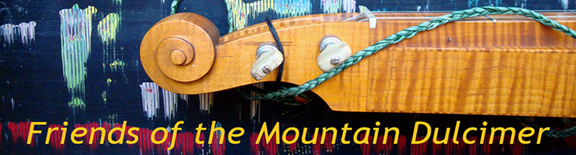
My baritone's name is Curly Sue because of the really pretty curly maple she is made of.
How about Nutmeg , since Connecticut is the Nutmeg State?
I originally thought it odd to name instruments. I never named by guitar, my 12-string guitar, or my mandolin. But it's easy enough to say "the Guild" or "the 12-string." It's a lot harder to say "my six-string baritone dulcimette by Ron Ewing."
My sense is that folks who have lots of dulcimers give them names, but if you only have one, there is no need. When I was in college I had a cat named TC for "the cat." I saw no reason for a real name since it was the only cat in the household. I only named my first dulcimer when it became my first dulcimer, meaning when I got a second one. When it was the only one I had, it was just "my dulcimer."
But my question here is about gender. Why is your bike female? Why are most dulcimers female? Maybe they are not. The hourglass shape definitely seems feminine to me, but a teardrop? I don't know.
And what about Jim's football-shaped dulcimer? Maybe he should call it "Jim Pluck-it." [For those who don't know, Jim Plunkett was a Heisman Trophy-winning quarterback with Stanford University who went on to win two Super Bowls with the Oakland Raiders back in the 70s and early 80s.]
B. Ross Ashley said:
That's odd, I never thought to name my dulcimer ... my bike is Madama Butterfly, because she is an Italian/Taiwanese hybrid (a Bianchi Boardwalk, built in Taiwan about 1987.) I probably ought to name the dulci. Hmmm. It's a stock Connecticut-built 1989 Folkcraft cherry teardrop.
Cherry Poptart? Yeah, right.

That's odd, I never thought to name my dulcimer ... my bike is Madama Butterfly, because she is an Italian/Taiwanese hybrid (a Bianchi Boardwalk, built in Taiwan about 1987.) I probably ought to name the dulci. Hmmm. It's a stock Connecticut-built 1989 Folkcraft cherry teardrop.
Cherry Poptart? Yeah, right.
There's got to be a name in your description, Judy: "beautiful honey blond buttery color." That sounds like a girl to me.
Judy said:
Fun topic! I just got mine and haven't thought of a name yet. I'd love some suggestions. She (or he) is made of cherry and sitka spruce-a beautiful honey blond buttery color. I'm anxious to hear everyone's names
Got one named Mae for Mae West. An early Berg with a very curvaceous body and wasp waist. Other than that, I have Magic, Comet, Thistle, Dearheart, Irish, Ivy (ivy leaves for soundholes) Flame, Flair, Starbright etc. These are all based on the soundhole pattern.
Please don't be offended. It's late andI'm a goofball.
Today my daughter said to me, "Daddy, I think you should give at least one of your dulcimers a boy's name. They can't all be girls." (Let's see, Rosa, Queenie, Lucinda, well she's a tomboy . . . )
If she were older, I might have responded, "But the curves, honey, the curves are just so . . . so . . . voluptuous and alluring."
And whoever said "Dragonfly" was a girl anyway?
And she named her dulcimer (an Eedy Beede with dolphin sound holes) "Splash!" A splash ain't got no gender, does it?
Among those of you who name your dulcimers, have you chosen male names, female names, or a combination? Has anyone stuck to those gender-neutral names like Carmen, Pat, Chris, or Alex?
Guitars have always been hermaphroditic, with a female body and a phallic neck. What about dulcimers? (And don't get me started on trombones!)
I cannot encourage you strongly enough to have the 1 1/2 fret added to your dulcimer! It opens so many doors. I usemine somewhere in virtually every song I play. I'll bet you will find that you do, too!
McSpadden makes a nice dulcimer. Some have more voice than others, of course, so it would be nice if you could play it first. However, short of going to the factory, you can only try one at a music shop or a festival. I hope you will consider trying one before you buy it. A number of my friends have not and were disappointed.
Good luck!
Dewey
Hi Barbara,
Yes - the Ionian set melody strings (0.012)can be tuned up to "d". It is something that I do all the time. They are stiffer than 0.010 strings but quite managable really. I quite like to run 3 strings on my McSpaddens by taking off the inner melody string to end up with 0.022 bass, 0.012 middle and 0.012 melody. It then becomes very easy to play in all types of playing style and tunings like that and has a very sweet, uncluttered"old time" sound. I think that those standard McSpaddens are a great workhorse - not the prettiest or most fancy dulcimer out there but alovely pragmatic musician's instrument and very versatile.
Robin
Hi Barbara,
I would echo what has been said here. I really wouldn't worry too much about getting a compensated bridge. McSpadden untertake the compensation because the string gauges they use for a pureD,A,dd set-up have a 4 gauge difference between the middle and melody strings. Because of this the middle string (a 0.014)pulls just a fraction sharper higher up the fretboard than the melody strings (0.010). But it is very, verymarginal and the reality is you can compensate with your initial tuning and playing style if your bridge is flat across (like 90% of us end up doing). Also, the standard Ionian strings that McSpadden fit (0.022, 0.012, 0.012, 0.012) for D,A,Awill go to D,A,dd with no problem anyway - and the compensation is even less necessary in that set-up.
The McSpadden bridge compensation is the "perfect" for D,A,dd and one specific string gauge set. A flat non-compansated bridge is the "perfectly acceptable" for all types of set-up and playing styles.
Regarding woods - Simply be led by your ears, hands and eyes when you go to choose your new dulcimer. All those standard McSpaddens are great instruments so just pick the one that really talks to you and you won't go wrong. There are differences between the various woods and also differences between two dulcimers build of the same woods because no two pieces of wood are identical- so just choose the one that feels right for you.
Robin
From what I have read from actual McSpadden owners, the bridge compensation does not make a very noticeable audible difference. Most dulcimers do not have compensated bridges and they sound pretty good. I myself wouldn't worry too much about it.
Every McSpadden I have ever heard sounds awesome- and most of them probably have 'regular' bridges.
Paul you are right - the relief (or lack of it) on the fretboard will effect the action, feel and over all playability of a dulcimer. I do somewhere around 200 to 300 resonator guitar set-ups per year - fret leveling, setting relief, cutting nuts and cutting new bridges. And, to get it right, the sequence is relief first, then nut and then bridge. With a dulcimer the player can do nothing about the instrument's relief, unless you want to take off all the frets and sand and re-finish the fretboard !!!! The best playing dulcimers I get through my shop are those with just a touch of relief in the fretboard. I get to compare a lot of instruments side by side so feel pretty justified in saying that a little relief makes a big difference. You can run a lower action at the 7th and still have a beautifully clean playing instrument for chord melody style if there is a touch of relief in the fretboard.
BUT NOTER DRONE IS DIFFERENT FOR ME - Having a touch of relief remains the same - I want that on all my dulcimers. However, I run a much higher action at both nut and bridge. I want absolute clarityfrom my melody string, working off an in-strum lead and using very stiff picks (quills of wood strummer). I've just measured my own noter drone specific instruments - the ones where I have cut new nuts and bridges to set the action to suit my playing style - and my prefered action is way, way higher than nickle and dime. For example the Prichard replica I have, which I cut a new nut and bridge for, has an action of 1.5mm 'above' the first fret (I could sit a dime on top of the fret) and 3mm above the 7th. I'm using 0.013 gauge piano wire for the melody string on that instrument. I have an old dulcimer with the action even higher but the fret pattern is visibly shifted to the left on that dulcimer and the first fret even more so. With a fret pattern set by ear on older dulcimers you often see this shifted 1st fret - and it is due to the nut height that the early players would use. I see that Bobby Ratliff at Slate Creek Dulcimers, who builds noter drone specific instruments, fits a floating bridge so players can intonate the melody string if they change action height or string gauges or tuning tension. It is a very good idea as I certainly need my VSL slightly longer than the VSL of the fret scale. Kevin Messenger builds this fret pattern shift into his Prichard replicas. Because pretty much all contemporary dulcimers are designed around D,A,d and chord melody playing the bigger volume builders standardise their action, string gauges and pitch intonation around set parameters. This is why if you tune the open strings of many contemporary dulcimers to exactly D,A,A and play with a noter the darn instrument plays sharp  So us noter drone players end up tuning the drones against the fretted root note on the melody string (the 'd' at the 3rd fret) and accept that our melody string open A will be slightly flatter than our drone string open A
So, coming back to string height, no one set height will suit every dulcimer or player. However, you can't just change the string height or gauges or tunings and expect all to be perfect. And, if you do get a comission for a build from a noter drone player have a think about the implication on the fret pattern that running a higher action and higher string gauge will have. And don't forget that a noter drone player doesn't need equal temperament fretting as they are not playing across the strings fret against fret - you could opt for a mean tone or just intonation or quarter-comma meantone or simply set the frets by ear
It's a good idea to put a straight edge on the fret board first, to check for high frets, or any up or down curve in the fret board itself. If all is well, I start by lowering the nut, and get th1st fret string height close to what I want, then lower the bridge to get the octave measurement. If necessary, I adjust the nut a slight bit more, but it isn't usually much. The nickle/dime dimensions work well, but if US coins aren't available, you might have to resort to actual measuring devices, at least to measure local coins.
Paul
Fret wire comes in different sizes, so the height of the frets above the fret board can vary. The height of the nut or bridge saddle above the fret board are unimportant, it's the height of the strings above the frets that affect playability. The variable of fret wire alone makes a standard measurement difficult to establish. What is the height of the fret wire used on your dulcimer? And how much was removed in leveling, crowning, and polishing the frets after installation? The person doing the set up takes measurements of each instrument they work on, and adjusts the nut and bridge height for each instrument. Most builders leave nut and saddle height a bit high until the instrument is sold, and adjust to each players preferences.
Paul
As Bobby sez, height of the strings above the fretboard as a measure, has too many variables generally. We normally do not measure the height of the nut or the bridge above the surface of the fretboard. However, the 'traditional recommended starting point' for good action height is a dime sitting on the fretboard at the first fret. A dime is 1.55mm,so 1.5 to 1.6mm is a good start. At the same time the strings should be the thickness of a nickel above the 7th fret. A US nickel is 1.95mm so 2.0mm above the 7th fret is the place to start.
I also agree with Marc and recommend MusEdit. I use it for all my SMN and dulcimer tab. Its learning curve probably isn't any different than other software. You can use MusEdit for basic SMN or tab, or you can use the software to its fullest extent and really make it look extremely professional. I learn something new with the software each time I use it. I've really gotten into writing my own tab from existing songs (I play chord/melody style) and am having alot of fun doing it, thanks to this software. I've always gotten good feedback when contacting Doug. I haven't had to contact him for awhile, though. I think my work looks pretty sharp thanks to this software (it actually looks better than some tab that I get at dulcimer festivals ). Oh, you can also change the tab options for writing tab for different fret configurations....for example, if you have a 1+ fret.
What I called HD tab is really just the note names below the SMN just like MD tab. It makes it much easier for me. Tabledit has afeaturethat allows you to change between the tab numbers and the note name with just the press of a key [actually 2 keys, shift and 4, the $]. I also use the reverse tab function so any 'stacked' notes, like chords, read the same vertically as the SMN, bass notes at the bottom.
I'd second Marc's recommendation of MusEdit. Excellent programme for MD, freeware now, and runs well on all versions of Windows (and Linux and OS X if you install it in Wine.) Doug Rogers is travelling in Asia now and is really hard to contact for support, but there is a user group on Yahoo which has provided me with some help in the past: http://launch.groups.yahoo.com/group/musedit/
I would not know anything about tabs for the HD, I've never seen one.
I used Musedit for a long time for MD tab. It's a good program and he did make it free but the programmer isn't working on it any more. I switched to Tabledit and found it good for the MD and it has a couple of features that lend itself to setting up MD tab for the HD if you don't read SMN very well. The programmer is very responsive to his customers also and he has a web page for customers to post comments etc. You may want to check them both out to see which youprefer. I feel they are both about the same as far as learning curve.
Since this thread has been resurrected, I will chime back in and mention that I now have my Starsong also. It is absolutely wonderful. It looks fantastic, but more importantly it sounds absolutely lovely. It's easily the most responsive dulcimer I've ever owned. I am extremely pleased with it. I'll also echo Ilene's comments above - Gary is a great guy and a fantastic musician. For anyone who decides to get on the build list - you won't regret it. It may take a while, but you will be thrilled.
One more thing to mention - after playing many dulcimers with different VSLs over the years, I've come to realize I'm most comfortable playing instruments with VSLs from 26 in. to 26 1/2 in. I asked Gary to build mine with a 26 1/4 in VSL (instead of his usual 27 in VSL), and he's now got that length templated. So for anyone out there who may want a Starsong but was thinking they wanted the smaller VSL of Gary's A-frame model (VSL= 26 in), you now have another choice. :)
Thanks for your response, van. Your instrument sounds beautiful. Enjoy it!
Hello Van. Congrats on your Starsong. I'd love to see/hear it if you'd like to post some photos/videos. If you don't mind me asking, what woods did you go with?
I am next up on Gary's build list (I was two people behind you on his list.) For anyone who's thinking of ordering, do it sooner rather than later - there were 15 people behind me on the list as of April 15, 2013, and I'm sure that number has grown significantly. I've only had a chance to play a couple Starsongs, but they were both gorgeous instruments to play, to listen to, and to look at. I am eagerly awaiting my own. :)
Linda I. Vickers said:
Vivian, The Gallier dulcimers are designed primarily for playing fingerpicking style (Gary fingerpicks). Last May I decided to order an A-Frame which is the smaller version (26 VSL vs. 27 VSL for the Starsong) of Gary's dulcimer. Gary designed it(you can read the specifics on his website) and taught his brother, Les, to make it. At that time, he quoted me this price for the dulcimer. The A Frame is $625 which includes shipping and handling, hardwood fretboard overlay, position markers, edge binding on the top perimeter, and strap buttons. There is an optional gig bag case that is $40.There are two tuneson youtube and can be accessed under the A-Frame information that areplayed by Josh Noe (The Trip Home and Indigo Out). My only experience is playing the A-Frame fingerpicking style and with its thinner wood and other Gallier design characteristics (see the website), it has an exceptionally pretty sound. The wait isn't as long for Les to complete a dulcimer but he is a full-time musician so there is a waiting period depending on what might be going on. He had a few delays with my dulcimer; I received the dulcimer at the end of September. Would I buy it again? Yes I would! If anyone has any other questions on the A-Frame they would like an opinion on - I'll glady share mine. Hope ya'll are having a great new year. Linda
Hi Linda...Thanks for the reply! I did write to Gary and he did send me the links you spoke of, and told me about his brother making the smaller A-frame, so it is very good to hear from you about that instrument. I am glad to hear that you were really pleased with it. I was concerned, because it did seem to be a bit smaller, and I want to make sure I get something that has a true dulcimer sound...I really am a bit nervous about ordering something off the internet, and not being able to hear it in person, but You Tube really helps with that sometimes! I think I have decided to go with Nic Hambas for now...I have heard good things about his instruments, but I do intend to get on a list for the Gallier, I really want one, especially since I want to explore different styles of playing! I think I am going to be a victim of DAD, like so many others that I have met on this site...! Sounds like a nice disease to catch, anyway! Maybe by the time he is able to build me one I will be much more informed of my own style and so can get more specific on the details...
Thanks again for your input, Vivian
Vivian, The Gallier dulcimers are designed primarily for playing fingerpicking style (Gary fingerpicks). Last May I decided to order an A-Frame which is the smaller version (26 VSL vs. 27 VSL for the Starsong) of Gary's dulcimer. Gary designed it(you can read the specifics on his website) and taught his brother, Les, to make it. At that time, he quoted me this price for the dulcimer. The A Frame is $625 which includes shipping and handling, hardwood fretboard overlay, position markers, edge binding on the top perimeter, and strap buttons. There is an optional gig bag case that is $40.There are two tuneson youtube and can be accessed under the A-Frame information that areplayed by Josh Noe (The Trip Home and Indigo Out). My only experience is playing the A-Frame fingerpicking style and with its thinner wood and other Gallier design characteristics (see the website), it has an exceptionally pretty sound. The wait isn't as long for Les to complete a dulcimer but he is a full-time musician so there is a waiting period depending on what might be going on. He had a few delays with my dulcimer; I received the dulcimer at the end of September. Would I buy it again? Yes I would! If anyone has any other questions on the A-Frame they would like an opinion on - I'll glady share mine. Hope ya'll are having a great new year. Linda
Thanks Vivian. I think we truly do have the same approach. Since I tend towards more contemporary instruments and love a deeper 'voice', I ended up ordering a dulcimer from Tom Yocky. His design and technology and workmanship are very, very good plus he's a great person to deal with. The sound is deep and lovely and I practice something on it every day. LadyHawk is her name :) and he carved an elegant hawk in flight on it for me. It is quite lovely and his design intrigued me. I didn't have the sense to stop there so I wrote to Janita Baker at Blue Lion Instruments. I had heard their workmanship was outstanding. I ended up ordering the IIR rosewood flatpeg hourglass dulcimer and had a smaller mother of pearl matching rose put on the peghead. It has a smaller scale length than my Yocky. It is incredibly beautiful with workmanship everyone is familiar with and has a higher 'voice' than the Yocky. They are both lovely and play well but in different ways. The Yocky is strength and deep toned whereas the Blue Lion is a smaller, more elegant instrument. I'm very pleased with my choices and my plan is to learn more about the fine points and music theory before venturing into another dulcimer. With so much to learn, I can't justify another expensive dulcimer at this point but I'm sure the day will come. If you want a delicate, higher voice (but no twang sound) and are interested in something at the price the custom models go for then I can say a Blue Lion is a work of art and is a very high quality instrument. I'm finding I'm tending towards the larger sound boxes that give me a deep tone but who knows what will come. I've also found that I prefer fingerpicking over strumming or using a noter and the music I'm trying to learn is also more contemporary but then that is just my style. I wish you well with your selection and just know you'll have a great time with whatever you buy.
Vivian Hays said:
Thanks so much for all your input! It all sounds very reasonable and true, and just the kind of guidance I need right now. I feel exactly the way Barbara Maas explained it, (thanks Barbara), lots of enthusiasm, bouncing all over the place, but with lots of questions attached! I do want to make a good informed decision, and not go nuts, but still get what I need to feel successful and happy in the end with my choice....I had actually written to Gary Gallier about his instruments and knew he had quite a waiting list going, (about 18 months) but I figured I would get on it if he was willing...I do intend to buy a less expensive (but still gorgeous!) instrument at this time, but was just really impressed with his dulcimer.
I also know that I can pass on any instrument I purchase now to one of my nieces and they would be thrilled! For now, I think I am leaning towards Nic Hambas. I spoke with him yesterday, and he is very helpful and informative. I also love the Blue Lion, but they are very spendy as well!
I wish I could actually see, touch, hear, before I choose, but that is just not possible. I really am glad I found this site, it has been very helpful and enjoyable to get such wonderful, friendly and well informed advice. Thanks! Vivian
Thanks so much for all your input! It all sounds very reasonable and true, and just the kind of guidance I need right now. I feel exactly the way Barbara Maas explained it, (thanks Barbara), lots of enthusiasm, bouncing all over the place, but with lots of questions attached! I do want to make a good informed decision, and not go nuts, but still get what I need to feel successful and happy in the end with my choice....I had actually written to Gary Gallier about his instruments and knew he had quite a waiting list going, (about 18 months) but I figured I would get on it if he was willing...I do intend to buy a less expensive (but still gorgeous!) instrument at this time, but was just really impressed with his dulcimer.
I also know that I can pass on any instrument I purchase now to one of my nieces and they would be thrilled! For now, I think I am leaning towards Nic Hambas. I spoke with him yesterday, and he is very helpful and informative. I also love the Blue Lion, but they are very spendy as well!
I wish I could actually see, touch, hear, before I choose, but that is just not possible. I really am glad I found this site, it has been very helpful and enjoyable to get such wonderful, friendly and well informed advice. Thanks! Vivian
Ken,
As usual, you are the voice of reason. I think when we start out in the dulcimer world, we want the sound that is the best even though we don't actually know how to classify the 'best' because we don't have the experience listening and playing that you do. I don't know about others, but I really struggled with the question ... is cost equal to value? does it make sense for me to invest $1000 at this point? I know my enthusiasm was unbounded and I went overboard with books, equipment and even ended up with two dulcimers. I didn't want a poor sounding, beginner's dulcimer that I wouldn't enjoy hearing and playing but I'm far from equal to needing a Gallier at this stage. It's so hard to gear back to what you really need rather than what all is 'out there'. I heard the Gallier played on YouTube and the softness and depth of sound were simply beautiful. The instrument is equally as beautiful. Thanks for the reminder that we can be truly pleased and enjoy a lesser costly instrument although his would certainly be something to dream of having one day. Your advice in so many areas is welcome and I always look for your comments. Thanks for all the information you share.
Regards,
Barbara
Gary, like Dwain Wilder of Bear Mountain, has a VERY long waiting list, if the list is even open. Beautiful and beautiful sounding. Worth the money? Worth the wait? Both those builders are making Master class concert grade instruments; and if you're just starting out I can think of a dozen builders who's $300-$500 class instruments are more than enough for 99% of the players out there...
Hi Vivian,
I don't know whether the situation has changed at all, but I had spoken with Gary back in early July and at that time he told me that he was having to turn away orders and that if took a new order the wait would be at least 18 months due to people already on a waiting list.
Gary's dulcimers do look and sound fantastic. The hourglass Starsong was $1,400 back in July.
Kind regards,
Brian
Hi, I have been looking at many different builders and have had many helpful replies from members on this site (Thanks!) I recently came across Gary Gallier's site and was so impressed by the beauty and very different design of his instruments. I believe the hourglass is called the Starsong. Does anyone have any input on them? I couldn't find any pricing on his site at all, so have no idea of the prices, but love the looks and sound (You Tube). I would appreciate any input! As a complete beginner I want all the input I can get on the instruments and builders before choosing one. Thanks! Vivian
Head over to Strumelia's other site dedicated to traditional playing (link on the Main Page)--in addition to all of the great info found throughout, there are additional links about playing techniques ("Useful Traditional Dulcimer Links"). Read Ken Hulmes "Get Noter-ized" article--several pages of helpful (to say the least) info regarding different ways to hold the noter, different materials, etc.
Bryan, not sure if you've already looked at my noter blog, but here are a few suggestions:
http://dulcimer-noter-drone.blogspot.com/2009/12/beginner-tips-on-using-noter.html
http://dulcimer-noter-drone.blogspot.com/2009/02/road-to-corn-dogs.html
http://dulcimer-noter-drone.blogspot.com/2009/02/corn-dog.html