The New Folkcraft Travel Dulcimer
Instruments- discuss specific features, luthiers, instrument problems & questions
Awesome Ken! Richard told me to expect one around the end of December. I'm testing one with the added 1+/8+ frets.
Awesome Ken! Richard told me to expect one around the end of December. I'm testing one with the added 1+/8+ frets.
Ayup; I'll be field testing one of the 6+/13+ frets instruments, and so will be getting mine Real Soon Now. Apparently a large number of folks want to try the 1+/8+ and other closer to chromatic additional fret setups; and because Folkcraft made a limited number of each kind, those testers may have to wait for the second batch of test instruments to be finished. Richard is very interested in my N&D opinion as apparently the fretboard is very shallow...
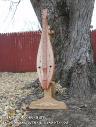
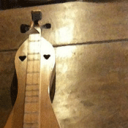
Just curious if any of our FOTMD crew signed-up to test drive one of these. I know there were some delays, but I understand they'll be shipping soon. The design (based on the old Folkroots model) is intriguing...simple in appearance, but it looks like it's designed for a big sound in a small package.
Hi Strumelia
The children would love him. Limberjacks do rule and go perfect with Dulcimers and Banjos.
yea!
Hi Donato
That's a lot of budweiser. I probably shouldn't stock that much beer in the house. Draft Horse Limberjacks with weighted hooves might make an interesting idea. Maybe drill holes in the feet and fill with a bit of lead or other metal. Hmmm! It does give one ideas.
David that is a great unicorn! I love the weathered white paint and the mop hair. 
Here is my horse limberjack, which was already constructed but unpainted wood. I just added a few painted details, to give him a saddle, white face and legs, and a face... and made him look like a palomino:
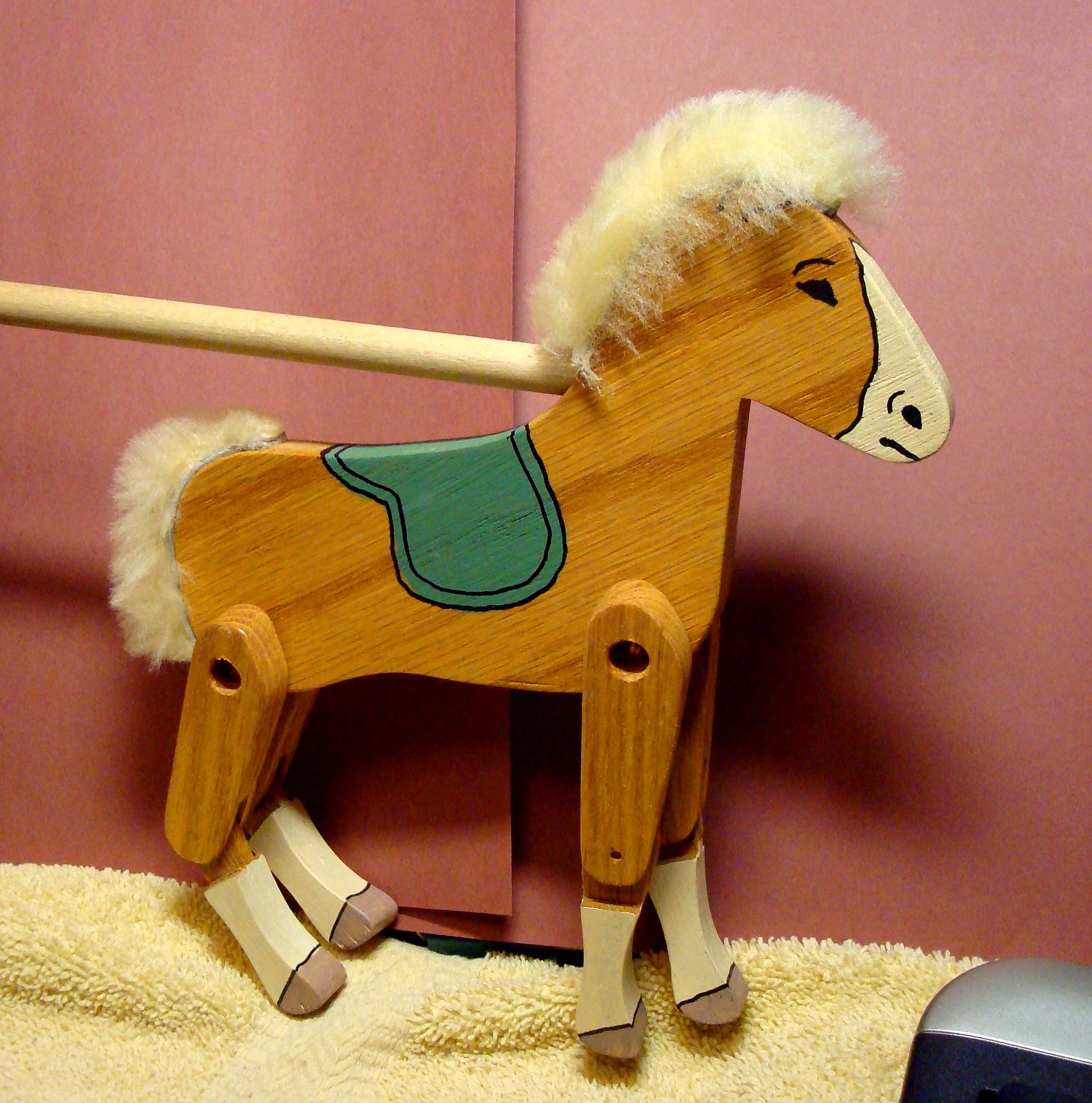 My palomino looks a bit chunkier and less graceful than your unicorn- maybe he's better built for cow-punching!
Limberjacks rule!
Hi all
I wish I had a video or something of it in action. My wife does a great job of it and is so good working with little children. I hope to get some DVD material of it and our puppet show we play music with. I'm working on a Buffalo limberjack to take on old timey gigs. I've got some brown water based stain and I'm thinking of calling him Buffalo Byron after my Dad. Since Bill and Bob are already taken. I have a clawhammer banjo to play along with that one.
It is a delightful animal isn't it? And a very nice limberjack as well. I love their simplicity and potential for endless imaginative fun. Very cool!
folkfan said:
Really nice limberjack. Love unicorns and limberjacks. You did a great job with this one.
Really nice limberjack. Love unicorns and limberjacks. You did a great job with this one.
That's really cool, David. Strumelia will like that too, she's got a soft spot for limberjacks...
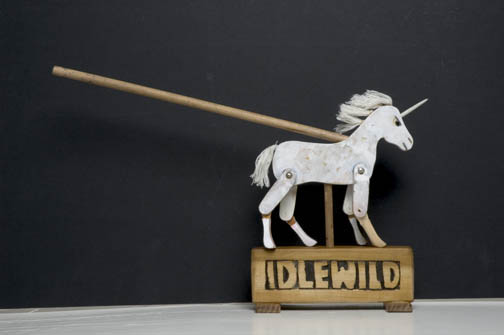 I took a horse pattern and sawed it out then old mop strands for the mane and tail. A little white paint and colored pencil for the eyes and mouth and finally a length of white fiber glass fishing rod for the horn. We take him to our renfaires we work at and let children come and take a turn with him while I play Shepherd's Hey on the Mountain Dulcimer.
I had kind of a nice morning today. My wife and I get up before work to make coffee and she does her Tai Chi warm ups while I play my Shakuhachi. I sometimes even take ideas from what she does. So I played a little and turned to my current flutes I'm working on while she went on with her Tai Chi. I'm working on two Xiaos, a Hopi Flute and a 2.4 Jinashi Shakuhachi. They are done for the most part, but I have to kind of live with them for a week or two, in order to play them and tweek the mouth pieces for a while. I'm getting better at understanding what makes for good sound production with each of the kinds of things I make. I only took off a bare millimetre or two from each of the flutes and they sound much better with a quicker response and more expansive tone. If only every day went so well. Now for bindings and other woodburning decorations at some point. I also won a local first place in the state wide Veteran's art show that they had at our local VA Hospital for a 1.9 Shakuhachi I mad with wood burning for that catagory. It will go to a national show in Boston for VA facilities around the country. I'm just glad for the reinforcement I got locally, and anything else is frosting.
I always keep bones, spoons and Triangle in my gear somewherefor me, butthey never seemed to appeal to my wife. She took to the Tambourine, Zilsand the Djembe for percussion, and I have tried not to bug her too much about something I suggest, but give support to the things she likes doing. I have some wooden bones, but I've always thought the real bone material sounds the best.
David, maybe you can get your wife interested in playing the bones as well- it's a natural for anyone who already plays tambourine. I have some bones and can play them in a simple way- they are incredible fun once you get the first simple 'triplet thing' going...not that hard really.
Hi Strumelia
That is the direction of what I was thinking in trying to expand our sound a bit. My wife plays Whistle, Tambourine and Bowed Psaltry, and leaves the Harp home when we're playing Old Time and Not the Irish material. I thought with a Tambourine head for my Banjo I could play a beat behind some of her melody playing. I would still bring the Dulcimer of course. Thanks again for hosting this great site.
Tambourines were very common in the minstrel era, along with banjos and rhythm bones. I kinda play my banjo a little like a tambourine sometimes anyway, rappin' on the head... so fun . 
Hi Strumelia
I loved the jpg of your banjo with the carving of the Pigs head in the head stock. What a wonderful idea. I've been dreaming about making a tambourine banjo and carving some kind of minstrel era neck for it.
Hi Erin
It's great to have a real master Shakuhachi player to take some lessons from. For the Shakuhachi I've had to go it alone. I bought one of Perry Yungs introduction books and it has the right to left notation the Japanese use in it. From that I'm trying to read and write with that system since it has a notation system for some of the head shakes, occilations and breath attacks. I've got the rest of my time alive to study it. I live in an area where there are few Shakuhachi players or even Mountain Dulcimer players.One of myDulcimer studentsstarted a Dulcimer club here a while back and I got one newsletter from them and then they disapeared when she moved. You might check the Dulcimer player news mag for groups in your vicinity as well. There's a lot of great music in the northwest there, but like here you probably have to really search for it to find it.
Erin said:
Hey David, how wonderful to find another shakuhachi player, and maker at that!, here in the dulcimer group! I admire your ability to play so many instruments.
I have only been playing the shakuhachi for three years now and am constantly amazed at how slow my progress is! That said, I like the meditative aspects of the flute dearly and have a wonderful group of friends to share shakuhachi music with here in Vancouver. I am a student of Michael Gould and take a lesson from him once a month or so. I too prefer honkyoku and am also a big fan of Watazumi.
As for dulcimer, I only started playing it in the summer time. It is delightfully fun and feels so effortless compared to the flute. I haven't found a local community of dulimer players yet but will try to get down to join the group in nearby Bellingham some time soon.
Penny whistles are great as well. It only took just a little nudge to get me started collecting and making world flutes since they tend to be less expensive than a lot of instruments. Though some Shaks can get prices like rare violins. I have a chest of drawers at home that is nearly given over to flutes of all kinds.
Beth Hansen-Buth said:
That is a really beautiful shakuhachi David. I love hearing people's musical stories. I haven't ever tried the bamboo flute, I currently have some penny whistles that I pick up and toot on once in a while.
That is a really beautiful shakuhachi David. I love hearing people's musical stories. I haven't ever tried the bamboo flute, I currently have some penny whistles that I pick up and toot on once in a while.
Hi Erin
The Mountain Dulcimer came first along with the Guitar. I played Guitar for groups in our area for many years and always had the dulcimer along as a side instrument. At some point twenty years ago I met my wife and we put together our band to play our own music and I mostly played the Dulcimer and Irish Flute. We hired a guitar player friend. I started with a Black Mountain Dulcimer that my youngest boy owns and later got a McSpadden and for the last six or seven years have teardrop made by Gila Mountain. It fit well with the festivals and venues we play from Renfairs and Celtic to Old Time stuff. Along the way I picked up a Dutch Schietholtz and a French Epinette. The Irish Flute playing got me into world flutes of all kinds and having met some of the flute makers at the Zion Flute Festival got me started making flutes. The Bamboo flute making works for me since I have a small carving studio and not a lot of large table saws and the like. I use mostly hand tools. I'm mostly interested in the Honkyoku style of Shakuhachi playing since it is the most free form. I absolutly fell in love with the instruments ability to make unusual articulations from the large bladed surface on the instrument. Recordings I like are by Watazumi doso roshi and many of the current players I admire are followers of his.
I've been making Shakuhachi for several years now and have reached a point where I think they are sounding good and have a nice appearance. Lately I've added more wood burning decoration with wood dyes and bleaches. My past production has been to use a tung oil finish for the inside of the barrel and walnut oil mixed with a little linseed for the exterior. Walnut oil is used to occasionaly oil the barrel and clean and oil the outside. With this lates project I've wanted to try something different, maybe a beeswax and walnut oil finish buffed out. The Japanese would coat everything, including the binding with Urushi laquer. Many of my local instrument making friends would just spray it with a commercial laquer of somekind. I've wanted to try to be a little more on the green side and use less harmful substances for my sake, keeping in mind that the flute goes in or near my mouth as well as using a filter mask that doesn't entirely keep out vapourized laquers etc.
I should add the sound of playing Shakuhachi for me is extremely relaxing and theraputic. Buddist priests have used them for many centuries to meditate to by listening to the sound they play.
Dave Sharp
http://fotmd.com/david-s-sharp/gallery/2639/shakuhachi-close-up
Well, mine are made by my brother, Dave Lynch, who is known here and on ED as Harpmaker. You could contact him at Sweet Woods Instruments. His email is harpmaker at sweetwoodsinstruments dot com or at area code 660 then 747 -- 8618.
If you want he can add strap buttons to the corners of the possum board for greater security, but I've never had them installed on mine.
Vanessa, If you want more volume from your instrument you can get it by using a possum board. A possum board lifts the instrument off your lap and allows the bottom of the sound box to fully vibrate rather than being muffled in the lap.
Here's a photo of two of mine that my brother made for me. They both have a none slip rubber glued to the bottom of the board which allows for a great flexibility in placement on my lap. The one with the extra leg means that I can really stretch my legs out for greater comfort as I play. You don't have to strum as hard to increase the sound when the instrument is lifted.
Vanessa Lorentzen said:
Thanks for the reply Ken. After considering your comment and Beth's about playing slower and analyzing a bit, I believe I have been too aggressive, a combination of excessive force and pulling up as I do some alternate picking (as I have seen my husband do on the guitar.) WELL...it doesn't get the same results. I was proud that I could do it though! Funny thing is that I appreciate the soft sound of the dulcimer, but as I play more I want more volume and I think it's getting me into trouble. I guess I better call the guy who sold me the dulcimer to find out the gauge...you're right, I need a spare set!
Fingerpicking doesn't mean picking the string up from the slot. More like fingering them individually sideways. BTW, it's always a good idea to know what gauge strings you are using. You will break one (or need to replace them anyway in a couple months), and will need to know what gauge to buy to replace it with...
I've only been playing for 6 months, and am just trying fingerpicking on a couple of songs right now. It's tricky business, but the sound is so lovely that I'm practicing on my technique. My teacher said to think more of brushing the strings with my fingertips rather than plucking them. That's helped, but it's taking some practice time. 
Vanessa Lorentzen said:
Without a doubt...you have a good point here and I have noticed that fretting close to the fret is the way to get an excellent tone. Thanks for your input!
Beth Hansen-Buth said:Is it only buzzing on the strings you are fretting? I get a little buzzing now and then, especially on my base string, but I think it's mainly poor fretting skills on my part. What I do is go back and replay things more slowly to figure out where it's happening and play with how I'm fretting until it sounds a little cleaner.
You mentioned strumming with too much authority, do the strings buzz only when you strum forcefully or all the time? Some times strings will buzz if the finger or pick lifts the string upwards from the fret board rather than moving side to side. This upward pull lets the string snap back down against the frets and can create a buzz. You need to adjust your angle of attack on the strings to a cross motion eliminating the lifting motion if this is the problem.
Is it only buzzing on the strings you are fretting? I get a little buzzing now and then, especially on my base string, but I think it's mainly poor fretting skills on my part. What I do is go back and replay things more slowly to figure out where it's happening and play with how I'm fretting until it sounds a little cleaner.
i agree with this ! i have one myself and love it.
Leslie, Do you have any Scotch tape? preferably the gift wrap type. After reading about your mom I applied scotch tape to a nickel harmonica cover and the tape in no way hindered my ability to play the instrument. My lips never touched the metal and the tape is invisible. I think its a workable idea. Yes there are chrome harmonicas as an option but if you still have any nickel harmonicas I would go with the tape... Bob.
Bob I love this little story. I wish you could take a photo of your old box full of harmonicas and show it to us!
I have a couple of my harmonicas from 20 years ago, but sadly I think i lost my original two harmonicas I had as a teenagers, which would have been over 40 yrs old now. I always liked fooling around with harmonicas, but never got very good at it.
But I agree, it's always good to keep a little harmonica in your pocket- like carrying around a microscopic church organ!
I keep a set of rhythm bones and a limberjack in my instrument case when I go to music gatherings- like a harmonica they are very portable, and sometimes it's just the thing!
That is a really gorgeous instrument, I loved watching you play! You look like you are having a blast with your new dulcimer, which is as it should be. Congrats on your new friend.
Hey Mary,
That's an increadible instrument - it sounds like a whole band
Great playing 
I just love it too! Here it is under the Meyer's lemon tree. The rumble is the wind--it is breezy and wonderful outside today. :)