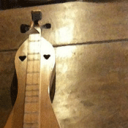
Have you met other FOTMD's in real life and become friends?
OFF TOPIC discussions
Me three...at Berea, where the wacky ones tend to gather...including Kenh and David!
Me too -- same wacky bunch of hardcore Traditional players and builders, including David...
I've met several/many the last two years at the Berea Traditional Dulcimore Gathering and have become friends with them!
This morning I was deleting a few online bookmarks that no longer do me any good. Since I had no been able to view the 'set to Secret group' EverythingDulcimer FB page for months now, I had my finger hovered over the bookmark to delete it. On a whim I clicked on it first, for oldtime's sake to see if by some miracle it had been made public again.
VOILA! It seems to be public and viewable by everyone again !
So now even if you are not a member of FB, you can at least go take a peek and see what's been happening on ED's last embodiment. https://www.facebook.com/groups/165673533442748/
The Powers That Be must have made the switch back to public group again, after many months now of being set to invisible to all non ED group members. Welcome back to the world, ED! ...and I do hope it stays that way.
Terry I love the way you look at it here. I'm going to incorporate your "first time in my life I've been...." attitude towards my age from now on. Thank you!
Truer words never spoken, Terry!
I just CRACKED UP LAUGHING on these posts and read them all. The best book I've found on the UKULELE is written by Jim Beloff. The info is a gathering of many years of research. The name of Ukulele is like this. When the Hawaiian's saw the Quatro being played by the Portigee folks that came to Hawaii said in Hawaiian of course, "wow, he's playing so fast it's like a jumping flea!!" Uku=lice lele=fast. A type of Tenor ukulele was popular in a "tenor banjo" or a banjolele in Hawaii 1910-1930. You can find 'em on sale on ebay. I've made 7 of them. These were also called TENOR BANJO'S. They are not as loud as a big banjo.....and fit in with Hawaiian music. The Tahitians still have as their national instrument a banjo uke. When that was popular, England and other places made these banjoleles. plunty of them on ebay now. ha, I'm going to check out the UU site. sounds really fun. My mother had a Martin ukulele and played it in the car while I was growing up with my brother. My brother has that ukulele. He took it to Martin Guitar co. to see what it was worth. He about fell over....$55,000. He still has the original case. FYI....there are more ukulele players in the United Kingdom then all of the USA and that includes Hawaii. We lived in the islands for over 30 years. aloha, irene
Sorry you don't live near me, I could just lend you a dulcimer till yours came in, unless you wanted to change the guitar around. Is there no one in your area?
good luck,
Ronald, you are actually asking two questions here. The first has to do with traditional dulcimer styles and the second about modern, chord style players.
As Ken has explained, traditionally, the dulcimer was only fretted on the melody string and the bass and middle strings were left to drone. Many fine players still play in that style and achieve the haunting, ancient sound of traditional folk music. In that style of play, the tuning of the melody string has to change depending on the mode or scale on which the melody of a particular song is based. DAA and DAd are the two "major-sounding" tunings. Before the addition of the 6+ fret, DAA was the only tuning that could be used to play songs in what we call the major scale, so it was more common. The addition of the 6+ fret allows us to play that same scale in DAd, but as Ken mentions, if you only play on the melody string, DAA allows three notes below the starting note of the scale.
But if you play in the traditional drone style, you don't just keep one tuning all the time. The tuning is determined by the melody. In the key of D, Angelina Baker can only be played in DAA. Going to Boston can only be played in DAd. Shady Grove can only be played in DAC, and so forth.
Modern chord players who fret across all the strings and also have a 6+ fret can often (though not always) get those different melodies without retuning. But both DAA and DAd have exactly the same notes, so neither one has an advantage in that light. Rather the difference between the two has to do with chord voicings. Chords in DAA are more compact and chords in DAd have greater range, meaning the notes might come from two different octaves. But one is not better than the other.
At some point a few decades ago, dulcimers tuned DAd with a 6+ fret became a kind of standard for modern dulcimer players. That is how I play, but there is admittedly something rather arbitrary about it. Had most people tuned DAA when I started playing, that would probably be my main tuning.
Ronald, the Kens have already highlighted the most important obstacles: the chromatic fretboard, the placement of the bass string, etc.
I think the biggest obstacle you will have is string spacing. The strings on the guitar are placed much closer together than are the strings on the dulcimer. If you are going to play in a modern chording style in which you fret across all the strings, string slots that are next to each other (say the G, D, and A strings, for example), will be too close together for you to get your fingers in there. And if you choose string slots further apart (say the B, D, and low E strings), they will be too far apart and will make chording difficult.
If you want to play in a traditional droning style that string placement will be less of an issue because you will only be fretting (either with a finger or a noter) the string closest to you, so the strings won't have to be equidistant.
But regardless of how you proceed, as Ken states, the slots that exist in your nut and bridge may not work for dulcimer string gauges.
I would suggest another option. Keep your guitar in playable condition as a guitar. Find yourself a cheap cardboard dulcimer. None of them are that loud, but some of them are ridiculously nice and make me feel silly for spending so much money for fancy dulcimers made of fancy woods. Backyard dulcimer makes a kit and so does Folkcraft. They take about an hour to put together, or you can pay a little extra and have it pre-made. You can sometimes find used ones as well. Those cardboard dulcimers are more than adequate to get you started while you wait for your winter dulcimer.
As my friend Ken says, the major advantage of DAA (Ionian Mode key of D), where the scale starts at the 3rd fret, is to provide the player with three notes below the 'low do' of the scale -- a feature found in many many folk songs from around the world.
Not everyone wants to have different notes on the same fret, so there's no "robbing" of notes. More traditional players use the unfretted middle and bass drones -- as drones -- to provide a background for the melody being played on the Melody string(s). The Unison tuning -- ddd -- has all string tuned to the same high d of DAd, which give a sort of "bee buzz" effect.
In DAA you have three notes below the starting note of the scale. In DAd you have to grab those notes on the middle string. Although no one know who originated the double melody string, we suppose it was to increase the melody line of a tune. DAd makes it easy to play tunes across the fretboard rather than in the linear pattern of DAA. If you play noter/drone style you still have the same drone notes in both tunings.
We don't have dumb questions here. We ask questions to learn and grow. There is nothing dumb about that. Please feel to ask questions for which you do not have answers. We do our best to answer them.
Ken
"The dulcimer sings a sweet song."
Hello, what is the purpose of having two strings ( or three if double melody) in DAA as oppose to DAD.
Doesn't having these two strings at the same pitch rob the instrument of the possibility of different notes on the same fret unlike DAD. If this is a dumb question let me know as I am starting and trying to learn as much as I can.
Ronald
Thanks, as for too many frets, they do have chromatic dulcimers which I absolutely do not wish to start with, if ever.
What I would do to my guitar is highlight the frets that are corresponds to the dulcimer with a sharpie. and be careful when learning
Ronald
Thanks for the info. It’s amazing it sounds relatively melodic for 29.95!
Your conversion won't be a dulcimer, of course -- dulcimer's don't have necks that extend beyond the body. Which tuning you choose is, at this point, irrelevant. The first step in to do the conversion of strings as detailed by @Ken-longfield.
You don't mention whether you are going to play your instrument upright -- like a guitar -- or flat on your lap like a dulcimer. With the dulcimer, the strings are "backwards" to a guitar. That is -- the heaviest strings are farthest away when the instrument is flat on your lap (if playing vertically the heaviest string is on the bottom).
As Ken mentions, if you intend to play a diatonic dulcimer, all those extra frets that make up the chromatic fretboard of a guitar will undoubtedly cause you issues when it comes to learning/unlearning fingering positions and other things on a diatonic fret pattern. All that to say, we won't say "don't do it", but converting a guitar to three strings and trying to use it as a dulcimer may not be the "best" thing to do if you really want to learn to play dulcimer.
I forgot to answer your other questions. I am not sure to which of Mel Bays books your are referring to in you question. Some of the Mel Bay books offer both DAA and DAd tunings. These being the most popular tunings. Other books also include DAc and other tunings. Currently, DAd is the default tuning for most dulcimer festivals and clubs, although folk are beginning to discover and appreciate DAA and other tunings.
Ken
"The dulcimer sings a sweet song."
As I think was mentioned before you started this thread, you will not have a doubled melody string unless you want to rework the nut and bridge on your guitar. If you choose to do a three string configuration, take off the 4th, 5th, and 6th strings. You will need to restring your 1st, 2nd, and 3rd strings. The bass D string (in either DAA or DAd) should be a wound 0.022 or 0.023. The middle string would be a plain steel 0.014. If tuning to DAA, the middle and first string (melody) are the same gauge. The first (melody) string for DAd tuning is a plain steel could be 0.011 or 0.012. You may need to modify the slots in the guitar nut to fit the these string sizes. Another possibility would be to buy and inexpensive guitar nut, slot it yourself, and run your strings down the center of the fretboard. Also, you will not be playing a traditional diatonic dulcimer by doing the this. The guitar fretboard is fretted for chromatic playing.
You did not say what style of dulcimer playing you want to do, but if you are going to play a traditional diatonic dulcimer, trying to learn on the chromatic fretboard may cause you fits when moving to the diatonic fretboard.
Best wishes for your project. Let us know if you have more questions.
Ken
"The dulcimer sings a sweet song."
Hello, I am not getting a dulcimer till' late winter.
How can I convert my guitar to a three string dulcimer.
It is a Yamaha folk size witha 25 inch string length. I am getting the book Complete dulcimer method Mel Bay. Should I convert to dad or daa, what is more common, or what tuning would work best for the book.
Thanks, Ronald
Ron, welcome to fotmd! i suggest you start a new discussion in our general Forums area for your guitar tuning question, rather than asking about it in this "Introduce Yourself" discussion.
Go to the general forum area and use the plus button+ to start a new discussion. :)
(When you, be sure to give us the scale length (length in inches between nut and bridge) of your guitar. You'll likely have to change some strings and maybe remove other strings from your guitar. Remember too when you ask about a '4 string dulcimer'...that a guitar does not have a pair of closely set strings like most 4 string dulcimers have on the melody string.)
Please do start your new separate discussion in the forums, so we can help you further there in it. :)
Hello, Thank You for the welcome.
I cannot get a dulcimer until late winter, in the meanwhile, is there a way to tune a guitar to at least a three string dulcimer
preferrably four in the usual aadd?
Thanks, Ronald
Found this site: shows the sears page - back click a few pages shows another sears page of instruments
https://www.flickr.com/photos/humbugs_and_oddities/5064034869/in/photostream/
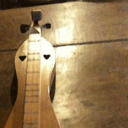
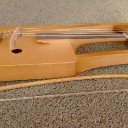
Sears Dulcimer #1 These dulcimers were made in Korea.
I saw a uke under Sears Harmony
Not being a good archivist, I did not write down the years of these three pages from the Sears catalog. The other attachment is a similar dulcimers marketed by Fretted Industries. Note that the Fretted Industries dulcimers have a rectangular end to their scrolls.
Ken
"The dulcimer sings a sweet song."
Coming a little late here, but...
When my wife and I play "Hewlett" (she accompanies me on MD), I play the first pass plucking with two guitar picks, and the second pass with hammers. I also have a pair of hammers with guitar picks installed at the end of the handles, and I play part of "Riu Riu Chiu" plucking with the picks. So far, that's all I've experimented with plucking with guitar picks. If your strings do not rest in groves across the bridges, you might have difficulty plucking them as they will move around on the bridges.
Yeah, this is really good stuff. I wish we could separate the audio and hear each instrument separately. Or maybe just get a camera solely on the dulcimer's fretboard. The dulcimer is not playing exactly what the fiddle is, sometimes a simplified melody and sometimes pure accompaniment. I know it's not traditional, but I like the use of the bass string that begins around 1:14. It really adds a nice contrast to the fiddle.
I have a 1930's Kay tenor banjo. I'll bet the same tuning would work on it! this would be a better alternative than the seagull stick dulcimer i tried and did not like.
Oscar Schmidt was a separate label, dulcimers made by the same company that made thousands of autoharps.
I have a (maybe) Hondo dulcimer sold by Sears for Christmas, has 'clover' sound holes. It needed some work but with the help of some great members years ago, I learned a lot about this dulcimer.
Every instrument is different, each one has their own personality .
Enjoy yours
Hi Don, there is more than one tuning possible- you'll find lots of info and discussions of tunings and fingerings for 4 equidistant string setup in our Group of the same name:
https://fotmd.com/heidi-muller/group/27/four-equidistant-strings
Remember you'll need to click the "join group" button in order to see the discussion replies and comment wall of a group. (You can always click the same button to easily UNjoin later.)
How do you tune your dulcimer with four equidistant strings?