New Dulcimer
General mountain dulcimer or music discussions
David, did you get any word on how long it would take?
David, did you get any word on how long it would take?
Thanks for your help John. Are we there yet, are we there yet.
David, it was really a pleasure to assist you with this process! It's just plain FUN!
Thanks Jan! That helps, I kind of figured the third one was old by the way they dressed. Here's another one, I think it was taken around 1916 when my Grandfather was posted in Columbus, New Mexico after Pancho Villa's raid. At first I thought they were railroad workers, but after a closer look I think they were miners. The photo was in bad shape so I tried to clean it up digitally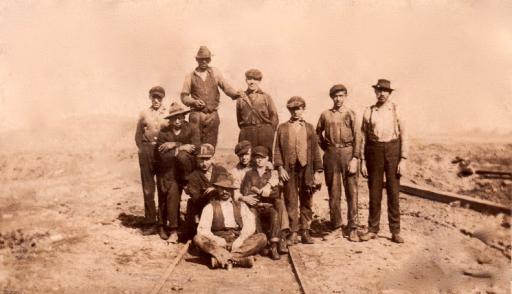
Joe, I'm curious, how did you remove the lacquer from the frets without damaging the fretboard?
That's awesome! 
I have enjoyed all of the episodes. I just watched the one with Holly Tannen. As it turns out, she bought a McSpadden Ginger from me and that is the one she refers to and plays near the end. I'm so glad it found such a nice home!
Thanks Val, Wayne and I appreciate your comments.
Help spread the word ... please let your friends know about the podcast.
Patricia, keep up the great work. A real treasure for now and the future.
The Anticipation of it's arrival is a big deal. Congratulations David, your new dulcimer sounds like a beauty. Will be looking forward to pictures and hearing it.
Sounds like a great combination of woods there, David. Bet it'll sound like a dream
Congrats! Sound clips when you get the chance..
Congratulations, very exciting! Hope you post pictures after you get it. I also ordered a new dulcimer from Folkcraft (a custom butternut/walnut with wenge accents and a galax back). They are a wonderful group of people there and great to work with. If you ever get a chance to visit them, you'd find it interesting.
Congratulations on your impending arrival. My first dulcimer had a mahogany back and sides and a spruce top. Nice tone and excellent sustain.
Thanks Ken,
Yeah I figured I would stick with a product made for a wooden instrument!!
I just remember as a child doing my "chores" and we always had to use pledge on the bedroom set furniture and it has like this waxy build up now ( I recently was given my mom and dad's bedroom set after my mom passed and noticed that and remembered what we used!!)
take care and thanks
Maria
Ordered just placed. Folkcraft, African Mohagany Bottom/sides, Sitka Spruce Soundboard. Black Tuners. Very excited. Make me a better player? NO. But a really happy one. Merry Christmas all.
Robert,
Today I made a bid on ebay on a new but old Marine Band 365, with 14 holes, key of C. I've gone as high as I am going to bid, so I will probably not get the bid, but maybe I will. What you had to say about your 364 pushed me over the top on this decision.
My favorite harp is a Hering Vencedora 60 reed double sided tremolo, keys of C and A. On the C side, the 5th blow reed has failed, but I always liked the A side the best anyway. I also have an 84 reed Vencedora, keys of C & G. So if I need a C, I still have one.
Special 20s are my favorite ten holers. I have Lee Oscars, Suzukis, a Marine Band, Bushman, and a couple of Seydels. Something about the Special 20s though that float my boat.
Thats why there are so many different harmonicas how there, kind of like vehicles, no one of each makes everyone happy.
Maria, you shouldn't have any problem with the Lemon Oil. I disagree with Bob on the use of Pledge or any polish that contains silicone. It can cause problems with trying to match the finish if a repair is needed. Just speaking from experience. Stick with polishes made for instruments.
Ken
"The dulcimer sings a sweet song."
The harp I use the most today was one I bought back in 1970 that did not work for me then . its a Hohner 364... key of C. 12 holes three octaves. You can see the versatility of being able to go between three octaves. Too bad its not made in other keys, I could really use a D... Robert...
Okay so this is good information. Thank you.
I ordered this: from musician's friend ebay store: Dunlop Fretboard 65 Ultimate Lemon Oil
it was free shipping and less then 4.00 and it gets good reviews
I will try that on the fretboard and see what happens etc...and then perhaps the other advice on the wood or maybe even try a spot that's not conspicious and use it for the wood. I will know more when I receive it and read the label.
Thanks again
Maria
That's good news Bob. You know, I still play dulcimer just as much as always. But the harmonica gives me a way to make music when it's difficult or impossible to play dulcimer. Put one in your pocket and away you go.
I too have a drawer full of harps, 10 holers and tremolos. My main interest is tremolo.
Have fun!
Terry, your posts about harmonicas inspired me to dig mine out. I have about half a dozen that I played in high school and college. That's over 30 years ago now. I guess they are all getting to be "vintage." I have a couple of marine bands, a blues harp in b-flat, a chromatic (which I never really learned to play well) and a Piccolo in C. I like the piccolo because it slides right in my pocket.
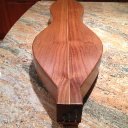
Although it is hard to tell from the photos, the fret board and body may have been finished differently from the body. If the fret board looks a lot less shiny than the rest of the instrument, then this is probably the case. For everything but the fret board you are probably OK with a guitar polish, or believe it or not, Pledge furniture polish. I would try a small spot first to make sure. Not knowing what is on the fret board, I would probably apply a light coat of lemon oil to it. I use Old English lemon oil.
Folkcraft has produced a Folkroot model for at least a couple years. Dulcimers come up on Shopgoodwill quite a bit. But no one there can answer any questions about the instrument, and shipping is invariably expensive. Good luck with your purchase. Once you have it, you can contact Michael Rugg and get complete info on when it was build, woods, etc....
Hohners marine band model 365 is the best of the series. Only come in C&G. 14 holes nice bass range and warm chording. I have a G model. Unfortunately with a broken reed. Larger body bigger sound and very easy to play... Robert...
Hey folks. Since this discussion is heading in that direction, let me just point out that we have a whole group at FOTMD devoted to home recording .
I never much cared for how a pickup sounds for recording. I prefer a nice mic.
so basically no matter what finish it is the lemon wood WON'T HURT it right??
If that's the case then I will get that.
Thanks
Maria
@marymacgowan I only wear headphones if I'm multi-tracking. Otherwise if I was listening to the previous track through a speaker while I was overdubbing then I would be recording the original trackl again onto the new track and I wouldn't be able to isolate them.
Thanks so much Rob! Your feedback means a lot to us. We appreciate you listening. If you haven't yet, would you be willing to write a review about the Hearts of the Dulcimer Podcast on our iTunes page? The link is: http://bit.ly/hotdpodcast .
More reviews = more visibility on iTunes for the dulcimer! :-)
As the others say , we really need to know what the original finish was -- oil, urethane, shellac, etc. FWIW, Lemon oil can be used on ANY wood, not just lemon wood <grin> Brand doesn't matter, contents do -- you want a lemon oil where the lemon oil itself is the predominant ingredient.
Patricia, I have enjoyed all the episodes of Hearts of the Dulcimer. I especially enjoyed the new one with Holly Tannen. Thanks a lot.
I use Martin Guitar polish on my dulcimers. Seems to work well.
it won't let me delete the duplicate picture sorry
oh wow...I don't know. I do know it was made by Jack Bruner who owned the Walnut Valley Dulcimer Company. It's all solid black walnut and it was the 86th dulcimer made in 1989. I believe the owner of mine actually bought it new in Epcot from the owner.
Thanks so much
Maria
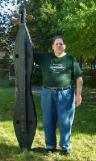
here are some pictures
Is it a painted finish? Or stain, or oxidation? Who was the builder?
[quote="marymacgowan"]
[quote="Guy Babusek"]Guy, could you describe what you use to simulateneously film and record? I have microphones and preamps and headphones (and a Bose songwriter amp system, which would be good for filming - I think - ?), but just don't know how to put it all together for a live recording. thx![/quote]
Sure Mary! I've used several different methods through the years. Lately I find I get the best results by simultaneously recording the video and the audio from two separate sources . I have mostly just been using my iPhone to record the video and I record the audio right through the iPhone microphone. I simultaneously record the audio using a decent microphone right into the computer using a program like Logic. Once I have finished recording, then I import the audio and video into a video editing program such as Adobe Premiere. I sync the audio of the decent recording up with the iPhone video and then delete the audio recorded on the IPhone. I've also experimented with filming directly using a WebCam while I'm recording into Logic but I find that sometimes is less than satisfactory Hope that helps!
Thanks everyone for taking your valuable time to respond to my past. Seriously. Hopefully, with the help of my son, your advice, and a little money, I'll get something decent together.
Meanwhile, I'll probably quit recording with my smart phone.
Merry Christmas