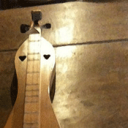
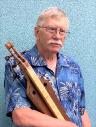
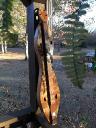
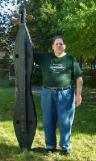
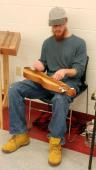
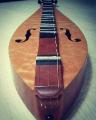
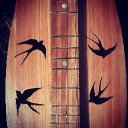
Does anyone recognize this dulcimer?
Instruments- discuss specific features, luthiers, instrument problems & questions
How did this dulcimer turn out? I'm thinking of buying one like it. Thanks.
How did this dulcimer turn out? I'm thinking of buying one like it. Thanks.
Happy Anniversary to all whether you have been here all eight years or just joined. This is a great virtual community. Thank you Lisa and all the moderators who help keep this site moving forward.
Ken
"The dulcimer sings a sweet song."
I use an unwound bass string (18 ga. if I remember correctly) on my Will Singleton (3-string) dulcimer. I did some experimenting before arriving at what I like. The other 2 strings are 12 ga. for the melody, 14 ga. for the middle.
Steven
I personally try to use the heaviest gauge strings that sound OK on a particular instrument. Sometimes it takes some experimentation to find out what that is. Heavier strings sound less tinny rounder. They might require heavier callouses, but I find the improved tone to be worth it. Also, if you like to bend strings, you have more control with heavier strings since there is more resistance. Also, because heavier strings are louder, you can play more delicately and still get decent volume, so they allow a greater dynamic range.
It never occurred to me to swap out wound strings for plain steel. Maybe I'll give that a try.
I'd like to mention that when i got my Keith Young teardrop dulcimer almost 20 years ago, he explained to me that he favored stringing his dulcimers with heavy unwound bass strings. Also, quite a few minstrel style banjo players favor unwound gut or nylon bass strings.
Oh my goodness- think you all so much for your very sweet posts!
It's been a fun and eventful eight years. 
I want to thank the wonderful volunteer site Moderators who help advise me, keep things safe here, and put in a great deal of their time and energy behind the scenes.
....music wire, number 8 (.020) for the bass string is how I string them too!
Only for you Lisa, I might not be playing today and as it happens I just sat here for the past few hours singing and playing after our wedding anniversary dinner that our sons cooked for us. Thank you LISA had this not come along I would not be playing . Best wishes.
Sean -- it's a "sound" thing. To me an un-wound string is a crisper sound than a fat wound string flopping back and forth.
I'm in the non-wound camp also, the 'whine' for lack of a better term, is very distracting to me.
Ken,
Why non-wound for the bass string? Is it sound, feel of the winding or cost? I don't think I've met anyone else who doesn't use a wound bass string.
A real note of congratulation and appreciation for your virtual opened doors! 
Thank you for creating and maintaining this important dulcimer forum, Lisa.
Yay, FOTMD!
Thank you, Strumrlia, for all your work here. xxx
Eight years ago today, FOTMD opened its virtual doors for the first time.
Thank you Lisa...
Just use the Strothers String Gauge calculator -- plug in the VSL and the notes of the open tuning you want to use (DAd, DAA, etc) http://www.strothers.com/string_choice.html
I play mostly old-style traditional instruments with 27-28" VSL, three strings, fretting only the melody string. I normally buy bulk 12s for the melody and middle drone, and non-wound 20s or 22s for the bass string.
I tend not to worry about VSL so much when choosing strings as I do about what sounds good on a given instrument. For the most part, I buy bulk banjo strings in .012, .014 and a wrapped .024 gauge. However, I sometimes use .010s or .011s for melody strings if that's all I have on hand.
On a beautiful Modern Mountain dulcimer I had (gee, I wish I hadn't sold that to a student a few years ago!) made of poplar, spruce and Osage orange wood, I used .011, .014, and a nickle-wrapped .022 because it was just to bright sounding with a .024.
As always, my recommendation is that you experiment with different strings, different winding materials and see what works best for you. Strings are inexpensive and only take a few minutes to change.
I am always experimenting and curious with string gauges on the dulcimore. I am curious to what size string gauges the community uses varying on different VSL's and what conclusions they have come up with, if any.
I ran across Vander Woude" dulcimers & they have the very same sound hole as my trailing/weeping/bleeding heart, what a surprise. His site directs one to Hewoud Music. Vander Woude decided to retire & his granddaughter, Victoria has taken over the business. I wrote her & she sent back this reply below. It was very sweet for Victoria to take the time to do this research - much like what has already been posted.
I hear their dulcimers are 'beautiful' & the sound 'unique'
"The meaning, origins, and history of the Trailing/Weeping/Bleeding Heart soundhole design are completely shrouded in mystery. Mountain Dulcimer lovers have been debating over it for years, but there appears to be no single concrete answers available. There are numerous theories, some of which I have included here: -Bleeding or Weeping Heart shapes are traditionally used to represent sadness or loss. For those who enjoyed playing sad love songs or wished to commemorate a lost loved one, bleeding heart soundholes would add a sentimental touch to their instrument and music. -A common theory is that they are not “bleeding” hearts but rather a depiction of “Trailing Hearts”, a flowering vine with heart-shaped leaves, also known as the Rosary Vine. Some Mountain Dulcimer builders specifically state that their design is a heart-shaped leaf and vine. -The geometrical heart shape was originally used to represent leaves (not sentiment), especially of the Linden tree. Legend says that any couple who sits under the branches of “the tree of lovers” would be in love forever. -The Pennsylvania Dutch frequently used hearts in their décor to represent love of God, family, friends, and country. The tips of the trailing hearts point heavenwards as a reminder that true love comes from God. The Mountain Dulcimer was partially based on a German folk instrument (the zither) and was commonly used as a church instrument, so this heart design is a reflection of the instrument’s roots. -The simplest theory is that the ornamental heart was born from builders experimenting with how to make heart soundholes more elegant. No symbolism was meant beyond those conveyed in standard hearts. As you can see, symbolism is mainly left open to interpretation now. Some people don't relish the thought of having "bleeding" hearts on their instrument and prefer the floral explanations. Others feel the historical meanings are more substantial. Legends and theories aside, the Trailing/Weeping/Bleeding Heart soundhole has become one of the most common and beloved Mountain Dulcimer soundhole designs. Most builders seem to use it as a soundhole design option. Its graceful ornamental shape adds a nice touch of whimsy to this beautiful folk instrument, it allows greater resonance than most soundhole designs, and the mysteries behind its origins reflect the mysteries of the Mountain Dulcimer’s true roots"
Peg holding, YEA
Hey hey, pencil eraser - rub that on & the little bits (like adding fiber to our diets) has the bass peg holding. WOW, no slipping. Has anyone else tried an eraser?
Often when I visit the home page I see a listing of discussion topics, many of which have a number of comments or replies associated with them. However when I click on these entries I only see the original posting and not the full thread. How do I get to see all the comments/replies?
Many thanks
Trevor
If Fred Flintstone played the dulcimer, he might feel right at home using your pick. Nice finds, Charles!
Steven
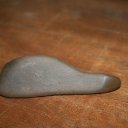
I was looking for other stones to make a pick out of when I found this stone(And 12 cents). I remembered Ken H's post about his malachite noter and I thought "This might work". After polishing I now have a stone noter and pick! Rock music!!!
Yes I have that book too Stephen- it's a great book with lots of descriptive background.
I have a great book by Almeda Riddle. It's called
There are currently several copies on Amazon.com at good prices.
The Germans (Penn. Dutch) used the heart to represent 4 ideas concerning love.......love of God, love of family, love of friends and love of country at least that is what I recall from years ago. In the old German Lutheran Liturgy which I grew up with, like the Roman liturgy the Sursum Corda is offered by the celebrant who intones........."Lift up your hearts" and the congregants reply........."We lift them up unto the Lord." That intonation goes back to the third or fourth century according to those old dusty books I have. The upward pointed heart may be a reference to doing that......looking to heaven the source of all true love. (see those years of seminary have provided me with all sorts of information that would be great if I ever get on Jeopardy). When the German settlers put hearts on all sorts of things they usually referred to love of family or community and faith. Some have said that upward pointing hearts meant the instrument was to be used for hymnody and celebration and the regular heart for the love of one human being for all of creation including family and friends. Then again, maybe this is just all speculation......but it is fun to think about.
IIRC "trailing hearts" is what the Ford's called their "vine with multiple heart shaped leaves" soundhole design.
( Linden leaf - a source of magical power ... "bleeding heart" - too sentimental or liberal )
Both of those meanings sound better than maybe 'sad'
thanks
I am not even sure the design in question is usually considered a "bleeding" or "weeping" heart, both of which imply loss and sadness. What about a "trailing" heart? I have definitely heard that term used. I think Ron Ewing refers to trailing hearts as a soundhole option for his dulcimers. It might even be a reference to a rosary vine, which is sometimes called a string of hearts or trailing hearts plant.
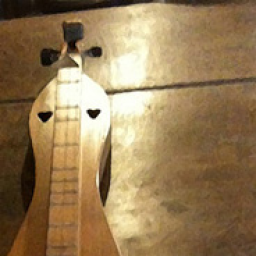
Of course, it is very likely that there is no one stable meaning to a single image, but that different luthiers think it means different things or even nothing at all but just looks cool.
Salt-Springs,
A true treasure