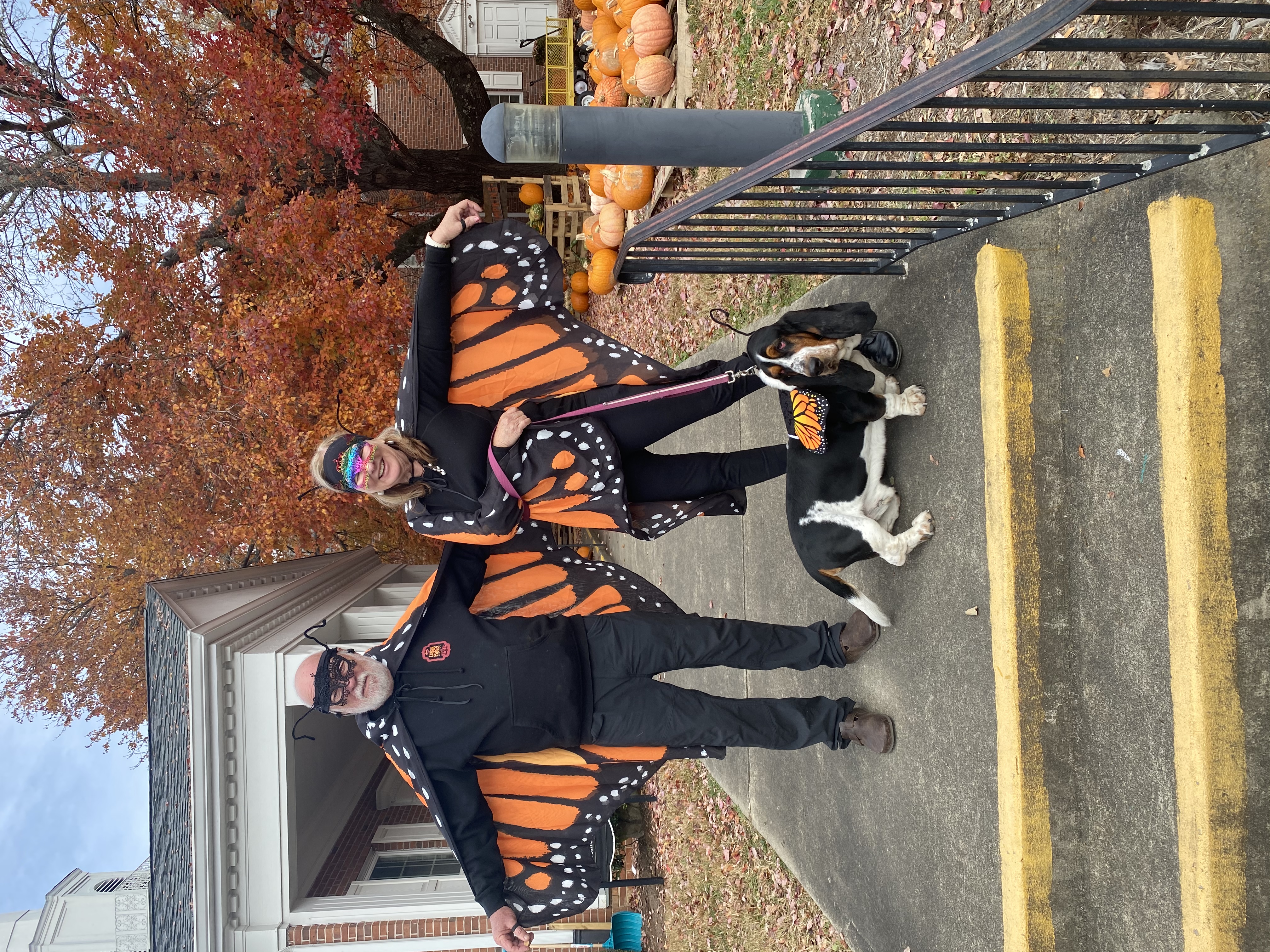
Thanks to our FOTMD welcoming "Greeters"!
General mountain dulcimer or music discussions
Special members greeting new members -
thanks
Special members greeting new members -
thanks
Buddy is my 11 year old Jack Russell terrier.
Such a cutie!
Nice to hear of such a satisfying ending to this story.
I have six. My wife purchase a McSpadden for me years ago, a banjo style and four that I made myself.
Welcome to the forum! Thanks for sharing your dulcimer collection!
Thank you all for the replies & good ideas. I finally called McSpadden's on a guess & they gave me the name and number of Walworth's & HE WAS THERE! So helpful & nice, he took my info & sent me 6 of the pads for free & they came the next day-can't beat that!
On behalf of all site members, I just wanted to give a hug of appreciation to our wonderful VOLUNTEER Welcome Wagon here on FOTMD.
Our "Greeters" post warm welcome comments on the profile page of every new member who joins the site. They do this simply because they know how good it feels to receive a friendly post or two on your page when you first join. Our greeting team puts the "friends" in Friends of the Mountain Dulcimer, and they do it out of their own kindness.
I'd like to add that there are no special requirements for joining them as a FOTMD "Greeter"- you just have to love people and make a friendly welcoming comment on new members' profile pages with some regularity- whenever you feel you can. If you'd like more info just catch FOTMD Moderator Jim Fawcett early on most mornings in the ChatRoom here on FOTMD. To open the Chat, click the blue "quote bubble" button at bottom right of any page on the site.
Let's all give our thanks to our site's current Welcome Wagon Team!:
==========================================
I have six. My wife purchase a McSpadden for me years ago, a banjo style and four that I made myself.
Love all these dulcimers! Which brings me to the question…..
How many dulcimers does a dulcimer player need?
Just one more!
This is very sad. I was hoping to get to know him and the dulcimer better. Thank you for your assistance!!
Oops, it looks like I got dogs and dulcimers confused.
Ken
"The dulcimer sings a sweet song."
Congratulations on acquiring your eighth dulcimer. It is beautiful and I am sure it sounds great. Enjoy.
Ken
"The dulcimer sings a sweet song."
Thanks Ken! It does sound really nice. BTW, it's only #7, I surely don't expect a #8.
Congratulations on acquiring your eighth dulcimer. It is beautiful and I am sure it sounds great. Enjoy.
Ken
"The dulcimer sings a sweet song."
Hi Susie! That is so beautiful! As it turns out, Bob and I actually saw it a couple of weeks ago at Folkcraft. ☺️ Richard showed it to us and told us about the wood. I drooled over the cat paw sound holes…lol…🐾🐾 Congratulations!
Wow, that's neat to hear. I saw the pictures of your visit to Folkcraft. It's cool you saw it. Richard and crew picked out a fabulous set of Hickory for it. I've been playing it today. It has such a pretty voice and the sustain is remarkable. Of course, the workmanship is fabulous. But one correction, they are dog paws,
haha. I do think he has cat soundholes too. Since I've had 7 family dogs in my life so far (#8 is on the way), you can officially call me a dog person.
Hi Susie! That is so beautiful! As it turns out, Bob and I actually saw it a couple of weeks ago at Folkcraft. ☺️ Richard showed it to us and told us about the wood. I drooled over the cat paw sound holes…lol…🐾🐾 Congratulations!
Looks beautiful. Congrats on your new baby.
Thank so much, Dusty!
Looks beautiful. Congrats on your new baby.
Update, I just added dulcimer #7. My last.
I've wanted a Hickory dulcimer for awhile now. This is it. A Folkcraft FSH. I also had Richard engrave a maple leaf at the 5th fret, since my husband and I have been producers of Michigan Pure Maple Syrup since 2008. I'm really happy with this dulcimer....it sounds great and plays perfectly.
Hi,
I'm a new member to the site. Wow! I am about to buy my first aids. My issue is my low frequencies so it will be interesting to see how they react to the dulcimer sound. The manufacturer that I'm planning on buying have treble and bass controls. I'll let you know how if that helps at all. It will be a whole new world!
If you want a less conventional -- but entertaining as well as educational -- look at Modes, check out my essay called Uncontrite Modal Folker:
Thank you for posting the link to the mode posts; I woke up the next morning thinking, “I should have provided a link to the first one!” I’ve bookmarked them
GinaB -- the short answer is no, a short VSL will not "bring both hands to the front of my body" -- unless your body is 24" wide! The reason is, we strum the dulcimer mostly at one end, and fret mostly at the other end. I have a couple hundred tunes in my repertoire and from experience, most tunes occur between frets 1-10, with occasional forays up to frets 12 and even 14.
If you have trouble with the instrument bobbing up and down, moving around and such, the solution is probably to be found in how you're setting the dulcimer on your lap. The first thing to do is get your knees far apart -- 16" or more apart. T
The second thing is to angle the dulcimer across your body -- not square across, but angled, with the first fret (more or less) over your left knee (assuming you're right handed) and tucking the bridge (more or less) into your right hip.
Hard to take a picture of your own lap, but here you go. The first photo shows my Bobby Ratliff Cumberland Model with a 20" VSL and you can see the first fret out over my left knee and the right end tucked into my hip. I sit up. and don't hunch over, but I do look down at the fretboard often while I play.
The second photo shows another Ratliff dulcemore, with a 26" VSL (the bridge is just out of picture on the right side. Same wide stance. Same 1st fret over the right knee. Same right end tucked into my right hip.
However, in both cases I'm playing with my left hand moving from my left knee to the middle of my lap -- not from leg to leg.
What a beautiful dulcimer. Best wishes finding out more about it.
Other than the tuneing machines, your MD really doesn't look too bad from the photos. You can do the obvious things needing fixing yourself, new strings [normal maintenance], replacing tuneing machines is pretty easy although selecting new ones is a bit harder. Just pull and replace the end pins, they're probably escutcheon nails or brads. Don't worry about the scratches/chips, it's part of having a used, probably older, instrument. I heard a pro country singer used an older guitar that actually had holes worn through the top. Don't use anything with silicone in it to clean the outside since it cannot be removed, it will prevent any refinishing or other repair work to the wood.
Bottom line, don't pay for anything more than tuneing machine installation at most.
Hey, that's so nice of you to let me know how it helped you! Makes my day.
If anyone wants to check it out, here's a link:
https://dulcimer-noter-drone.blogspot.com/2010/09/few-of-my-posts-about-modes.html
Hi Strumelia, When I first heard there were these things called modes, I looked them up, but didn’t understand a thing, I spent the next two years periodically buying books, watching YouTube tutorials and reading online trying to understand the concept, to no avail. Then I came across a link you provided somewhere in FOTMD to your blog, and all I can do is scream THANK YOU!!! Your explanation is brilliant and simple at the same time. ( I definitely needed simple.) I am so happy that I found your posts. If I had found them earlier it would have saved me hours and hours of wading through torturous explanations that I never understood.
best regards, Linda
Hello all! I am new to the group, and have posted my introduction in the appropriate section (I think). I found this group while searching for the answer to my question, the discussion title. When I took my current music position in NY, I discovered that I was able to teach a dulcimer unit (using some cardboard ones that you can find on amazon). I wanted my students to see that dulcimers are a real and beautiful instrument, and found one in a local music store. I'm currently seeking to contact the maker if they are still around, so I can thank them and ask them some questions about the dulcimer. I've attached 3 photos to assist. On the inside, it says the maker is CB Henry, from Montgomery, PA. Any help in finding them would be greatly appreciated, especially because it is such a beautiful instrument. Thank you!
Hello all! My name is Nathan, and I am a music teacher currently based in NY, USA. I was a euphonium primary in college, but have been playing recorder since I was small, performing in my family's folk group on that, trumpet, and later guitar. I picked up dulcimer more recently, and am so thankful to have found this group!
My own thoughts are that a VSL of between 25"-27" is really ideal if one is intending to play in the key of D a great deal. (most dulcimers play in D more than in any other key). Once you get in the longer 28-30" vsl range, you are going to start breaking strings a little more often, and the shorter you go ...say 22-24", the heavier strings you will need to put on in order to play comfortably in the key of D.
That's the reason epinettes (which often have a typical vsl of only 21" or so) are usually tuned higher for the key of G (3 steps up from the usual dulcimer D). And dulcimers longer than 28" scale length often do better when tuned to C (1 step lower than the usual D).
Beginner dulcimer players often worry that they 'need' a shorter vsl because they have small hands. What they don't take into account are two important factors: 1) They be using also their thumb while fretting ...which extends their reach way beyond what most guitar players do using only four fingers ...and 2) Because of the drone-friendly tunings of dulcimers in the first place, one frequently is making use of open strings while fretting chords. So it's not really all that common or critical to make a long stretch when chording. When it does come up that a long stretch is needed, your thumb can neatly solve the issue most of the time.
While I wouldn't necessarily recommend a 28-30" vsl dulcimer to people with smaller hands, I think that vsl's of 25-27" are great for people with any size hands, even small hands. Just my two cents.
IMHO FB Marketplace is not a particularly good place to shop for dulcimers if you are inexperienced with them. Neither is Goodwill. Most of us who really care about our instruments would not sell there, I think.
FYI the New Harmony Pudge has a 24"VSL, considered by many to be a most excellent length, and hardly too small for you. I build and play a 24-25" VSL instrument as well as 28-30" instruments. The McSpadden Ginger has a nominally 24" VSL and the same notion applies.
IMHO, with your lack of experience you are fretting (all puns intended) far too much over the VSL. After you've played everyday for 6 months, you'll have some idea of what "too big" or "too small" mean to you personally.
What exactly is the issue with the tuners? Are they too tight? Or too loose and don't keep the strings in tune? Have broken knobs? We can talk you through fixing them if they are too tight or too loose. No need to spend money when a quick fix with a screwdriver will do the job.
Please, please, never use Pledge on a dulcimer or any other instrument made of wood. Pledge contains substances that make it virtually impossible to repair cracks, dings, and scratches because they prevent the absorption of stains to match the color of the wood. This causes any repair to stand out like a sore thumb. Instead use a good instrument polish like the ones sold by C. F. Martin, Gibson, Fender, and other guitar makers.
Ken
"The dulcimer sings a sweet song."
Hi Richard, Six months ago I started wearing hearing aids and I also noticed that my dulcimers don't have that sweet quality sound I am accustomed to when wearing them. I too, either take them off, or use my remote to shut them down when I play. I am glad I am not they only one with this problem.