North country dulcimers floating bridge replacement
Instruments- discuss specific features, luthiers, instrument problems & questions
That looks like that could be the one Skip.
Thank you.
That looks like that could be the one Skip.
Thank you.
Your new dulcimer is beautiful! Keep us posted after you get it set up and are able to play. I bet it's got a nice voice too.
If you go to Jan Potts public page, there is a post by 'Paula' just below the photo [her thumb nail id icon] that looks like it is probably a photo of the bridge in question.
Thanks Ken I really appreciate your help
No problem, Buzz. Looks like you conquered it. Yep, that's a North Country Dulcimer alright. The place where the strings contact the bridge will be placed at twice the distance from the fret board side of the nut to the center of the 7th fret. Any good luthier or repair tech should know that. Jan Potts, one of our moderators has a photo of a North Country dulcimer here:
Perhaps if you send her a message here she can shed more light on the bridge shape.
To send her a message, click on "Members" above. Put "Jan Potts" in the search window. When her page comes up click on "send message" just below her profile information on the left hand side of the page..
Ken
"The dulcimer sings a sweet song."
Thanks for the advice I am new to forums so I am having a little bit of an issue posting pics and replying to messages with my phone.Sorry.
Robert Hutchinson was the maker of North Country dulcimers in Bairdsford, PA. Besides making dulcimers, he was known also as "The Kazoo Guy."A He is no longer building. The bridges on his dulcimers were unique. You can find some photos on the dulcimers on the internet. You will need to have someone custom make a bridge for you. If you can find someone who has a North Country dulcimer who would be wiling to trace the bridge for you, then whoever makes a bridge for you would have a pattern to work from. It will take some work, but shouldn't be too difficult.
Ken
"The dulcimer sings a sweet song."
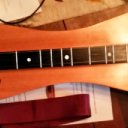
Hi, Buzz, Can you post a photo of the instrument, especially the section where you would strum? That would help us give an informed answer, as there are various different bridge styles.
Hello everyone,
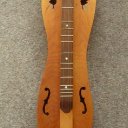
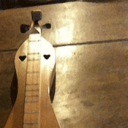
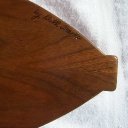
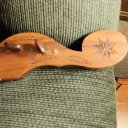
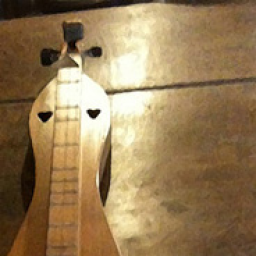
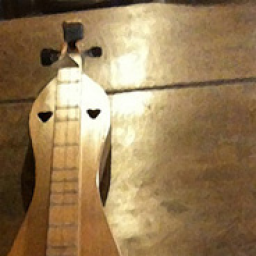
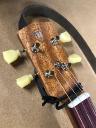
First off I am a newby to this forum and dulcimers and if I am doing this post wrong please let me know. I ran across my first dulcimer at a thrift store and was amazed by the instrument as I have been playing guitar for many years and even played violin back in school for a few years. Anyway the dulcimer I was lucky to find is an hourglass 38 inch 4 string made by North Country Dulcimers built in 1985 according to the tag inside. My problem is that it is missing the bridge..It is a beautiful instrument and I really can't wait to give it a try. My question is where would I find a bridge and where the placement of the bridge should go. Any help would be much appreciated. Thanks in advance.
Buzz
Crosspicking is a specific type of flatpicking.
Flatpicking is merely the technique of playing runs of single notes using a flatpick. (Technically we also strum with a flatpick, but usually flatpicking is seen as an alternative to strumming.)
Crosspicking involves the use of flatpicking patterns across several strings. Check out this demonstration of Molly Tuttle crosspicking "Wildwood Flower." You can see that by imposing her picking pattern across several strings, she adds rhythmic complexity while not only carrying the melody, but also offering harmony (chords) as well, without strumming at all.
If you are just starting out, you will want to master the basic back-and-forth picking of flatpicking before getting into the more complex rhythmic patterns of crosspicking. If you search these terms on the internet, you'll find lots of stuff for guitarists, a little for mandolin players, and almost nothing for dulcimer players. Among dulcimer players, the most prolific at both would be Aaron O'Rourke and Gary Gallier. Stephen Seifert is clearly capable of the technique as well, as is Erin Mae, but they tend to strum a lot more than is usually included in crosspicking.
Edit: In that Molly Tuttle video, she doesn't play the song until 12:52. She begins teaching it at 7:48. The first 7+ minutes is her explaining the crosspicking pattern she uses.
Does anyone know what happened to the dulcimer program at Vanderbilt?
Hey @fharlm, I would think a Fluke would be a great beginner ukulele. They are made with a composite body, which keeps the cost down and also makes them almost indestructible. The wood top ensures good tonality. And they are made with excellent intonation. There are lots of cheap ukuleles out there, but a lot of them are unplayable. The Fluke is reliable. And hey, you don't need a stand since it can stand up on its own!
Although they cost a little more, I prefer the models with wood fretboards. The sound is noticeably warmer than those with the polycarbonate fretboard.
Even if you continue playing and eventually want a fancier, solid wood instrument, the Fluke makes a great travel instrument-- something you can be comfortable taking camping, for example--so it will always have a use.
I have several ukuleles. My favorite is the Fluke. Also have a Flea and Firefly (banjo uke) which are great. Another favorite uke I bought for $30 on a beach in Italy. It has a great sound.
Do you recommend Fluke to beginners like me? I don't post much, but I read a lot on this forum. I am asking now because there are many options and I am confused.
for starting the process to make a UKULELE selection for purchase. I wouldn't want my wife to buy something that won't
even stay in tune long enough to get satisfactory learning from. Four-string is what I expect
makes the most sense.
Crosspicking is a specific type of flatpicking.
Flatpicking is merely the technique of playing runs of single notes using a flatpick. (Technically we also strum with a flatpick, but usually flatpicking is seen as an alternative to strumming.)
Crosspicking involves the use of flatpicking patterns across several strings. Check out this demonstration of Molly Tuttle crosspicking "Wildwood Flower." You can see that by imposing her picking pattern across several strings, she adds rhythmic complexity while not only carrying the melody, but also offering harmony (chords) as well, without strumming at all.
If you are just starting out, you will want to master the basic back-and-forth picking of flatpicking before getting into the more complex rhythmic patterns of crosspicking. If you search these terms on the internet, you'll find lots of stuff for guitarists, a little for mandolin players, and almost nothing for dulcimer players. Among dulcimer players, the most prolific at both would be Aaron O'Rourke and Gary Gallier. Stephen Seifert is clearly capable of the technique as well, as is Erin Mae, but they tend to strum a lot more than is usually included in crosspicking.
Edit: In that Molly Tuttle video, she doesn't play the song until 12:52. She begins teaching it at 7:48. The first 7+ minutes is her explaining the crosspicking pattern she uses.
Is there a difference between cross picking and flat picking? If so what is the difference and when would you use one over the other?
Susie Thank you so much . I am looking forward to getting better on getting better on my playing mountain dulcimer
I own 3 guitars one which I got as a gift in 1978 made by Eagle and two Taylor’s. I am learning Native American Flute…..I have too many to count. I have a McNally Stick, Djembe. I was given a mountain dulcimer for a my birthday and I bought another mountain dulcimer while on vacation . I am not sure if I have enough mountain dulcimers. Lol 😆 Along with miscellaneous musical instruments
There's a group of us here with interest in Native American Flutes. You fit right in with your growing collection of them, along with your growing collection of dulcimers.
I own 3 guitars one which I got as a gift in 1978 made by Eagle and two Taylor’s. I am learning Native American Flute…..I have too many to count. I have a McNally Stick, Djembe. I was given a mountain dulcimer for a my birthday and I bought another mountain dulcimer while on vacation . I am not sure if I have enough mountain dulcimers. Lol 😆 Along with miscellaneous musical instruments
There's a group of us here with interest in Native American Flutes. You fit right in with your growing collection of them, along with your growing collection of dulcimers.
I own 3 guitars one which I got as a gift in 1978 made by Eagle and two Taylor’s. I am learning Native American Flute…..I have too many to count. I have a McNally Stick, Djembe. I was given a mountain dulcimer for a my birthday and I bought another mountain dulcimer while on vacation . I am not sure if I have enough mountain dulcimers. Lol 😆 Along with miscellaneous musical instruments
Wow Kendra, thank you for sharing. Impressive, to have have so many heirloom instruments. I have one.....my grandpa's fiddle, that he got when he was 16 (1914). I also wondered about Bob's guitar stable. I was up to 7 at one point, but have thinned the herd to 4. Bob needs to catch up to your collection, haha.
Thank you so much! You are blessed as well to have your grandpa’s fiddle…Wow! Awesome! There is nothing more special thank to have these family heirlooms!
Lol…Bob has many special guitars, but he has one that he loves the best! He thinks it is the perfect guitar to accompany the dulcimer and I agree… he is one with this guitar! He loves his other guitars, but he is connected to his Taylor! ❤️🎶😁
Wow Kendra, thank you for sharing. Impressive, to have have so many heirloom instruments. I have one.....my grandpa's fiddle, that he got when he was 16 (1914). I also wondered about Bob's guitar stable. I was up to 7 at one point, but have thinned the herd to 4. Bob needs to catch up to your collection, haha.
Hello, my most precious dulcimer is my Grandmother’s dulcimer, made in 1894. My second most precious dulcimer is one made by my dad in 1925, when he was 16 years old. My third most precious dulcimer is a courting dulcimer that my dad made in 1975 to play with my mom. (My husband and I still play it all the time) I grew up playing the dulcimer, so I have many dulcimers…probably 60 or more. Every one of these instruments have a story and almost every one of them are regularly played.
As far as other instruments, I have many family heirloom instruments because most my family were all musicians. I have several banjos, including my grandmother’s and my uncle’s. I have several fiddles including those that my dad played and other family members. I have my mom’s accordion. I have my grandmother’s pump organ.
Other instruments include my upright bass that I purchased when I was in high school. I also have two pianos, several autoharps, several bowed psalterys, various band instruments that I played including flute and clarinet, ukes, misc. rhythm instruments, misc. instruments in general, and more.
Now, let me tell you about the guitars my husband has…he has 14+! Some are one of a kind and some are from my family!
I am blessed!
Interesting solution, although I usually stab myself on the other end when using homemade loop end strings.
Ken
"The dulcimer sings a sweet song."
I didn't think of your simple solutions. I think the beads are pretty. Maybe I'll get some rainbow beads and really dress up my headstock! 💐
Nothing wrong with that....it's all about having fun and making it your own. You may even start a trend in the dulcimer community.
I didn't think of your simple solutions. I think the beads are pretty. Maybe I'll get some rainbow beads and really dress up my headstock! 💐
I bend them back like Strumelia and make sure the cut end is inside the tuner hole.
Cute idea. I cut my string ends to about 1/8-1/4" which keeps them out of harms way. But, with (currently) 4 guitars, 7 dulcimers, and 3 other stringed instruments, I have had my share of string pokes while changing strings (since I started playing 49 years ago).
That's pretty cute Sheryl! Clever.
I usually take a small needle nose pliers and bend the very ends right back on themselves like a little loop.
Kept stabbing my fingers on the ends of my strings. Glued beads on the ends. No more pokes.
Yes, you can. I think the gauges (from melody to bass) would be 0,012, 0.016, and 0.025. If those are a light, you can go up to 0.014, 0.018, and 0.026, 0.027, or 0.028.
Ken
"The dulcimer sings a sweet song."
Can I change strings to make it into a baritone mountain dulcimer. I am just curious because I love the sound of it
You can tune a dulcimer any way you want to. DAd or DAdd happens to be the most popular tuning at the moment. In the groups I play with we also play in DAA, DAC, DAG, EAA, CGG. and a few others. I play mostly three string dulcimer hence the references. If you play with 4 equidistant strings you have many other tuning possibilities. One caution is that you may need to change string gauges to reach some tunings. You'll know if you start breaking strings that you'll need another gauge.
Ken
"The dulcimer sings a sweet song."
Then I have a question. The person I bought the mountain dulcimer from says the tuning is Dadd. On acoustic guitar you can change the tuning. I am wondering on a dulcimer if you can change the tuning or if you have to leave it with the tuning it came with?
If the tuning is A2E3A3 [lower than DAd] or similar it's a baritone. The physical dimensions won't be an indicator.
When I went on vacation I bought a mountain dulcimer Length 36” Height 2” Width 9.5” VSL 28.5-29” Width of strings 2” I am wondering if it could be a baritone mountain dulcimer. The picture is on my member page. Thanks for all your help
Yeah that does sound awesome Ken. Have a great time! Don't catch covid.
Teddy, it's a great time for you! That dulcimer will probably smell like fresh wood and lacquer-- the "new dulcimer smell", not unlike the "new car smell" that everybody knows.
At least you won't have to wait an hour after delivery for the box to warm up, like you do in deepest winter!
My new Clemmer Mountain Dulcimer is 'Out for Delivery' scheduled to arrive sometime today (that usually means afternoon/evening) - I think time has been broken... I checked the clock an hour and half ago, and it read 8:52AM - I just checked now, and it reads 8:53AM. lol. I am SO looking forward to seeing and getting to know my new (first ever) dulcimer!