Forum Activity for @magictime

magictime
@magictime
05/07/20 04:28:46AM
20 posts

Thomas reproductions (Messenger/Knopf/other?)


Instruments- discuss specific features, luthiers, instrument problems & questions

I'm weighing my options for ordering a meantone fretted Thomas replica. I'm in the UK and as far as I can ascertain, nobody over here is building such things for sale, whereas at least two American luthiers with excellent reputations specialise in this type of historic replica - John Knopf and Kevin Messenger. Is there anything members would say in terms of comparing and contrasting the two? For instance, looking at pictures I have the impression that the upper and lower bouts are almost the same size on John's, whereas the lower bout is noticeably wider on Kevin's - is this correct? Are they based on earlier and later Thomas patterns perhaps? Any effect on sound? Anything else people would say? Any builders I'm overlooking? (I'm aware of Dan Cox and Bobby Ratliff, but as of right now I'm leaning towards a reproduction rather than simply a traditional instrument.) 

Cindy Stammich
@cindy-stammich
05/06/20 10:26:54PM
72 posts

How is the COVID-19 coronavirus affecting you?


OFF TOPIC discussions

I have been working from home (a real challenge - and I don't even have kids under foot).  Early Tuesday mornings I do our grocery shopping as well as my mom's.  I deliver her groceries (only to the front porch).  Then we walk.  It's amazing that we haven't missed a walk in all the weeks we have been doing this!  She is 87 and still walks a mile every day!  The hardest part is leaving without a hug!

Nate
@nate
05/06/20 03:04:38PM
443 posts

Adding Extra Strings to Courses


Instruments- discuss specific features, luthiers, instrument problems & questions

That is very insightful, thank you Grant!

Reading your perception of the differences it's pretty apparent to me that I am not at a level of knowledge yet to be trying to add in other equidistant strings. I think at the core, I am wanting to move towards all kinds of changes to improve my sound including chromatic scales, extra strings, and more elaborate courses, but probably the only one I am ready for yet is  more elaborate courses. I think at this moment I am mainly just considering any ways i can make the sound itself fuller or prettier, not necessarily ways to give it more notes.....yet!

Nate
@nate
05/06/20 02:48:40PM
443 posts

Adding Extra Strings to Courses


Instruments- discuss specific features, luthiers, instrument problems & questions

Thank you for such a comprehensive response Ken. I guess I am mostly asking about different tunings to the courses but also dont really know if it makes more sense to just add extra strings in equidistantly. I'll try to notate the tunings more coherently going forward, I was not aware of the correct way to write them.

And yes 12 strings are a bit of a challenge for me but specifically my hands have gotten used to the freedom of sliding around and only having to stay over 1 string per finger while they do. So i have gotten used to hand positions that put pressure in the exact place on the string that I need, and when another one is added in, my muscle memory doesnt compensate for having to move my finger slightly to the side well enough. That being said if I can find a tuning that has a sound I really like, it would be a pleasure to put in the practice.

Anyway, I am very curious  if you can still use DAd tabs with the tunings you mention? Will they still sound correct? I have a hard time understanding how our ears interpret these intervals but intuitively it seems like if your melody string was Ad it would change some chords. Is this the case? Also if the middle string is tuned 'Aa' (which I think is A3a4) then the highest pitch open string would be the middle correct? Does this affect the way the sound is perceived if the melody you are fretting is lower in pitch than the drone, instead of typically always being higher? Again, to be clear, this is all coming from an uneducated perspective.


updated by @nate: 05/06/20 02:49:11PM
granto
@granto
05/06/20 02:00:37PM
8 posts

Adding Extra Strings to Courses


Instruments- discuss specific features, luthiers, instrument problems & questions

Interesting question Nate! First about 6 string dulcimers and things: I have a mcspadden baritone with 6 strings. Before I restrung it, it was A2A3-E3E4-A3A3. I also thought it was a little annoying to play, since the pairs of strings are not equal in size. But I thought it had a very rich sound with the octave courses.

Then you're also talking about some 4 string ideas. I think those are fun. However, going off what Ken was saying, a 4 string dulcimer is not really a "trational" dulcimer. You'll have to do more chords usually and be more careful what strings you play.

A few different tunings:
D-F#-A-d:
I haven't done much with this but I think most of the time, folks are using this to access more chromatic notes on a diatonic instrument. If you're not familiar with chromatic stuff, this probably won't be very intuitive.

D-G-A-D:
This is the first 4 string tuning I really tried. I also played Rondo Alla Turca with this tuning. I think it's more intuitive, because both DAd and DGd are hidden in there. I also like it because you can get more 4 note chords in a tighter range, and have extra strings for fast melodies. However, this tuning is harder with strumming because one of the middle strings will often get in the way.

D-A-d-a:
I of course like this tuning. It's got a larger range, but with four strings more 7th chords and other 4 note chords are avaliable. Another observation to help playing in this tuning: the higher three strings, (A-d-a) are actually the same intervals as DGd tuning. If you know DGd chord shapes, you can play them there.

One thing to think about is what you want extra strings for. Do you want to play songs you already know, just with a different sound; or do you want to dive into a completely new tuning and different techniques?

Grant
Nate
@nate
05/06/20 01:57:26PM
443 posts

Is the strumhollow redundant?


Instruments- discuss specific features, luthiers, instrument problems & questions

Yes, unfortunately I had my doubts that the spaces would be big enough, though I would say it may still be useful for picking styles where the pinky is used to anchor the hand in place. Of course I eventually intend to practice enough that it stops being a concern, but since I build all my own dulcimers, I frequently indulge on 'crutch' modifications that help the sound along in the meantime. Not to correct the mistakes in my technique, but to correct the sound even in the event of a mistake so that it's more appealing to listeners while I am still learning and often mess up! 

Ken Hulme
@ken-hulme
05/06/20 01:40:44PM
2,157 posts

Adding Extra Strings to Courses


Instruments- discuss specific features, luthiers, instrument problems & questions

You don't seem to be talking about adding additional strings, just about changing the same six strings to different tunings.  Two different things.  

FWIW -- mostly we refer to tunings from the bass string to the melody, not melody to bass the way you write them...  Tunings are usually written  DAA, DAd, etc, where the lower case letters show a note an octave higher -- d versus D

Remember, the dulcimer is a 3 course instrument -- melody, middle drone, bass drone -- not a 6 course instrument like a guitar.  Any course can have 1, 2 or even 3 strings, but we still retain the concept of melody, middle drone and bass drone strings.  MOST dulcimer tunings involve the bass and middle drones being tuned a fifth apart, with the melody string(s) tuned to create different "scales" as the guitarists call them.  D-A or C-G or G-D are fifths apart 1-5.  Tuning the melody strings to different notes gives us scales-- 1-5-5. 1-5-7, 1-5-8, 1-5-4 etc.  -- which start at different frets.  

If you think strumming a 3-course dulcimer with 2 strings per course (total 6 strings) is "very cumbersome to get used to fretting..." and you're not getting "all that much fuller of a sound" -- them you're really in trouble if you try to strum a 6-course doubled string instrument like a 12 string guitar.  

A 3-courses double strung (6 string dulcimer) tuned with some octave pairs and other combinations are not uncommon.  Bass courses strung and tuned Dd are very common.  So are melody course tuned Ad.  Thus you have Dd-AA-Ad.  Once in awhile you'll find someone experimenting with octave tuned middle drones Aa and you could have Dd- Aa-Ad.  Any of these octave tuned couplets would need something other than the ordinary set of dulcimer string, of course.

Dusty Turtle
@dusty
05/06/20 01:25:57PM
1,868 posts

Is the strumhollow redundant?


Instruments- discuss specific features, luthiers, instrument problems & questions

Terry McCafferty makes what he calls an "extended" strumhollow.  Bascically he cuts off the fretboard a few frets early to creater a longer and more usable strumhollow.  How many of us actually fret those little tiny frets above 14 anyway?  Take a look at his instruments and you'll see what I'm talking about.  I love playing with the extra long strumhollow.

It might be that @Natebuildstoys saw Stephen with one of Terry's dulcimers.  He's been playing them a lot the last few years.


Ken Hulme
@ken-hulme
05/06/20 01:07:44PM
2,157 posts

Is the strumhollow redundant?


Instruments- discuss specific features, luthiers, instrument problems & questions

I think you're tilting at windmills here. 

Dishing out between frets to make 'strum-able' spaces has been tried; and not very successfully.  The lengths of the spaces are too small and it's too hard to stay in that space as you strum.  Hardly anyone keeps their strums within a one inch zone! 

If it were worth the time and effort, you'd see all kinds of builders using the idea in their builds.  

IMHO it's also gonna be ugly.  Also, to me, it's too much work for virtually no gain.  "..consistent sound quality with less effort and technique... would maybe reduce the damage" Consistent sound quality is the result of good strumming technique.  Sloppy technique results in damaged fretboards and tops.  Learning how to hold the pick and strum with it is the second most important skill to learn with the dulcimer, or other stringed instruments.  First skill is learning to fret the string(s) cleanly.  No facet of instrument design can truly compensate for poor playing techniques.

Nate
@nate
05/06/20 01:01:36PM
443 posts

Adding Extra Strings to Courses


Instruments- discuss specific features, luthiers, instrument problems & questions

I'd like to put more strings on my next dulcimer. I have a 6 string dulcimer which is tuned dd-AA-DD. Very cumbersome to get used to fretting those extra strings and not all that much 'fuller' of a sound in my opinion. @Granto has one which I've seen in his videos that is tuned D3 A3 D4 A4 which I'd love to do eventually but for now I gotta study theory more so I can actually get some use out of the extra range. The same goes for adding an f# string as in d-A-F#-D Someone mentioned on here a dulcimer tuned dd-a-Dd with a D4 string running in course with the D3. That's hard to wrap my head around.I am aware that 12 string guitars often use 'octave tuned' courses, but It seems to me that this might get in the way. For example 'dyad' chords which only use the middle and bass string would still have those high notes that you are meant to be specifically avoiding playing. Also I'd imagine the bridge would have to be cut bizarrely for better intonation. What do y'all think? Have you heard dulcimers tuned like this? Are you aware of specific issues in building or playing that relate to adding extra strings? What do yall think is an ideal 'extra' string or strings to add to a dd-a-D dulcimer? Finally what about these two extremely radical tuning ideas: d4d4-A3A3-D3D2 as well as d4D3-A3A2-D3D2 basically, all three strings running in course with their lower octave. Conceptually i would think it would sound good but I have no education in music or building so It might very well be muddy or chaotic or impractical. I'd love to hear thoughts!


updated by @nate: 05/07/20 11:38:18AM
Nate
@nate
05/06/20 11:44:38AM
443 posts

Is the strumhollow redundant?


Instruments- discuss specific features, luthiers, instrument problems & questions


I saw a Stephen Seifert video where he showed a dulcimer made for him that had a strumhollow which went all the way up to the 14th fret (16th literally) and he explained it was made this way because that was where he preferred to strum. I have attached an image. What do y'all think of the idea of hollowing out one of the spaces between two of the frets low down the fretboard? For example, if there was a strumhollow between the 8th and 9th frets, another between the 12th and 13th and another just past the bottom frets? Then while playing the top of the fretboard you could use the top strumhollow, while playing the middle you could use the middle strumhollow, and when playing way down the frets you can use the traditional strumhollow. Maybe this would be structurally weak or ugly, but I would expect that it would be more practical for consistent sound quality with less effort and technique and also would maybe reduce the damage over time caused from the pick hitting the fretboard.


Duclpaintbox .jpg Duclpaintbox .jpg - 68KB
Ken Hulme
@ken-hulme
05/05/20 10:24:09PM
2,157 posts

Is the strumhollow redundant?


Instruments- discuss specific features, luthiers, instrument problems & questions

Irene -  to play with a pick and not get flap, you have to slide the pic across the strings at an angle in each direction, not hold the pick rigidly vertical at right angles to the plane of the strings.  On the outstroke the angle is like this / but a shallower angle.  On the instroke the angle is opposite \ again again even more shallow.  if you keep the pick vertical | you get a distinct 'click' as the pick releases each string in turn.  But if you angle the pick it just slides from string to string.  The trick is learning to turn the wrist and forearm as you strum.   That's how I learned from Robert Force anyway...

IRENE
@irene
05/05/20 09:33:32PM
168 posts

Is the strumhollow redundant?


Instruments- discuss specific features, luthiers, instrument problems & questions

Thanks Lois.   Well, I can see folks playing here and on youtube....playing on the 12 fret or there abouts....with using their hand and not a pick, then the sweet tone is there for sure.  I watch Kendra Ward play, always in the strum hollow....she uses a corset stay.....that would make a quick mess of fret boards up higher.  I can also see that's it's  a bit hard when it's on the lap.....so the flappty flap flap is copied.  Tell me how you can play with a pick and NOT get that flappy flap flap?  It's great percussion, but I don't want percussion on all my music with the dulcimore.   As others have said many times here, there's no right or wrong way to play a dulcimore....there's just  the joy of playing music alone or with others.  So thank you other lutherers out there that made a strum hollow....I use 'em.  aloha, irene

Lois Sprengnether Keel
@lois-sprengnether-keel
05/05/20 07:29:13PM
197 posts

Is the strumhollow redundant?


Instruments- discuss specific features, luthiers, instrument problems & questions

At the risk of leaving the point of the discussion, since the strum hollow seems a bit of protection from picks . . .

IRENE:

Well, now, I must say something here.   Being that I had NO ONE to teach me in Hawaii 35+ years ago, I learned from Jean Richie's books.   Then when I met some wonderful folks in Southern Oregon 20 years ago.....they played all over like you talk about here.   Weird for me....I didn't like the FLAP FLAPITY FLAP with the picks on the fret board. I really LIKE playing at the strum hole.   HOWEVER, I've also watched so many videos on this site and those that play without picks and with chording..............finger dancing all the way.....I love the sound as well.   It's that FLAP FLAPTIY FLAP....and maybe only for me.............distracts from the beautiful melodies and or chords folks use when they play.  Yes, Ken, there is a sweet sound in the middle....but I often play way up high on the fret board....so for me............I stick to playing at the strum hollow.   aloha, irene

Tend to agree, @Irene.  Picks cramp your hand and, unless I specifically want the percussion, I, too, am no fan of the FLAP FLAPITY FLAP.  As to where to play, I probably need to pay more attention.  I remember being surprised when my husband asked why I didn't use the strum hollow.  Never noticed.  Had more important things to pay attention to and now this discussion's got me noticing a bit more.

Clive Quinn
@clive-quinn
05/05/20 10:37:56AM
3 posts

Dulcimer String Anchor Pins


Instruments- discuss specific features, luthiers, instrument problems & questions

Don B:

I would think that eventually the hole will elongate from the tension of the sting pulling the ball end into the wood. The pin holds the ball end in place away from the wood. However I am not a luthier...

I thought the same when I first tried it Don, but since then I've made perhaps 50 dulcimers using this method and it works perfectly. I wouldn't want to try it on softwood though. This is what it looks like with the strings in place.


IMG_7252.jpg IMG_7252.jpg - 100KB
IRENE
@irene
05/04/20 11:40:27PM
168 posts

Dulcimer String Anchor Pins


Instruments- discuss specific features, luthiers, instrument problems & questions

Grateful for the place to order the brass pins, thanks John.  and a beautiful job of how to hide the ball end of a string.   There are a lot of ways of tying those strings down.....but a stick out with all of 'em attached to one is not a good solution.   aloha, irene

robert schuler
@robert-schuler
05/04/20 03:20:09PM
258 posts

Is the strumhollow redundant?


Instruments- discuss specific features, luthiers, instrument problems & questions

I add a strum hollow on all the dulcimers I build. I assume my customers expect it. And it looks cool. But do you need one? I would say no. Personally I never play over the hollow. Usually it's over the twelfth to sixteenth fret area. But I can see it's usefulness with finger picking. Metal finger picks especially.... Robert.

Don B
@don-b
05/04/20 02:22:15PM
9 posts

Dulcimer String Anchor Pins


Instruments- discuss specific features, luthiers, instrument problems & questions

I would think that eventually the hole will elongate from the tension of the sting pulling the ball end into the wood. The pin holds the ball end in place away from the wood. However I am not a luthier...

Nate
@nate
05/04/20 12:17:22PM
443 posts

Dulcimer String Anchor Pins


Instruments- discuss specific features, luthiers, instrument problems & questions

Very neat workaround. Definitely an aesthetically nice solution

Nate
@nate
05/04/20 10:00:10AM
443 posts

What's your favorite tune or dulcimer to play this month?


General mountain dulcimer or music discussions

Have been practicing on Ashokan Farewell trying to get fluid on it. Very fond of Dusty's performance and have watched it a few times for study!

Favorite Dulcimer to play right now is my 30" long dulcimer. Keep it between us, but i never bothered to finish trimming the frets downblinders


20200504_064907.jpg 20200504_064907.jpg - 285KB
Ken Hulme
@ken-hulme
05/04/20 09:14:27AM
2,157 posts

Dulcimer String Anchor Pins


Instruments- discuss specific features, luthiers, instrument problems & questions

That's an interesting design, Clive.  Wouldn't work for every design, certainly, but if it works for you, that's what matters.  

John C. Knopf
@john-c-knopf
05/04/20 08:34:48AM
450 posts

Is the strumhollow redundant?


Instruments- discuss specific features, luthiers, instrument problems & questions

My belief is that strum hollows are not necessary.  I think many new builders (in the 60's and 70's) followed the Kentucky tradition of Ed Thomas.  They saw many photos of these dulcimers, to the exclusion of older Virginia dulcimers, and just thought that was "the way they were supposed to be built".  I certainly didn't see any examples back then of dulcimers without strum hollows.

Steven Berger
@steven-berger
05/04/20 07:29:06AM
143 posts

Is the strumhollow redundant?


Instruments- discuss specific features, luthiers, instrument problems & questions

Rob, I had a Hughes dulcimer from the 80's, and it did have a strumhollow...and, I lived in Colorado at the timewhistle ...I don't know about any of their dulcimers  before that.
Rob N Lackey
@rob-n-lackey
05/04/20 06:38:44AM
420 posts

Is the strumhollow redundant?


Instruments- discuss specific features, luthiers, instrument problems & questions

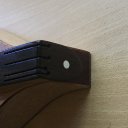
When I got my 1st dulcimer nearly 40 years ago I thought you should play over the strum hollow most of the time.  I learned quickly that sul tasto (toward the nut) and sul ponticello (toward the bridge) would do the same as on the guitar: a sweeter sound toward the nut, a more metallic sound near the bridge.  Like others I used them to vary the sound as I did on the guitar.  However, you can do the same thing without a strum hollow.  Here's a pic of my Heatherwood, which has no strum hollow:

I believe the Hughes dulcimers were made the same way.  Maybe that was a Colorado thing? 

That being said, you can see by some old dulcimers without strum hollows people wore down the part of the fretboard over which they were strumming.  My problem is not that but wearing the top from vigorous strumming and fingerpicking.  My Rockwell is going to look like Willie's Trigger in about a year if I don't watch it.  LOL.


Clive Quinn
@clive-quinn
05/04/20 04:56:40AM
3 posts

Dulcimer String Anchor Pins


Instruments- discuss specific features, luthiers, instrument problems & questions

I got so fed up with pins that I decided to try something else. I drill 4 shallow holes big enough to hold the ball end and cut 4 slots between them and the bridge. It makes changing strings easier and makes the sound better, on my dulcimers at least, perhaps because it is attached to wood and not metal.


brett2.jpg brett2.jpg - 143KB
IRENE
@irene
05/04/20 12:08:46AM
168 posts

What's your favorite tune or dulcimer to play this month?


General mountain dulcimer or music discussions

yep, Steven, I'm with you on that.   However, during this Plandemic, I've loved the hymns most of all and Tomasi, my husband, playing the autoharp with me.   There's one I've been working on...........COME HOME.  although I'm already muchly at home............I love playing my newest dulcimer that is all cherry wood and I'd sent the peg head to a carving son that lives in Maui, he carved a beautiful scroll head for me and this is a bright sounding dulcimer.  Still, I love my big Box dulcimer that is so very mellow.....aloha, irene

IRENE
@irene
05/03/20 11:55:14PM
168 posts

Finish


Instruments- discuss specific features, luthiers, instrument problems & questions

WOW, another interesting and thoughtful post.   yep, I've tried several kinds of finish.   On my harps and other instruments I've used OLD DAD'S wipe on finish and I loved that.   Easy to put on, to touch up and all.  then they went out of business.  I then went to General Finishes (Oil based) Gel Topcoat Satin.   I also noticed that too many coats seemed to lessen the sound.   So 3 is about my limit and very thin coats.  My brother introduced to some water based finish that dried in an hour........and I didn't like it all....but it was a trial on the one that I had with me there.   I'm going to sand that one down and try something else.   When in Hawaii in the month of Feb.....I made two dulcimers and got what Bob suggested Minwax wipe on Poly.   I like that very much.....3 thin coats is all that is necessary.   Who was it in Berea that said they often didn't have any varnish or paint on the early ones?   and it's very very true, all of these instruments need time to develop their sound.....the little tiny air pockets need to be filled with sound and sing.   There has been studies on instruments that ARE NOT PLAYED and they do lose their musicality.  It's so fun to play an instrument, and have the other instruments I have around me do some sounding simpathetically. aloha, irene

IRENE
@irene
05/03/20 11:33:39PM
168 posts

Is the strumhollow redundant?


Instruments- discuss specific features, luthiers, instrument problems & questions

Well, now, I must say something here.   Being that I had NO ONE to teach me in Hawaii 35+ years ago, I learned from Jean Richie's books.   Then when I met some wonderful folks in Southern Oregon 20 years ago.....they played all over like you talk about here.   Weird for me....I didn't like the FLAP FLAPITY FLAP with the picks on the fret board. I really LIKE playing at the strum hole.   HOWEVER, I've also watched so many videos on this site and those that play without picks and with chording..............finger dancing all the way.....I love the sound as well.   It's that FLAP FLAPTIY FLAP....and maybe only for me.............distracts from the beautiful melodies and or chords folks use when they play.  Yes, Ken, there is a sweet sound in the middle....but I often play way up high on the fret board....so for me............I stick to playing at the strum hollow.   aloha, irene

Steven Berger
@steven-berger
05/03/20 05:05:06PM
143 posts

What's your favorite tune or dulcimer to play this month?


General mountain dulcimer or music discussions

My favorite dulcimer and tune are the ones I'm playing at the time I'm playing.

Steven Berger
@steven-berger
05/03/20 05:00:36PM
143 posts

Is the strumhollow redundant?


Instruments- discuss specific features, luthiers, instrument problems & questions

"Is the strumhollow redundant?"....Yes...and no.  About the only reason for having one may be to provide an area on the fretboard to protect it from the wear caused by the plectrum or quill hitting it during play. 

Susie
@susie
05/03/20 03:31:09PM
513 posts

What's your favorite tune or dulcimer to play this month?


General mountain dulcimer or music discussions

Robin Thompson:

Playing mountain dulcimer is a comfort in these days.  

You bet it is, Robin!

Ken Hulme
@ken-hulme
05/03/20 12:48:25PM
2,157 posts

Is the strumhollow redundant?


Instruments- discuss specific features, luthiers, instrument problems & questions

IMHO, yes, the strumhollow is unnecessary.  Yes, the ideal place to strum is half way between where the string is fretted and the bridge -- which of course changes constantly as you play.  Most players strum somewhere around fret 12-14, some up as far as fret 8.    I strum in different places depending on the effect I am trying to achieve -- from brash down around the bridge to mellow at the half-way point of the vibrating string. 

Hollowing the fretboard for its entire length will definitely remove more wood than carving a strum hollow, especially with the wide modern fretboards.  Rather than a strum hollow, I prefer to simply round-over the edges of the fretboard between the last fret and the bridge.

The fretboard holes on that diatonic stick aren't so much for reducing weight as they are for adding more sound-hole to the construction.  Some dulcimer builders, following older traditional instrument designs, drill one or two 1/2" or 5/8" holes through the fretboard (hollowed or no) all the way into the soundbox.

Dan
@dan
05/03/20 12:33:16PM
208 posts

Is the strumhollow redundant?


Instruments- discuss specific features, luthiers, instrument problems & questions

Not really needed. I make my staple boards with them on the Kentucky pieces because the old masters did. Like Bobby said, we strum about staple 14, a few inches beyond the hollow.


updated by @dan: 05/03/20 12:33:46PM
Mill Branch Dulcimores
@mill-branch-dulcimores
05/03/20 12:29:03PM
23 posts

Is the strumhollow redundant?


Instruments- discuss specific features, luthiers, instrument problems & questions

I have no use for strum hollows. I build traditional Virginia dulcimores and they didn't have them is one reason. The other reason is I never strum there so there's no sense in going through the extra work to add one if I don't strum there. 
However I think a lot of fingerpickers do use the strum hollow area. So I reckon it would come in handy for them.

Nate
@nate
05/03/20 11:13:16AM
443 posts

Is the strumhollow redundant?


Instruments- discuss specific features, luthiers, instrument problems & questions

I built my first dulcimer before I had ever seen or heard any played, after reading a page in a homesteading book on how to build them. I sort of just assumed the strumhollow is where you strum. Once I watched a couple videos about antinodes I realized I should strum in the middle of the string, and once I watched some dulcimer videos I realized most players strum about 1/4 the way up the string from the bridge. Most players agree the strumhollow is just not the sweet place to strum. For a while I stopped adding them, and instead would just hollow out the channel on the underside of the fingerboard all the way down to the bridge. It worked terrifically and probably was much more structurally sound than a strumhollow due to the shape. Sometimes on quicker builds I will even just drill a few holes where the strumhollow would be, to reduce the mass of the neck without sacrificing so much structural integrity. What do y'all think? is there any value to a strumhollow other than just to reduce some of the wood off the fingerboard? Is extending the channel on the underside just as effective as adding a strum hollow? Is drilling holes like on this strumstick as effective?


dulcstrumstick.jpg dulcstrumstick.jpg - 110KB
Nate
@nate
05/03/20 10:58:53AM
443 posts

Finish


Instruments- discuss specific features, luthiers, instrument problems & questions

Ken Hulme:

Body volume differences, wood differences, internal bracing differences, age of strings, many other factors will audibly affect the quality of sound between two dulcimers.  Finish... not so much, IMHO.

The first three dulcimers I made for practice were exactly identical in materials and dimensions, but one was unprotected craftboard, one had just enough of a poly stain mix to coat the surface, and the third had a heavy few coats of poly forming a shell around the wood. These three were all made from craftboard so not exactly identical grain or anything, but the difference in the three was stark. The bare craftboard has by far the softest most mellow tone, and the one with a heavy poly coat is very twangy and bright, while the one with a modest amount of poly falls in between. The one with the most poly is loudest, and the one with exposed wood is the quietest, also. My assumption has been that because the poly is stiffer than the wood, the more i add, the more the tonal quality resembles a stiffer type of wood. I dont know how this would translate to harder types of wood. Maybe if it were a wood that is stiffer than the poly it would actually dampen the sound?

Robin Thompson
@robin-thompson
05/03/20 09:58:43AM
1,568 posts

What's your favorite tune or dulcimer to play this month?


General mountain dulcimer or music discussions

@Ken-Hulme & @Dan Those instruments look great!  It'd be fun to have a go at playing them.  

I've been working on a yet unnamed original tune and am playing it mostly on my Blue Lion Jean Ritchie model instrument.  Playing mountain dulcimer is a comfort in these days.  

Susie
@susie
05/03/20 09:40:19AM
513 posts

What's your favorite tune or dulcimer to play this month?


General mountain dulcimer or music discussions

I have been working on several songs, but I'm really enjoying my version of "Beauty and the Beast". I got Bing's original tab, but revised it some for my playing style, which I really like. Such a pretty tune. It sounds wonderful on my Doug Berch Standard Dulcimer, but it is also beautiful on my Folkcraft Custom Baritone. 


updated by @susie: 05/03/20 09:40:54AM
Bob
@bob
05/02/20 11:35:31PM
87 posts

What's your favorite tune or dulcimer to play this month?


General mountain dulcimer or music discussions

Though I don't have a particular favorite dulcimer to play, somehow I found myself really enjoying the simple melody of a hymn called "Oh God Almighty Father". It brings to mind many fond memories of my seminary years and indeed makes me feel quite peaceful. It's kind of like meditative prayer when I am playing it.

Banjimer
@greg-gunner
05/02/20 09:54:54PM
142 posts

What's your favorite tune or dulcimer to play this month?


General mountain dulcimer or music discussions

I've been playing some old ballads on my just intonation hogfiddle built by our very own Bobby Ratliff. There's something special about just intonation and 1-5-5 tunings. And Bobby knows how to fret them just right.
  230