Forum Activity for @strumelia

Strumelia
@strumelia
09/02/16 09:59:40AM
2,403 posts

Back up rhythm devices


General mountain dulcimer or music discussions

I use two different foot rhythm devices- both are 'low tech' though:

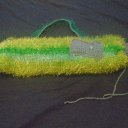
I made an ankle percussion strap that closes with Velcro. I sewed various rattling/jangling things on it.  When I tap my foot with my heel, it works well but obviously does not sound like a drum, more like rattles.  But when combined with the stomp of a hard heel on my shoe, it works nicely.  This doesn't work as well if you are a toe-tapper rather than a heel tapper.

Same thing with putting a tambourine under my foot-  I put the tambo on the floor with the skin side down.  Then I put my toe into it and that lets my heel rest on the rim edge that's nearest me.  I then tap my heel down on the tambo rim and that creates the rhythm.  There's a percussive quality if you use your heel assertively.

Ken Longfield
@ken-longfield
09/02/16 09:36:44AM
1,323 posts

Back up rhythm devices


General mountain dulcimer or music discussions

Paula, I have not used any of these devices. You can do a search for drum machines which are devices that create drum sounds/rhythms and are connected to amplifiers. Usually they come in the form of pedals. Looking at stores like Elderly Instruments or Sweetwater, you can find many options. Another way of doing it, I think, is by using an iPad/tablet or computer or phone, with some app on it that produces rhythms. I think the latest Dulcimer Geek podcast at DPN talks about pedals for use with dulcimers. Check it out at the Dulcimer Players News website. Sequencers and samplers may also produce rhythms for accompaniment.

Ken

"The dulcimer sings a sweet song."

Ken Hulme
@ken-hulme
09/02/16 06:57:03AM
2,157 posts

Back up rhythm devices


General mountain dulcimer or music discussions

They are generically called Rhythm Boxes, and run from $60 up.  Some have an optional foot pedal.  Korg (the same folk who make electronic tuning devices) makes several versions.

Paula Brawdy
@paula-brawdy
09/02/16 06:09:15AM
53 posts

Back up rhythm devices


General mountain dulcimer or music discussions


A lot of professional musicians have something that provides rhythm... drums sounds etc.   They use  Some sorts of pedals and whatever... Can anyone enlighten me on what you need to provide rhythm?   Are they using a keyboard that is programmed to provide rhythm?  but I do see them using a pedal...   I am totally lost on this one!

what do they use?

Ken Hulme
@ken-hulme
09/01/16 07:16:18PM
2,157 posts

Determining string gauge


Instruments- discuss specific features, luthiers, instrument problems & questions

Dulcinina -- string tuning "trick" to avoid breaking strings when tuning them:  Never tune a string that isn't humming.  Decide which tuner controls the string you want to tune.  Pluck the string, and while it's vibrating give the tuner a quick quarter turn.  If you do not hear the string change tone, STOP -- you are not turning the right tuner.  Find the right tuning knob and try again.   If the string does change tone, pluck it again and tune it to the note you want.

Dusty Turtle
@dusty
09/01/16 06:02:30PM
1,847 posts

Determining string gauge


Instruments- discuss specific features, luthiers, instrument problems & questions

Nina, you can trim the strings without cutting them by bending them back and forth and back and forth and back and forth until they break on their own, which will almost always be right at the point where they emerge from the hole in the post.  That way nothing will be sticking out.  I usually don't bother with that and just snip them with wire cutters, but then I use the side of the wire cutters to bend the sharp end in so that they don't stick out straight.

Another option, though it looks kind of funky, is not to trim the ends at all, but when you are dong to run them along the side of a pair of scissors. The string will curl up into a bouncy coil.  That is the same technique you've probably used with ribbon when wrapping presents.

In the future, I hope we all have those self-trimming tuners that Brian G mentions above.

dulcinina
@dulcinina
09/01/16 05:11:29PM
88 posts

Determining string gauge


Instruments- discuss specific features, luthiers, instrument problems & questions

Hi Everyone, I changed my bass string using the bass string from my old dulcimer.  We have one music store and the guy was as helpful as he could be but had never even seen a dulcimer before. And I live in south central KY! He  pulled out some strings and we eyeballed it. They don't carry individual strings anymore, and I had to buy a pack.  I put on the string and promptly broke it.  So I took off the bass string from my other dulcimer and I have no idea the gauge.  But it plays much better. Now I have a couple sets of melody and middle strings.   They'll eventually get used. 

I also trim the string before winding.  I couldn't get as close to the end as I wanted for the final trim and there's a sharp end sticking out.  Wished I had read the hint about leaving enough string to make a little kink at the end.  This dulcimer has different tuning pegs than I'm used to.  The middle and melody strings have nothing sharp sticking out and I can't imagine how they trimmed the strings so close. I was glad to read all the responses. 

Nina

Sheryl St. Clare
@sheryl-st-clare
09/01/16 04:43:03PM
259 posts

Determining string gauge


Instruments- discuss specific features, luthiers, instrument problems & questions

 Brian, Interesting, and good recommendation. If I can ever find plans for a guitar head dulcimer, I'll give these a try. 

Brian G.
@brian-g
09/01/16 03:53:04PM
94 posts

Determining string gauge


Instruments- discuss specific features, luthiers, instrument problems & questions

I also trim the string before I put it on, leaving about 2 inches past the tuner.  A few of my dulcimers have self-trimming tuners (they have built in cutters and trim the string as you are replacing it), and they are absolutely excellent. I think they are D'Addario Planet Waves, but I am not 100% sure.  But I went from being skeptical of them to a firm believer pretty much immediately:

D'Addario Planet Wave Tuners

Jan Potts
@jan-potts
09/01/16 03:29:08PM
402 posts

Determining string gauge


Instruments- discuss specific features, luthiers, instrument problems & questions


Dusty Turtle:


 Once the string is taught enough you can remove the capo.....


That's my problem--it's my strings that are apparently learning challenged!  faceplant


Seriously, though, these are all good suggestions.  I may even use some of my old strings and practice with some shorter scale instruments til I get better at this.


updated by @jan-potts: 09/01/16 03:29:41PM
Jan Potts
@jan-potts
09/01/16 02:34:54PM
402 posts

Rebels, trailblazers & champions...OH MY! Black Mtn Festival


General mountain dulcimer or music discussions

whocindylou:


As a newbie dulcimer player, I didn't realize this is a first year festival. Kudos to the organizer for managing to pull this kind of talent; covering such a huge spectrum of personalities and musical styles, together for our benefit.


Me--I am loving that I get FOUR consecutive days playing the blues with Bing, singing and playing sweet Appalachian tunes with the lovely Sarah Morgan, finally getting a chance to learn to arrange my own songs with Tull--master of arrangers for the dulcimer, learning how to memorize and make the songs I love my own with the inimitable Erin Mae, and working on finessing my technique with Stephen Siefert.


Hey, Cindy!  This is a new time for gathering at Black Mountain, but a few years back many of us attended Dulcimerville, held there in the summer and headed up by Lois Hornbostel.  So it's not exactly brand new...these organizers really know the ropes, and, yes, the instructor lineup is phenomenal (I've had classes from almost all of them).  It doesn't fit into my fall schedule, or I would have considered going.

I know you'll have a LOT of fun!  And maybe I'll meet you down the road...Unicoi, perhaps?

Sheryl St. Clare
@sheryl-st-clare
09/01/16 02:00:43PM
259 posts

Determining string gauge


Instruments- discuss specific features, luthiers, instrument problems & questions

Strumelia:

Ken makes a great point.  It's not desirable to go around the post or peg eight or ten times.  
I approach it a little differently than Ken, but we both get the same results.  I trim the string before I even put it on-  holding it over the instrument and trimming it to leave only about 2.5 inches for winding.  Typically this means I'm trimming off about 6" from the original string length.  The length from tailpiece to cut end will vary by an inch or two depending on which peg you are going to.
Once the string is on and tuned, I trim the little end at the peg to a short length and then I take a pocket-sized needle nose pliers and kink the cut end back on itself so it can't prick my fingers...or you can leave a half inch and with the pliers just tuck the cut end back into the hole out of the way.  I hate getting stabbed while restringing!  cryrun


This is my method too, but I leave 3.5-4 inches for winding, because somehow, I always end up short. I like to go around the post 3-4 times.  Looks neat, but holds well. My hand from pointer to pinky is 4 inches, so I just lay my hand over the post and cut the string there, then wind. I like to keep my face back from the instrument when I am tuning. If I do break a string, I won't end of with the nickname "Scarface". The more you change strings, the more comfortable you are doing it. And practice makes perfect. Isn't that what they say?

Strumelia
@strumelia
09/01/16 12:52:28PM
2,403 posts

Determining string gauge


Instruments- discuss specific features, luthiers, instrument problems & questions


I actually first trim the string length so there's only about 2 inches of slack, then thread in the peg and wrap it around a couple times.  Then I lay the string in the nut slot and put my middle finger of my left hand on top of that slot to hold the string in place (a capo would work too, as Dusty said).  At this point there's still enough slack to hook the other end of the string on the tail end pin... and I use the thumb of my nut slot hand to pull up the slack as i start tightening so the string doesn't pop off the tail pin.  I then use my right hand to turn the peg a couple more times to tighten it up.  When it's snugging up enough I remove my left left hand from the nut area and make sure the string is in both nut and bridge slots as I finish tightening.  Sounds more complicated than it is- once you've done it a few times it's no big deal.

I once changed a whole banjo skin without taking the strings off the peghead end by using a capo to keep them in place on the neck while changing out the head skin.   lol...talk about wanting to save a couple bucks...


updated by @strumelia: 09/01/16 12:54:28PM
whocindylou
@whocindylou
09/01/16 12:39:21PM
5 posts

Rebels, trailblazers & champions...OH MY! Black Mtn Festival


General mountain dulcimer or music discussions


i am not seeing much chatter on Black Mountain Music Festival.

I was hooked from the moment I saw that bold, audacious, completely mind-boggling lineup of talent, all in one place for four fabulous days!  OH, and the location just happens to be the gorgeous Blue Ridge mountains of North Carolina, in autumn's full majesty!

As a newbie dulcimer player, I didn't realize this is a first year festival. Kudos to the organizer for managing to pull this kind of talent; covering such a huge spectrum of personalities and musical styles, together for our benefit.

So, who else is heading to the festival? What are you most looking forward to???

Me--I am loving that I get FOUR consecutive days playing the blues with Bing, singing and playing sweet Appalachian tunes with the lovely Sarah Morgan, finally getting a chance to learn to arrange my own songs with Tull--master of arrangers for the dulcimer, learning how to memorize and make the songs I love my own with the inimitable Erin Mae, and working on finessing my technique with Stephen Siefert.

Yes siree, I know how to have some dulcimer fun! How about you?


updated by @whocindylou: 10/27/19 12:02:25PM
Dusty Turtle
@dusty
09/01/16 12:36:01PM
1,847 posts

Determining string gauge


Instruments- discuss specific features, luthiers, instrument problems & questions

Yes, Jennifer, a string winder makes changing strings a lot faster and easier.  I have a string winder that is also a wire cutter, like this one by Planet Waves .

Another tool to use is a capo.  I can't believe I never thought of this and had to get the idea from Butch Ross a few months ago, but it will make your life easier if you use a capo to hold the string in place while you thread it through the tuner post and begin your winding.  Once the string is taught enough you can remove the capo, but before then it will make your life much easier.

Strumelia
@strumelia
09/01/16 11:34:32AM
2,403 posts

Determining string gauge


Instruments- discuss specific features, luthiers, instrument problems & questions

Ken makes a great point.  It's not desirable to go around the post or peg eight or ten times.  
I approach it a little differently than Ken, but we both get the same results.  I trim the string before I even put it on-  holding it over the instrument and trimming it to leave only about 2.5 inches for winding.  Typically this means I'm trimming off about 6" from the original string length.  The length from tailpiece to cut end will vary by an inch or two depending on which peg you are going to.
Once the string is on and tuned, I trim the little end at the peg to a short length and then I take a pocket-sized needle nose pliers and kink the cut end back on itself so it can't prick my fingers...or you can leave a half inch and with the pliers just tuck the cut end back into the hole out of the way.  I hate getting stabbed while restringing!  cryrun


Ken Hulme
@ken-hulme
09/01/16 10:23:46AM
2,157 posts

Determining string gauge


Instruments- discuss specific features, luthiers, instrument problems & questions

Trim off the excess string, ladies.   That way you don't have a bird's nest around the pegs.   I usually go through the hole around the post and back through the hole, the pull the string up to get rid of the slack.  Then I use the tuners to get the initial tune.  After that I snip off the excess string, leaving only a half inch or so.  With the bass string I'll go through the hole, around the peg twice then back through the loop as I pull up the slack.  That locks the string in place.  Then tune and trim.

Jan Potts
@jan-potts
09/01/16 12:35:31AM
402 posts

Determining string gauge


Instruments- discuss specific features, luthiers, instrument problems & questions

Maybe you could show me a few tricks, Jennifer!  Mine always end up looking like a 2 yr old wearing oven mitts attempted the task.  giggle2

Sometimes I'm even surprised they manage to hold a tuning!

It's probably fear that keeps them in their place!  sweating

Jan Potts
@jan-potts
08/31/16 09:19:48PM
402 posts

Determining string gauge


Instruments- discuss specific features, luthiers, instrument problems & questions

Matt Berg:

 Just buy a couple different thinner strings and try them all until you find one you like!


Um....perhaps Jennifer does not, yet, (like many of us!) feel proficient about changing strings?  This is an acquired skill that takes quite a bit of practice for some of us....hairpull

Matt Berg
@matt-berg
08/31/16 06:32:02AM
105 posts

Determining string gauge


Instruments- discuss specific features, luthiers, instrument problems & questions

Why bother worrying about the string gauge?  If the string is too thick for your preferences, the actual gauge doesn't matter.  Just go to your local music store with your instrument and have the clerk pull out strings and compare them.  You won't know what gauge you prefer until you have tried a few.  My local Guitar Center sells individuals strings for $1.  Just buy a couple different thinner strings and try them all until you find one you like!

Ken Hulme
@ken-hulme
08/30/16 09:17:15PM
2,157 posts

Determining string gauge


Instruments- discuss specific features, luthiers, instrument problems & questions

Jennifer -  the problem is that most of the employees at a generic guitar store either don't have a caliper, or don't have a clue how to read a caliper.    Not one of the four shops here in my town has a caliper...


updated by @ken-hulme: 08/30/16 09:18:27PM
Brian G.
@brian-g
08/30/16 03:28:54PM
94 posts

Determining string gauge


Instruments- discuss specific features, luthiers, instrument problems & questions

Jennifer - yes, you can definitely just measure the string with a caliper to determine its gauge.  As has been mentioned, there's nothing special about dulcimer strings; a regular old caliper or micrometer will work on a dulcimer string just as well as it will any other string. I had to do this recently for a harp dulcimer I acquired as I had no idea what gauges the harp strings were.  :) 

dulcinina
@dulcinina
08/30/16 12:37:53PM
88 posts

Determining string gauge


Instruments- discuss specific features, luthiers, instrument problems & questions

Thanks, guys. I got on Strothers string gauge site and it recommended a 19.  So I'm going to try and 20 and 22 and see how I like them.

Ken Hulme
@ken-hulme
08/30/16 12:11:41PM
2,157 posts

Determining string gauge


Instruments- discuss specific features, luthiers, instrument problems & questions

Dusty is right, Nina.  The two things you need to know to determine string gauge is the VSL and the open note you want to tune the string to.

Dusty Turtle
@dusty
08/30/16 12:07:22PM
1,847 posts

Determining string gauge


Instruments- discuss specific features, luthiers, instrument problems & questions

Nina, I think Bob is right. I usually use a .24 bronze wound string for my bass strings on my instruments in the 26.5-28" VSL range. But it is a matter of preference.  If you prefer lighter strings, go dow to a .22 or .20.

There is no difference between guitar strings and dulcimer strings other than the name on the package. But the good news is that single strings are pretty cheap. Why not buy 2 or 3 in the .20-.24 range and see which ones you prefer?

For future reference, you might consult the Strothers String Gauge Calcuator where you indicate the VSL and the note you want to tune to and the calculator will tell you what gauge to use. I've been told it errs on the light side, so feel free to go a little bit heavier than indicated.

Bob Reinsel
@bob-reinsel
08/30/16 09:25:03AM
80 posts

Determining string gauge


Instruments- discuss specific features, luthiers, instrument problems & questions

I generally use a bronze or nickel wound .22 or .24 gauge on the low string.  It's really a personal preference, up to a point.  Especially if you want to go to lighter strings.  Heavier strings cannot be tuned to as high a pitch.  Light strings will be soft and unresponsive if they are tuned too low.  If you tune somewhere between C and E on the low string you could even use a .20 or .18 unwound string for the base if you want to.


updated by @bob-reinsel: 08/30/16 09:25:38AM
dulcinina
@dulcinina
08/30/16 09:13:15AM
88 posts

Determining string gauge


Instruments- discuss specific features, luthiers, instrument problems & questions

Is there a way to determine the string gauge on strings on my dulcimer.  I bought a Folkart at KMI and the bass string seems kind of heavy.  The dulcimer is a 27.5 VSL  and the body depth deeper than traditional dulcimers.  I know that a heavier gauge gives a louder sound but I'm having a little trouble pressing the bass string and some buzzing.  It's a wound metal gold string.  We have a local music store and the people know a lot about guitars but nothing about dulcimers.  Any suggestions? Nina


updated by @dulcinina: 08/03/23 09:22:22PM
sleepingangel
@sleepingangel
08/29/16 11:36:41PM
98 posts

Handmade Native American flute


Adventures with 'other' instruments...

awesome. That's so wonderful!!! thanks for sharing and enjoy your beautiful creation!!

Maria

sleepingangel
@sleepingangel
08/29/16 11:35:34PM
98 posts

Native American Flutes


Adventures with 'other' instruments...

Jennifer Brutschy:

Sleeping angel, thank you for sharing this.  I'm putting it at the top of my list of books to buy.  It sounds great.

Doors just keep opening . . .


I

Oh I think you will LOVE it. I learned how to read the Nakai tab and it opened up a world of music that's available. Plus I love his voice and how he teaches. I've conversed with his wife and she was so wonderful. After I purchased the second installment and then a different book on jazz for the NA flute (also by him) she send me his cd as a gift. (I had put the book on my videos to show people where I got the music from and she gave me permission to record his songs that he wrote) and I guess she was happy that I did it etc..I was so surprised. And it's a wonderful cd. It's called Remembrance. I have it in my car and listen to it over and over!!! I wish I could have thanked him. He passed away in 2010 but his wife is keeping his memory alive and I'm so glad...

Take care

Maria

Kevin Messenger
@kevin-messenger
08/29/16 10:04:05PM
85 posts


Me too Lisa, I got one last fall in Williamsburg. Haven't got a good tune down yet. Guess I will stick with building dulcimers. LOL


Strumelia
@strumelia
08/29/16 10:00:50PM
2,403 posts


Well I am of course a beginner to all this pipe/whistle stuff which makes it a challenge, but I found the metal pennywhistles to be very difficult for me to get clear notes on, and not so at all on my plastic tabor pipe, which has a nice clear warm tone.

So as an experiment I ordered two plastic/polymer Dixon penny whistles instead to try- in the keys of high D and low A. (there's a substantial size difference between the two keys).

They arrived today and I am finding them much easier to get good notes on than the metal PWs.  Not sure why but the plastic ones make clearer notes and warmer tones for me.  Perhaps when i get better I can make the metal ones sound better, who knows.

I was delighted to discover that all my diligent tabor pipe practice is helping me here-  the learning curve for these new pennywhistles is way less steep than when i first started tabor pipe.  I can already play some of my favorite simple tunes, with only a few mistakes here and there.... so fun!!

I'm not one for playing lots of Irish tunes, but I can play my favorite renaissance and medieval tunes on these, and also some early folk/country dances from various European countries.  I'm working on some simple French branles, also things like Nonesuch.

sleepingangel
@sleepingangel
08/29/16 08:53:10PM
98 posts

Native American Flutes


Adventures with 'other' instruments...

Jennifer Brutschy:

Yes, Terry, it feels that way.  My first experience with a dulcimer was life-altering, too.

Congrats on the HS flute. I know exactly what you mean because I felt the same way with the dulcimer too!!

and I'm sure this will be the first of many flutes for you as well. So far I have three HS and they are all very beautiful and unique in their own way!!

enjoy and if you need a good resource besides the YouTube videos from HS their is book/cd that taught me so much and is simply amazing. It's called "understanding the gift" by the late John Vames. I could just listen to the cd all day and he not only plays the examples but gives verbal instruction and encouragement!

take care 

Maria 

Terry Wilson
@terry-wilson
08/29/16 02:58:12PM
297 posts

Native American Flutes


Adventures with 'other' instruments...

Jennifer, congratulations.   Big moment in your life.

Susie
@susie
08/29/16 02:55:21PM
515 posts

Native American Flutes


Adventures with 'other' instruments...

Jennifer Brutschy:

My HS Sparrow Hawk just arrived and WOW is it beautiful!

YEAH, it's fun to get a HS flute in the mail. Enjoy!

John W. McKinstry
@john-w-mckinstry
08/29/16 02:14:13PM
59 posts

How to be sure about a copywrite?


Site QUESTIONS ? How do I...?

Thank you Salt-Springs and Strumelia.  Your suggestions and encouragement are just what Anne and I needed.

Sheryl St. Clare
@sheryl-st-clare
08/29/16 01:58:19PM
259 posts

Native American Flutes


Adventures with 'other' instruments...

Nice, looking forward to hearing how it sounds. enjoy!

hugssandi
@hugssandi
08/29/16 12:35:17PM
249 posts

How do YOU memorize music?


General mountain dulcimer or music discussions

Linda, we will learn together!  :)  Bob, I do love getting 1,000 versions from YouTube!!!  Being TAB dependent I am finding that when I do work out something by ear I remember it much more easily.

Bob Reinsel
@bob-reinsel
08/29/16 12:03:28PM
80 posts

How do YOU memorize music?


General mountain dulcimer or music discussions

I have never really understood how I memorize music.  It's a thing that I have done since I began playing piano as a child.  In fact, reading music has been harder for me than playing by ear, which comes kind of naturally.  I would only read music until I had it in my head. I don't know if I have ever successfully learned a tune on dulcimer from tab, but maybe I haven't really tried.  

For me, the learning process starts with listening to a tune until I have it in my head.  YouTube is a great resource for finding various interpretations of songs.  I usually will listen to several different recordings when I am learning something.  I also learn the music first and put the words to it later.

Patricia Delich
@patricia-delich
08/28/16 09:56:56PM
154 posts

Hearts of the Dulcimer Podcast in its 2nd year


General mountain dulcimer or music discussions

Thanks for listening! dulcimer


hugssandi:

inlove   Thank you so very much for sharing this.  


  415