Building your own folk fiddle/violin plan
Adventures with 'other' instruments...
nice workman ship for scraps of wood.
nice workman ship for scraps of wood.
Nice. One of the most complete Instructables I've seen, Usually they leave a great deal to be desired. I've built several Spanish folk fiddles called Rabel - lineal descendants of the medieval Rebec. Rabel, like the rebec, usually have a carved body with a separate sound board, rather than 6 thin pieces of wood glued together. The other folks option is a gourd body. Soundboards are often leather or tin. There was a great Spanish language website that I had bookmarked, but it doesn't appear to be working now
You might consider posting this in the building section; there are already other non-dulcimer building things there...
hi my friends......did'nt know where to post this?.......so I used to play classic violin in my early teens....but I'd get up early saturday morning to watch Hee Haw ...just so I could watch those cats burn whenever there were good fiddle players on
http://www.instructables.com/id/Improvised-Folk-Fiddle/
Hi Mike,
That TK O'Brian was my first dulcimer and I loved it  I've just passed it on to another beginner and hopefully they will get another few good years out of it too. I used it as a loan instrument for a while and enevitably someone else fell in love with it and asked to buy it!!! I tracked down the workshop who built the instrument for the TK O'Brian brand. They are made by the Hagen family in Ozark. Chas buys in billets of wood from his local lumber yard and they quartersaw and plane the planks themselves. I was so impressed that when I started my dulcimer business over here in the UK I asked the Hagens if they would build a model for me - so they make me the Red Kite which I sell in the UK and Europe.
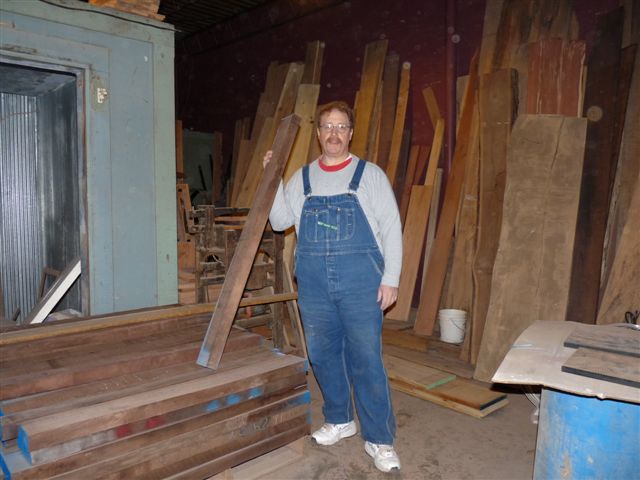
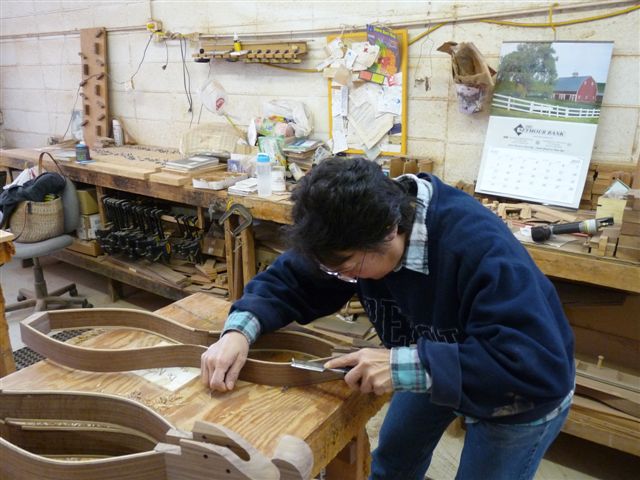
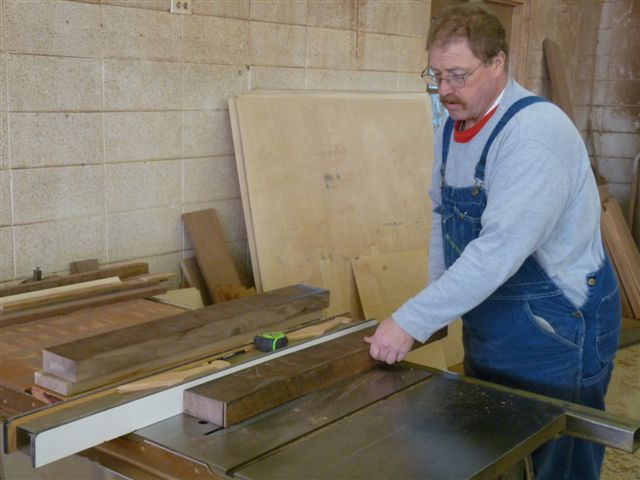
I'm really proud to be working with such a great family and helping them get their instruments over on this side of the Atlantic. In fact, all the small US dulcimer workshops and individual luthiers I deal with are great people - it is a fantastic community and one where artisan instruments make up the lion's share of the market. The big name instrument makers who mainly build now in the Far East can't really get a look in with dulcimers because the artisan small workshops andluthiers in the US do such a great job. It isheartwarming to find something left in the world where the big companies are kept out of the market because they know they can't compete with the qualityor price that the artisans can produce.However, the one thing that the small workshops and independant dulcimer makers can't afford is an advertising budget soit is up to us players to keep spreading the word and supportingour artisans

'Reletive tuning' is tuningthe strings to each other Mike rather than tuning them to a regulatedexternal source like an electronic tuner or pitch fork. Use your electronic tuner to get close to the tuning you want then blend the strings to each other by ear. You'll find that the instrument will end up in tune with itself and sounding great but you may actually be pitched at say a little flat of the key of D or whatever ie not exactly at a definitive pitch. If you have a look at the tunes I've posted in the Old Style NOter and Drone section of the forum you'll see that quite a few will say something like DAA (just a little sharp) or similar. When you listen to old recordings of folks like Jean Ritchie you'll find that her dulcimer wasn't tuned to an exact pitch either - it varies quite a lot as she would have just tuned it to itself throughout the recording session so it varied a little from song to song.
If you can find another bead then I would add it to the string that's missing one at present. It will help you with those final fine adjustments.
Robin
Another thing I've noticed with too many wraps is that you can get yourself in a situation where winding on more string forces the lay up against the side of the pegbox and actually starts to push the peg out making it slip.
I've always taken the string through the hole, brought it back up to the top and down through the hole again before tightening, works well for me. I've seen people actually knot the string onto the hole, but this can be the devil getting it off if you ever need to make a quick change.
john
The beads are added as fine tuners. Some players with friction pegs use the beads, players with geared tuners won't likely need fine tuners. You want a few wraps of string around the peg, to help lock the string from slipping, but more than 4 is probably overkill, and looks sloppy.
This is easy to demonstrate, but hard to clearly explain in words, but I like to put the string through the hole in the tuner, then bring the loose end of the string back around the shaft and under the other end so it is pinched against the shaft of the tuner. This helps lock the string in place so it is less likely to slip. I could show you in a few minutes, but I'm not sure I can describe it so it makes sense. Words fail me, I guess, probably related to all those D's in English classes.
Paul
Glad to hear about your experience sharing the mountain dulcimer at Grey Fox. Keep up the good work!
That is a a shame Jeni. There were some great acts and I may have a new favorite or two. My wife and I have loved the Carolina Chocolate Drops since we first heard them a few years ago. They stole the show at Grey Fox. New ones we really liked were Jim Gaudet, Betsie Ellis, and Della Mae. Of course, there were a lot of old favorites there too. Over 40 bands in all!
Thanks guys. John it really was pretty neat. We sat down and started playing like we had been playing together for years and the songs seemed to roll out quite nicely. It was kinda like Zen......
That's neat when stuff like that happens!
That's really great, Scott.
Just returned late Sunday night from the "Grey Fox Bluegrass Festival" up in the Catskills of New York. I had a ball and there were thousands attending and camping there. I think I was the only dulcimer player there! If there were others they didn't show themselves.... Anyhow, my wife and I camped beside a Canadian Bluegrass/Gospel group and they had never had any experience with a mountain dulcimer. Long story short, they asked me to sit in with them and we played several songs together. I even taught them a couple of Canadian fiddle tunes they didn't know about! They became very enamored with my dulcimer and several of them expressed interest in maybe acquiring one and using it in their music. Anyway, I had fun spreading the word and maybe made a few converts.
The official festival photographer took stills and videos of us playing and I'm hoping they post it on the festival website soon.
Scott
Since the uke was brought up in this thread, and since I just saw Jake Shimabukuro again for the millionth time last night, I just wanted to mention that if you like uke, you need to hear Jake. He's done for uke what Bela Fleck did for banjo. He also happens to be a very nice guy. You can see a free documentary here:
Jake Shimabukuro: Life on Four Strings
Enjoy!
Lauri, I hope to have a JRS one day....he lives close to where I do and I frequent their shop. Really beautiful sounding dulcimer! JH....lately everything in my house is dusty....hasn't slowed me much :) Ukelele.....there has been a banjo uke calling my name for some time now....trying to resist!
I have figured out that looking at the bridges helps with accuracy. For some reason my eyes just want to look at the strings...so I have to kind of keep reminding my self to look at the bridges.
I'm really enjoying the HD....It remains set up in my music room and I have to walk past it to get to my other instruments so I stop and hammer often!
I was led to the fretted dulcimer from the hammered dulcimer, which I learned to play first. I still have my beautiful old custom Dusty Strings D25, and still love the thing even though I haven't seriously played it in a while. To David I just wanted to mention - don't look at the strings; look at your bridges instead. Much easier that way. :)
I made my first HD in the late 1980's, and a great number since then ! I truely believe it to be relatively easy to play, I could'nt read SMN then (nor can I now ) but once I had mastered the 'geography' of the instrument's layout (using a specific 'tuning' pattern every time helps ) I seemed to be able to 'jus play the durned thing', and although attending some workshops, I have never really been tied by the constraints of 'doing it the right way' I always played 'seated', using a monopole leg, and found that I fitted into our UK pub sessions (where just about any type of music is played, on just about every sort of instrument) very well, so long as I observed timing, rhythm , and patterns (see Susanne's comment). For me, the HD fitted into such sessions well , it worked great to be able to lay down backup sound to tunes I did'nt know. I always preferred playing the HD over MD in such situations, 'cos without doubt it carries a lot more punch. The downside being that this enables all the 'bum' notes one might play to be clearly heard !!! Of course, the MD is easier to lug around......................... !
Go for it Cheryl, just don't spend too much time looking down at the strings, 'cos then you might notice all the dust on the soundboard, which may put you off playing ???
best wishes
JohnH
Robin...great idea!!! Connie....I had no idea it was the dark side...push over I'm going to join you!! I was considering the D550 for a chromatic. I wish I could hear one in person, but I have heard Dan Landrum's via recording. I'm starting to get the layout pretty well, just hitting those darn strings accurately has been tough!
Phil....its calling me....its those darn irish jigs.
CJ, don't go over tothe dark side!!!! 
Just wondering how many folks who play mountain dulcimer also play hammered dulcimer. I've owned a pretty Masterworks hammered dulcimer for years and just now I'm thinking I just may learn to play the durn thing. It has a nice sound and diatonic string layout with a couple chromatic notes on the side. Shouldn't be too hard to learn....right?? :)
Linda, that makes so much sense about teaching the returned military members. I live not too far from the Walter Reed Medical facility in Bethesda, MD. I'm not as experienced on the dulcimer as some, but I have taught a couple of friends how to play. That would be such a worthwhile thing to do. I'd be interested in how he started his program, where he gets his guitars, does he rent them, give them away, loan them, etc. Think of the wonderful opportunities to serve those who have served.
My classical music station this past week talked about a study showing that choir members had synchronized blood pressure when singing. It was comparable to the way yoga breathing could lower blood pressure. So sing with those dulcimers and your other instruments...especially the soothing songs.
Well, I won't wax philosophical here on the question of "What music has done for me?", but simply get to the practical. Music has gotten me through more medical and surgical hospital stays than I can shake a stick at. Since TV has never been something I watch with any regularity, music and books are what have gotten me through endless hours flat on my back. I never go into a hospital without my tape recorder or now iPod.
Music quite simply helps ease pain and speeds the recovery process if a patient keeps his or her feet and legs moving while bedridden. It also can add a bounce to the step as a person finally gets to walk the halls. At least, I've found it so.
Carrie, you play beautifully by the way!
Listening to music has become more important than ever before. I have been playing music since I was very little. I think over the years my ability to think from the point of view of a listener rather than that of a performer has developed and uplifts me much more than it did years ago. Plus, in University we were always "listening" to music. But that type of listening, although very educational, trained me to listen critically. I think that all that training has done me a lot of good, but it has taken years to be able to put my critical ears on the shelf and just "be" with a piece of music. It's a good thing!
Music
Music feeds my soul
and it truly melts my heart.
I knew music would be my life
From the very start.
I have played and taught for years,
All kinds of music in many of places
But the best part of my life
Is the smiles on my students faces.
I have a key in my possession
It opens up a door
To the wonderful world of music,
Where some have never been before.
I have a key in my possession
It opens the door to peace
Calms the sick and soothes the soul,
May music never cease!!
Cindi, I've been playing at Bluegrass jams for a few years now and am actually in a BG band with my dulcimer. I usually use the capo and if I have to play a song in a different key than I'm used to, say from D to A, I try to just move the tab up the keyboard so to speak. I noodle around until it's right in that key. If you know the song well, it's not so hard to do. Good luck!
Scott
Cindi -- don't let they fact that they have to read tab bother you. There's nmo law sez you hafta read tab! Memorize the songs, if that works for you, and blow them away. i don't read tab or SMN. I learn by ear and play from memory - couple of hundred songs at last count. IMHO a club is not the place to learn new music. It's a place to practice music, and practice playing, together, which should be fun.
For a nursing home "concert" you only need maybe a dozen songs total -- 3-4 that everybody plays together; 2-3 some by this duet, 2-3 by that trio and at least one solo each. BTDT many times over the years.
Here is a bit of a radical idea for your 3rd old dulcimer Cindi. How about stringing it up with 4 melody strings (4 x 0.010) and tuning them all to 'd' so you have a dulcimer in d,d,dd like a Galax dulcimer is tuned. It may sound crazy but for sessions you won't miss the bass strings as the other instruments (like guitar) will over power your bass string anyway. In d,d,dd your dulcimer will 'froth' along at the top of mix providing a very audible rhythm. If you listen to some of the tunes played by Phyllis Gaskins with her string band you'll hear how this tuning works when played with others.
The tuning d,d,dd means that you can play in the key of D with a noter or by fingerdancing starting the scale at the nut or play in the key of G starting at the 3rd fret (over d,d drones) - without retuning. If you put a capo on the first fret you can play in the key of A, both major and minor depending on your use or not of the 6+, starting the scale at the 4th fret and playing over e,e drones.
When I go to sessions (quite regularly!) I always carry a Galax tuned dulcimer, and it is the tuning I use the most as the sound carries really well because your dulcimer is sitting in a unique part of the sound spectrum. You need a quick right hand to whip up a rhythm - my preference is to use a quill and whip it across the strings.
It is just an idea - but if you do have an old dulcimer doing nothing at present then it could be fun to set it up in Galax tuning and have a go with noter and quill.
Robin
Having one dulcimer in DAd and one in DAA won't really help cover themultitude of key used at a bluegrass jam. Robin's link above to his discussion of tuning and playing in the various session keys will give you lots of good ideas for tuning two dulcimers to cover the common keys used in bluegrass.
You've run into the problem I have with most dulcimer clubs -- they seldom play tunes up to speed, feeling that they should "play down" for beginners/slower/older players not play up to speed and stretch those players to improve. The result is that no one improves, everyone becomes equally mediocre, and everything from Amazing Grace to Camptown Races is played at the same glacial pace....