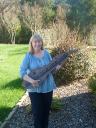
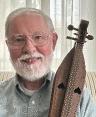
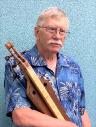
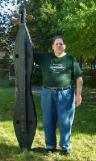
Sad news- Rest in peace our good friend John Phillips
General mountain dulcimer or music discussions
I am saddened to hear this news. John and I had shared a lot of good conversation. My prayers are with his family. John you will be truly missed.
I am saddened to hear this news. John and I had shared a lot of good conversation. My prayers are with his family. John you will be truly missed.
This is sad news. My sympathies to all his friends and family.
I join the others in expressing my sympathy to John's family and friends. He was a wonderful asset for our community and will be missed.
Ken
"The dulcimer sings a sweet song."
I am sad to hear about this. John and I talked some, mostly privately, and he always encouraged me to follow my own muse. RIP.
Sad to hear of the passing of one of our treasured dulcimer players on the other side of The Pond. He will be missed both there and here.
He was quite the player. I only wish I'd have known him in the flesh. I'd think we'd have enjoyed each other's company over a 1/2 pint (or 2,) then played a few great tunes.
Very sorry to hear this sad news. May God comfort his family and friends.
A good man indeed... With sadness... Robert
Very sad to here that John P has passed away. You will be missed.
Deeply shocking and sad to learn this news. We had such wonderful and fun exchanges. I can't believe it.
Rest in Peace John P.
Oh I feel a little sad today, however I have been listening to my playlist of John P's music and remembering his gental way of guiding me to hear the sweet sounds. I have been recalling the demo songs he would post for us in audio and how it was slowed enough so I could attempt to pick out the melody along with him, as if he and I were face to face and yet we were across the pond from each other.
I will remember his love for sharing this beautiful instrument and all the encouragement he gave us.
John's music will live along with us, He gave us a beautiful gift and we shall remember his life with appreciation and Love.
Thank You our Friend!
It is with sadness I have just been given the sad news re Johnp. I shared with him music, a love of our West Country, and my home ! I also lay claim to having introduced him to this our site, where he gave his knowledge and experience freely and never in a disparaging manner. He was a quietly confident player of our shared instrument......I just wish he had shared more recorded music with us !
Indeed, Rest In Peace Johnp
JohnH
Oh wow. This is a shock. He helped me learn a few things. I will miss him. I'll be saying prayers for his family. I am thankful that his music and posts are here. :(
Info on Dulcimer U is now up--I've decided to go (I'll be in Nina Zanetti's morning class) and my husband, Craig, has surprised me by saying he wants to go, too. He'll be in the dulcimer building class all day, but will attend some of the jams and all the concerts at night.
http://www.wcu.edu/engage/community-resources/conferences-and-community-classes/dulcimer-u/dulcimer-u-summer-week/index.asp
I've been several times, so if anyone has a question, just ask! I'm looking forward to meeting some FOTMD members there!
Jan
Oh, I am shocked and saddened by the news of John's death. I treasured both his friendship and the wonderful music he made. I'm reminded how through sites such as FOTMD and Soundcloud (where I am one of John's followers), John's music lives today.
I offer my deepest sympathy to John's family. He will be sorely missed.
Rest in peace, John.
John's contributions here on FOTMD were always friendly and civil as well as knowledgeable and he was considered a good friend by many. I hope that his charts--The Dulcimer Compass, (showing organization of the modes) and "Lengths of Intervals (In Semitones)"--will remain on the site.............because one day I may actually understand them!
My condolences to John's family at this sad time. I hope they find some comfort in knowing his love of music was shared worldwide.
Wow, I am so sad to hear this. John P was a good friend of mine here, and a good FOTMD Citizen as well. I will miss him.
I have been contacted by a good friend of his and by his son, and I've been asked to share the very, very sad news that John Phillips (FOTMD member John P ) has passed away unexpectedly at home from a heart episode.
John has been an active and respected member both here on Friends of the Mountain Dulcimer and on Everythingdulcimer for many years. His amazing musical knowledge, his humor and diplomacy, and his generosity in sharing and helping others has truly enriched the entire dulcimer community. John loved being part of our FOTMD 'family' and his absence will be profoundly felt. My heart is heavy today.
Please share here as we pause to reflect on John and on his family in their time of loss.
I've finally graduated to Planxty Eleanor Plunket, Steel Guitar Rag, Country Garden, and playing around with blues scales/riffs, or pieces of these.
It not only sounds good, it's good for you too...you'd definitely get a work-out playing it!
The original question was how to play grace notes. I am not sure it is helpful to bring in accidentals, since grace notes may or may not be accidentals.
As Ken notes, grace notes are often ornamental in nature and not an essential part of the melody. As Robin explains they are usually written much smaller than regular notes in standard musical notation.
Grace notes always appear just before a note and they receive no counted value. The note just after the grace note sounds on beat, so the grace note actually takes away some of the duration of the note preceding it.
On a stringed instrument, a grace note would be plucked with the right hand, but the left hand would employ a slide, a hammer-on, or a pull-off to play the main note after the grace note. I do not think many of us could actually pick both notes fast or smoothly enough. But the important point, again, is that the note following the grace note falls exactly on the beat, so the grace note precedes it without itself receiving any counted value.
Below is the first line of my arrangement of the old Quaker hymn Beech Spring. Notice the three grace notes. In each case, I suggest playing it as a hammer-on. If this were arranged for noter/drone play in DAA, I would suggest a slide in the first case and a hammer-on in the second and third since the grace note would be the open string. And note that none of these grace notes are accidentals.

Really impressive, I am fascinated and plan to watch those videos.
Now I may have this wrong so don't quote me! But I think of grace notes as the quick augmentation notes that you hear around the melody in many types of music. They are not part of the melody but usually just a passing flash of an adjacent note. They tend to be in the key of the piece being played. This tune I recorded this week uses a lot of grace notes on the downward melody runs:
Now 'accidentals' I think of as notes in a tune that are not 'in key'. When written in notation they are the notes that have a sharp, flat or natural sign next to them on the staff to show that particular note in different from the key signature. There are a few tunes I play that have accidentals. Here is West Virginia Hills. The tune is in the key of D and the accidental is an F natural. The tune goes 'Oh those West Vir ginia hills' and the accidental falls on the Vir...
http://k003.kiwi6.com/hotlink/jxhmqvq1bo/West_Virginia_Hills_-_Jeffreys_-_15_Jun_14.mp3
As I play with a noter there are certain techniques I use for both grace notes and accidentals. I've outlined then in this video:
VSL and Scale are two different ways of saying the same thing. The string only vibrates between the nut and the bridge, hence VSL. I've played bass for years, so I'm used to a 42" scale instrument!
You know me, Dusty -- although I play a few Common Ground tunes, to another dulcimer player I'd play something that shows off noter & drone at its best -- long ringing slides; crisp notes; a fast dance tune -- something like that. Maybe Maire's Wedding or Jock O Hazeldean.
Thanks, Dana. "Lee's Waltz" is a pretty special tune.
Actually, Bing Futch's "Rosin the Beau," which he says he learned from Stephen Seifert's CD, was the first tune I learned on the dulcimer. Even before I had my own dulcimer, I watched Bing's video so much that when I first got a dulcimer I was able to play the tune almost right away.
Dusty, you're such an amazing player, anything you choose will be a gift to the audience. As for your questions, my answer would still be Lee's Waltz. It's what makes my heart happy and I played it a gazillion times just to smile so naturally it stays in my fingertips.
When I hear songs that I play or those which I'm familiar with the tune, I still thoroughly enjoy hearing the player's take on the song. Bing Futch playing Rosin the Bow isn't the same as another's and so on. I actually really like hearing various ways to showcase a tune so if you played Lee's waltz and I heard it, I'd be listening (and picturing tab in my head) to each familiar note, listening for any nuances that made it your own. Then I'd go home and try to copy you. :-)
Let us know what you ended up choosing and if there's a video, then that too!
Fascinating indeed. I showed the video to my daughter, and the more we watched it and understood the variety of sounds the machine was making the more impressed we became. Aside from the detail that went into construction, it is the original vision of this thing that astounds me. How do you even come up with this idea?
It's great to hear of the "go-to" songs people rely on. Many of them are standard fare for dulcimer players, meaning songs that would be commonly heard at dulcimer jams. Others are more idiosyncratic. Several are on my "to learn" list.
Maybe I could change the original question a bit? Originally I asked what your "pocket tune" was, meaning the song you play when someone asks, "Oh, you play the dulcimer? Play a song for us!" What if the person asking the question is her or himself a dulcimer player? Does that change your choice of song? I mean, if another dulcimer player requests a song you don't play Bile Dem Cabbage, do you?
The reason for my question is that I will be playing a very short set at a dulcimer festival later this spring, so the audience will be other dulcimer players. While I want to stay within my "comfort zone" to reduce performance anxiety, I also want to play something other than the same tunes everyone else plays.
Wildwood Flower, is my #1 go to song. Southwind; Cripple Creek; June Apple.
Thanks Ken, I'd not heard the term "grace" before. As for accidental notes, simple key the string with the noter touching the fret board to play the half note. Robin Clark demonstrates this technique in his advanced noter video.
Someone was recently asking about how to play grace notes. That's one of those "depends" questions. "Grace Notes" encompass a wide variety of musical ornamentation types. So, it depends on what kind of grace or ornamentation you're talking about. In SMN grace notes are written in smaller notation to indicate that in many cases grace notes are 'fill ins' between notes used to fill up pauses or rests or sustained notes.
The most common dulcimer grace notes are those we use to cover the fact that the tune we're playing contains one or more 'accidentals' that aren't found on our fretboard in the tuning we're using.
As a traditional dulcimer player, I get the occasional 'accidental' when a Tab shows that I need to play a 6+ fret and my dulcimer simply doesn't have that fret.
So how do you play a note that isn't there? One way is to play the two notes above and below the missing note -- in the time of the missing note. Say the accidental is a quarter note on the 6+ fret (and I don't have one). In place of the missing note I would play the 6th fret and 7th fret as eighth notes. Need a Bb and don't have it? Play a B and a B# in the same time as the Bb is supposed to be. If the tune is a familiar one, the listener will even hear the note that isn't there, because their brain expects to hear it.
We can also 'cover' a missing note using a grace note slide between the notes that are there, with the slide occupying the beat of the missing note. A sort of syncopated hammer-on or hammer-off cane also be a grace note for something that isn't there.
Dusty, look on YouTube for Wintergatan and you'll find some videos on the construction of the machine. This is fascinating, thanks for sharing Strumelia.
By now you know that on FOTMD there are lots of opinions on any given topic  ...
...
For me, the day I picked up a 23" VSL McSpadden "Ginger" was a total game changer. It was January, 2011, and I found it for sale in the vendor area at Kentucky Music Winter Weekend. Maureen Sellers was selling it and there was a box placed next to it for the buyer's check. I wasn't feeling very well, having gone through 2 grueling operations in the previous 2 months and was sitting out one of my classes that Saturday afternoon. I had never seen a dulcimer this size, much less held one, and I was instantly enthralled with it. Everything that I had struggled to do on larger instruments (with longer VSL's) now came easily with the Ginger. My confidence grew as my fingers easily found the notes for song after song. I played almost non-stop for 2 1/2 hours, wrote out my check, dropped it in the box and took my new Ginger to my final class of the day.
The Ginger remained my favorite instrument for several years. It was set up to be tuned DAd, so I used it in both my private playing and in classes and jams. Eventually, other instruments caught my interest and as my collection grew I had a variety of sizes and VSL's to choose from. I found that I was now comfortable with VSL's up to, but not exceeding, 28 inches....but I still prefer a VSL around 25-26 inches.
This has been my experience. As always in the dulcimer world, see what works for you!
Best wishes in your journey!
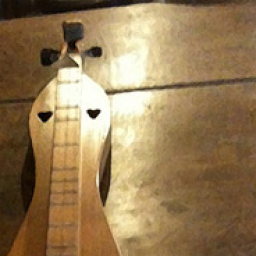
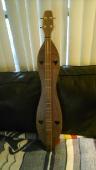
Mc Spadden Ginger , 23" VSL
That thing is insane. I am going to have to watch about a dozen more times to figure it out. How someone could envision this is just beyond me.