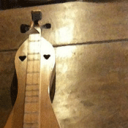
Ho Ho Ho and here I go again- buying another dulcimer!
General mountain dulcimer or music discussions
Almost exactly a year ago I found this website. I found out that I was getting a duclimer for Christmas (I had been asking for one) and could not wait to get it. I was so excited I was going crazy.
Since then I've had a wonderful time playing my dulcimer. I play some other instruments, so I knew that it was entry level when I got it. Now I've learned from my sweet papa bear husband that he's getting me a new one this year!!!!
Total shock to me since I wasn't asking for one. But he realized that I really enjoyed playing and he also plays instruments and knew that it would be a great present to get an upgraded one. So he wanted my opinion on what to get since he doesn't really know anything about them. I don't know much, but I think I chose a great one for the alloted budget.
SO HERE WE GO AGAIN!! I'm totally excited again and in awe of how blessed I truly am. So for 2 years in a row now at Christmas I'm going to be ripping open the paper on a brand spanking new dulcimer!
My new baby is a Folkcraft cedar/walnut beauty and I'll be drooling over the pictures until Christmas morning. 
My fingers are tingling with anticipation, my heart is bursting with joy, and I can't believe I'll be playing a Christmas tune on Christmas day with a new instrument!
Oh and he was asking me if I'd rather have an iPad or a new dulcimer, like that's even a legitimate question. Thank goodness he asked first is all I can say cause there's no way I'd ever choose anything other than a new instrument of any kind. LOL
So now I just have to figure out what song will be my first song on it. I've gotten into the habit of really trying to pick a first song on a new instrument. Not sure why, kinda sentimental for me I guess. Any suggestions are welcome, Christmas tune or not.
updated by @mandy: 08/03/23 03:37:05PM








 I'm trying to decide right now between I'll Fly Away (i've been really doing that a ton and just can't get enough of it) and Wildwood Flower (i usually play that as my first song when i get something new). I may change my mind and play something completely different too, but I'd like to play one of my favs.
 So though it may appear that I like these kinds of things (since I do videos) I really don't. They are just a necessary tool to share my true love of hearing, playing, and tinkering with music.