Old red stain dulcimer
Instruments- discuss specific features, luthiers, instrument problems & questions
Marg, sorry about that, I fumble-fingered that post and put the URL in the front instead of the back of the post.
Marg, sorry about that, I fumble-fingered that post and put the URL in the front instead of the back of the post.
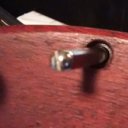
Mhttp://www.stewmac.com/Hardware_and_Parts/Tuning_Machines/Banjo/ Marg, those look like mechanical banjo tuners. The bare one is missing it's knob and internal bushings and the cracks you mentioned are probably in the knobs themselves. Stewart-MacDonald Co. (Stew-Mac) has Grover Sta-Tite pegs that I think will work for you. Their cost is $27.65 and here is the URL for you to see:
When I went back - the shop wasn't ready to sell as is, they were going to order the pegs and finished out but a bit more of a price. Well I went back today and they are still going to order the pegs but had not done so yet and the dulcimer was just kinda taking up room, so I was able to get it for the $20. less.
I am pleased with it, the pegs are a problem for me but the rest of the instrument looks like it had never been used. I rub it with the oil I put on my other dulcimer and strings, strung it with just 3 strings till I can figure out the peg problem and tuned it to DAA. I wasn't ready to stretch the strings or other pegs any higher, most everything I play is DAD - occasions turning differently. I played 'Amazing Grace' and it sounded really nice, either the difference was my ear from my go to dulcimer or the different tunning but it sounded like what maybe a mt. dulcimer was ment to sound like. I usually like a more mellow sound but this was more bright with a nice substain. It's smaller than what I am use to so my fingers were over reaching but it will be easier to reach some finger postiions I have trouble with. It is 26.5 from bridge to nut.
OK, now I have it, now what do I do? (Do I try and glue them) or do I try and find just one knob or 1 tension peg or go for a whole new bango set. The ones left on it have hair line crack so they will break soon, probably from age. So, will all banjo pegs fit or would I need to worry about the hole? I am enclosing photos so you can help me with this next step.
Anyone have an extra laying around? Thanks for your help so far and if you don't mine taking me the rest of the way. By the by, I pd. $40 even. I like the idea it was made for Sears, a lifetime ago, I worked there.
Thanks I really don't intend on glueing my bridge down, just will learn about it.
Linda, it won't let you change your password because all the answer boxes in your profile questions are blank. Answers are required, including checking male/female box. This helps me detect spammers and keep our site spam free. The answers don't even have to be correct, but please put in some info. I'm not sure how you joined to begin with without filling in profile answers at all- or maybe you removed the answers after joining?
In any case, please fill in answers for all those blank boxes, check female, put in your new passwork twice, and then hit SAVE at bottom. That will work. If you leave any box blank it will not let you change your password. This is for your own protection as well.
Ah! That would 'splain it, Lucy!
Depends on how and with what he glued that bridge down; you might be able to un-glue it. Slack the strings -- all of them. Run your hairdryer on high at the junction of the bridgeand the fretboard (both sides), to warm things up and hopefully soften the glue. Use a short length of 1/4" or 3/8" dowel or other stick (as a punch) and a hammer, and tap on the end of the bridge (not on the front or back). A good sharp RAP will probably knock it loose without hurting anything.
Hi! Actually, I'm not suggesting it...haha, just mentioning that one who sees an unglued bridge, may think it was in error. Now I have a glued in bridge when it was intended to be a floating bridge.
Hi D-Chitwood, I think I am going to learn about just having a floating bridge, when I know where I want it to tune and adjust it I think it will work fine and make the instrument flexable to maybe add heavier strings to change the sound. I am not ready to do anything crazy so I am keeping to similar strings for adjustment and tuning.
Thank you for the suggestion, gluing it down is one suggestion that I may consider some day.
Liked the 2'nd part of Schienholt, great interview Ken. It is really interesting to learn so much history of this instrument, too bad there is not more music from the past. Maybe you'll find someone who knows of the music through the podcasts.
I have a 35 year old handmade tear drop that I undusted and took to a guitar center for strings, when I first became interested in learning to play. The guitar center guy didn't have dulimer strings and just measured mine and replaced them with similar size strings. As he was working with it, he said, "Well looky here, the bridge isn't glued in place! I can fix that!" and he glued it down. Ah, to have known.
Hey Ken, sweetwood is a common name for a laurel.
I'm not familiar with a wood having the common name of Sweetwood. Sweetgum, yes, but not Sweetwood. What other names does it go by?
Dulcimer on a table - whether 5/8" or 3" thick -- is better than dulcimer on the lap. The lap is soft and absorbs sound. Tables are hard and reflect sound making the dulcimer louder. However. Dulcimer suspended even 1/8" above a "table" gives you even more volume because it frees up the entire back of the instrument so it can vibrate.
You can test this by setting two pencils on your table and putting the dulcimer on top of them.
Personally I like dulcimers with built-in feet, like my John Knopf Uncle Ed replica. You can make simple feet about 1/4" square that will stick on with double-sided tape. For my possum boards I prefer 3/8" or 1/2" thicknes and 1/4" suspension height. I have one board that is 1/2" Balsa -- verrrrryyyy lightweight!
When your friend makes your possum boards tell him not to put any padding on the suspension parts - whether they are just simple cross bars or fitted yokes or whatever. You want the dulcimer to directly touch the wood of the supports, for maxium amplification. Any padding, such as felt, will 'cost' you some enhancement. Wood to wood contact between the suspension bits and the dulcimer will not harm the dulcimer if the other wood is sanded very smooth and finished with ureathane or whatever.
I picked up some nice hardwood planks at an estate sale for a song (no pun intended), just the right size for possum boards. I’ve got some Sweetwood (native to NC) and some pretty, but unidentified hardwood. I gave some to my dear friend Maureen whose husband has been enticed into making us possum boards. I gave him a half dozen pieces of planks, and he is off, researching, and designing my friend and me a board. The planks I provided him are 3/8” thick, because I read in my research on possum boards that this was a pretty good thickness for a possum board, and they happened to be cut that way.
Meanwhile, I started playing around with some of the other planks that happen to be 5/8” thick, and have discovered that they provide a much richer sound. I’m talking about a plain plank of wood, no supports, or elevation, just a dulci on a plank, Appalachia style.
I would appreciate hearing thoughts from some of you possum board users on your preference of board thickness, and support or no support, support height, etc.
A little shameless self-promotion here, but I want to let everyone know that Patricia and Wayne have the latest episode posted.
http://dulcimuse.com/podcast/resource/003.html
Enjoy it folks.
Ken
"The dulcimer plays a sweet song."
This function doesn't work for me; I enter a new password twice but get the following error msg:
You have entered an invalid value for "my interests in music or mountain dulcimer: " - value must be printable characters with the following allowed HTML tags: span,strong,em,a,b,u,i,p,div,br,img,h2,h3,h4,pre,hr,ul,ol,li
I am using Safari 7.1 if that helps. I even tried putting text in the "my interests" box but that didn't work either.
Any ideas? I'd like to change password to one I will remember! Thanks, Linda
I saw some of those. Only thing is there are lots of negative responses on that seller and another one. Recent too. I don't feel too comfortable about that.
Patty look on ebay there is a 1/4 size bow for 6.99 free shipping from NJ.
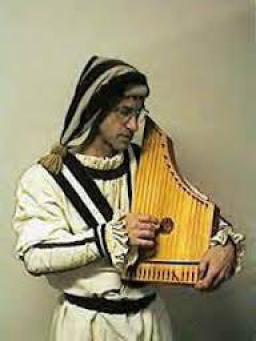
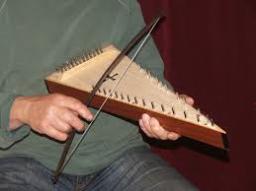
Psalteries -- both the classic Plucked Psaltery and the modern Bowed Psaltery are good choices for other stringed instruments. A Plucked Psaltery is like a simplified Autoharp without nearly as many strings and without the chord bar in the middle. The Bowed Psaltery is very simple, not at all like the Bowed dulcimer (which is more or less a cello).
Hi Clogger! Welcome to FOTMD! Thos string gauges sound just fine -- as long as you can get adequate sound from them. What the VSL (Vibrating String Length - distance from nut to bridge) on your dulcimer? If your dulcimer does not have a 6+ fret, you might want to experiment with the Bagpipe tunings -- Ddd, Ccc, etc. as they allow dulcimers without a 6+ fret to easily shift among various Modes for palying a variety of tunes in sessions.
You'll want to go to Groups in the upper bar, and join the UK and European Mountain Dulcimers Group. There you'll find Robin Clark, John Henry and a lot of others from your side of the Pond nattering away about all sorts of nonsense!
Sean, I haven't given up on looking for a used bow but 3/4 would be a bit too big. I saw a 3/4 at the music store. It was fairly long. I was thinking 1/4 size.
I applaud your experimenting with your new dulcimer! It's always good to have a few extra backup plans. If you would like to use a good online calculator for determining straing gauge, I suggest Tom Strother's" http://www.strothers.com/string_choice.htm.
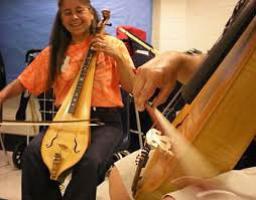
Well, so far, I only play the dulcimer. I'm enjoying it more and more as I go on. Not that great at it yet, but it makes me happy. However, I occasionally think about picking up another instrument and trying it out. Everyone in this thread seems to play a wide variety of instruments. What would be an easy string instrument to pick up in addition to the dulcimer? I don't mean easy in a demeaning way--all instruments have their complexities. I've been considering trying out a ukulele sometime. Some of the dulcimer festivals have a "try out a ukulele" class, but I haven't made it to any of those. Bowed dulcimers fascinate me, but they seem quite challenging for someone at my level.
Piano would be nice too, but I don't have any free walls in my house.
I was able to locate one instrument sold to someone in Midland Michigan, but I can't seem to locate a photo of the one you mention here (even though there are several comments about how great it looks!) so I can't compare by looks. The one in the log is #4815 and can be viewed online. I'm assuming this is NOT the one you have, since this entry is for a 4-string. This one is also one of his later ones, while it sounds like the one you have is one of his earliest.
Jan Potts (former Midlander, now resident of Lexington, KY...about 15 min. from Winchester, KY)
I, too, would like to give a big thanks to our moderators. I know they help make Lisa's job much easier. 

Thank you so much for the kind words Marg. I too am hoping for a similar blessing in my play as was evedent with my organ abilities. I had a rather short upsweep in abilities during my church organist time due primarily I feel to the fact that I was using that talent in God's service. It's amazing what God can do with an otherwise unusable week talent (I thought?). So it is with my new Probst, as I look forward to getting involved with a few other church instrumentallists to again do service to God. That brings me to a heading of looking for all things Hymnal in dulcimer tabliature and parts of a larger group of instruments in music written for church play. I really loved how my earlier dulcimer worked so well with a harp, viola, violin and one time we also had a cello to add to the group. Great fun and thanks again, marg. Kevin.
Kevin,
I glad you are on the mend and soon with have some new favorites. Maybe from this 'horrible time ' you will create some interesting new tones to your music. Wishing you and your family all the best.
One of the advantages of a floating bridge is for the maker. He or she simply sets the bridge on the fingerboard, strings up and tunes, then slides the bridge forward or back to set the intonation. The two disadvantages are the bridge can be knocked out of position and perhaps the transfer of energy from the strings to the instrument isn't as good. A fixed bridge, usually set in a slot in the fingerboard, isn't going anyplace. And it is firmly attached to the instrument. But the maker has to have the measurements right for proper intonation and resetting intonation for a new string gauge is a major job.
Hay Jan, Sam and Bob R. thanks so much for joining our wonderful moderators team. I appreciate all the work you each do and keeping us all in line is a great job cause we are a wonderful group of members. Keep up the good work and don't let the "SPAMERS" INTO OUR WONDERFUL SITE!
So glad to have Bob, Jan, and Sam be a part of the Mod Squad!
PS- A bit of trivia: FOTMD's own Ken Bloom was one of the musicians who performed the music for the pilot of The Mod Squad television series.





 Happy Strumming!