Plucked Psaltery Bowed Psaltery Bowed Dulcimer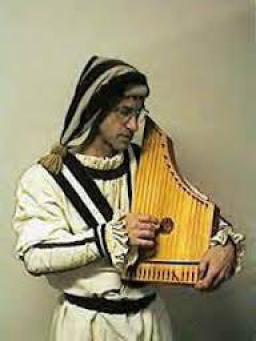
updated by @ken-hulme: 07/31/15 07:31:33AM
I saw some of those. Only thing is there are lots of negative responses on that seller and another one. Recent too. I don't feel too comfortable about that.
Patty look on ebay there is a 1/4 size bow for 6.99 free shipping from NJ.
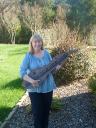
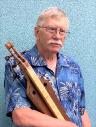
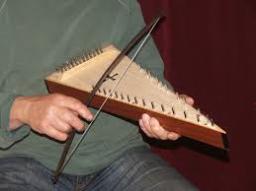
Psalteries -- both the classic Plucked Psaltery and the modern Bowed Psaltery are good choices for other stringed instruments. A Plucked Psaltery is like a simplified Autoharp without nearly as many strings and without the chord bar in the middle. The Bowed Psaltery is very simple, not at all like the Bowed dulcimer (which is more or less a cello).
Hi Clogger! Welcome to FOTMD! Thos string gauges sound just fine -- as long as you can get adequate sound from them. What the VSL (Vibrating String Length - distance from nut to bridge) on your dulcimer? If your dulcimer does not have a 6+ fret, you might want to experiment with the Bagpipe tunings -- Ddd, Ccc, etc. as they allow dulcimers without a 6+ fret to easily shift among various Modes for palying a variety of tunes in sessions.
You'll want to go to Groups in the upper bar, and join the UK and European Mountain Dulcimers Group. There you'll find Robin Clark, John Henry and a lot of others from your side of the Pond nattering away about all sorts of nonsense!
Sean, I haven't given up on looking for a used bow but 3/4 would be a bit too big. I saw a 3/4 at the music store. It was fairly long. I was thinking 1/4 size.
I applaud your experimenting with your new dulcimer! It's always good to have a few extra backup plans. If you would like to use a good online calculator for determining straing gauge, I suggest Tom Strother's" http://www.strothers.com/string_choice.htm.
Well, so far, I only play the dulcimer. I'm enjoying it more and more as I go on. Not that great at it yet, but it makes me happy. However, I occasionally think about picking up another instrument and trying it out. Everyone in this thread seems to play a wide variety of instruments. What would be an easy string instrument to pick up in addition to the dulcimer? I don't mean easy in a demeaning way--all instruments have their complexities. I've been considering trying out a ukulele sometime. Some of the dulcimer festivals have a "try out a ukulele" class, but I haven't made it to any of those. Bowed dulcimers fascinate me, but they seem quite challenging for someone at my level.
Piano would be nice too, but I don't have any free walls in my house.
I was able to locate one instrument sold to someone in Midland Michigan, but I can't seem to locate a photo of the one you mention here (even though there are several comments about how great it looks!) so I can't compare by looks. The one in the log is #4815 and can be viewed online. I'm assuming this is NOT the one you have, since this entry is for a 4-string. This one is also one of his later ones, while it sounds like the one you have is one of his earliest.
Jan Potts (former Midlander, now resident of Lexington, KY...about 15 min. from Winchester, KY)
I, too, would like to give a big thanks to our moderators. I know they help make Lisa's job much easier. 

Thank you so much for the kind words Marg. I too am hoping for a similar blessing in my play as was evedent with my organ abilities. I had a rather short upsweep in abilities during my church organist time due primarily I feel to the fact that I was using that talent in God's service. It's amazing what God can do with an otherwise unusable week talent (I thought?). So it is with my new Probst, as I look forward to getting involved with a few other church instrumentallists to again do service to God. That brings me to a heading of looking for all things Hymnal in dulcimer tabliature and parts of a larger group of instruments in music written for church play. I really loved how my earlier dulcimer worked so well with a harp, viola, violin and one time we also had a cello to add to the group. Great fun and thanks again, marg. Kevin.
Kevin,
I glad you are on the mend and soon with have some new favorites. Maybe from this 'horrible time ' you will create some interesting new tones to your music. Wishing you and your family all the best.
One of the advantages of a floating bridge is for the maker. He or she simply sets the bridge on the fingerboard, strings up and tunes, then slides the bridge forward or back to set the intonation. The two disadvantages are the bridge can be knocked out of position and perhaps the transfer of energy from the strings to the instrument isn't as good. A fixed bridge, usually set in a slot in the fingerboard, isn't going anyplace. And it is firmly attached to the instrument. But the maker has to have the measurements right for proper intonation and resetting intonation for a new string gauge is a major job.
Hay Jan, Sam and Bob R. thanks so much for joining our wonderful moderators team. I appreciate all the work you each do and keeping us all in line is a great job cause we are a wonderful group of members. Keep up the good work and don't let the "SPAMERS" INTO OUR WONDERFUL SITE!
So glad to have Bob, Jan, and Sam be a part of the Mod Squad!
PS- A bit of trivia: FOTMD's own Ken Bloom was one of the musicians who performed the music for the pilot of The Mod Squad television series.


Patty,
Another alternative would be to get an inexpensive 3/4 size violin bow like those that are used for kids learning Suzuki method. Those work well for a ukelin and shouldn't cost over $20 or $30.
More information on ukelins here: http://www.studiobobo.com/ukelin/playing.html#anchor1401612
Well I've growned numerous times of this and other sites about the fall of my great dulcimer collection. 25 at one time down to zip, nada, nothing at all, not even a jaw harp in the larger instrument collection as a whole. This of all things because my family needed to eat. Well I'm on the mend from that horrible time in my life and now I can say it's only a matter of a little wait. Thanks to folks on this site and to Rick Probst looking about on this site (ED as well) Rick saw my desire to obtain one of my two most favored dulcimers. I knew that the other I could no longer obtain (a Ron Ewing double) since he told me in no uncertain terms that the one double he main for me was his first and very last double that he'd ever make. Too much work he said. I favored that double and my Probst about equal so my choice was easy to make. When once again getting back into playing a dulcimer it would have to be a Probst.
After a few emails between Rick and I it was determined to make the instrument much like my former Probst dulcimer was. Rick even kept all the information on that instrument including pictures so it was very easy to note the various aspects of that instrument in order to incorporate them into the newest Probst dulcimer made for me. Fiddle back curly maple back and sides, 1/4" deeper to facilitate baritone use. Ebony fingerboard, bridge and binding. Six string with octave strings on the bass drone pairs. Ebony peghead overlay. Mahogany for under the fredboard, heel, and peghead. Standard Probst F hole sound holes on the upper bout and sound hole on the lower bout. Chrome Gotoh 18 to 1 tuning machines and chrome strap buttons. A strip of ebony inbetween the two pieces of the back wood. And finally I think? A very nice Bag Lady fully padded case for the instrument that fits it to a tee and has backpack straps for easy toting of the instrument. That and it makes packing and shipping the finished instrument much, much easier. Put the dulcimer in the bag, wrap the bag, address the box the bag is in and off it goes via UPS, FedEx, etc. I know that there is a way to post pictures directly on the posting or at least a photobucket link to look at it at photobucket's site, but each and every time I try to insert that information I get a window telling me that my browser doesn't allow that and I should use the ctrl/X/C/V shorcut keys to get it here. I tried and ...... Nothing at all. Maybe I'll teach myself just how to do that in the future, Trust me it is an absolute georgous instrument to be seen. The contrast of the ebony against the fiddleback maple is just right in my book.
Yep the deposit is in and contruction is commencing on this build. I can't wait already for this to be finished. Already I've caught myself on what might be my next instrument and I have to catch myself otherwise I'll get the fam back in the poor house and have 50 dulcimers. I've heard and experienced the same thing with dulcimers as with guns. You never can have enough and can always accept just one more. Well I've first curtailed my investment in firearms and am happy with the ones I have, I will also make peace with my single Probst dulcimer. This understanding that there may be just one more dulcimer purchased to include the DAA end of things (or in my case GDD) a fifth lower tuning of the same. Now what will accomplish this possible second dulcimer may be anything I remember liking when I was on a full roll collecting wise. I do indeed like the all cherry McSpadden mentioned a few posts earlier, but I'll probably purchase a Ron Ewing baritone dulcimette which is more likely named a 3/4 dulcimer. Ron extends and baritonizes his dulcimette or octave dulcimer. This gets you into the half way department allowing a tuning of standard A baritone tuning or in my case as in the probst I'll be in G or gDD.
That way I'll have no good excuse to get any others as I will own a dulcimer in the two modes that I know how to play in and they both will be tuned in the same key. I've found that the need and or the difference between use of a Mixalydian tuned instrument vs the ionian version is a matter of where does the song start and end. If on the root then the dAD is preferred by me and if it starts a fifth lower (as in Amazing Grace) it is preferred to be in DAA. Pictures will be learned and posted when I get my hands on the instrument. YEAH!!! Kevin.
Yes that was the old URL for this site, Friends of the Mountain Dulcimer. We used to be hosted on ning, but now we are free of ning and own our site completely, and it's new URL is fotmd.com
Yes please do update your defunct bookmarks wherever possible, as the old site has been deleted. Thank you!
Love the storys - 'impulse buy' all to funny. i hope you will enjoy it.
Hey Patty, Dan, Prestine 2, Dusty and Bob R.; I knew ya'll would come through for me and help me lean about my new discovery of a floating bridge on my Robert Schuler dulcimer.....You guys are the Best! 

Well Robert Schuler has a saw marking where he placed the bridge that I can use, I am happy you offered me the video, thanks Dusty. Robert told me to loosen the strings when adjusting the bridge, but will see how this works when I tune and may use Prestine2's suggestions also.
I now have a clear picture why people use a floating bridge, mine is unnotched, but with it I can be flexable about using different gaged strings if I want and experiment some with it.
I will be puting on 0.18 for bass and middle strings and 0.11 for the melody strings and see how I like this. I will let you all know how I like this and how I do with adjusting and all....Thanks to all you great Friends for your suggestions and help.
Here is the video Dan refers to above:
We have a lab and a very sensitive, slightly neurotic English Shepherd (picture a black and white border collie). He is extremely sensitive to any change in the atmosphere, whether it's a slight tone shift in a conversation, or maybe a cat is tip-toeing up the street in the middle of the night. He hears it all and is aware of everything.
Depending on which song I play, he might just lie still on his bed and quietly cry the whole time. Other times, say with something like Black Mountain Rag, he might huff and run purpose circles around the downstairs. The other animals ignore me.
Lexie, floating bridges can be either notched or un-notched. The important thing about them is that they can be moved. It is also the tricky thing about them.
The primary advantage of a floating bridge is that it can be moved, the primary disadvantage of a floating bridge is that it can be moved. 
To compensate for intonation issues on the instrument you can slide a floating bridge a little closer to or farther from the nut. If, for example, you install a different guage of strings, you might need to adjust the bridge, or you might not. It can also be used to compensate for a high action. Sometimes you will see them angled across the strings to compensate for intonation differences between the melody and bass strings.
A fixed bridge requires slightly (very slightly) more precision on the part of the builder, but it is often easier on the player, because she doesn't have to worry about getting the bridge misaligned and throwing the instrument out of tune. This is especially true of an instrument built with a low action.
Once I get a floating bridge set where I like it I mark the location with a pencil line at the base. That way I can reset it in close to the same spot if I need to.
Well, that didn't last long. Impulse buy this morning. I'm thinking of deleting Ebay from all of my gadgets. As of next Tuesday will have a new 6 string added to my collection. I don't have any other 6 strings, so I'm feeling only sort of guilty.
That's a bit like asking a woman how many shoes is enough or asking a man how many guns is enough. 
I have a teardrop that was made for me when I was about 26. It has been a dust-collector for 28 years but has a nice sound. I also own a cherry McSpadden that is my go-to and I have a hankering for a beauty that I saw on youtube while looking for a play along westphalia waltz tune.
Thanks for the comment (avatar). Lisa helped me with that. When I change strings on Big Red I plan on replacing them one at a time to keep the bridge in place. I like the gauge strings it has so I'm not planning on doing any big changes. Also, I believe that one can only go so far with string guage sizes because of vsl. I understand Big Red was a baritone but I plan to keep it the way it is because I like the sound. I know some who inquired about changing to a baritone with their current duclimers but I would ask a builder first as to possible modifications needed.
Lexie, I have several dulcimers with floating bridges. You should watch Pristine2's video on how to adjust the fb for more accurate tuning. I checked, it transferred here from the old site.
Nice picture (Avitar) of you Patty. Thanks for the information about your floating bridge.
I was surprised when changing my strings, that my bridge came off. It is kinda trinangular shaped made of wood and has a saw mark where it is to sit that I need to line it up before I tighten strings. The Dulcimer was made by Robert Schuler and he also told me that I can use heavier strings and adjust the bridge to get the sound I want or to change my tunings.
Apparently, the floating bridge makes my dulcimer more versitile.
Lexie, Big Red, which I purchased from Dan Cox, has a floating bridge. It is notched (picture embedded) but it's a floater. I'm guessing the floating bridge helps in getting the notes just right on each fret up the scale. I could be wrong but that's my guess. I'm sure Dan and all those wonderful dulcimer builders/makers can give you a better answer that I can. I'm sure those experienced dulcimer players can too.

I have a couple of Snark tuners and use them with dulcimer, fiddle, guitar, mandolin, ukulele, banjo - pretty much everything. They're pretty much my go-to tuner these days. I have had the head slip out of the neck on occasion, but it's easily pushed back into the ball joint.
Another good one (I don't use it, but it's gaining a lot of popularity among musicians in St. Louis) is the D'Addario NS Micro Clip-On tuner. It seems especially popular among the local fiddlers.
What is the purpose of floating bridges?
Are floating bridges notched or not?
I would just like to have knowledgable people tell me all they know about having floating bridges, the advantages or disadvantages of having them.
Thanks for all your help.
Jan, I'll have to check out Nina's Facebook page and look for the pictures.
It sounds like a great time was had by y'all had there in NC! Friends, food, and good music are all tops in my book. :)