Forum Activity for @ken-longfield

Ken Longfield
@ken-longfield
02/09/14 10:54:22AM
1,357 posts

Installing Question~Perfection Planetary Violin Pegs Set For Violin, 4/4


General mountain dulcimer or music discussions

I start with a quarter inch hole when using a violin peg reamer. The bent sides look very good.

Ken

"The dulcimer sings a sweet song."

robert schuler
@robert-schuler
02/09/14 08:48:01AM
258 posts

Installing Question~Perfection Planetary Violin Pegs Set For Violin, 4/4


General mountain dulcimer or music discussions

Before I bought a reamer I filed a screwdriver blade to match the taper. If you only want to make one dulcimer it should work, especially since pegheds are primarily held by glue not friction. The tricky part is getting the hole sized to allow the treaded portion to self tap itself. Another is making sure you check for tread direction. Two will be left handed, two will be right handed. As tuners go they are worth every penny and have that oldtimey look... Bob
Bob
@bob
02/08/14 09:53:02PM
87 posts

Installing Question~Perfection Planetary Violin Pegs Set For Violin, 4/4


General mountain dulcimer or music discussions

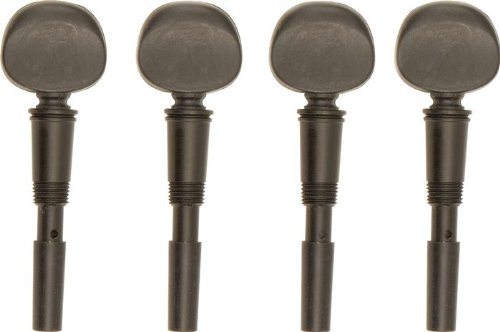
Thanks for the suggestion- I will look at their page. The pegs I plan to use are for violins size 4/4 (see the pic attached), so they should be the correct size. I also will buy the reamer, that thing isn't cheep though!

robert schuler
@robert-schuler
02/08/14 08:19:11PM
258 posts

Installing Question~Perfection Planetary Violin Pegs Set For Violin, 4/4


General mountain dulcimer or music discussions

I have installed them in banjos. They are really nice. I haven't installed the fiddle type. Which style are you using ?. You will need a tapered reamer just like you would use with wood pegs. Check out Pohaku ukelele company, their tech page has a great tutorial on installing peghed tuners.... Bob
Bob
@bob
02/08/14 07:54:51PM
87 posts

Installing Question~Perfection Planetary Violin Pegs Set For Violin, 4/4


General mountain dulcimer or music discussions

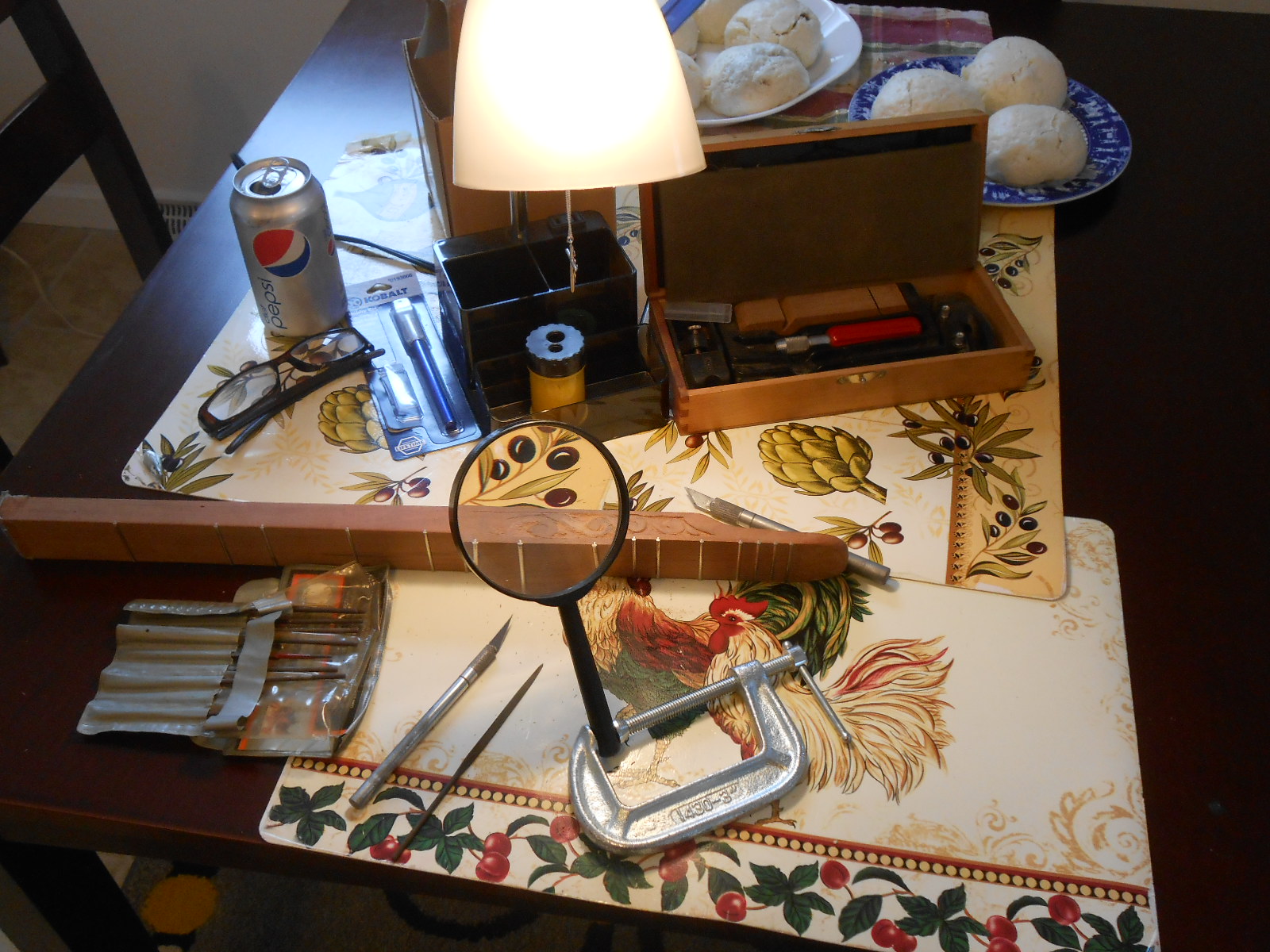
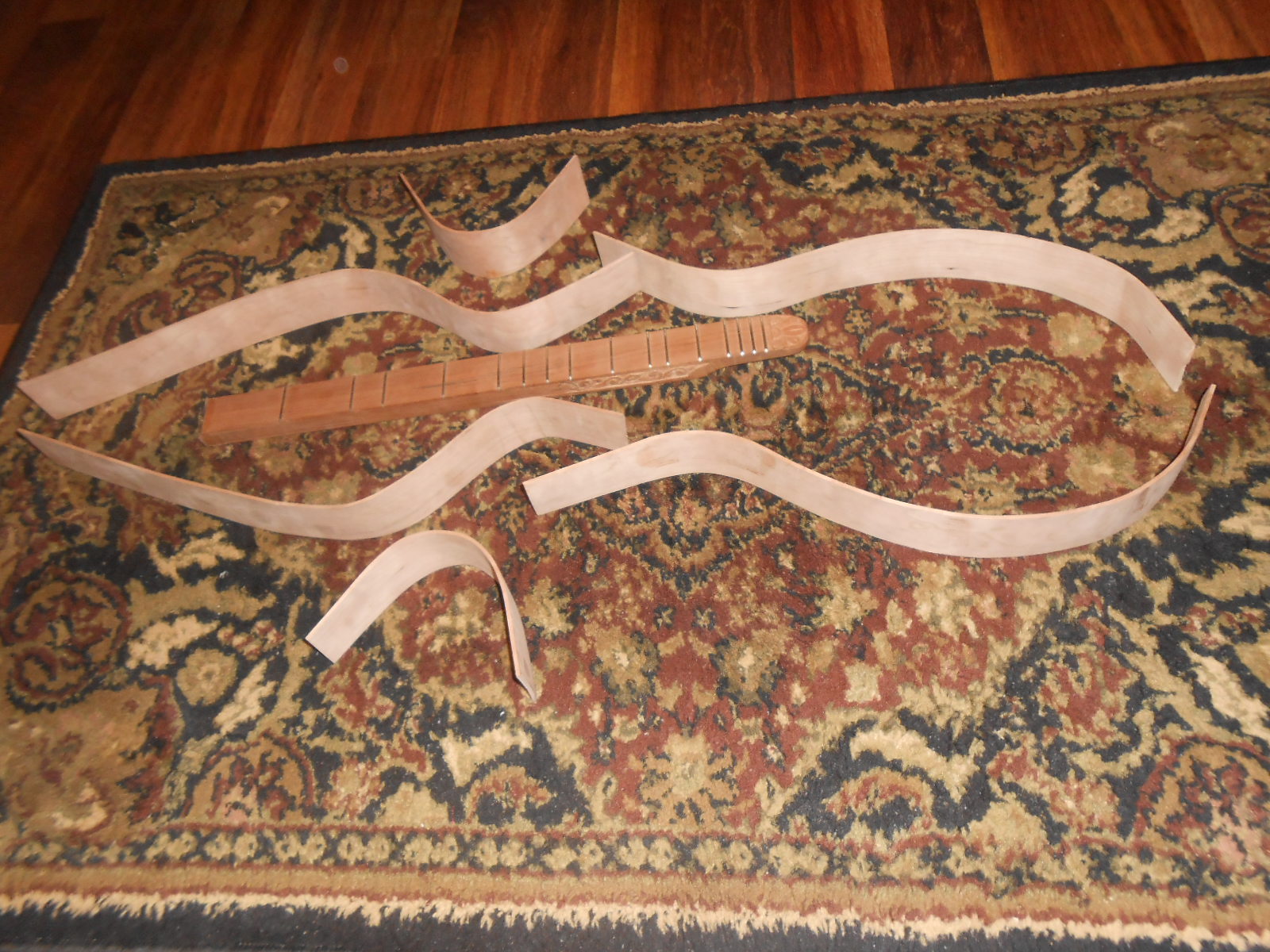
Well, things are moving along with my project- the dulcimer rib sections have been bent to shape and the fretboard has been made, with some relief carving on the sides. I have ordered a set of four Perfection Planetary Violin Pegs (size 4/4) for the dulcimer tuning head that I just started to work on.

These geared tuning pegs are highly rated and I do like the traditional/classical appearance over other geared tuning pegs.

I have not installed these before, (and actually the pegs have not arrived yet) so I am looking at various tutorials on YouTube and such.

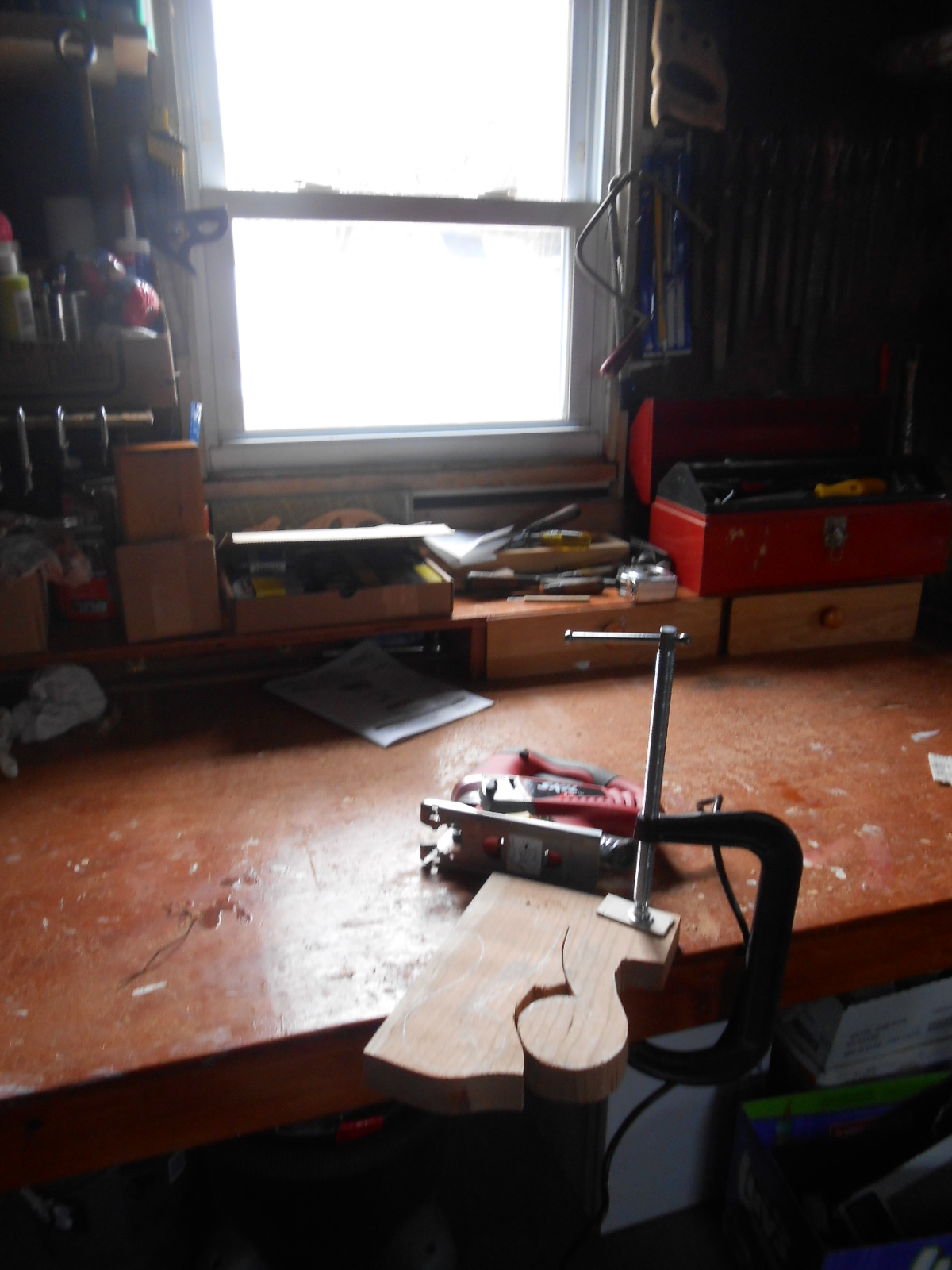
My first question is what size to drill the peg holes in the peg box before they are reamed ? I have not found any info on that! (I am ready to start carving the tuning head & scroll and want the holes bored first.)

My guess is 3/8 " but don's want to make any errors.

Does anyone have some advice as to the hole size?

Thanks!!


updated by @bob: 02/19/19 07:00:15AM
Robin Thompson
@robin-thompson
09/02/14 11:59:44AM
1,569 posts


Hi, Jim! If the email address you shared is your private email address, I recommend removing it from public forum for the sake of your privacy. Private information can be shared through private messages here at FOTMD.Please pardon my interruption!All good wishes,Robin (one of the moderators)
Ken Hulme
@ken-hulme
09/01/14 09:58:09PM
2,157 posts


Jim; iff you go to this discussion, there is an attachment of the Wfret file that you can click and download:

http://mountaindulcimer.ning.com/group/dulcimermaking/forum/topics/fret-layout-2?commentId=3745489%3AComment%3A573798&groupId=3745489%3AGroup%3A2913

John Bozeman
@john-bozeman
08/09/14 03:38:56PM
1 posts


Ken Hulme said:

There are, here in the Building sections, several posts which list the fret spacings for some of the common VSLs. There is also the free downloadable "old" version of Wfret which some od us can send you that allows you to set any VSL and print out a template. Other fret calculator don't, IIRC allow print outs of templates.

Hi Ken,

I had the old version of WFRET on a desktop that died a few years ago. I am ready to build a few more dulcimers and discovered the "new" version doesn't support the mountain dulcimer diatonic option. Could you email it to me?

Thanks in advance, John

Ken Hulme
@ken-hulme
02/07/14 06:26:40PM
2,157 posts


There are, here in the Building sections, several posts which list the fret spacings for some of the common VSLs. There is also the free downloadable "old" version of Wfret which some od us can send you that allows you to set any VSL and print out a template. Other fret calculator don't, IIRC allow print outs of templates.


updated by @ken-hulme: 02/16/16 03:18:57PM
Robin Clark
@robin-clark
02/06/14 12:44:58PM
239 posts


I need to re-learn the tunes from the CD over the next week as Nick and I are going to Gainsborough Old Time Festival next weekend. So its a good excuse to sit down with my dulcimers and get some serious playing time in

Robin Thompson
@robin-thompson
02/06/14 10:46:21AM
1,569 posts


Wow, I'm sure glad Robin C jumped in here-- I neglected to mention how the false nut is for noter/drone play!Robin, I just had The Cadair Idris Sessions playing on my car stereo the other day. :)
Robin Clark
@robin-clark
02/06/14 10:27:31AM
239 posts


I go up to E with a 0.022w on my McSpadden. And like Robin T I've used a false nut for some applications. In fact all the tunes in the key of G on The Cadair Idris Sessions were played in Ddd with a false nut under the bass string at fret 3 to give Gdd (a nice bright tuning). Note though that a false nut only works for noter drone playing as it raises and throws out the intonation of the string for fretting - this is why 95% of players have not heard about a false nut as they would be unable to use one for chord melody playing styles.

Robin Thompson
@robin-thompson
02/05/14 07:51:47PM
1,569 posts


Helen, if you wish to go higher than E with your bass string, you may wish to try using a "false nut" (also known as a reverse capo). A false nut is nothing more than a small piece of wood or hard plastic that can be slipped under a string/strings against a fret to create a temporary nut at that fret.
My false nut is nothing more than a piece of a bamboo chopstick cut then whittled so it can be slid under one (or two) strings.
Like Rob, I can go to E on most of mine with no trouble. I have also just used a false nut to make a change from D to E when the mood struck. :)
Hope this helps!PS-Quite some time ago I made a video about using a false nut. The video quality is poor-- we had bad, slow internet at the time -- and it's not, by any means, exhaustive on the topic. It can be found in my videos.
Rob N Lackey
@rob-n-lackey
02/05/14 05:44:34AM
420 posts


Helen, What's the vsl? I can go to E on most all of mine I've tried with no problem. EAd is a great tuning (IF that's what you're trying to get to) for several good old tunes.

John Henry
@john-henry
02/04/14 06:24:29PM
258 posts


David, I agree with you, most of the instruments I have built have revolved around the use of quarter sawn timber, but now and then , either because I like the look of a piece, or because its all I have to hand, then the grain is whatever !! I like the stability of quarter sawn stuff, and it usually includes the bonus of being easier/more predictable to work, but I have a dulcimer 7 3/4 " wide, made from reclaimed true Hon. Mahog. (panels from a bank door) the back of which has grain which is truely tangentially sawn. It has stayed 'true and flat' and plays like a dream. So, while I agree with KenW re the mixing of timbers, with your choice of available material, I think I would go with maple for everything except the top, where I would use your red spruce, (I do love straight grained s/w tops) IMO this should result in a 'bright' sounding instrument, with the light coloured timbers darking down with exposure to light. I repeat, just my opinion based on my experience !

looking forward to see what you come up with

John

Ken Longfield
@ken-longfield
02/04/14 04:50:26PM
1,357 posts


Quartersawn wood is certainly nice; especially for bending, but it is not necessary. You can make a fine dulcimer out of slab cut wood. Just be careful when bending the sides. Personally, I would make the whole thing from ash if i had enough. I don't like mixing too many woods.

Ken

"The dulcimer sings a sweet song."

John Henry
@john-henry
02/04/14 03:47:16PM
258 posts


Hello David ! "Plenty of nice cherry.." Enough to use for the whole of the build ? Cherry makes for a nice looking /sounding dulcimer !

JohnH

Ken Hulme
@ken-hulme
02/04/14 02:06:42PM
2,157 posts


IIWM (If It Were Me) I'd use Ash for the sides (I like working with Ash) and the cherry for the back. Spruce, IHMO is a bit too soft for a back (which gets more wear than the top).


updated by @ken-hulme: 02/09/16 03:44:50PM
Wout Blommers
@wout-blommers
02/05/14 05:15:38AM
96 posts


Clive, I have to add some info to my answer. Technical the pizo receives the vibrations of the bridge, but... the feedback coming from the body will alter those vibrations. Imagine experimenting with a magnetic pick up on a normal (classic) guitar, on a semi-acoustic guitar and on a solid body guitar. The sound will have each time a different character. The same goes for a solid body dulcimer.

Wout

Wout Blommers
@wout-blommers
02/02/14 09:00:32AM
96 posts


It picks up the movements of the bridge (with feedback), so it will work. It even works with no body at all, as long as it makes contact with the bridge.

Wout


updated by @wout-blommers: 02/10/16 02:03:27AM
jasemones
@julie-semones
06/28/14 02:48:51PM
6 posts

Strumming so frustrated


Playing and jamming difficulties...HELP ME!

Thanks Richard and Helen - unfortunately I've been away from my dulcimer for MUCH too long. I had taken on a job caring for an elderly lady and that took most of my time. Unfortunately she passed away on Wednesday...so I am hoping to jump back into learning again!

Dusty Turtle
@dusty
02/05/14 02:48:20PM
1,873 posts

Strumming so frustrated


Playing and jamming difficulties...HELP ME!

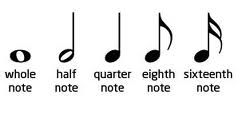
Marg and others, forgive me for adding a little music theory, but there are different types of notes:

I would suggest forgetting about sixteenth notes for a while. You will be playing awfully fast to get those in dulcimer music, and most of us aren't ready for them yet.

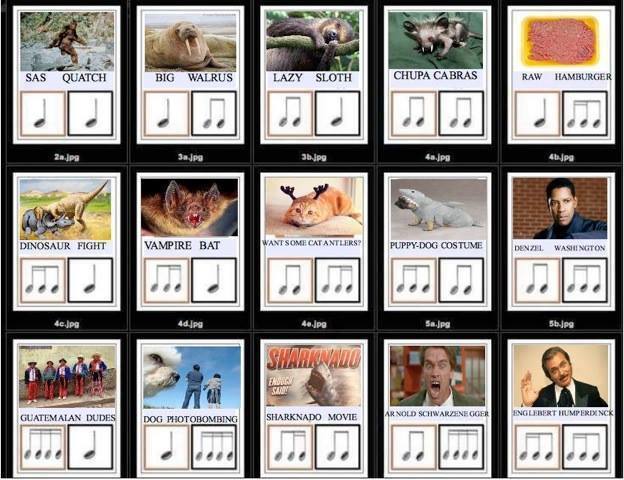
There are two ways of indicating eighth notes. If you just have one by itself, it has a little flag as in the picture I posted. If you have two together, they are joined by a bar across the top as in the examples from the pictures Carrie posted and Marg quoted.

We all completed elementary school and learned our fractions, so this shouldn't be too hard. A whole note gets four beats, a half note gets two beats, a quarter note gets one beat, and an eighth note gets 1/2 a beat. Another way of saying that last part is that you play two eighth notes in the space of one quarter note.

That is why it helps to learn to strum in both directions. If you are strumming out once a beat, as Julie is in her rendition of "Twinkle Twinkle," then strumming in as well will let you play eighth notes. Maybe a short demo is in order.

Remember that this stuff takes time. Be patient. First goal: develop a steady strum in one direction. Second goal: develop a steady strum in both directions. Third goal: start to "swing." Fourth goal: have fun skipping strums and creating cool rhythms.

marg
@marg
02/05/14 11:49:01AM
624 posts

Strumming so frustrated


Playing and jamming difficulties...HELP ME!


Are we to practice what we see?

When a note has a bar it goes out in? So 3 notes would be out in out? and 4 out in out in?

were we to click on the photo or just use it as a guide?

Thanks Carrie, everyone is very helpful but sometimes it still doesn't make any sense - yet.


And this pix by Doug Berch

Everyone at one point in time or another just has the strum get 'em down. These are just a couple of aids that may help you "whip" that strum into shape!


Dusty Turtle
@dusty
02/04/14 06:52:00PM
1,873 posts

Strumming so frustrated


Playing and jamming difficulties...HELP ME!

Julie, you're doing great! Stop beating yourself up. Your rhythm is steady, even when there are rests or half notes. Just keep doing what you're doing.

It seems like you are only strumming in one direction, and for now that's great. Twinkle Twinkle should only be strummed in one direction. When you feel more comfortable, try to strum in the other direction as well. So if you are going out now, you will want to add in strums.

To start out, try playing the Alphabet Song, which is basically the same tune as Twinkle Twinkle. But when you get to "L-M-N-O" you have to play eighth notes. Keep your hand moving just as steady as it is now, but on the M and O you will want to strum in rather than out (your hand has to move that way anyway!). There is no rush here, so if you don't feel ready for it, just put it off for a while. But that will be the next hurdle for you to cross. And given how you are playing now, I think you are about ready for it. And the main point is that your hand does not have to move any faster than you are playing now. But instead of only strumming in one direction you will, when the music calls for it, strum in the other direction, too.

Julie Semones said:

Alrighty all, I've been trying everything you all have posted, I think I'm finally catching on....here I am (YIKES, can't believe I'm sharing this!!LOL)

Strumelia
@strumelia
02/04/14 05:21:39PM
2,422 posts

Strumming so frustrated


Playing and jamming difficulties...HELP ME!

That's how it starts, Julie!

Julie Semones said:

Alrighty all, I've been trying everything you all have posted, I think I'm finally catching on....here I am (YIKES, can't believe I'm sharing this!!LOL)

Robin Thompson
@robin-thompson
02/04/14 01:12:52PM
1,569 posts

Strumming so frustrated


Playing and jamming difficulties...HELP ME!

Julie, you're doing great! Just keep with what you're doing and strumming will, over time, come to feel natural. Well, at least most of the time, anyway. I have days. . . :)

Julie Semones said:

Alrighty all, I've been trying everything you all have posted, I think I'm finally catching on....here I am (YIKES, can't believe I'm sharing this!!LOL)

jasemones
@julie-semones
02/04/14 12:53:38PM
6 posts

Strumming so frustrated


Playing and jamming difficulties...HELP ME!

Alrighty all, I've been trying everything you all have posted, I think I'm finally catching on....here I am (YIKES, can't believe I'm sharing this!!LOL)

Robin Thompson
@robin-thompson
02/02/14 05:28:07PM
1,569 posts

Strumming so frustrated


Playing and jamming difficulties...HELP ME!

Julie, I got my first dulcimer in '05 and I'm always working (playing) on my strumming. :)

Julie Semones said:

Thank you all for your responses!! I am going through reading them all. I've been trying to play since Aug 2013, which isn't really that long at all. I'm proud of myself for plucking out the tunes I have. My dad for Christmas made me some beautiful noters, and I've tried using those too...beautiful sound.. Please don't think I'm ignoring comments, I am just taking my time reading through them all!

jasemones
@julie-semones
02/02/14 02:54:36PM
6 posts

Strumming so frustrated


Playing and jamming difficulties...HELP ME!

Thank you all for your responses!! I am going through reading them all. I've been trying to play since Aug 2013, which isn't really that long at all. I'm proud of myself for plucking out the tunes I have. My dad for Christmas made me some beautiful noters, and I've tried using those too...beautiful sound.. Please don't think I'm ignoring comments, I am just taking my time reading through them all!

Strumelia
@strumelia
02/02/14 01:52:24PM
2,422 posts

Strumming so frustrated


Playing and jamming difficulties...HELP ME!

Many great suggestions here in everyone's answers- I think everyone's advice and approach is useful and good...check them all out, Julie, and you are sure to find an approach that suits your particular learning style perfectly.

Dusty Turtle
@dusty
02/02/14 12:46:28PM
1,873 posts

Strumming so frustrated


Playing and jamming difficulties...HELP ME!


There are a couple of different issues being addressed here. Julie commented that she has trouble strumming while playing a song. Most of us have given advice on how to develop a better strumming technique. One specific piece of advice was to practice with a metronome.

Ken's advice is how to arrange a song. And indeed playing a song by replicating on the dulcimer exactly how you would sing it is one way to arrange a song. It probably is the most obvious for people who are used to singing, and for those folks it might be a good way to start. But there are others. You might develop a rhythm that you think characterizes that song, strum that rhythm, and fit the melody notes into that rhythm. Another is to play a harmony part on the dulcimer. Or a counter-melody on the dulcimer. Those latter two take a bit of practice, but not perhaps as much as you think. Strumelia has a wonderful video on how to play a harmony part to Go Tell Aunt Rhody.

But none of those ways of arranging a tune are incompatible with the use of a metronome. When you practice with a metronome you do not strum every time the metronome sounds. Rather, the metronome keeps time for you, and you fit what you are playing into that steady rhythm. A metronome is usually set to a quarter note or half note, meaning it sounds two or four times a measure. But you might play one note per measure, eight notes per measure, or whatever, depending on the tune. Practicing with a metronome helps you develop a steady strumming pattern that sounds smooth rather than choppy and is consistent throughout. If you want to start with Ken's suggestion of strumming the melody the way it would be sung, that's fine, and using a metronome will help you do that steadily and consistently.

In my post above I did not mention using a metronome, but I think it a good idea. And in the video lesson to which I linked I don't address how to arrange a tune; that comes in the subsequent videos. The first thing is to develop a steady strum that feels comfortable, stays on beat, and moves smoothly across the strings.

Most beginning players concentrate on the left hand. They think that finding the right notes to play is the key to being a good musician. But most of our playing is done with the right hand. How smoothly we play, how loudly we play, how fast we play, whether we play one string or all three, all those decisions and more are determined by the right hand. The fact that you are aware of the need to work on your right hand is a good sign. Just being aware of it and working on it will make you a better player, better able to express whatever it is you want to express through music.


updated by @dusty: 09/21/19 04:17:33PM

John Keane
@john-keane
02/02/14 10:47:36AM
181 posts

Strumming so frustrated


Playing and jamming difficulties...HELP ME!

Julie, once you discover your strum and become comfortable with it, I would highly recommend the use of a metronome when practicing. A metronome is probably the most valuable implement available to novice and professional musicians alike for developing rhythmic and technical accuracy.

Ken Hulme
@ken-hulme
02/02/14 09:37:53AM
2,157 posts

Strumming so frustrated


Playing and jamming difficulties...HELP ME!

I'm gonna suggest something different, Julie: don't try to be a metro-gnome.

Strum in the rhythm of the words not a machine-like rhythm. Start with songs you already know how they sound.

Strum once for each note -- in the rhythm of the words. Melody string only or across all three courses, it doesn't matter.

One of my favorite teaching tunes is Frere Jacques, because 1. Nearly everyone knows how it goes; 2. It's a simple repeated string of notes; 3. It has a distinctive, but not 'flat' rhythm.

Skip
@skip
02/01/14 11:41:19PM
391 posts

Strumming so frustrated


Playing and jamming difficulties...HELP ME!

I suspect you are using mostly wrist or finger movement, many beginners do. Try making the movement more like brushing something off your lap which is more movement via the elbow rather than the wrist. You can advance to the more controlled wrist/finger strokes later.

Frank Ross
@frank-ross
02/01/14 11:39:07PM
32 posts

Strumming so frustrated


Playing and jamming difficulties...HELP ME!

Julie, not sure how long you have been on your dulcimer playing journey. I have only been at it for 4 months now. This forum had been of great help and encouragement. A month or two ago I described that my playing sounded like a series of rear end car crashes. Several members recommended that I practice strumming with a metronome and it really helped. After about 2 or 3 weeks of practicing strumming to a metronome things started coming together. I also practiced walking my fingers up and down the frets as I strummed to the metronome. This really helped with the strumming hand to finger hand coordination. Start off at about 60 BPM and work up to somethingyou are comfortable with. Occasionally you may need to take a day off to get the tick, tick... tick out of your head. http://www.metronomeonline.com/ . I had never played an instrument before and am 68 so my fingers to brain speed isn't what you would call fast anymore. After 110 days I posted a video of "Ode to Joy". It isn't Carnegie Hall quality but it is a great improvement over the Atlanta highways in the snow noises I used to create. See video below - I can strum in both directions but was nervous and just wanted get through it without dorking it up. Keep practicing, don't give up and things will happen.

Dusty Turtle
@dusty
02/01/14 10:18:21PM
1,873 posts

Strumming so frustrated


Playing and jamming difficulties...HELP ME!


Julie, I would suggest putting your left hand entirely over the strings of the dulcimer so they are muted. Don't think about playing notes at all. With your right hand, hold the pick so that most of the pick is securely between your thumb and index finger, but hold it loosely, not tightly. Think of strumming as brushing across the top of the strings rather than actually plucking them. As you strum out, angle the top of the pick away from you and just barely touch the top of the strings. Do that as you count 1-2-3-4. Just take it slow. Once you have a nice, slow, even stroke going out on the beats, count 1 & 2 & 3 & 4 & and strum out on the numbers and in on the &s. As you strum in, you want to angle the top of the pick toward you.

Reminders: 1) keep lots of the pick in contact with your fingers; you don't want to just hold the end while most of the pick sticks out; 2) hold the pick loosely, not tight; 3) brush across the tops of the strings softly; 4) keep a steady beat even if you have to go very slowly to do so.

Carrie has already pointed you toward John Keane's excellent video on strumming . I also put together a three-part instructional video on using a flatpick . The first video covers strumming. You might find it helpful.

You might also keep a pick with you at all times. I sometimes practice rhythmic strumming on my leg, my stomach, the steering wheel, the arm rest of my chair, etc.

Just take it slow and don't get impatient. Good technique takes time.


updated by @dusty: 09/21/19 04:15:46PM
Robin Thompson
@robin-thompson
02/01/14 08:57:35PM
1,569 posts

Strumming so frustrated


Playing and jamming difficulties...HELP ME!

Yes, please do be patient with yourself, Julie.For fun, put any music you like on a music player. With dulcimer in your lap, mute the strings with your left hand by laying your hand across them. With your right hand, strum to the music you're listening to. Don't even think about it. Maybe even close your eyes. Don't worry about which direction you're strumming. There is no wrong way to do this exercise. The point is to just get comfortable with strumming only. The musicians you're listening to are playing the song-- you're just adding some percussive sound. :) If you try this, have fun with it!Everyone is different-- to me, strumming is more felt than thought about. It's likely not the same for everyone, though.
Guy Babusek
@guy-babusek
02/01/14 08:26:27PM
96 posts

Strumming so frustrated


Playing and jamming difficulties...HELP ME!

Be patient with yourself, Julie. It takes a great deal of time and patient practice. Make sure you SLOW everything down a LOT! work slowly on small little sections at a time and don't worry about speed for now. Speed comes later. There is nothing wrong with you, it's just the nature of the beast. It will get easier and easier with time.

  568