I think setting and audience makes a big difference in how you dress for performance. No need to be "out of place" or "over dressed" for your performance. either!!!
Forum Activity for @guy-babusek

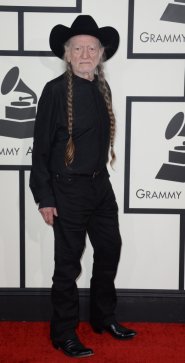

To me, I'm dressed-up when wearing my good jeans. :)
We don't play 'out' a lot. That said, being porch players of mostly Appalachian old-time music, we dress in clean jeans and, lots of times, t-shirts. Actually, we have a lot of very cool music-themed t-shirts, some of them painted by a good friend of ours.
If we're playing a wedding, though, we dress appropriate to the occasion and do not wear clothes that would draw undue attention to ourselves. I stick with nice trousers for myself, though, too, because it's easier to position either lap dulcimer or bowed dulcimer without much fuss. Also, pockets are very handy to have for picks, noters, rosin, whatever.

Hi Mary
I may be old fashioned but I think one should dress for the music they are doing. For me, jeans, hiking boots, and at-shirt for guys doesn't work. You want to stand out a bit more, and remember you are performing not just getting up and doing a song. For gals, look at what Jean Ritchie wore most of the time. A simple country dress. I think a long, colorful old fashiond dress goes very will with the old songs played on a dulcimer.Cheers Ken

I doubt that I can say anything as a performer, for I certainly am not a professional and I have not yet been asked to do any gigs. But I do play at the country jams and occasionally at other talent/musical entertainment events. Generally, what I like is a pair of jeans (or khakis) with a nice casual shirt, often some kind of plaid or checked, and a fleece vest that will coordinate well with the shirt.
I have seen Aubrey a few times over the years and what she wears certainly works well for her.
While dress is important, the music, venue, and message are the most critical.
I think that a lot of the men ought to dress a bit better.
Just my opinion. 
I always try to dress well onstage Mary. Even if I'm wearing jeans for a casual event, I always wear a collared shirt. I don't personally like to wear t-shirts on stage. For an evening indoor event, I avoid jeans and instead wear slacks and a collared shirt. I always make sure my clothes are pressed. It's just my opinion that it gives the message to my audience that I \ really care about them, the performance and the music. Again, that's just what I do... and you know what they say about opinions....
John's reference to Wayne's blue earring concerns a photo Wayne posted with a blue Snark tuner attached to his ear. He titled it "Tuning by Ear."
I probably shouldn't post here. I honestly don't care how people dress. I don't think anyone should feel they have to dress up to perform, so jeans and a t-shirt works for me, if that's what makes you comfortable. Years ago I saw Gilligan Welch at the Freight and Salvage in Berkeley. At intermission, the woman I was with (a young lawyer from San Francisco) commented that Gillian's outfit was just "so frumpy" and someone needed to teach her how to dress. I had not even noticed how she was dressed, but I probably could have recited the playlist in order. It was funny, though, when Gillian added in her between-song repartee that she had started a database to list what outfit she wore at each show because she was giving a concert and someone pointed out that she had worn that same outfit the previous time she played that venue. Everyone laughed, of course. My date was horrified to learn that Gillian was thinking about her outfit and still dressed "so frumpy." I was sad that someone with so much musical talent had to waste her time thinking about her outfit. You know what I mean, like supposedly Einstein wore the same outfit everyday because he didn't want to waste time thinking about the mundane, insignificant details of daily life.
Dress in whatever way makes you most comfortable. If part of that comfort is your perception of how you look, then wear an outfit that you think makes you look good.
As a middle-aged man, I can confess that I am less worried about the clothes I'm wearing than the fact that the dulcimer does not hide my beer belly the way a guitar does. No one needs to see the jiggle in my middle.


resurrecting 2 autoharps
Adventures with 'other' instruments...
$35 for the Silvertone - wow!
I'm looking forward to the beginner's autoharp workshops at Winterfest. Best of all, the choir director is also attending a workshop with me, and the autoharp repair guy is loaning us each a harp so we can participate. People are so nice and generous with their knowledge and tips.
resurrecting 2 autoharps
Adventures with 'other' instruments...
Thank you for this information! It's much appreciated. I neglected to update this post, but I found a repair person who will be at Winterfest in Irving, Tx later this month who will look at the harps and check the strings, restring them etc. (Yes, I discovered sets of strings are pricey. But it is what it is.) Very please you've give me the info on how to clean them up, I can do that before taking the harps to him - it will save him time and be good education for me. Thank you again for the help.
resurrecting 2 autoharps
Adventures with 'other' instruments...
Hi Ruth, I am sorry I did not see this post earlier. Robin Thompson just alerted me to it. While you can certainly use strings that are 40 years old, be prepared for some breakage. You can clean the strings using Scotchbrite or one of the artificial steel wool products. You can also use steel wool, but it is very messy and hard to clean up. You can unscrew the covers over the chord bars to clean underneath. Just keep the chord bars in the same position as you take them off so that you can put them back in the same place. You might list the bars on a piece of paper from left to right or vice versa. There are little springs under the chord bars. Be careful that they do not pop out. You can spend a great deal of time searching for them. Don't ask me how I know that! You might find a music store in you area the will sell a single autoharp string to replace the broken one. Sets of 36 autoharp strings are fairly expensive. Yes, you do need to use autoharp strings and not guitar strings. The autoharp strings are wound to fit the harp. It is not a difficult task to restring the harp. Another thing to watch out for is the felt falling off the chord bars. After 40 years the glue that holds the felt in place can dry out. You may need to glue pieces of felt back in place. Other than that, you should be able to clean the harps with something like Murphy's Oil Soap and then use a good guitar polish on them. To get the crud on the inside of the instrument use a vacuum cleaner with a narrow attachment to reach into the hole. You do not need to put it around, just get over the hole and let it suck the stuff out. I hope this helps. If you have any more questions, feel free to send me a private message or you can email me through FOTMD.
Ken
'The dulcimer sings a sweet song."
resurrecting 2 autoharps
Adventures with 'other' instruments...
Chronograph? That's auto correcting text for you!
resurrecting 2 autoharps
Adventures with 'other' instruments...
Hi, tonight I rescued 2 autoharps from the church choir room. They'd been there so long no one could remember the who or how of it.
Anyway, one is an Oscar Schmidt Silvertone 15 bar, 36 string. One high E string is missing, but as it was in it's case, is in very good condition as far as I can tell. A little googling told me Silvertones were made between 1965-1967 and sold through Sears and Roebuck. It came with a 7 inch record with instructions for tuning, but sleeve is there, but no record.
The second autoharp is the Japanese Sekova chromaharp, these entered the US market in late 60s. While the Silvertone is maple (veneer I assume), the chromaharp is that sunburst coloring, you see on guitars. I found a serial number and would like to date that also. It's also 15 bars and 36 strings and has all the strings. However it wasn't in a case so is very dusty and grit etc has fallen into the soundhole which I can't shake out.
All I know about this instrument is the above text, thanks to Google!. Do strings that could 40+ years old have to be changed? The info that came with the chromaharp says strings do need not need to be replaced, except if they break. There is a tuning device, but plastic handle is so brittle, it's broken off. I'm wondering whether I should try tuning or not.
Apart some dusting, I haven't done anything else with them. I've got permission to see if they can be made playable again. So, where should I start? Can I unscrew the bars to clean underneath them? What do you clean the strings with? And best way to get the grit out of the body of the chronograph? Or should I find someone to restring them? I'm in Dallas Fort Worth area. Sorry for all the questions, I'd like to bring these alive again, I hate to see neglected instruments.
updated by @ruth-lawrence: 08/01/23 10:25:08PM

Guy, as you point out the other five modes sound somewhat exotic to many ears indicates they are not realy in use anymore. For centuries music is made in major and minor, or majeur et mineur, or Dur und Mol. Surely somebody can proofMozart composed a Fantasy in C minor in which a reverse scale delivers a descending Lydian scale, rather eclected.
Of course are major and minor part of the modes system, all be it under different names. Even Mixolydian and Dorian are related to major and minor: the first is a scale starting in major, but ends in minor, where the second is a scale staring in minor and ending major. In a way pulling one's leg 
Wout
Right.. sorry that I derailed it... I just see statements like "Modes represent a complete different music practice compared with what we use today" and have a difficult time not taking the opportunity to remind us that all western tonal music is modal music, and that is true for tonal music that is traditional with or without drones, popular music, the bulk of classical and jazz music, country, R&B, Rock, etc. Songs that use major or minor keys are modal. The bulk of all western music from at least the medieval period to the current contemporary period is modal for the most part. I think when people think something is "modal" they consider it to be one of those other 5 modes that are less commonly used and thus sound somewhat exotic to many ears. But the truth is, the chances are that all your favorite songs sung in every day major and minor keys are in fact, modal music.
Guys, I think part of the confusion here is that in dulcimer circles, modes are often conflated with drone playing. The assumption is that traditional music involves modes to be played over drones whereas modern music involves chords.
I think we all understand that a mode is nothing but a scale, and as long as a melody is restricted to the notes of a mode, it is modal music, whether or not drones or chords accompany the melody. After all, there is a lot of other modal music that incorporates chord structures (Miles Davis's Kind of Blue album is often celebrated as a study in modal jazz, for example, and Coltrane's "My Favorite Things" is famous for a long improvisation in the dorian mode).
Let me point out that the original question here had nothing to do with modes but asked about keys and how to use a capo. The only reason modes were mentioned was because the first person to respond, Rob, accurately pointed out that on a diatonic fretboard, the use of a capo changes the mode as well as the key. I fear all this discussion about modes is just overwhelming to beginners, especially those who are not playing drone style and don't really need to understand modes for any practical purposes.
Thanks Guy,
We're obviously talking at cross purposes here then. In drone style you can only play the natural minor, both the harmonic and melodic minor scales would require frets that don't exist on a standard dulcimer. What you are asking for is a sequence of five successive semitones.(frets 5, 6, 6+, 7, 7+, 8)
Which is why it is so important to distinguish between chord and drone styles and whether you have additional frets or not.
This is getting way off topic, so I shall leave it there.
A mode describes the manner in which the whole steps and half steps are arranged in any diatonic scale. The two most common modes are commonly known as "major" and "minor" scales, which are 2 of the 7 modes in western music of the common practice period. The Major scale is also known as the "ionian mode" and the minor scale is also known as the "aeolian mode." In common practice the minor scale is also altered into either "harmonic minor" wherein the aeolian mode's 7th degree is raised by a 1/2 step giving it a "leading tone," and also the "melodic minor" scale wherein the 6th and 7th degrees of the aeolian scale are raised each be a 1/2 step.
My point is simply that when someone says things like "Modes represent a complete different music practise compared with what we use today" it is not actually accurate, since the major and minor scales are also "modes."

Larry;
The 'something ' you're missing;
1. A key identifies a specific series of 8 consecutive notes [being available].
2.Keys are scales that are based on the Ionion mode series of steps/half steps [WWHWWWH], in other words the spacing [steps/half steps] between the notes.The physical layout of the MD fretboard dictates that the Ionian scale startsat the 3rd fret to the 10th fret [not counting + frets].You can see this by examining fret spacing on your MD. This could be interpreted to say that the only fret you can capo and change the key is the 3rd fret, all the others change the mode. Keep in mind a mode is simply a change in the order of notes on a single string with the spacing dictated by the fretboard, ie.: open = DEF#GABCD [WWHWWHW] is a mode [mixolydian] and capo at 1 = EF#GABCDE [WHWWHWW] is another mode [aolian] using the same notes in a different order and with different spacing between the notes.This is the reason you will need to re-tune or have another MD to play in C.
3. Having the 6+ and 13+ allows playing in both G and D, [DAd] or C and F [CGc] no capo necessary.
4. There is no need to become too concerned about modes this early in your journey.
Hi Guy,
Not really understanding that, are you talking drone style and do you have a 6+. If you raise the 7th then you no longer have a diatonic scale(do you have an example of this, I can't think of one myself), and if you raise the 6th then it's no longer Aeolian but Dorian. In fact, most minor mode tunes you come across are gapped at the 6th and therefore playable in both Dorian and Aeolian, (and Phrygian if you have a 6+).
But that's what you get when talking modes
Don't forget that our major and minor scales are technically "modes", Ionian and Aeolian respectively (although the pure Aeolian mode is often altered by raising the 7th and sometimes the 6th scale degree). So while calling something "modal" when referring to the other 5 modes is common practice, it's not technically correct. Technically any "diatonic" melody is "modal."
It's pointless trying to discuss modes if you don't know the type of instrument being used and what style of playing is being talked about. What's good for one is not always much use for another.
At the very least you should say if you have any extra frets and whether you are playing drone or chord style, otherwise you're just asking for confusion.
If you play drone style then the important things are whether there are any gaps in the scale and where abouts this places your home fret. Modes are just a convenient way of putting a label on this.
If you play chord style then I don't really understand why you are talking about modes at all, but that's probably because of living in the UK . It was more than thirty years before I even met another dulcimer player and the whole post-revival thing passed me by
The only time I've found a thorough knowledge of modes useful is if you're tabbing out a piano score, that is, moving from chromatic to diatonic.
Exactly!
Modes represent a complete different music practise compared with what we use today, with exceptions, like 'Old black Crow', Scarborough Fair' and the 'Drunken Sailor'. Modesis making music listening to the intervals after each other, where harmony is listening to the intervals which are produced at the same time. Drone music is a mixture.
So isn't there a real reason why modes were introduced to the dulcimer? Yep, to get ride of the inflexibility of the diatonic set up. What do other diatonic instruments players do, like the mouth organ and the thin wisthle? Just bying another instrument which is in the right key.Well, that mouth organ iseven crazierthan the dulcimer... Using a C harmonica when playing in G (or is it reversed?)
Wout
BTW it wasn't me who introduced the modes in this thread...
Wout Blommers said:
Hi Strumelia,
'Being sure' is a relative idea
In the above example starting at the open melody string playing Ionian means using the 6+ fret, right? (Rob writes about 'a nice major sounding mode') Using the 6+ and shifting the keyboard one fret to the right delivers, still using the 6+ fret, a Dorian mode..
Ah, I missed the part about starting out by playing ionian in DAd tuning...! Still, it's a confusing debate since the question doesn't lay it out too specifically.
My opinion isthat talking about modes is confusing and also frustrating, special when learning the dulcimer. Let's only talk about major and minor,and sometimes about Mixolydian and Dorian;almost rarities becausethat is just a few compared with the other two in music.
No, let's not.
I'm sort of of the opinion that how confusing and frustrating it gets when talking about modes is directly related to how people talk about them. 
Just use a DAD chart and leave out open, first and second position.
It is the same as on the guitar... The C grip played with a capo on the second position will sound as D. You are thinking C, but it is a D. Anyway, onmost dulcimers there are only three strings (Okay, the melodycan be doubled), which makes chord grips easy.When playing chords one doesn't need a capo. Playing noter&drone style, a capo can be handy.
On the guitar you have only four fingers toperform a grip on six strings. Because you don't have to use the thumb to make pressure at the back of the neck playing dulcimer, you have five fingers for three strings. So one loosing while cooking isn't that bad...
Wout
Larry, what's nice about using the capo is that you can use the same fingerings and play the same songs you are used to. The only difference is that you are in a different key (and you have to navigate around the 6+ fret). So the same fingerings you used for D in DAD will be a G when the capo is at the third fret. The fingerings for your G and A chords will be C and D with the capo at the third fret. Does that make sense?
I seem to post this video whenever anyone asks about how to use capos, but check out this Bing Futch video. He teaches Hangman's Reel in DAD and then shows you how to play it in G with the capo at the 3rd fret and and in A with the capo at the 4th fret. Then, if you listen as the closing credits roll by, you'll hear a "spooky" version in Em, which he gets by putting the capo at the first fret and playing the same song.
Larry,
As Rob explains capos do not work on dulcimers the way they work on guitars or banjos because the dulcimer is fretted diatonically, so some notes are not available to you. As the posts above indicate, using a capo will change not only the key, but the mode. I can't talk modes, but I am comfortable with capos.
If you tune CGC you can play in F with the capo at the 3rd fret or G with the capo at the 4th fret.
If you put your capo on the first fret you will be in the key of D, but the notes available to you will be D minor.
What I suggest is tuning to DAD and using the capo at 3 for the key of G and 4 for the key of A. Then you can quickly tune down one note to CGC for the key of C. Those four keys -- C, D, G, and A -- are the most common keys in bluegrass and old timey jams.
Larry Ross said:
Thnaks for all the input and the total confusion. I guess the answer is...... tuning to the Key of C and putting a Capo on Fret one does not result in the Key of D
Hi Strumelia,
'Being sure' is a relative idea
In the above example starting at the open melody string playing Ionian means using the 6+ fret, right? (Rob writes about 'a nice major sounding mode') Using the 6+ and shifting the keyboard one fret to the right delivers, still using the 6+ fret, a Dorian mode...
Playing the open string and using the 6 fret (not 6+) delivers first a Mixolydian mode and shifted one position delivers an Aeolian mode. That is what we do by tuning the melody string to C (one down) and start at the first position instead of the open string.
Using a capoon the first fret delivers E Aeolian, a minor scale (not mode), as Aeolian being next to Mixolydian in the circle. Next to Ionian is Dorian.
Ionian > Dorian > Phrygian > Lydian > Mixolydian > Aeolian > Locrian
My opinion isthat talking about modes is confusing and also frustrating, special when learning the dulcimer. Let's only talk about major and minor,and sometimes about Mixolydian and Dorian;almost rarities becausethat is just a few compared with the other two in music. (With exception of the Medieval Church music)
Strumelia said:
Wout are you sure about that?
Wout Blommers said:Hi Rob,
Tuning in 1-5-8 and starting 1 fret higher will be Dorian.
Wout
Larry,
Another idea is to have one dulcimer in either Bagpipe tuning Ddd with the 6.5 fret, and to have another in CGG Ionian tuning. With the 6.5 for Bagpipe D, from the open string you would get key of D and D mixolydian, and from the 3rd fret down key of G. With a reverse capo under the drones on the first fret, you would get E minor as well. Just a thought for whatever it is worth,
J.O.P.

Well, Larry, unless you have a chromatic dulcimer, the short answer is, "yes, you're missing something." Because of the diatonic arrangement of the frets on the dulcimer, you have not only changed the open notes; you have changed the mode as well. Instead of being in a nice major sounding mode, you'll be in (I think) aeolean, which is minor sounding. If you have not read it, you can download Robert Force's "In Search of the Wild Dulcimer" for free on his website: www.robertforce.com . He has a great discussion of modes in it.
In old time jams, I normally have 2 or 3 dulcimers in different tunings: one in DAA, one in CGc, one in either DAd or DGd. See it's a great excuse for multiple dulcimers.
Rob

House fire
OFF TOPIC discussions
yep sure was. One ofthe best mail I have ever gotten. I am still smiling like a frog on a hot summer day sitting on a Lilly pad.
oh that was bad.
Robin Thompson said:
I'd wager your mail the other day was way better than mine,Phil. :)
phil said:as soon as i get some new battery for my camera I will show ya'll what I got in the mail.
I know i have been missing for a few days. nothing bad has happen, we have been moving into our new place. still have some things to get moved. then we will decide what we are going to do and where we want to live. so for now we are renting.
Dusty said:
I agree, Dusty. I'm afraid this discussion has morphed (like so many seem to do) into another in depth discussion/debate of modes and their usage, and it's likely no longer useful to the original poster. I'm going to close this thread because I feel Larry's question was completely addressed a while back already. Feel free to start a new thread if you'd like to start a continued mode discussion. Thanks!