wood dulcimer cases
General mountain dulcimer or music discussions
Good looking case there Kevin.
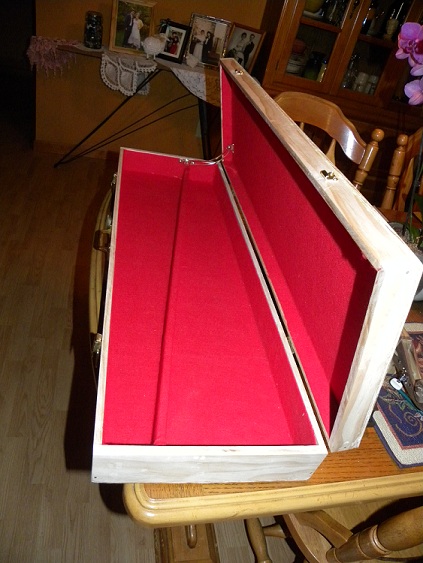
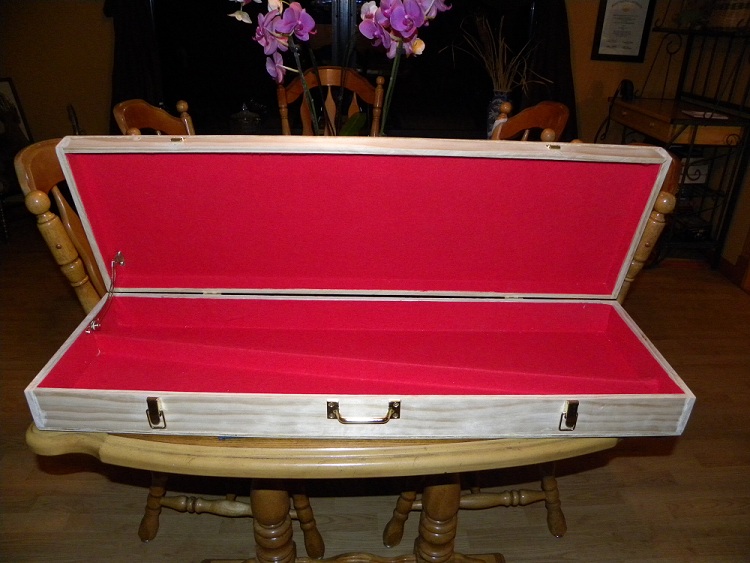
Looks very solid Kevin, think I'd have gone for a more 'comfy grip' handle though  Like the divider idea.
john
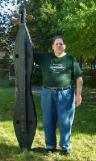
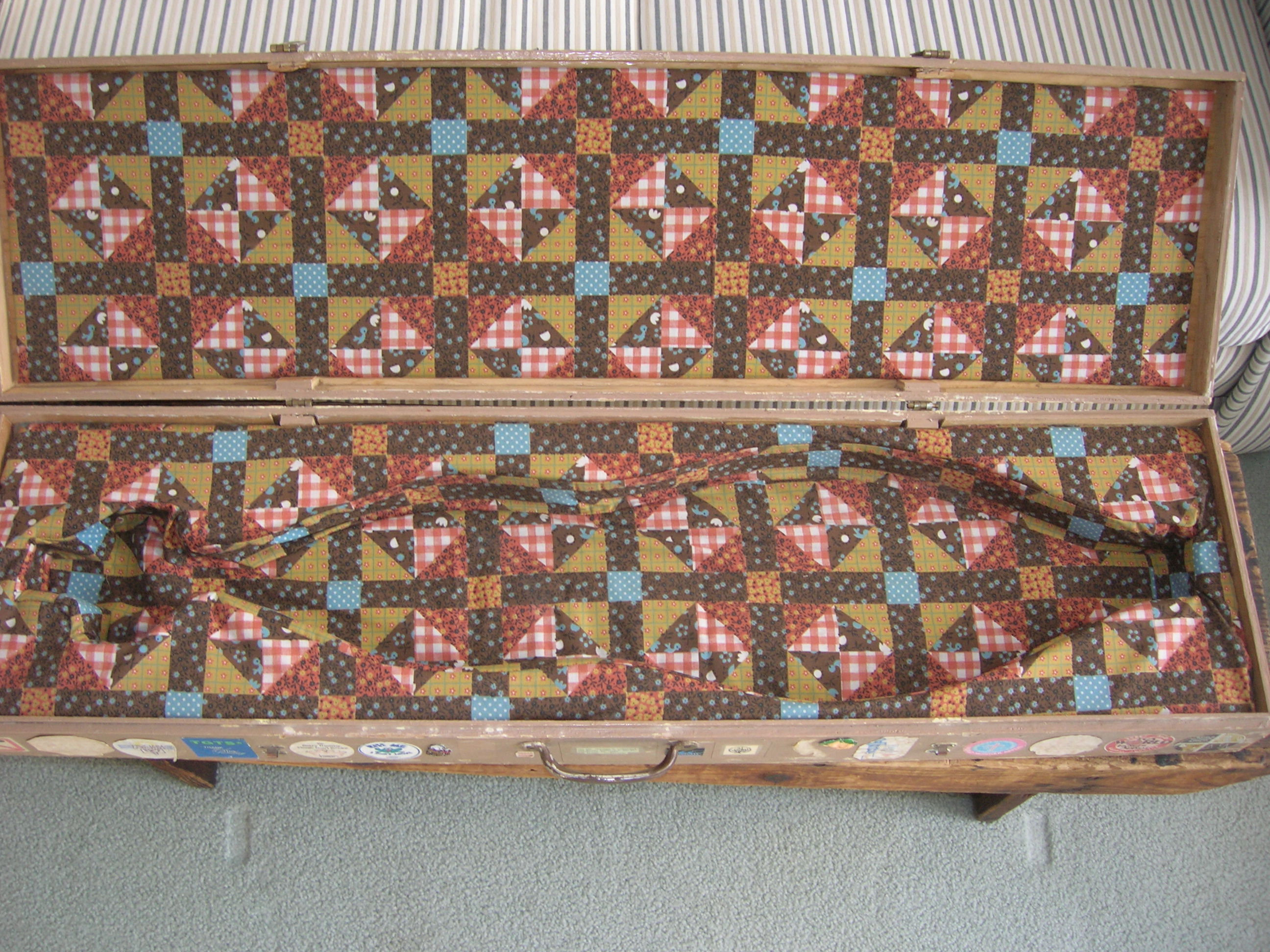
I just thought I would show you all my new case. I build dulcimrs to sell ,and when going to gatherings I need to carry a lot of dulcimers. This one holds two. 
Burrell,
That's how I make wooden cases -- build the whole box, then slice off the lid. It'll fit perfectly every time.
I haven't made box joints at the corners, though that's the best way to fasten them.
I generally use either 3/8" solid poplar or 1/4"- 3/8" plywood for the edges, and 1/8" plywood for the top and bottom pieces.
I wrap the raw box piece exteriors with thin vinyl sheet goods, usually black, and glue/staple the edges all around.
Then the rigid-foam interior is added and cut to accommodate the instrument. The foam is then covered with Fun Fur or flannel material and trimmed. Sometimes I add a flap lid in one corner for an accessories area.
Then 3 or 4 small brass hinges are added, 2 draw catches and a handle.
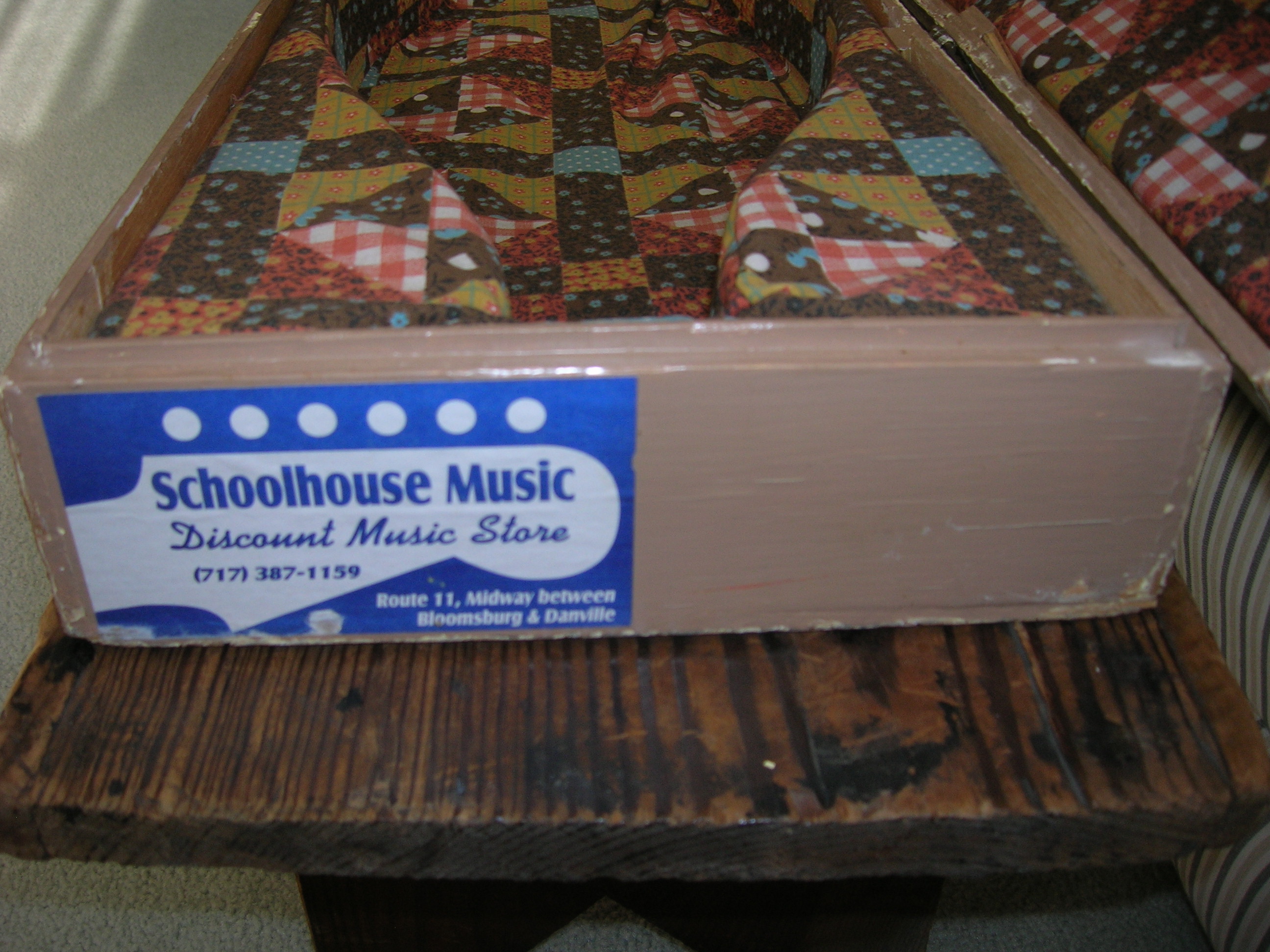
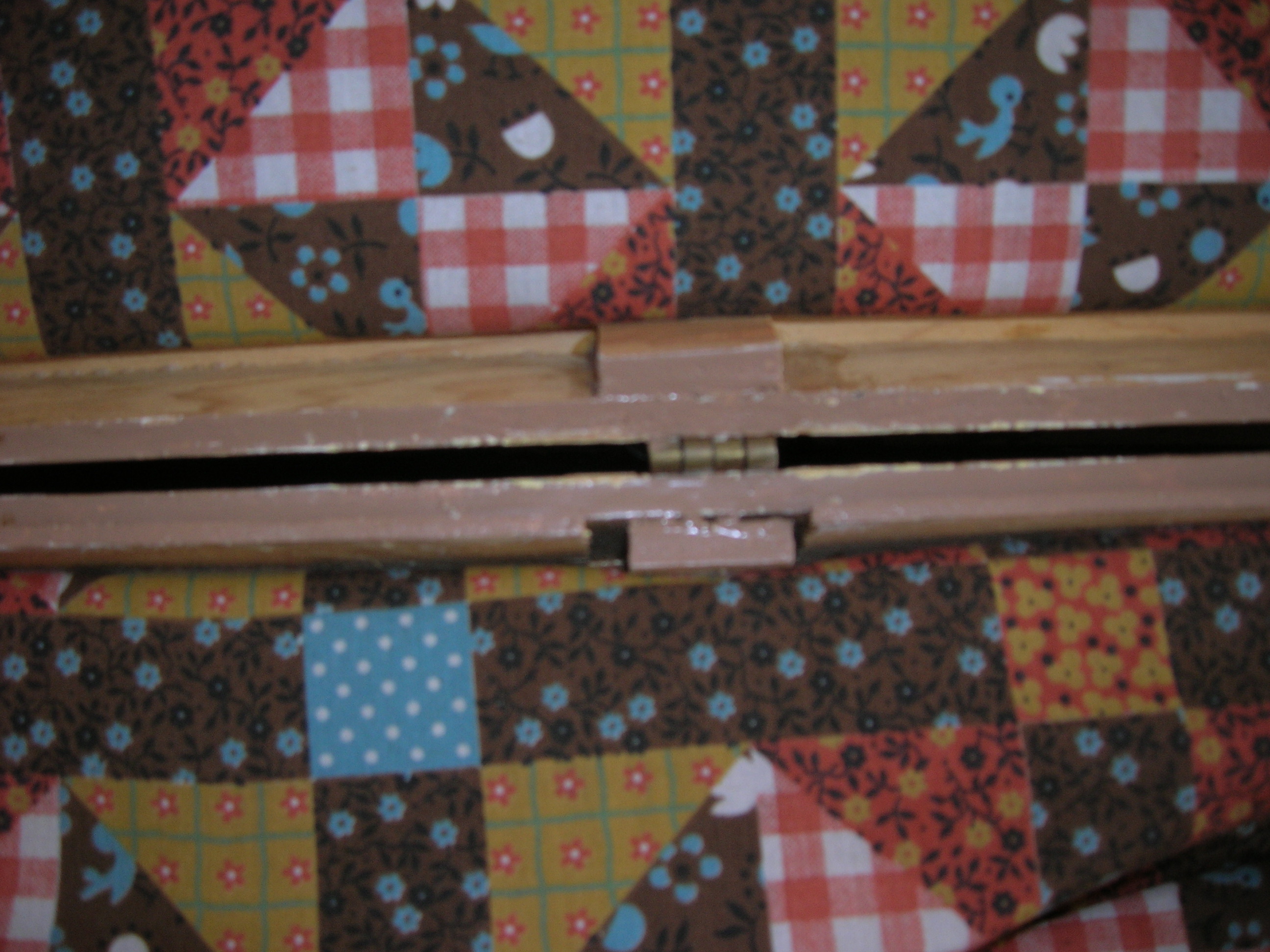
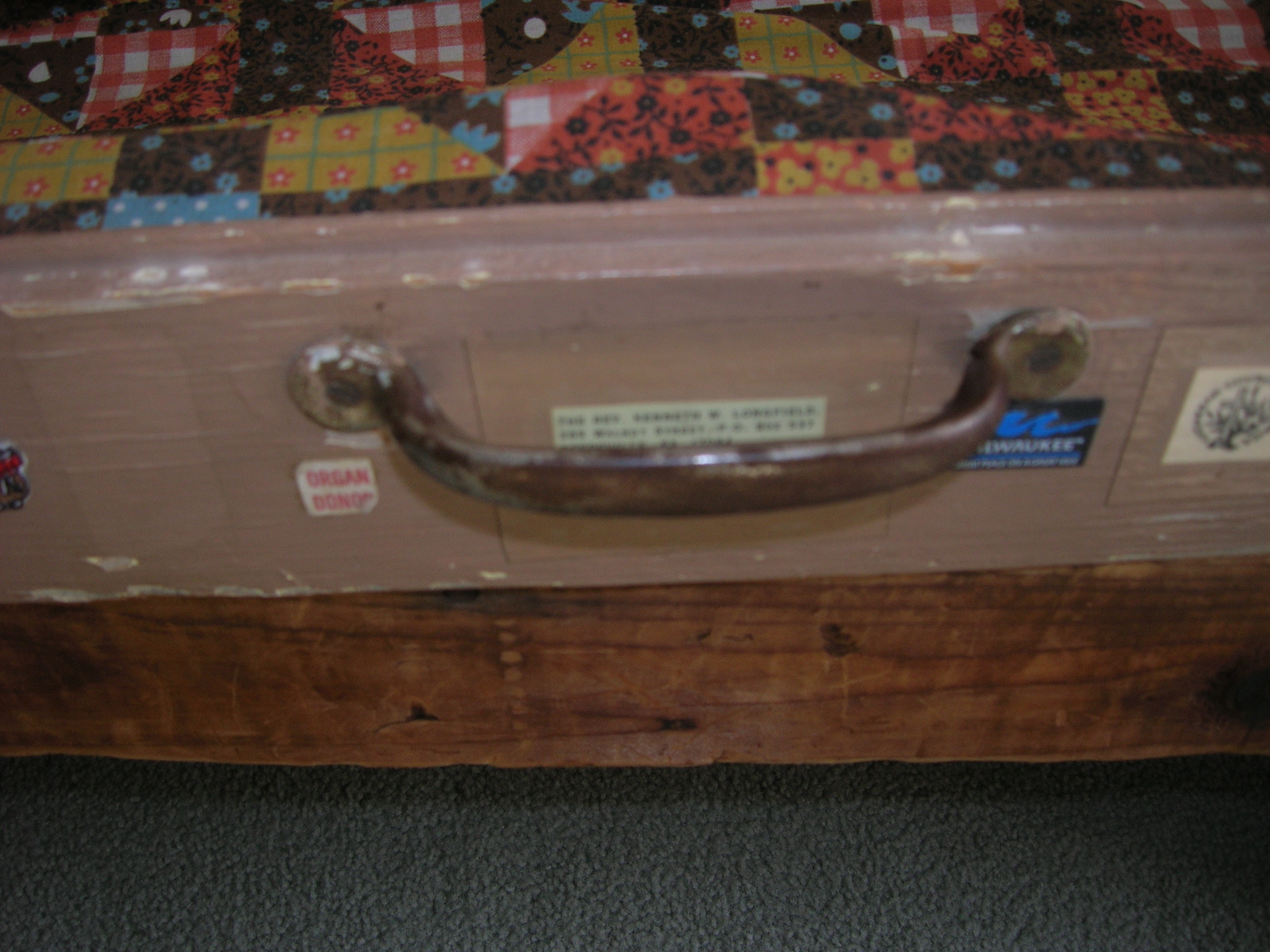
Thanks Chuck. It was made of 1/4 inch plywood. I used the panels from a hollow core door to create the lip. It was originally painted yellow and then I changed it to brown. If I ever took all of those stickers off it would probably fall apart.
I like it, sure protects your dulcimer well. Must be well built to last this long.
Okay, if finally found time to take some pictures of my case. I have used it for almost 40 years. Here they are: 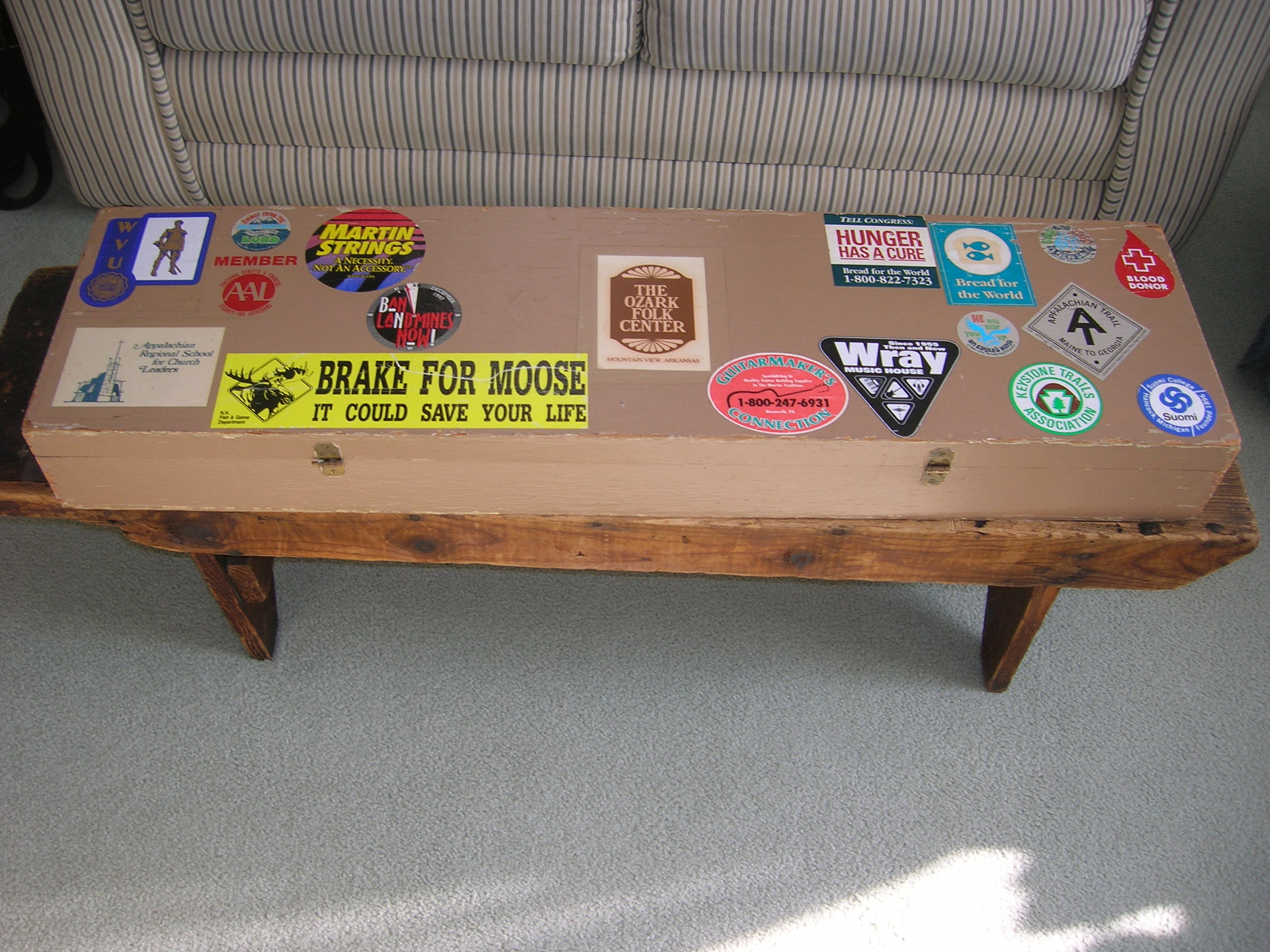
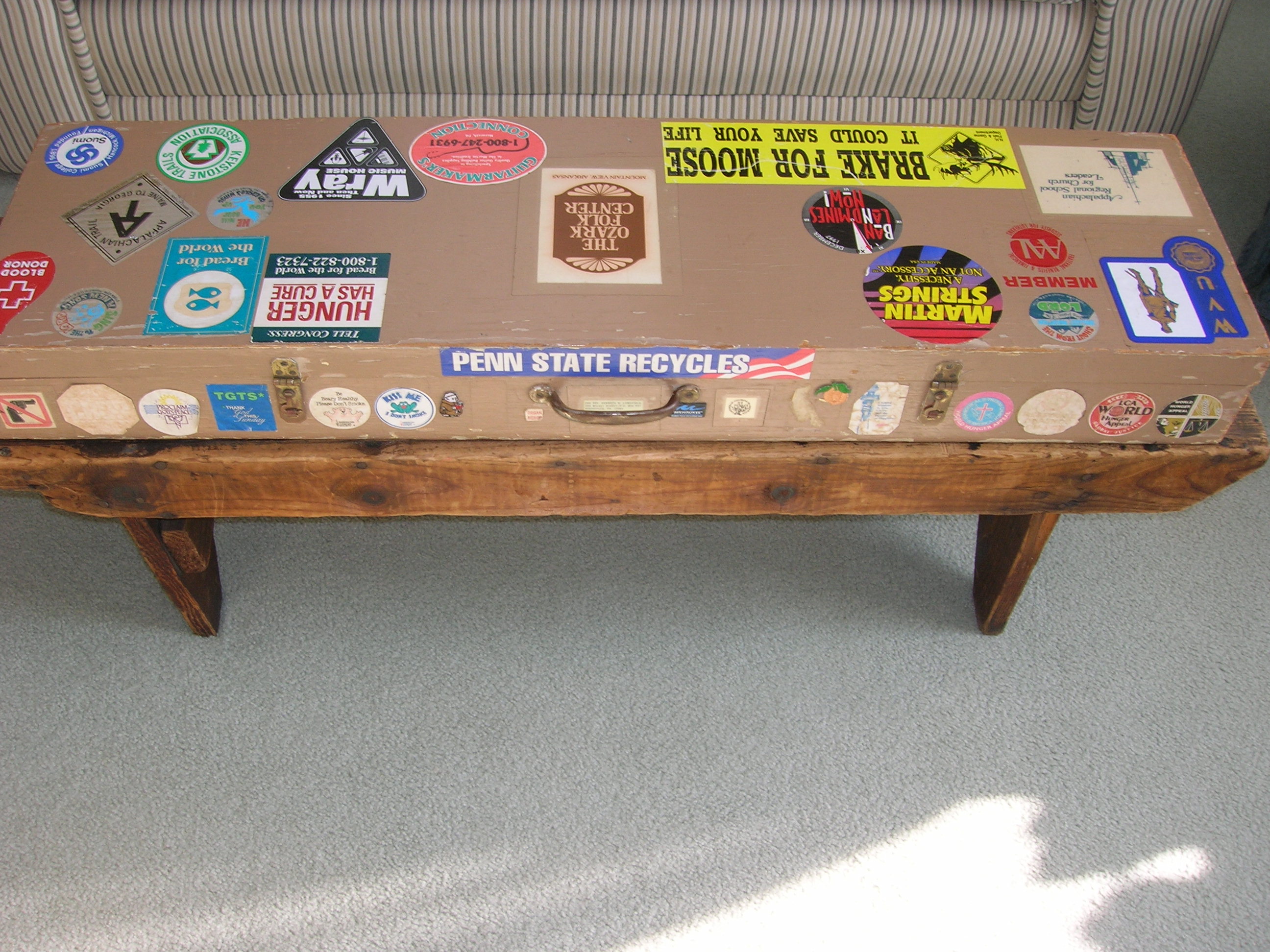
Sure would like to see the one you built and I will get pictures of mine. The one I saw did not have metal hinges on it, a belt was used and leather belts were used for latches. Hardware is getting expensive, the one case I made has over twenty dollars worth of hinges, latches and corner protecters.
Sure would like to see some examples some homemade wood dulcimer cases.
Mike please wait for a reply from Kris! She is very interested in getting one back. If there is a problem then I would be interested in having it.
Mike Anderson said:
I just purchased and was accidentally shipped a Black Oak Dulcimer instead of the George Looney McSpadden that I had bid on. It says Ron and Kris Hansen on the inside with a Reed Springs Mo address. There is no number or initials or anything else to identify it. My Mac is in background with micarta fingerboard.
Can you please try to tell me more about it? I'm in a huge quandary now as I just received this today and I am not sure how to handle the situation. Its a flat head and appears to be solid walnut.
thanks,
Mike
Kris Jackson said:Hi Dave,
Thank you so much for contacting me. I am really looking for our mountain dulcimers. I was never a hammered dulcimer fan and they take up so much space. Have a great summer.
Kris
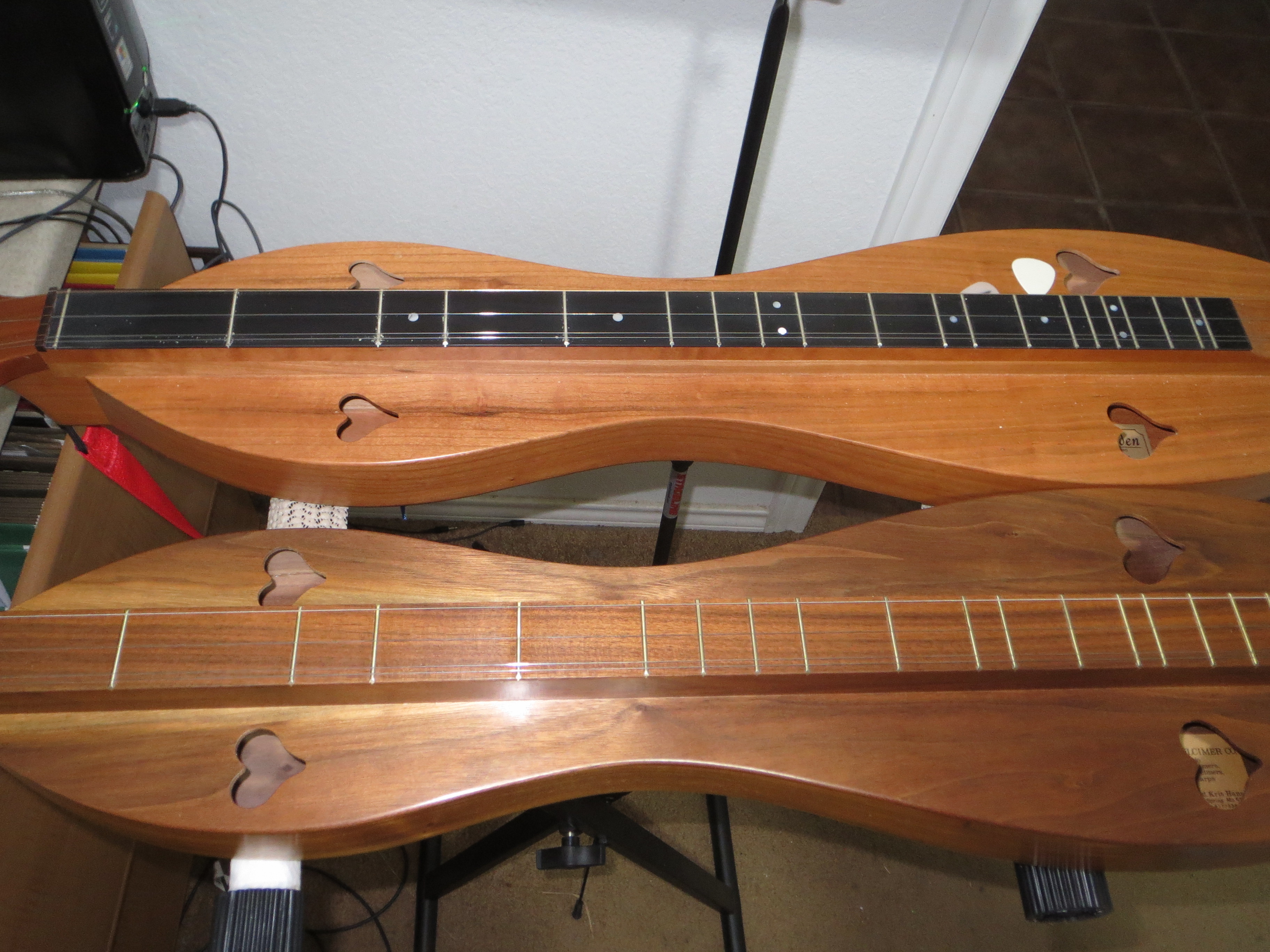
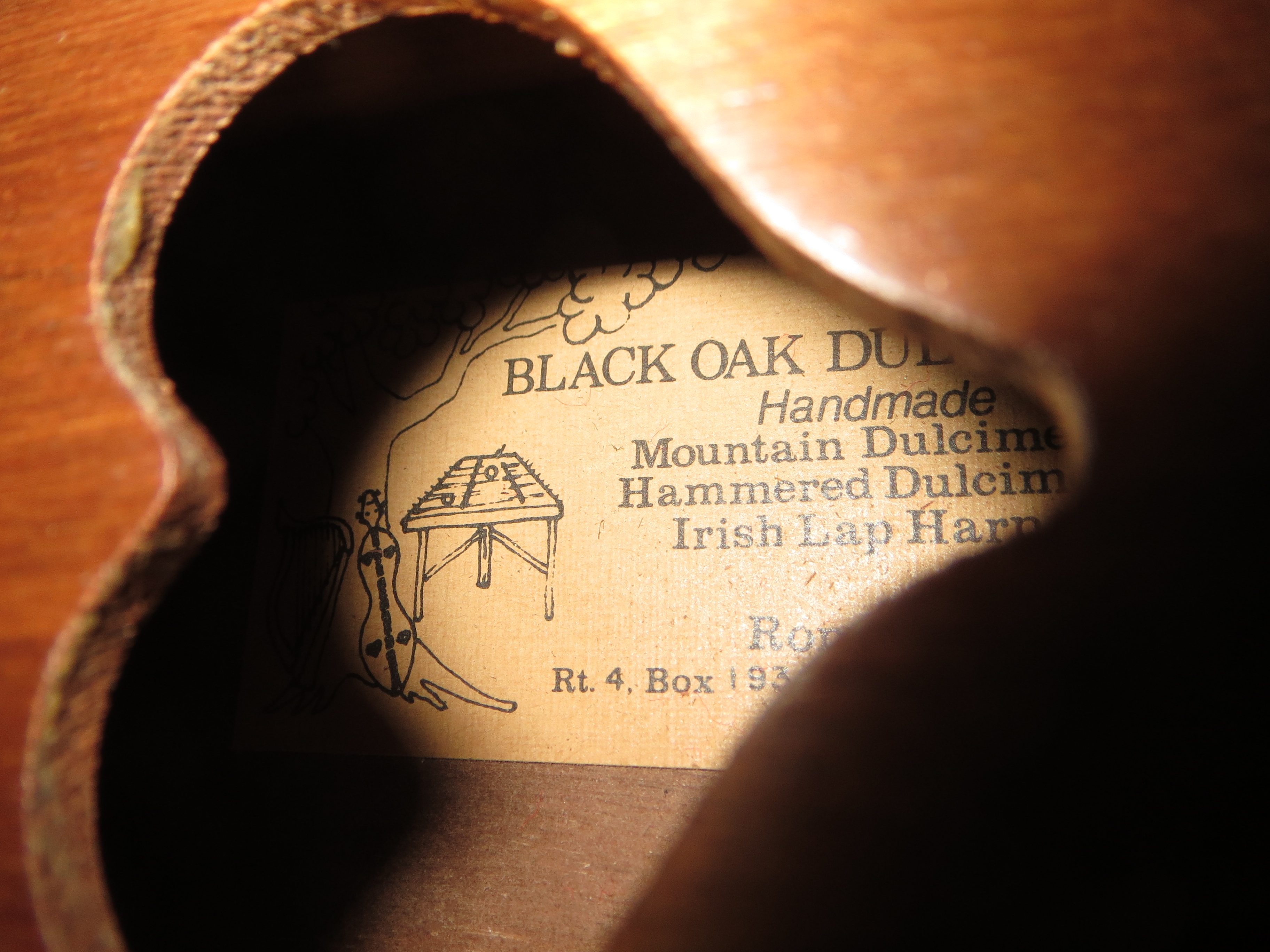
What part of the country? What time period? They aren't listed on any of the builder's rosters that I know of. How many instruments did they build? Were they labeled inside? The more info we have the more we might be able to help.
I am searching for any examples of Black Oak or Hansen Dulcimers. Kris, one of the original builders, is very interested in tracking them down.
I remember watching that show as a wee little one. Not sure is I remember seeing the dulcimer. But I am sure I did I had to see and hear one some where that made me want to have one of own.
according to youtube that episode aired sept 64 and that is the month and year it started so that might have been the 1st if youtube is right.
I'll keep checking
Thanks, I was really surprised when I ran across it. I wish I knew which episodes he "played" his dulcimer. I know he did in episode 1  Anyone have a list?
hey David Thanks for posting the article that was neat.
I haven't looked real close and I'm not disagreeing with you, but could it possibly bea mismatch of the audio and video? Not saying Fess played it here but this article from Sept 1963 Fess Parker says the dulcimer was his idea and it's one he'd brought out of the Smoky Mtns ten years previously. Sowhether he played it in this scene maybe he could play but then I know lots of folk that buy mtn dulcimers and don't play
See
http://news.google.com/newspapers?id=7jxQAAAAIBAJ&sjid=3lYDAAAAIBAJ&pg=3146%2C868815
Ken Hulme said:
Good post Dana. This topic surfaces about once a year. Watch closely and you can see that, of course, Fess really isn't playing the dulcimer, and the notes he's fretting aren't the right ones for the song.
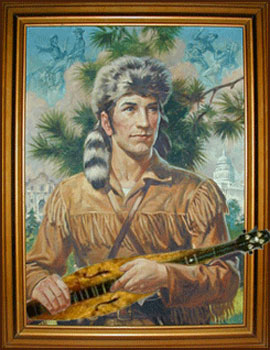
Davey Crockett played aKeith Young dulcimer. ;)
http://www.donpedi.com/images/links-fine-art-of-dulcimer-davey-croc...
Dana was also the one who found the episode of the Waltons in which John Boy plays the dulcimer and sings:
http://mountaindulcimer.ning.com/forum/topics/john-boy-walton-s-dulcimer-song
After watching that clip I now know why I started playing dulcimer. Its a chick magnet !
LOL Ken you done busted the bubble, I though ole Danel was a playing it. I never thought to check what he was fretting, did think about trying to play the song though. I guess its in DAA tuning?
Ken Hulme said:
Good post Dana. This topic surfaces about once a year. Watch closely and you can see that, of course, Fess really isn't playing the dulcimer, and the notes he's fretting aren't the right ones for the song.
Well, if he didn't, he should have! " Einstein played the violin, he loved to shout and sing. If that ain't genius, that ain't anything." -Henry Jankiewicz, Cranberry Lake Jug Band
Paul
Good post Dana. This topic surfaces about once a year. Watch closely and you can see that, of course, Fess really isn't playing the dulcimer, and the notes he's fretting aren't the right ones for the song.
For some unknown reason, I think that I had seen this episode. I remember Fess Parker sitting in a straight-back chair, his wife combing her hair and then coming out and asking him how long he would be gone. Of course, I had no idea what the dulcimer was, and other than his laying it down on the seat, I can't say that I thought much of it...actually, the siting of the dulcimer was not very long in the scene.
Here is a link to a Daniel Boone episode where Fess Parker sings to wife Rebecca, playing a dulcimer.
Gosh Wayne, i'll have to find a scanner so I can convert them from paper to electrons. I didn't take many photos and those were "pre-digital". Here are two really small pix of instruments I made though...
 This one I called Fruit & Nuts; made from fruitwoods and nut woods. Mango top, Oak sides, Cherry fretboard, Lychee Nut nut and bridge, Kamani wood tuning head, Walnut soundhole inlay, I forget what else. With a 27" VSL, about 5" wide and 3" deep I built it as a "transitional dulcimer - half way between a zither and a mountain dulcimer. The shape and rough dimensions are taken from an 18th century zither in a museum collection in Germany. Instead of nearside half frets, I added a central raised fretboard - the hallmark of a dulcimer rather than its European ancestors.
 Here's a really crummy pix of a replica Langeleik - Norwegian dulcimer ancestor - that I made for the Norwegian Prez of a company I worked for up in Venice, FL before I retired. Notice the wooden frets set into the near edge and the other unfretted drones. The box is bottomless as was common with Langeleik as they were usually played on a table.
We'd like to see a picture of your new instrument. Most here are not familiar with that builder, I suspect. Playing on a table top is VERY traditional. A number of pre-Revival builders put small feet on the bottom to raise the bottom off the table top and allow it to vibrate, giving louder sound. You may want to consider making a Possum Board - think 1/2" or thinner Poplar plank 5-8" wide x 36" long from the Lowes or Home Depot "hobby wood" section, with a couple 1/4" square rails glued across say 28" apart, to support your dulcimer. Now glue that rubber shelf liner to the top of those rails. Set the whole thing on a table, then set the dulcimer on top.
On the question of staining.... very few builders do. Most like to see the beauty of the wood grain. Use a clear polyurethane and wipe it on. Repeat 3-4 times, steel wool in between coats. I personally prefer a satin finish rather than deep gloss.
You may want to read the article I wrote called I Just Got A Dulcimer, Now What? . It's an illustrated glossary of terms (so we all speak the same language, plus answers to many beginner questions about tuning, playing, care and feeding of your new best friend.
http://mountaindulcimer.ning.com/profiles/blogs/i-just-got-a-dulcimer-now-what
Dan, you've been given good advice so far. Make sure your legs are spread pretty wide and that the head of the dulcimer sits on your knee. Some people use that shelf liner/carpet pad stuff on their laps, but others claim that the material can mark the finish of your dulcimer.
Although some traditionalists frown upon using straps, I had a horrible problem with my dulcimer moving around until I installed strap buttons and began using a strap around my lower back. The dulcimer immediately became "mine." You can make your own strap, of course, and Strumelia has a nice video about how to do that at her noter/drone blog (scroll down to the very lower bottom of this page). Carrie is right that any adjustable guitar strap will also work, but my preference is the quick release dulcimer strap that Sue Carpenter designs and sells. I have one on each of my dulcimers now.
Wider stance, not bigger lap. Legs wide apart at the knee. Left knee under the 1st - 3rd fret, left end of the dulcimer tucked into your right hip. Also wear slacks which are not made of polyester or other slippery materials. As Don sez, you can also use a piece of rubber shelf liner, or a piece of chamoix skin.
Some "standup" players, like Robert Force, leave the strings in their original configuration; he reaches over the top of the instrument rather than coming in from below the way a guitarist would. Strings can also be reversed if the player is left handed.
Rather than continuing to tack additional questions onto a discussion, Tony, it's often better to start a new discussion, as it makes it easier for others interested in the question to find both the Q and the A using the Search function...
Hi Tony.
The D and A will be no problem, the F# may be a bit slack. See how it goes,
Depending on what style of play you intend, you could take the middle string up to D and use a reverse capo at the 2nd fret.
john
Tony Brown said:
Can I tune to D Fsharp and A (1-3-5) using normal strings.
Cannot find the 1-3-5-discussion . Help please