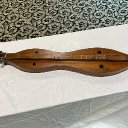
Help with ID of recent thrift shop purchase
Instruments- discuss specific features, luthiers, instrument problems & questions
What a cool resolution
And now the "circle" has rejoined! What a fine development from Randal's inquiry 6 months ago! Hope things work out with the repairs.
This is great news. Glad to see that progress has been made on this issue.
Ken
"The dulcimer sings a sweet song."
A lovely dulcimer and a lovely development! Enjoy that beautiful instrument, Randal!
Such a wonderful development in this 6 months-long drama! Thanks for joining, @rtemplin!
HI Randal,
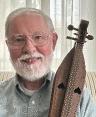
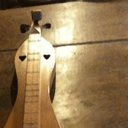
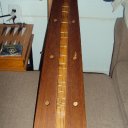
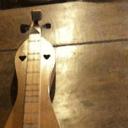
That dulcimer was built by my father. If the tag inside indicates "Calera, AL", I probably built the fretboard and sanded it :). Although we no longer own it, I can point to the shop where it was constructed. I am very familiar with his building techniques and I still build dulcimers today. I still support the instruments that he built and I would be happy to talk with you about putting it back into playing condition.
I now live in Jemison, Al. Please contact me via email at roger.templin@gmail.com if you wish to discuss it.
Thanks,
Roger Templin
Well stated Wally and KenH. The mountain dulcimer is what it is. And in my humble opinion, one should enjoy its sweet song as it is without trying to make a bull horn out of it.
The dulcimer was devised for playing for one's own enjoyment, or for a few family members, not an "audience." This would probably have been in a room in a small home after the player's work was done in winter, or on a porch in the summer. Other family members often would have been reading, sewing, washing dishes, etc.
"Is it really normal for a dulcimer to have a very weak, drowned out sound?"
More or less. The dulcimer was never designed/built/intended to be an ensemble instrument.
Until the late 20th century the dulcimer has always been a solo instrument for playing to an audience of say a dozen quiet, appreciative listeners, no farther than say 15 feet away. If accompanied at all it would have been by a sympathetic fiddle, guitar and/or banjo player who understood how to blend their own instruments with others, not play as loud as they could because they could.
You may wish to try this english concertina However,I suggest you think really hard before getting one, for what I heard they are one of the more challenging instrument to learn.
@lily-pad, I just responded to this question in the other forum you posted in. I would suggest you start a new discussion in the Specific Features, Luthiers, Instruments Forum .
Hi @lilley-pad, and welcome to FOTMD. My main, go-to dulcimer is a McCafferty. (It's an older one with a standard piezo pickup but without the humbucker and MIDI interface he uses on the new Seifert model.) I love it. Great sustain. Great volume. Big round tone. The fingerboard is very responsive to your left hand. When I first got it a few years ago, I found the strings to be too far apart for comfortable flatpicking and had to make some custom adjustments, but Terry now uses a special bridge that allows you to adjust the distance between the strings.
However, if you want to continue this conversation, perhaps you could start a new discussion on McCafferty dulcimers in the Discuss Specific Features, Luthiers and Instruments Forum .
Just Jon here. Don't know if this is the right forum site. But here goes first Howdy all. Any one have experience with a McCafferty dulcimer I know that they're beautiful and I like his adjustable nut design very innovative. But what about tone play ability sound?
Don't know if this is the right forum site. But here goes first Howdy all. Any one have experience with a McCafferty dulcimer I know that they're beautiful and I like his adjustable nut design very innovative. But what about tone play ability sound?
What wewas it Jean Ritchie said? Her Dad tuned the dulcimer to Bim, Bim, Bom. What the actual notes were didn't, and still doesn't matter. There weren't any absolute notes. Some of us these days say that we're tuned "in the vicinity of"... in the vicinity of D or A or C
Well that's gonna be fun! 🎼
I play the fiddle and feel that playing the dulcimer has helped me play it..I don't play many chords..just melody string and drones.. so having a lot of fiddle tunes in my head it seems to be easy to find the note interval on the fiddle.. just my experience..of course intonation is a bit tough but tuner helps...i find that just going for it without timidity is best..good luck and fmhave fun
It's ok you'll get there.
Roger, you wrote clearly and kindly and all of us I'm sure understand better the terms, Native American and Native American Style. Thank you, aloha, Irene
I have always found the appropriation of dream catchers pretty amusing. Many tribes believe that spider web charms need to be periodically purged through ritual, as they attract and accumulate negative spirits. In Hupa culture, 'dreamcatchers' are associated with a protective spider spirit who is also a moon spirit, and therefore, spiderweb charms are purged through a ritual once every full moon.
I suspect most people who buy them at tchotchke shops are not aware of these sorts of details and are effectively just attracting negative energy to themselves, if you believe in that sort of thing.
Of course, most "dreamcatchers" are just woven mandalas with some feathers and beads glued to the edges and couldn't even be used as a spider web charm. For example, most tribes believe that a spider web charm needs to have a specific number of terminating points along its hoop, typically 12.
I suspect most people who buy them don't actually subscribe to any sort of native american spiritualism, and don't really care one way or the other.
If you look on High Spirits Flutes, you will see he calls them Native American Style flutes. Years ago the American Indians sued the people selling “Native American Flutes” when the person making the flutes had no Native American heritage. Now when selling a “Native American Flute” it must have been made by a “Native American “ or if not by an “American Native “, it must be sold as “Native American Style “. “Native American Flute Style “ donates the type. “ Native American Flute “ donates it is an official “ Native American” made flute.
Thank you for that explanation. I see that on the HS website. I understand and agree with the distinction. That said, I think in causal conversation, when we speak of our flutes, there's no harm in calling the HS flutes, Native American Flutes. I know I do. I'm thankful for such builders who are responsible and respectful and build quality flutes. In doing so, they are still honoring the Native Americans, the instrument, and the music.
Thanks again!
As a person who makes Native American Style flutes, I thought it might be helpful to know why they have to be called Native "style" flutes. This is due to the Indian Arts and Crafts Act of 1990, which was passed to protect Indigenous crafts people. They were being crushed by people offering cheap knockoffs, mostly being made in China and Eastern Europe. Now in the USA you must clearly identify that it is a Native American "style" flute (or even other crafts like dreamcatchers) - unless the maker of the item is a registered member of a federally recognized Tribe or Nation.
It would shock you to find out just how bad the problem still is - the Chinese are still dumping cheaply made dreamcatchers, arrowheads and many other items. You can even go to a reservation and find these items being sold in the gift shops there. And just how bad is it? The international patent for a dreamcatcher is owned by...China. It never occurred to our indigenous craftspeople that something like that could happen!
I have a lot of Cherokee blood in me, but I don't qualify for membership in any of the three recognized tribes of the Cherokee. Thus, I cannot sell my flutes as "Native Made". But I long ago decided to not be part of the problem, so I do sell them as Native American Style.
That is a cool tip Dusty, thanks for sharing.
I'd like to develop a better ear for tuning. If I use my keyboard to tune my dulcimer then check it with a tuner, I can get the bass string pretty close, but the higher pitches are up to 35 cents off. And thats after spending a few minutes plucking back and forth. I can usually hear the 'beating' of the frequencies being slightly different, but can't really tell whether I need to tune up or down to fix it
How exciting, @Lorillee!
I hear you Wally
. I had an aunt who had perfect pitch (and a Steinway piano worth about as much as my house!). When my uncle was learning a right-hand picking pattern for the banjo, she didn't mind the repetition of the picking, but she couldn't stand that he was always practicing in the same key. So he used a capo and would just change keys every few minutes.
@wally-venable, you are right that learning perfect pitch is not a reasonable goal, but to learn relative pitch should be.
Students in most formal music education programs develop tricks to learn intervals. The first two notes of "Happy Birthday" represent a 2nd. The first two notes of "When the Saints Go Marching In" represent a 3rd. The first two notes of "Here Comes the Bride" represent a 4th. The first two notes of "Twinkle Twinkle Little Star" represent a fifth. The first two notes of "My Bonnie Lies Over the Ocean" represent a 6th. I can't think of one for either the minor or major 7th, but I'm sure you can look one up since there must be lists like this all over the Internet. And the octave is "Somewhere Over the Rainbow."
I've stuck with the major scale (Ionian mode) here, but you could do this for the chromatic scale. The minor 2nd is the dangerous shark music from Jaws. The minor third is the first two notes of "Greensleeves." And the list goes on.
I should have written
"Perfect pitch" is often considered a curse. I had a friend with perfect pitch who, 60 years ago, found that almost all the pianos in a good showroom were off key, and she couldn't play most of them beause they hurt her ears.
You should be able to distinguish between a whole step and a half step in American/European music. To "learn" absolute pitch shouldn't be a goal. (Some Asian and African music doesn't use European intervals based on a logarithmic scales.) Good musicians play intervals, unless of course they are "bending" a note artistically.
Digital tuners with absolute reference to frequency haven't been around very long. We didn't have precise standards in the not-so-different past. We had tuning forks and reed pitch pipes, both of which produce tones which will vary minutely with temperature. To mention only two countries, the USA and Austria (home of Mozart, Beethoven, etc.) used different pitches for the A to which they tuned.
A band from the 1920-1950 period would have tuned to the piano, if they used one, which would have been relatively tuned if it was "in tune."
A symphony orchestra tuned to whatever A the oboe played at the beginning of the concert. The oboeist might or might not have used a fork or pipe as a reference.
As the saying goes, "this ain't rocket science, it's art." "Perfect pitch" is often considered a curse. I had a friend who, 60 years ago, found that all the pianos in a good showroom were out of tune, and she couldn't play any of them.
Put on some music and grab an instrument. Try to play along. Your first task will be to determine the key. Then you will pay attention to the structure of the music. Then you either start figuring out the chord progression or you start working on key melodic phrases. Eventually, you get the whole song.
Lather, rinse, repeat.
I played guitar (not very well) for years. I started at family sing-a-longs, and I learned pretty quickly how to hear chord changes in a song. I also used to watch a lot of sports, and I would do so with a guitar on my lap. When the commercials came on, I would try to play along with the jingles. That forced me to work through those steps above (determine the key, identify the melodic hook, etc.) super fast because each commercial might only last 30 seconds. But by the third or so time a given commercial aired, I could usually play along.
If you want to train your ear, I strongly suggest not looking at tab while you play. Look at your dulcimer and think. Think about the relationships between the frets and the notes they represent. Think about the relationships between the strings in the same way. And I would advise not thinking about absolute tones, but about intervals. For example, the distance from an open string and the second fret is a third. From the open string to the fourth fret is a fifth. To the seventh is an octave. And so forth.
Eventually, you'll be able to hum a song in your head and imagine how to play it on the dulcimer. And that's a pretty cool skill to have.
My Ron Gibson Dulcimer should get here by the end of the week!!!!
I've wondered a lot if the music that I listens to "untrains" my ears. I listen to quite a bit of blues from 1920-1950 and a LOT of it is only "relative tuned" from the top string down. I've never been good at all at knowing whether a note is flat or sharp, and if a note is flat or sharp it doesn't affect my enjoyment of the music. Starting to think I might have permanently screwed up my pitch perception
I'm with Ken, to a large extent. Few of us "train" our ears, but "our ears learn."
We learn, I think, by having music in two forms at the same time. Playing or singing while hearing others in a group. Plying or singing while reading music as sheet music or TABs. Singing along with a record.
A set of instructions in any form may help because it is structured so that your experience is expanded, not because it is just repeated.
Sorry... I just trained my ear through decades of singing in choirs and playing with other musicians. And listening over and over and over again to cassette tapes/vinyl in the Dark Ages before on-line music...
I'm curious about what training you do to enhance your ear (relative pitch, recognizing chord progressions, and identifying sharps/flats). If you have any exercises or resources, please feel free to share!
Currently, I've been using an ear training app called ToneScholar ( https://tonescholar.com ) if you're interested). It's been effective, it has improved my relative pitch, but it focuses on voice based exercises. I am NOT a singer!
I’m NOT looking for an alternative ear training app. I'm interested in any advice or exercises you may have that are similar to the app. Thank you!
I am not really a Vonnegut fan, but this story inspired me years ago. It is so true that some things are worth doing because they are inherently interesting and fun. It doesn’t matter whether I am ever able to play like my idols (or willing to play in public at all). I can and should do them because I want to do them.
I have far more hobbies than most people. And some of them I do very well. People have asked me why I don’t turn them into a business (glass beads and carving tools). The answer is because the doing is the purpose. When I make someone else’s beads or blades, I lose the joy of making them.
Sometimes the only thing that matters is if you want to learn and do something like playing a violin, dulcimer, etc. You don't need to be good you just have to have fun.
Hi. I have taken up the fiddle 9 months ago..love it.
That's great, did doing dulcimer help you in learning fiddle?
shootrj2003, I'm glad to hear that you were able to get the violin back in to playing condition. I like your ingenuity in finding and making tools to do the job. Keep it up and before long you'll be carving your own violin tops and back. Good work.
Ken
"The dulcimer sings a sweet song."
I've learned a lot by buying "$100 dollar instruments" on sale at $30 or so on the Shop Goodwill website and working on them.
You can't buy much of a lesson for $30.
I haven't had to try learning sound post setting yet. I don't bid on ones which are shown with the bridge out. I bought a post setting tool on eBay for less than $10.
Glad your experiment ended productively.
Wally you know I have heard that a lot but only after I learned why you dont.also Ken ,the same with the mixed up tuners,reminded me of friend years ago ,while we were still young ,who removed all the wires from his VW bug to do a tune up…
It’s an avg. $100 mass produced 3/4 ,student guitar ,known history of no rework ever done,so to my thinking,probaly very alike holes and tuners, after careful inspection,I put them back so holes were centered an they seemed right none were loose ,none were long or short looking at how they ended on the sides of the tuner box and just said a Hail Mary, even though I’m a Protestant ,it seemed to work!
I restrung all strings with low tension( not tuned) enough to keep bridge from falling and in its place even with the notches and original feet marks,then I retreived the sound post with a hook from makeup section of dollar general
(lord knows what it original use was ) but it was sharp enough to spear spruce ,then I made another tool that hooked into the end of the post like pincers on either side which it hung from like a pail handle,after i acertained the angles were correct I’m a woodworker so I’m pretty good eye for that,and after several try’s and three successes( my pail handle pincer tool would not release and kept pulling it out )so I lost patience and clipped it off after setting it again it became a sacrificial repair tool but only cost me $2.50.it is set about 3/32”behind the right foot of the bridge.
After I was done ,I tuned it up ,I did this all at the indoor rifle range while my rifle team guys shot their weekly match,I missed my match,but as promised my granddaughter s violin is back together with new strings ,a replaced sound post and got a good clean and wax,and me,I recieved a good education in violins and how to tune them OH,I recieved two violins from our friends who I was incidently helping to move at the same time as needing to get this done! A really busy day.it doesn’t get any better than that!
I want to all for you responses and I will probaly have it checked by a local instrument luthieryou guys are great
Wally, thanks for that link and the information. I have two friends who make violins and have a learned a little from both of them, but I leave the building and repair to them.
Ken
"The dulcimer sings a sweet song."
The general advice is NEVER TAKE ALL THE STRINGS OFF A FIDDLE AT THE SAME TIME. (Unless you are a luthier doing a major repair.)
String tension holds the sound post in place. You place the sound post and, carefully position it, with all strings loose. Tightening strings without a soundpost can break the face.
Before they were installed, the pegs were probably all the same. During set-up or a service, individual holes may have have been reamed and pegs smoothed with a sort-of pencil sharpener to improve fit and smooth turning.
I'd suggest looking at http://www.makingtheviolin.com/ before fiddling with fiddles. There are other useful violin sites, of course.
Actually "one string at a time" is good general advice when replacing strings on any string instrument, including dulcimers.