
I did a search for 'Clemmer dulcimers' on here & a photo gallery popped up with the different members who posted their Clemmer dulcimers, not sure if they still have them or not but you could contact the members & ask them about theirs
Forum Activity for @marg
External Pickup for Mountain Dulcimer - Kala amp?
General mountain dulcimer or music discussions
Dusty has a good point. I was recently introduced to the condenser microphone, which isn't like the usual hand-held stick mic. It's a sort of Omni-pickup that you put on a stand in front of you. Nothing attached to your instrument. They pick up both the instrument and your singing very well. I've seen them on Amazon for around $75.

External Pickup for Mountain Dulcimer - Kala amp?
General mountain dulcimer or music discussions
Gale, as Ken demonstrates, there are some very affordable options out there. My advice if you want to be able to amplify several instruments would be to get a microphone rather than an external pickup. The industry stand-by is the Sure SM-57. If you look online you can find deals where you get the mic, a chord, and a mic stand for around $100. I made that purchase a few years ago and then more recently bought the Sure SM-58, which is basically the same mic but for vocals. And I'm sure there are less expensive mics out there that would also do the job.
I just think that whatever you spend, a good microphone represents a better-sounding and more versatile option than an external pickup. I have never been satisfied with the few external pickups I've tried.
But you might also pose this question in the Technology/Software/Amplifying Group here at FOTMD. Some people have a great deal more experience than I with amplifying instruments.
External Pickup for Mountain Dulcimer - Kala amp?
General mountain dulcimer or music discussions
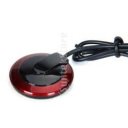
I use simple contact piezo pickups that I get off the Net; cost about $3-$5 each. The sticky tape does not bother the dulcimer's finish. Sometimes I replace the tape with 3M double sided tape...
updated by @ken-hulme: 12/27/17 03:20:42PM

External Pickup for Mountain Dulcimer - Kala amp?
General mountain dulcimer or music discussions
Should add that I have a standard size McSpadden and a couple of Folkcraft dulcimers I would like to amplify...
External Pickup for Mountain Dulcimer - Kala amp?
General mountain dulcimer or music discussions
Hi all -
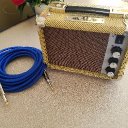
I am looking for some advice on any moderately-priced external pickups that work well with a mountain dulcimer and would work with the cute Kala amp I bought for my tenor uke this past summer. See attached for photo of amp and cord. My DH gave me a gift certificate to Elderly Instruments and looking to use that if possible. I don't have a lot of knowledge of "electrified" dulcimers but trying to learn from this site and others. Thanks in advance for any advice!
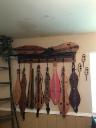
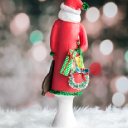
Look how kewl!
General mountain dulcimer or music discussions
I will keep a watch out!
I kept photos of the others she had on the page....I will find them and post here!
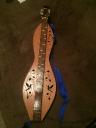
Look how kewl!
General mountain dulcimer or music discussions
The artist had three more on her Etsy page but they sold very quickly!

Look how kewl!
General mountain dulcimer or music discussions
Nice.
Ken
"The dulcimer sings a sweet song."

Play with ukulele and guitar
Instruments- discuss specific features, luthiers, instrument problems & questions
Don, have fun! Playing in different keys takes practice and it's a great skill to acquire.
Hindman Dulcimer Homecoming
General mountain dulcimer or music discussions
If a miracle of some kind takes place-- some unforeseen postive happening-- I may be able to make it.
Hindman Dulcimer Homecoming
General mountain dulcimer or music discussions
Yeah -- sorry to hear you won't make it Robin; I was looking forward to meeting you also...
Hindman Dulcimer Homecoming
General mountain dulcimer or music discussions
Sorry to hear that the senior housing fell through. I'll miss you. I took care of my mother and father at different times. Cherish your time with them.
Ken
"The dulcimer sings a sweet song."
Hindman Dulcimer Homecoming
General mountain dulcimer or music discussions
I'd had hopes of getting to attend. Then the attempts at getting my parents moved into Senior house failed. So, likely, I'll still be living with my folks in March.
Hindman Dulcimer Homecoming
General mountain dulcimer or music discussions
Hopefully they'll list the sessions soon. Here are some sessions offered last year:
Old Time Music for Beginners
Key of A
Ballads
Beginning Dulcimer
Singing with the Dulcimer
Counter Melodies
Little Songs
Irish Drinking Tunes
Surviving A Jam Session
Key of G
There were also seminars on dulcimer construction and Sacred Harp/Shape Note Singing

Hindman Dulcimer Homecoming
General mountain dulcimer or music discussions
Ken,
I did not see any sessions listed yet. Do you know what kind of sessions may have been offered in the past years?
Thanks

Play with ukulele and guitar
Instruments- discuss specific features, luthiers, instrument problems & questions
What Dusty said. Blend in, have fun, join the songs you can play and sit out the songs you can't.
Since you know your jam partners, it should be easy to ask them what songs they like to play and what keys they play most often :-) Pick a few songs and practice them before the jam. If you can only play along on one or two songs the first time you sit in, that's still a good start!
How are the ukuleles tuned? If they're in GCEA, chances are they're playing most songs in the keys of C and G. Those are the keys a beginner learns first. The key of D is only a little harder; beginners won't be happy if you keep calling songs in D but intermediate players should be able to cope.
My solution for playing with ukes is to bring one dulcimer tuned GDG for the key of G and capo at the 3rd fret for the key of C. If I didn't have a dulcimer that tunes easily to GDG, then I would tune a standard dulcimer down to CGC and capo on the 4th fret for the key of G.
If the song's not in C or G, I'd sit it out ;-) Or pick up a uke. You know those ukes are going to suck you in eventually 
Play with ukulele and guitar
Instruments- discuss specific features, luthiers, instrument problems & questions
The most common keys in folk or old timey or bluegrass music are C, D, G, and A. You should be prepared to play in those keys in any multi-instrument jam. And many songs have a specific tuning that they are always played in. St. Anne's Reel is always in D, Billy in the Lowground is always in C, Red-Haired Boy is always in A, and so forth. I try to practice songs in their common key so that I am always ready to play with others.
How to get into those keys? I can bring a single dulcimer to a jam. Tuned DAA or DAd, you can obviously play in D. With a capo at the third fret you're in G and at the fourth fret you're in A. Then you can tune down to CGG or CGc to play in C.
There are other ways of getting those keys (like tuning DGd for G), and if you have any extra frets playing in other keys gets much easier, but I find the capo is all I need to get the four most common tunings.
But the most important advice I can give is to remember that when you play with others, your job is to blend in, not stand out. If you don't know the song very well, just play quietly using a minimal number of notes. Little by little you'll learn more of the repertoire. But you should always listen more than you play.
And it can't hurt to take the lead on one or two tunes. Don't be afraid to just say "How about Goin' to Boston in the key of D?" and then start playing? Others will follow along, and if you show them patience as they learn one of your tunes, they will likely return the favor.

Play with ukulele and guitar
Instruments- discuss specific features, luthiers, instrument problems & questions
Seriously? This is why other musicians groan when you bring a dulcimer to a jam. We expect everyone to change for us. How nice? Not. If you plan to play a dulcimer with other instruments, you should change for them, after all, there are more of them than there are of us. Majority rules in a jam.
Yes, the dulcimer is a wonderful instrument,..., that can change and play nicely with other instruments. (And when you get REALLY good, you can bring just one instrument, or a fully chromatic dulcimer,..., hmm, fully chromatic CGg with a capo, that could do most everything.)

Play with ukulele and guitar
Instruments- discuss specific features, luthiers, instrument problems & questions
Just go ahead and play noter/drone whereever you're tuned - most guitar/uke players will quickly find the key and join in. I was surprised to hear someone playing drone style with a guitar player playing with full chords, but by God it worked and I thought it sounded great. The dulcimer is just the coolest instrument. I someone else if playing the dulcimer, just let them start, find the first chord and your off. It's fun and it's easy, don't complicate it lol.
Play with ukulele and guitar
Instruments- discuss specific features, luthiers, instrument problems & questions
So——the diatonic nature of the dulcimer tunes it to a specific key. While the chromatic guitar and ukulele can play in different keys without retuning.
Play with ukulele and guitar
Instruments- discuss specific features, luthiers, instrument problems & questions
Tune as you always do. Tell them, with their chromatic instruments, that you play in the key of D (or C if you tune CGG or CGc). They can play to your tuning easier than you can tune to their playing.
You won't necessarily be able to play every note of tunes they play. But if you listen, you'll be able to hear 3-5 note phrases of the tune. If you can quickly find that phrase on your melody string, just play that phrase over and over, in the same time as the tune, and you will have created a "part" for the tune that will meld with what they are doing...
If you say "I'm tuned DAA". They will tell you that you are playing in the key of d because that's the first note of your scale. If you are tuned DAd, they will say that you are playing in the key of g. That's because dulcimer folks tune the instrument to a keynote and everything revolves around that keynote; where chromatic instrument players tune to some base tuning from which they can play in all sorts of keys.
updated by @ken-hulme: 12/18/17 06:53:13AM
Play with ukulele and guitar
Instruments- discuss specific features, luthiers, instrument problems & questions
Bring two one DAd/DAa and one CGc/CGg and a Capo. (DAd/DAa depends on your playing style.)
Play with ukulele and guitar
Instruments- discuss specific features, luthiers, instrument problems & questions
If I get to jam with my son and his guitar and my wife, daughter and granddaughters and their ukuleles....how should I prepare? How should I be tuned?

Hearts Of The Dulcimer Podcast In Its 3rd Year
General mountain dulcimer or music discussions
Hearts of the Dulcimer Podcast - Episode 31
The Winter Holiday Dulcimer 2017
Celebrate the winter season with wintry seasonal music by dulcimer players John and Karen Keane, Christine Shoemaker, Stephen Seifert, Wendy Songe, Jessica Comeau, Holly Tannen, and Heidi Muller and Bob Webb.
Hearts of the Dulcimer Podcast can be found on most podcast apps.
Here's the link to Hearts of the Dulcimer on iTunes: http://bit.ly/hotdpodcast
Don't use a podcast app or iTunes? You can listen to all the podcast episodes directly on our website: http://dulcimuse.com/podcast
We also have a resource page for every episode, where you can find photos, videos, and song lists. Here's the resource page for this episode: http://dulcimuse.com/podcast/resource/031.html

Bridge for key change?
General mountain dulcimer or music discussions
Thanks, Lisa, I agree that C and F make the most sense to me. My tuning is CGG and having the C and F chords in both keys is a great way to keep this simple. It will be a lively song for a jam on death and I want to start in C with the verse on melody string only, then across the strings for the chorus, ending on C for a measure, then Bb (suggested by Jan Potts since it's in F) for a measure and then F for a measure (or those two, Bb and F, maybe only half a measure each), before starting the chorus on an F chord for the chorus a second time, but in F.
It also gives me an ending with a measure of F, then half each of Bb and F.
What I really love about your suggestion is the link! I plan to prowl that site like crazy. I am at an awkward stage with the need for either arrangements and/or learning how to do my own. There's even a bit of a story to it. (My playing sometimes uses the excuse of "Now you know why I am a storyteller and not a musician."). I now handle the rights to the songs and arrangements of my late aunt, Norma Andersen. Her musical world was Barbershop, but I bet she's approving my own musical journey. Thanks for nudging me a bit further.

Folks, do you have pending 'Followers' left hanging...!?
Site QUESTIONS ? How do I...?
Hi everyone,
I'ts recently come to my attention the lots of members don't realize that they have Followers waiting to be approved by them.. sometimes for many months. Members cannot exchange private messages or keep track of great new items posted by people they admire if their 'follow' has remained PENDING. Some members have turned OFF their site notifications for when a new Follower has requested approval of them, so the poor pending follower remains in limbo.
I'd like to ask all members to please CHECK your Followers list to see if you have PENDING followers that require that you either Approve them or Delete their request.
There are TWO ways to check for PENDING followers:
1) Simply go to your Profile Page (by clicking on your name at top right of any FOTMD page...if you see your name then you know you are logged IN)... and on your profile page you should click the Followers TAB. That's where you can approve or delete Followers as you like. (btw, deleting them will not send them a notice, it will simply quietly remove them from your follower list). See this image for what you'll see to approve Followers that may be Pending in your profile:
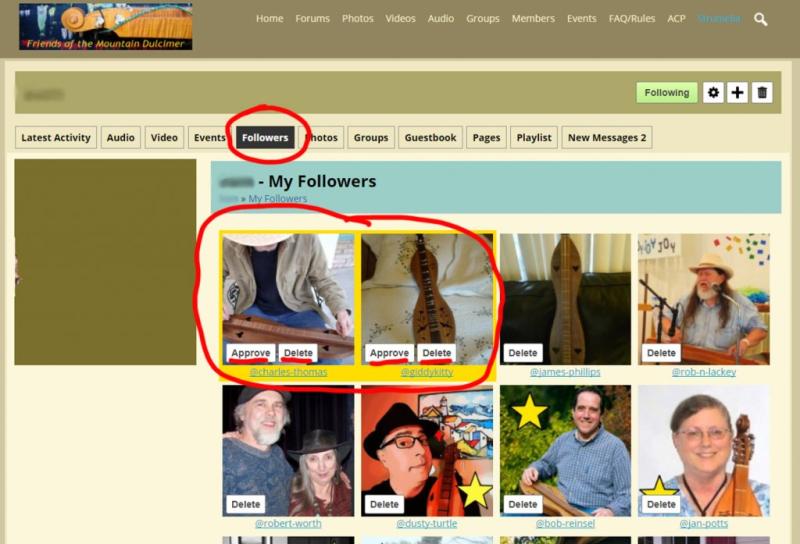
2) The other easy way to check for any Pending followers is to HOVER your mouse over your NAME at the top right corner of the site (when you are logged in) and you'll see a dropdown menu appear. In the menu is a link to "Pending Followers", with a number after it indicating if you have any. Click there to approve any pending ones.
Ok, so....
Once you've updated your Followers list so no Followers have been left hanging, you can check how you have your site notifications set for you account. For example, you can set your account to just automatically approve any new follower!
To check your settings for this, click on the Gear picture icon in your profile page ...there you will see three TABS: Profile, Account, and Notifications. --> Under the Profile TAb, there's a little checkbox that says: " Keep Followers Pending Until My Approval" . Make sure that checkbox is UNCHECKED if you want people to be able to freely become a follower of yours without needing or waiting for your approval.
--> While you are there in your Settings... under your Notifications TAB, you can use the drop down menu to set it to send you a notification for various site events... like when you get someone requesting that their Follow of you be approved... or when someone makes a comment on one of your videos or photos, etc.
Please take a couple minutes to go over your profile/account settings.. it greatly effects how you experience the site, and makes things easier for everyone!
Thanks so much! 
updated by @strumelia: 02/25/18 04:41:02PM
Bridge for key change?
General mountain dulcimer or music discussions
Maybe this helps? http://www.secretsofsongwriting.com/2010/05/18/3-smooth-ways-to-change-key/
What I'm getting from it, essentially, is the chord sequence C G Am C7 F
Although to my ears it sounds fine to play the tune in C, strum the C chord for a measure, strum an F chord for a measure, and then start playing the tune in F. The C and F chords are common to both keys.
Bridge for key change?
General mountain dulcimer or music discussions
Key changes need a bridge to transition and Robin Thompson suggested I take this out of "What Are You Working On?" and start it's own discussion. I could try this in Music Theory, but am interested in how to do this and, maybe, others have wanted to do key changes in a song.
Yesterday I asked:
I am currently trying to develop When the Saints Go Marching In. I am using Ionian tuning and want to go from the key of C to the key of F. Might anybody be able to suggest a bridge?
Hindman Dulcimer Homecoming
General mountain dulcimer or music discussions
I just received information on registration for the 2018 Hindman Dulcimer Homecoming. Here is the link: https://www.hindmansettlement.org/programs/cultural-heritage-programs/dulcimer-homecoming/ This is the first year that the homecoming will be under the direction of the Hindman Settlement School rather than the Appalachian Artisan Center. I am registered and look forward to seeing other mountain dulcimer enthusiasts there.
Ken
"The dulcimer sings a sweet song."
updated by @ken-longfield: 10/27/19 12:02:25PM

My "New" Folkcraft
General mountain dulcimer or music discussions
Congratulations! My very first dulcimer was an all-walnut Folkcraft and I loved it. In fact, I regret selling it.
Enjoy!
My "New" Folkcraft
General mountain dulcimer or music discussions
Nice, I'm partial to walnut instruments. Enjoy.
Ken
"The dulcimer sings a sweet song."
My "New" Folkcraft
General mountain dulcimer or music discussions
I really like teardrops. Enjoy that neat old Folkcraft! Nice photos, too.
My "New" Folkcraft
General mountain dulcimer or music discussions
Congratulations on your new (31-year-old) baby!

My "New" Folkcraft
General mountain dulcimer or music discussions
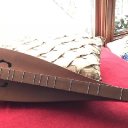
I love my Sweetwood's Student and it's great, I'd never sell it, but felt it was time to get another. That time was now. I have been looking for many months and well...It's far from new. It'll be 31 years old on the 31st of this month and it isn't flashy, but neither am I. Couple of marks here and there, but so do I. Builds character I'll say. I hope I made a good choice, I think I did with this Vintage Folkcraft TCH 725. It was built while they were in CT. It does have the 4th string pin missing, but I play with 3 strings, may or may not get a replacement. Just had to share. Ya know how it is. Happy Holiday's to all!
updated by @hd-luers: 12/10/17 12:12:53AM