
Forum Activity for @dusty

Dusty Turtle
@dusty
05/05/13 05:13:36AM
1,848 posts

Are There More Than Ever?


General mountain dulcimer or music discussions

I am not sure how to respond to this interesting conversation except as an outsider. I have only been playing the dulcimer for about 4 years. I have only attended two festivals, both on the west coast. I cannot attest to how things have been changing in the dulcimer community, but I do share the general observation that dulcimer players are increasing in number and so are dulcimer festivals. Stephen's observation is merely that even if it is true that a majority of workshops center on chording, DAd tuning and playing by tab, there is more available on other styles of play than there was in the past. That seems like an accurate observation.

Later this month I will be attending a dulcimer festival offered for the first time. There are 9 workshops in total, about 1/3 devoted solely to beginners. Of the other 6, one is devoted to noter technique, one solely to DAC, and one to a variety of tunings for fiddle tunes. There are only two devoted to modern chord style play in DAd tunings for intermediate or advanced players. My guess is that nearly everyone attending will find too little for their particular interests. But to the credit of the organizers, there is quite a variety for the choosing.

But this festival symbolizes the problem. There are only so many workshops that can be scheduled and perhaps only at the massive festivals like Dulcimerville is it possible to schedule enough workshops on a sufficient variety of playing techniques to satisfy everyone. Stephen's own work is another example. While some traditionalists see his work as a quintessential example of modern chord style playing in DAd, others of us complain that the Join the Jam tunes are allpresented in a drone style, with the melody played solely (or mostly) on the melody string. You just can't please everyone.

But what I fail to understand is why people think these different ways of playing the dulcimer are mutually exclusive. I consider myself a modern chord style player because I fret across all the strings. But to some people, much of what I do is not chord/melody but flatpicking. And sometimes I fingerpick, when the song or arrangement warrants that technique. Recently I began trying to play an old Shaker hymn and I decided the best way to do it would be out of a DAA tuning, perhaps even (gasp) with a noter. Having attended the Redwood Dulcimer Day in Santa Cruz, I've learned from some of the originators of the West Coast style of play. But what I've learned from them is how to play traditional French waltzes, laudas from the Italian Renaissance, and songs of freedom from South Africa. In the same way that playing the mandolin made me a better guitar player, studying different styles of dulcimer playing makes us better at whatever it is we choose to specialize in.

What I find bothersome is the refusal of some dulcimer players to attend a workshop that does not address the specific style of play they prefer. This kind of ghetto-izing can only stifle our development as musicians. Robin Clark, who is active here and a wonderful noter/drone player, occasionally posts renditions of songs in a chord style, and even in one of his droning tunes, he refers to the move to the IV chord in one part of the melody. His understanding of chords does not hinder but rather enhances his ability to perform as a noter/drone player.

But now for my personal complaint: I hate tablature. Yes, I use it, almost daily, to get the general sense of a song or to navigate a particularly difficult section of a tune, but I cannot read tablature fast enough to play along at a workshop. If you play a verse or two, however, I'll catchup. I have to feel a song before I can play it. At the Dulcimer School I've posted a lot of practice videos, and I appreciate Stephen's feedback. But truth be told, I learn from the videos or audio tracks, not the tablature. I don't even look at most of the tablature. My prediction is that tablature will die out as audio and video recording becomes easier and easier. It used to be that the only "take-away" from a workshop would be a piece of paper with the music written on it. And since we are folk musicians suspicious of fancy learnin', we refuse to learnSMN, so we use tablature. But everyone has a phone now that can capture a workshop leader playing a song. Everyone can record themselves on their webcams and share their work with the world on YouTube or here at FOTMD. I find it tedious to have an instructor lead us measure by measure through a piece of tablature that was not made available prior to a festival. If the tab is helpful, distribute it beforehand. But when we get together, let'splay. If I have to sit out the first verse or two while I get the hang of a piece, so be it.

Maybe, here on the West Coast, I don't have the luxury of complaining ofa First World problem. I am so grateful if someone who plays the dulcimer and has something to teach me is within a few hundred miles, that I don't care what tuning they are using, whether they fretwith fingers or a noter, or whether they hold a quill, a pick, or nothing in their right hand. I am grateful to have them near and want to learn what they have to share.

Ken Longfield
@ken-longfield
05/04/13 05:20:08PM
1,337 posts

Are There More Than Ever?


General mountain dulcimer or music discussions

When I frist started attending dulcimer festivals in the late 1980s,I found that I was looked down upon as I played only in DAA. That is the tuning I learned in and did not know there was another popular tuning. I quickly adjusted to DAd to fit in, but still found myself doing DAA at home. I also played with a noter and that, too, was looked down upon at that time.

A friend of mine who put out a very good book for MD did so in DAA. He received nothing but criticism for doing so. He couldn't sell the book until he finally changed it over to DAd.

I am encouraged by the numbers of people now working on noter/drone style and tunings other than DAd.

As to the West Coast style I find more West Coast folks traveling to East Coast(and mid-continent)festivals and more East Coast people traveling to West Coast festivals. I think some of this is because we are reaching the age of retirement and are not restricted to doing festivals close to home because we have to be at work on Friday or Monday. I think this also applies to the reason we do not see large groups of young people at festivals; they need to be in school on Friday and Monday. Even the summer festivals are difficult for young people who need to work or are required to attend sports or other camps.

I do think festivals are opening up more to the branches.

Rob N Lackey
@rob-n-lackey
05/04/13 05:10:54PM
420 posts

Are There More Than Ever?


General mountain dulcimer or music discussions

I, too, think you've hit the proverbial nail right square on the head, Stephen. You have a lot more experience with workshops/festivals than I do; I've only been attending them for about 2 years now. You see what's happening and what other players are doing with the instrument. There does seem to be a marked increase in noter players. I think you're right: there are more players in general, so there are more in every style. In this area, the players who have been playing a while all play DAA (with the fingers not a noter.) Many of them have their tab memorized, but ear playing isn't done too much. That I use DGd along with DAd and other tunings is strange to most of them. They play on the bass string if they need to play in the key of G. That's what they were taught, and they see no reason to go beyond it. However we know DAA tuning is not for sissies if you want to go beyond into chords a al John Blosser. I've been told he was criticized by the DAd folks for not using the "accepted" tuning.

Jerry Rockwell gave a workshop at Ft New Salem, WV, last year, on fingerpicking with the noter. I attended and it was great. Am I going to go exclusively noter/drone, probably not. Do I have noter songs/tunes in my repertoire, I do.

Now here's a question for you. Can you teach playing by ear, particularly in a 1 hour workshop? I've got a good ear (no brag; just fact (you're probably too young to remember that from tv)) and taught in adult education for 10 years but I don't think I could teach playing by ear in that short a time.

Well, we're all playing our music and, hopefully, we're all happy with it. I hope you'll continue to muse on this subject and if you have other thoughts you'll share them.

James Phillips
@james-phillips
05/04/13 05:02:23PM
87 posts

Are There More Than Ever?


General mountain dulcimer or music discussions

I respect whatever is being taught, but maybe the reason for not a lot of variety in the way of the workshops is maybe there isn't enough demand for it to justify it. Lisa, I understand where you are coming from, but if that's what the people want, give it to them, or maybe the festival and workshop organizers need to hear from people to get some demand for other then DAd workshops. The only way for any kind of change, of any sort, is to say something. You don't accomplish anything without speaking up to the right people. Just my two cents worth for whatever it is worth.

Strumelia
@strumelia
05/04/13 02:35:20PM
2,403 posts

Are There More Than Ever?


General mountain dulcimer or music discussions

I totally agree with everything you've said here, Stephen.

More dulcimer players of all types now- and the proportion of noter and quill and diatonic and chromatic/blues/rock and Galax and box dulcimer and mixed instrument jam skills and traditional and singing and WestCoast and DAA and by-ear players is getting bigger. I do think that festivals/workshops/clubs/learningmaterials need to take stock and get with the new changes...they are really lagging behind, stuck in focusing too much on same-old-same-old chord/DAD/flatpicking/tab-book, especially festival workshop offerings which seem to repeat the same subjects over and over. Shake it up already! Not everyone is ready for the nursing home, and senior players too are eager and able to learn some new things and have a hoot trying!

Stephen you are skilled and passionate enough to set an example for many.

As soon as I began to focus on noter style playing, even as a relative beginner to the style, I stopped going to festivals, dulcimer music camps, and workshops, and I stopped buying newer instructional material- simply -because there just wasn't much being offered for me. If festivals offer 90% of their courses aimed at chording/DAD players (whether flatpicked or fingerpicked), then those are the players who will find it worthwhile to go to that festival...others will tend to stay away rather than invest the time and money in attending.

The above-mentioned focuses are no longer 'novelties' that only merit a 5 minute passing mention in workshops. Many more people of all ages and all levels are serious about pursuing such focuses in depth now. This was not the case even as recently as 5 or 6 years ago.

Patty from Virginia
@patty-from-virginia
05/04/13 12:23:21PM
231 posts

Are There More Than Ever?


General mountain dulcimer or music discussions

I would like to see more workshops and music books with noter drone and no half frets. I like that old time style.

Stephen Seifert
@stephen-seifert
05/04/13 12:16:21PM
22 posts

Are There More Than Ever?


General mountain dulcimer or music discussions

I've been wondering about something lately and I'm not sure what the truth is. Here's some groups that sometimes feel underrepresented in the dulcimer world at events and in materials:

  • Pure Diatonic (no half-frets)
  • Noter/Drone
  • Galax
  • DAA
  • West Coast
  • Non-Tablature/Play By-Ear
  • etc.

Is it possible, contrary to what some might perceive, there are more of these types of players than at any other time in history? I certainly think it's possible there's more dulcimer players in general than ever before.

I recently heard someone bemoaning there just aren't as many non-tablature/by-ear folks as there used to be. They talked about how all the clubs seem to be more standardized and tablature based. I suggested to him there are not only more tablature players than ever, but also more non-tablature/by-ear folks than ever.

It looks like if someone's into noter/drone, there's more resources and possible playing partners than ever before. Same seems true for folks that are into chromatic. I understand it's hard to find workshops for either at most events BUT I'm also seeing way more noter and chromatic folks at events compared to 15 years ago.

The mainstream is strong but the branches seem to be doing encouragingly well. Being all down about the lack of West Coast style players seems like a first world problem along the lines of, " My 5 dollar latte came with one shot of espresso instead of the two I asked for!" I'm basically suggesting we've got it better than we've ever had it no matter what you're into. I realize there's exceptions but do see what I mean?


updated by @stephen-seifert: 02/09/25 09:03:05PM
Dave Ismay
@dave-ismay
04/27/13 07:15:05AM
25 posts


We are fans of that rubberised netting for making rugs non slip on smooth floors.

Works on knees and polished tables etc.

Rob N Lackey
@rob-n-lackey
04/23/13 08:21:50PM
420 posts


No waist or knee strap for me. Although I do use a shoulder strap sometimes.

Rob

Robin Clark
@robin-clark
04/23/13 02:54:24AM
239 posts


It does depend on the dulcimer I am using and the style of play I'm adopting and where I am sitting.

For a lot of my own traditional style playing I do not use a strap. My Ed Thomas and Prichard copies have painted backs that are quite non slip. Also, when playing noter drone I use an in-strum lead which is less prone to move the dulcimer.

On my slippery dulcimers and particularly when either playing chord melody using an out-strum lead, or for playing at sessions where I have to sit on whatever heightchair or bench is available, then I use a strap. I have used both the waist and knee strap. I don't think that there is any doubt that the knee strap is more ridgid and offers better control but it is not always practical (for women wearing skirts for example).I have a knee strap on both my McSpadden possum board and my Galax dulcimers as they tend to be the instruments I take to sessions andI really need to lock them down whilst sitting on God's knows what !!!!!

I have also used non slipknee pads as a halfway house. They are very useful when running teaching workshops as I'm often moving around the group and swaping dulcimers with the participants - and so need to pick up and put down dulcimers continuosly (a pain when using a strap!!!!).

Ken Hulme
@ken-hulme
04/22/13 09:55:13PM
2,157 posts


Wouldn't use a strap if you paid me. I use a wide leg seated stance, with the 1st fret over my left knee and the little finger of my right hand to move the tail end into my waist as needed.

Ken Longfield
@ken-longfield
04/22/13 03:05:27PM
1,337 posts


I use a strap around my waist when I use a strap. If I am my regular dulcimer chair my thighs are parallel to the ground and I do not need a strap. I sometimes use a little piece of the stuff used to hold carpets in place putting a piece on each thigh and the dulcimer on top of that.

folkfan
@folkfan
04/22/13 02:24:47PM
357 posts


I use a possum board when sitting down to play and a keyboard X stand if I'm standing.

john p
@john-p
04/21/13 08:46:09PM
173 posts


Follow folkfan's suggestion and go to Google Images, then use the keyword 'silhouette' in your search - silhouette birds, silhouette animals, etc.

john

folkfan
@folkfan
04/21/13 08:11:14PM
357 posts


You might try googling an image for an idea. Do you have any skill at simple outline drawing. For example, I drew a horse's head for my unicorn and transferred it over to my soundboard wood with basic carbon type paper. Cut out the excess center wood with a drill and then filed the rest of the head out. The horn, beard, and mane were wood burned.

There are all sorts of shapes that make good sound holes. What might interest you?


updated by @folkfan: 02/16/16 12:29:28AM
Jan Potts
@jan-potts
05/05/13 02:37:20AM
402 posts

Why So Much American Southern Rural Fiddle Type Music in Dulcimer Jams?


General mountain dulcimer or music discussions

Interesting discussion on what people want to play when they get together to jam. Some of the songs I like were on the radio 40-50 years ago--Puff the Magic Dragon and Today (while the blossoms still cling to the vine) come to mind readily. There are a few Beatles tunes I wouldn't mind learning to play on the dulcimer (Yesterday would be one), but then that's pretty old, too. And, heck, I LIKE the songs from the 1800's and the early 1900's...the songs we sang around the campfire in Scouts and with our families. Then, of course, there are the old hymns....many of them good rousing campmeeting tunes, fun to sing AND play. There are so many of these types of songs to learn, that I don't even think about learning something you might be hearing on the radio these days....just my take on things.......

Ken Hulme
@ken-hulme
04/30/13 08:19:50AM
2,157 posts

Why So Much American Southern Rural Fiddle Type Music in Dulcimer Jams?


General mountain dulcimer or music discussions

Raul - I know what you mean about bluegrass nazis!. I once had a huge argument with the organizers of a bluegrass festival who advertised an Open Instrument competition and then wouldn't let me play dulcimer because it wasn't a "Blue grass Instrument". I argued that their music wasn't bluegrass because it wasn't being played in "the Bluegrass" region of Kentucky (this was in Arizona) and that in three days I hadn't heard anyone play a negro spiritual, white spiritual or transplanted Scots-Irish ballad (the roots of bluegrass). They finally let me compete, and I came in second out of 20 or so guitars, mandos and banjos...

Robin Clark
@robin-clark
04/30/13 04:40:37AM
239 posts

Why So Much American Southern Rural Fiddle Type Music in Dulcimer Jams?


General mountain dulcimer or music discussions

I can understand that Raul - I prefer old time to bluegrass sessions myself on dulcimer (although I am the dobro player in a local bluegrass band!!!!)

I converted a standard dulcimer to Galax tuning and used that for about 6 months at sessions before deciding to buy a Galax instrument. I just put 4 x 0.010 strings equidistant on a TK O'Brian dulcimer thatI had. It gave me the opportunity to try out the tuning and playing style with quills and noter before I took the plunge and spent some money. Ihave a couple of Galax dulcimers now. I find that I rarely play them at home, just a little practice time to keep on top of the technique which is quite difficult. I prefer to pick up one of my more standard dulcimers when playing for myself. However, I always have a Galax in my bag for session.It is something that I've heard Phyllis Gaskins say about the instrument as well - once you getanother instrument in the mix with the Galax it really comes to life. They are very distinctive and classic played solo but they also have this other life of driving the rhythm within an old time mix. When I get the chance, one of my favourite playing situations with aGalax is to play for a clog dancer and have their feet as the second instrument

Raul Blacksten said:

We have the "bluegrass nazi" out here and he has influenced way too many people. Besides, bluegrass is the only genre of music that I know of that has rules as to what kind of instruments are acceptable. Me, I'm not a big bluegrass fan. I much prefer old time and traditional music. As to the Galax, I have wanted one for some time, but they are rare in SoCal.

folkfan
@folkfan
04/29/13 02:11:15PM
357 posts

Why So Much American Southern Rural Fiddle Type Music in Dulcimer Jams?


General mountain dulcimer or music discussions

Raul, It sounds like you've been to a fairly rigid Bluegrass jam. You might want to try a find a more inclusive group of players if you enjoy Bluegrass. I was welcomed into a group of bluegrass players jamming at a local community center. I stood outside the circle and held up my spoons and my shaker egg. The leader gave me a smile and a nod so I joined in. And spoons and shaker eggs aren't traditionally used for bluegrass.

I found this an interesting set of rules and regs. for a bluegrass jam.

http://www.s-w-b-a.com/pickerscorner_docs/etiquette.htm

Robin Clark
@robin-clark
04/29/13 12:51:37PM
239 posts

Why So Much American Southern Rural Fiddle Type Music in Dulcimer Jams?


General mountain dulcimer or music discussions

Try a Galax dulcimer with noter and quill at a Bluegrass jam Raul. The instrument sits in its own 'space' in the mix providing 'high hat' rhythm, and you'll also get chucked the odd lead break once the crowd gets to know you

Ken Longfield
@ken-longfield
04/22/13 03:01:32PM
1,337 posts

Why So Much American Southern Rural Fiddle Type Music in Dulcimer Jams?


General mountain dulcimer or music discussions

To reply to Folkfan's question, I came to this music before getting a dulcimer. As a young person I was involved in a weekly square dance group. I want to learn more about the music which led to an interest in folk music in general. It was wanting to play dance music that I became involved in playing guitar, then banjo and eventually the mountain dulcimer.

folkfan
@folkfan
04/22/13 02:19:58PM
357 posts

Why So Much American Southern Rural Fiddle Type Music in Dulcimer Jams?


General mountain dulcimer or music discussions

This has been an interesting discussion and I have to say that it has gotten me thinking. As I've said in the past, I'm a hobbyist when it comes to playing the dulcimer and I don't jam, so I can't add much to the discussion as to why fiddle tunes are so important in the general music that is played on the dulcimer. Having been to a number of festivals, and heard many a jam, I can agree that they do seem to be a large part of the the jam repertorie along with hymns such as I'll Fly Away, and Will the Circle Be Unbroken.

I'm sort of interested in questioning as to how many people came to be playing this music before or after getting a dulcimer? Do they play it because they truly love it as Robin does, or play it because it seems to be the only way to participate in clubs and jams, or are there others (like me) who simply don't bother trying to learn the music since there are so many other songs and so little time to learn????? Recently, these are the sort of questions that have been popping into my head as I've been reading this thread and others.

Robin Clark
@robin-clark
04/22/13 05:42:07AM
239 posts

Why So Much American Southern Rural Fiddle Type Music in Dulcimer Jams?


General mountain dulcimer or music discussions

Thanks Stephen and every one else for your comments.

I think that I have slightly miss-represented myself in my earlier posts. I would far prefer to play old fiddle tunes knee to knee with you Stephen than play the Beatles!!! I am just really interested why these tunes have found such longevity with the dulcimer. When I sit down to play banjo, mandolin, guitar or dulcimer, as I did yesterday, it is the old fiddle tunes that I'm drawn to.

I think that your insight Stephen into the fact that these type of old tunes are melody centered probably has a lot to do with their popularity among dulcmr players. In fact, that was just the sort of insight I was searching for when I asked my original question.

The 'play TUNES or PLAY tunes' allegory is actually a little in balance for me. In many contexts the tunes themselves are as important (play TUNES) as the playing (PLAY tunes). And itwas the Appalachian fiddletunes themselves that drew me to the dulcimer; in that I discovered old time fiddle tunes BEFORE I discovered the dulcimer. So in my case it was the tunes that led me to the instrument rather than the instrument's teaching materialleading me to the tunes. A lot of the sessions I attend are TUNE centered - for example they will be billed as an 'old time' session of 'Welsh tune session' etc so there is an expectation that not 'everything goes'. The TUNES are the focus and the hub of the wheel around which the players dance. The love of the tunes and the love of playing are intertwined, and it does matter WHAT you play as much as HOW you play it. There is a social context and connectivity, a tribe, that gels the participants. The Beatles or Aerosmith are not played at a Welsh tune session or old time sessionbecause in that context and moment in time it is notthe tribe'smusic. In some respects I think that there is an element of this tribalism amongst us dulcimer players regarding our repertoir. Now there is absolutely nothing wrong with that at all - it is just something we should notice about ourselves.

I enjoy playing a variety of music on the dulcimer but always return to Appalachian tunes and also folk tunes from other countries that have a 'fit' to the instrument. I love the tunes possibly more than I love the dulcimer, in that I will sit down and pick out the tunes on pretty much whatever instrument I have in my hands at the time. What I love about the dulcimer, particularly old style noter drone playing, is that it plays the tunes so well- with just the perfect timbre and feel I love to hear.

So thank you again for your insights. I felt it was a question worth posing just to generate a debate on why the Appalachian repertoir is still so interlinked with the instrument despite playing styles and players exposure to different music genera having moved on so far since the 1960s. It is good to think these fundamental issues through once in a while

Paul Certo
@paul-certo
04/21/13 01:10:47AM
242 posts

Why So Much American Southern Rural Fiddle Type Music in Dulcimer Jams?


General mountain dulcimer or music discussions

A big part of it is the books & tabs available tend to use public domain tunes. Copyright issues are not going away, so we have to live with that. When True Colors becomes public domain, it will be as outdated as Old Joe Clark is now. Another issue tied to this is limited sales. A lot of younger people may want guitar tabs for Cold Play songs, but there are way more young guitarists than young dulcimer players. Look around at dulcimer workshops, and see how the demographic shakes out. When I was in my 50's, I was still one of the younger people at dulcimer festivals. I'm not in my 50's any more, but how many teens and 20's do we see at dulcimer festivals? A publisher looks at how many copies they can reasonably expect to sell, and decides what books to put money into. If they see that certain books sell, and others don't, they look for more similar to the ones that sold well. If much of what sold was public domain, the publisher is going with more of the same. That's how the whole music biz works. That's why so many dulcimer recordings and books are self-published. But there still needs to be enough profit to make it worth while for the author. I don't write books, maybe someone who does can chime in here. I don't see myself spending my limited time listening to, and learning to play, songs I don't care for. Not for the purpose of writing a book, paying royalties, and hoping someone buys enough copies to allow me to make a profit. Life is too short to learn music I don't like, I don't have enough time to learn all the songs I do like.

Couple this with the twists & turns so much popular music uses.Going from one song to the next could easily require a new tuning. The club I was in refused to try new tunings. This is the main reason Old Time and Bluegrass jams are usually separate. We OT banjo players use multiple tunings, and tend to stay away from chord based playing. We stay in one key for a while, then agree on a new key for the next batch of songs. Bluegrass banjo players play chord-based music almost always using the G tuning, even when the key is C, D, or A, Bb, etc. They think nothing of changing keys at the drop of a hat, and the OT banjo player who tries to keep up is tuning while the other musicians are playing.

I tend to stay up late at festivals, because after the jams get somewhat sparse, those who like to sing do some really wonderful things. You can't sing over 24 dulcimers, 6 banjos, 4 mandolins and 11 guitars at a jam. But when a certain amount of the people have gone to bed, great fun is had by the half dozen who are still awake. That's when those other songs start to come out. I'll sit out the heavy metal dulcimer songs, the heavy metal guy will probably sit out my Hawaiian songs. We may all sit out the songs we don't know, and allow one or two players to entertain us with Mozart, or Cole Porter. If I think I can fill in some chords, I may try. If I think I'm messing it up, I will probably drop out and listen.

For the purpose of Stephens lessons, I think the basics are in order. For advanced lessons, branching out could be good, but royalties and demand are going to dictate to at least some extent. That certainly doesn't stop us from exploring other music on our own. As I see it, the ultimate goal of a teacher is obsolescence. The teacher should strive for the day the student can take over teaching themselves what they want to learn. A good foundation in the basics is crucial for this to happen.

Paul

Scott Collier
@scott-collier
04/20/13 08:24:45PM
14 posts

Why So Much American Southern Rural Fiddle Type Music in Dulcimer Jams?


General mountain dulcimer or music discussions

I think you answered your own post with this paragraph:

So, why these tunes? I do think they fit really well on the instrument. In the long run, they're easier to transmit and execute than some other types. They're also great for traditional dancing and what it requires. The notes are just enough to keep folks busy and happy. The feel is just right.

They just are the "right type" of songs that fit I guess. Everyone seems to know a lot of them and it's just easier to go to them in a jam. IMHO

Rob N Lackey
@rob-n-lackey
04/20/13 02:52:00PM
420 posts

Why So Much American Southern Rural Fiddle Type Music in Dulcimer Jams?


General mountain dulcimer or music discussions

Stephen, interesting observations. I came to the dulcimer after years of playing country/folk/blues/jazz/classical guitar. I can't limit myself to any one genre of music either. I also had no other dulcimer players to influence me, except on recordings. Until 2011, I had taken one afternoon workshop with Leo Kretzner in 1989 (I think.) I wasn't interested in playing a lot of the things I heard on the available recordings. I changed tunings a lot and figured things out by ear to play what felt "right" to me. No one said, "you have to play in [pick a tuning]" or "you have to play [insert overplayed jam tune here.]" So now I've come to WV and am associating with other dulcimer players and jamming with them instead of just being a solo artist. 'Til recently, the dulcimer came out around St Paddy's Day for coffeehouse gigs and back in the back for another year. I didn't know many of the common "jam" tunes. I'm learning them and having a blast doing it. Sure it's sometimes the same tunes every jam, but that's ok, I need the repetition to learn 'em. Sure, I want to call out "59th Street Bridge Song," but I don't. Come on to WV and I'll cook up a big bowl of grits and make some red-eye gravy and if we can move afterward maybe we can find something we can pick around on as well.

On a more serious note, sorry to have missed you at Laura Elder's Spring Fling in Lancaster OH. Just couldn't make it. Hope you'll be close again!

Stephen Seifert
@stephen-seifert
04/20/13 12:23:25PM
22 posts

Why So Much American Southern Rural Fiddle Type Music in Dulcimer Jams?


General mountain dulcimer or music discussions

Starting a new thread as was recommended: (The original discussion centered on 8 jam along videos .)

Robin Clark wrote:

"What intrigues me is why the dulcimer teaching repertoire is so regularly centred around old Appalachian tunes when there is such a wealth of contemporary music that would equally suit a contemporary dulcimer jam?"

and then,

"Wouldn't it be better to do tunes like this for Join the Jam on the contemporary mountain dulcimer, asthey arelikely to come up at a campfire jam?"

and,

"Shouldn't'True Colors'be an absolute contemporary dulcimer players 'standard' rather than 'Old Joe Clark'?"

First off, I haven't been able to dedicate myself to one kind of music. What works for me personally is focusing on a style, genre, or musician for 1 to 3 months at a time. I go through cycles. The holidays of November and December get me on Irish. When I'm stressed, I turn to jazz. Throughout the year, I pass through bluegrass, blues, electronic dance music, old-time, rock and roll, Indian, and others.

What I play in a Jam depends on the "campfire" and who's around it. I'm up for anything, but the jams I'm usually in include a bunch of dulcimer players who's shared body of knowledge and experience is, much more often than not, centered around pre-bluegrass Southern rural fiddle tunes or anything that's even a little like them.

When I get together with folks, I'm just not real focused on what style we're going to play. I'mobsessed, actually, with HOW we're playing. If I sit down knee to knee with another dulcimer player, I'm not there to play TUNES . I'm there to PLAY tunes. I'm looking for good vibes, clear communication, and creative risk-taking. It's really about community for me. The tunes are the vehicle for the expression. They're not the end goal.

So, why these tunes? I do think they fit really well on the instrument. In the long run, they're easier to transmit and execute than some other types. They're also great for traditional dancing and what it requires. The notes are just enough to keep folks busy and happy. The feel is just right.

A lot of music from the last 60 years has been more groove oriented as opposed to melodic. Take "Walk this Way" by Aerosmith, for example. It's one of my favorite songs but it's just too much about the rhythm to be the kind of material melodic jammers can embrace AS A WHOLE. There are exceptions.

Strongly melodic pop tunes over the last 100 years are often not rhythmically busy enough to work as dance music. I can play "Begin the Beguine" on the dulcimer but there's a certain density of notes that just doesn't fit the bill.

I'm not saying "Walk This Way" and "Begin the Beguine" aren't appropriate for the dulcimer or for a dulcimer jam. I AM saying they're less likely to show up because of the type of rhythm and melody they depend on. There won't likely be enough people who are prepared to play that kind of music.

Traditional type jamming tunes have certain features in common that lead to success with what we're going for. Consider tunes from the following traditions: Shetland, French hurdy gurdy, Irish pipes, German polkas, African singing and drumming, etc. In most cases, it's enough of the right stuff to keep it interesting and accessible and not too much of something else to ruin the communication and community. We're not talking about specialized show music; we're talking about group play along material that welcomes a wide range of abilities and levels of involvement.

There's also the fact, for me, that I had relatives who played Southern rural music. I also had relatives who came from the mountains of Tennessee and Kentucky. The old-time melodies we play makes me remember folks I knew as well as folks I never got to know. I'm sure I look fondly back on agrarian ways. I have a heart for the pioneering type and it's centered around the rural and rocky parts of what's considered the South. (Yes, I was born in Cincinnati but I love grits and red-eye gravy so back off!)I even blame Hee-Haw which I grew up with and loved.

Why are we playing old-time even though we're not playing old-time with folks at old-time festivals? Part of the reason is we have become our own thing. We play dulcimer music. Through time, we've found the right kind of material to keep us together long enough to laugh and enjoy the eating. These tunes fit the bill. You also have to realize our versions of these old-time tunes have been somewhat simplified to accommodate the limitations of our instrument. Our versions don't always mesh. (Also, quite often, as a whole, we're not as mature musically as the folks we want to sit in with. I know there are exceptions and I find them exciting and inspiring.)

Basically, I just want to get together with some friends and trance out to whatever kind of music will work. I didn't know any of these tunes when I started. I just wanted to join the jam. I was looking for friendship and a common goal. These Southern American tunes we favor fit the bill pretty well.I really don't care what we're playing as long as we can do it well together and feel good about it as and after it happens.

There ARE different kinds of jams. At Dulcimerville in Black Mountain, NC, you'll find all kinds of jams at night. You've got the Don Pedi old-time crowd. There's the standard dulcimer fiddle tune jam. You've got the bunch who likes to sing. There's a doo-wop jam. There's the away-from-the-dorms building where all the electric players are plugging in. There's all KINDS of jams to suit your interests but when we all get together in one big room, you're going to hear the common repertoire.

One last thing. You can't get around the copyright issues. For me to publish a book of modern tunes legally is one thing and it's possible. John Sackenheim and Tull Glazener have pulled it off, just to name a couple. Putting out a package that includes a book, a CD, and DVD video is a whole other level of complexity. I've gone to a couple attorneys about this in Nashville. One department handles print publishing. Another handles video. Since your audio CD has 15 versions of the same tune, you sure don't want to go through Harry Fox or you'll be paying 15 times the statutory rate. It's all got to be magnificently coordinated. Add digital distribution to the mix including custom websites and it's enough to make you want to stick with public domain. I sincerely hope things change in the next few years and I suspect they will. (Please someone tell me things have changed. I'd love to hear all about it in another forum or privately.)

That's enough rambling. Back to jamming. Robin, when you and I get together knee to knee, let's play some Beatles tunes. I'm all for it.


updated by @stephen-seifert: 08/02/23 03:23:11AM
Paul Certo
@paul-certo
04/21/13 01:24:15AM
242 posts


First try pushing the pegs into the holes more tightly. If this doesn't work, someone familiar with violin and related instruments can look at them and advise you on the peg dopes. There are 2 kinds of peg chemicals, one to help them move, and one to help them stay still. I don't know enough to know the product names, but ask for the one that "makes violin pegs stay still." If the pegs need replacing, the tools for fitting them to the instrument are a necessity. This means take it to someone who works on instruments of the violin family. Some guitar shops may have these tools, but not all will.

Paul

Dave Ismay
@dave-ismay
04/20/13 06:13:10AM
25 posts


Any decent music shop will supply Peg dope also called peg paste, peg stick, peg compound

Used by the fiddle fraternity for a century tuning pegs that are well fitted and properly doped will both turn smoothly and hold firmly

If your pegs are out of round grooved on the bearing etc Peg Dope will not be effective and you will need new pegs and a tapered ream to true the holes.

Good luck!

PS the old method was using talc and soap but avoid rosin incase it glues the pegs

Kevin Messenger
@kevin-messenger
04/10/13 07:21:02PM
85 posts


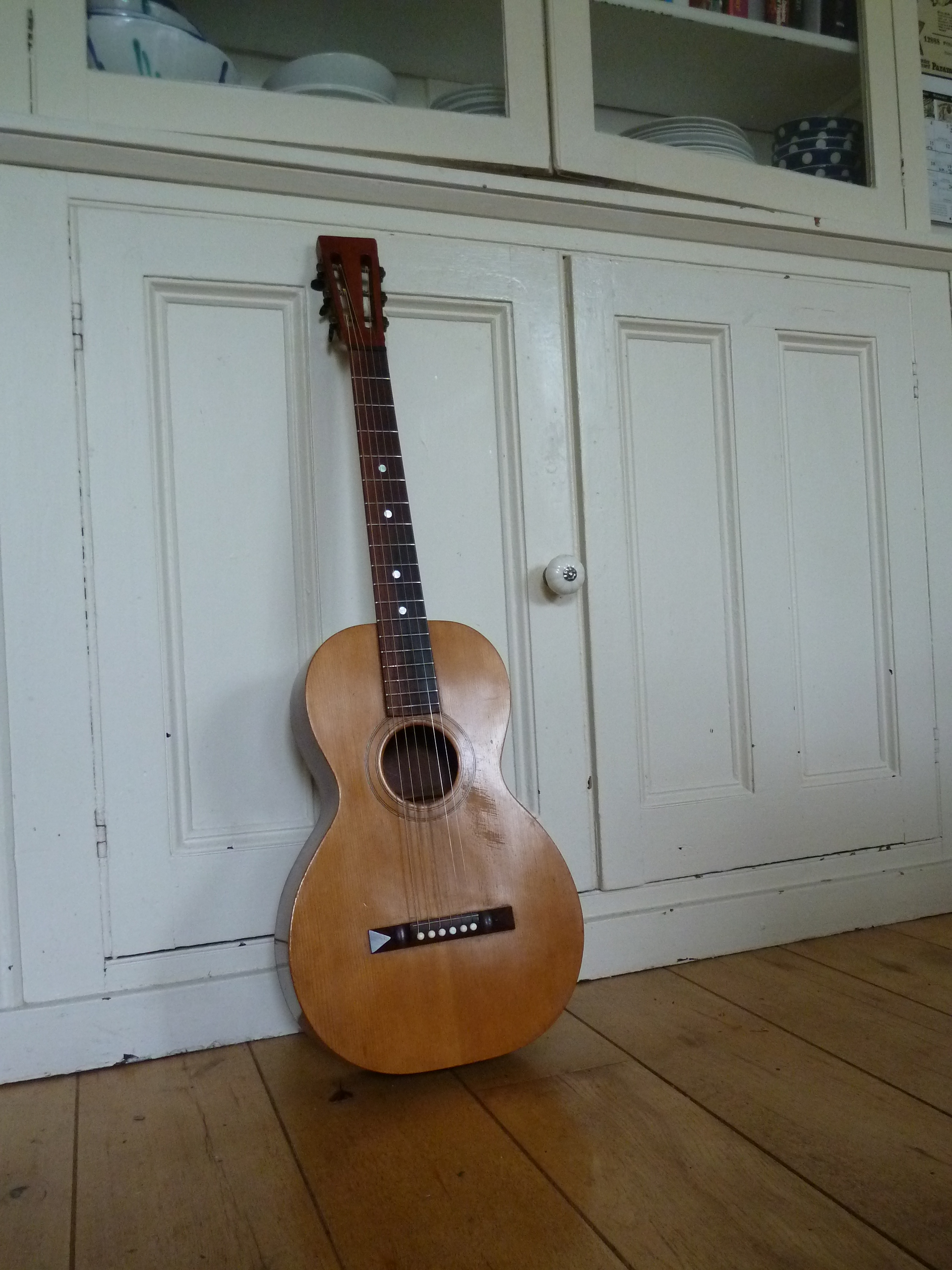
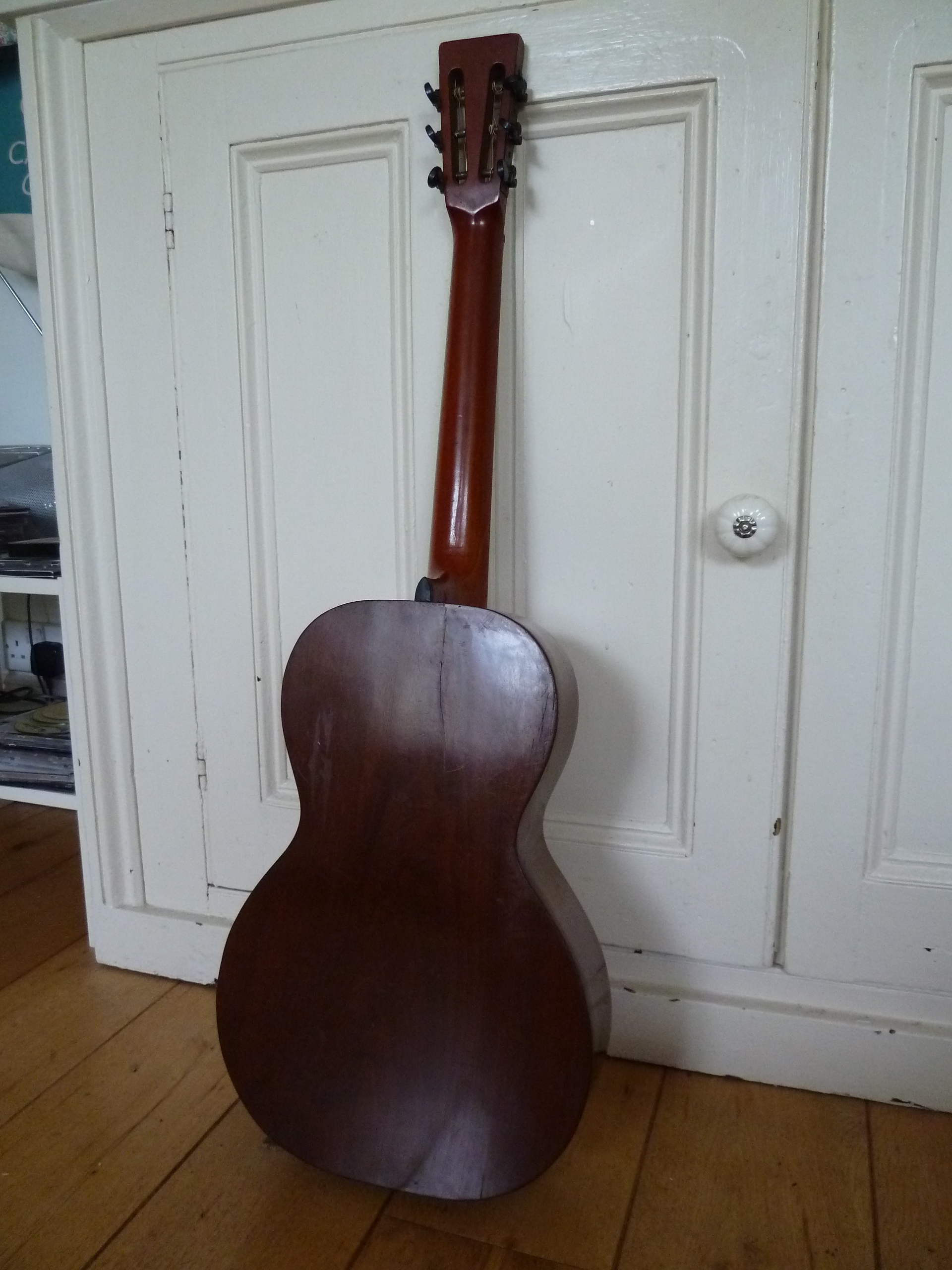
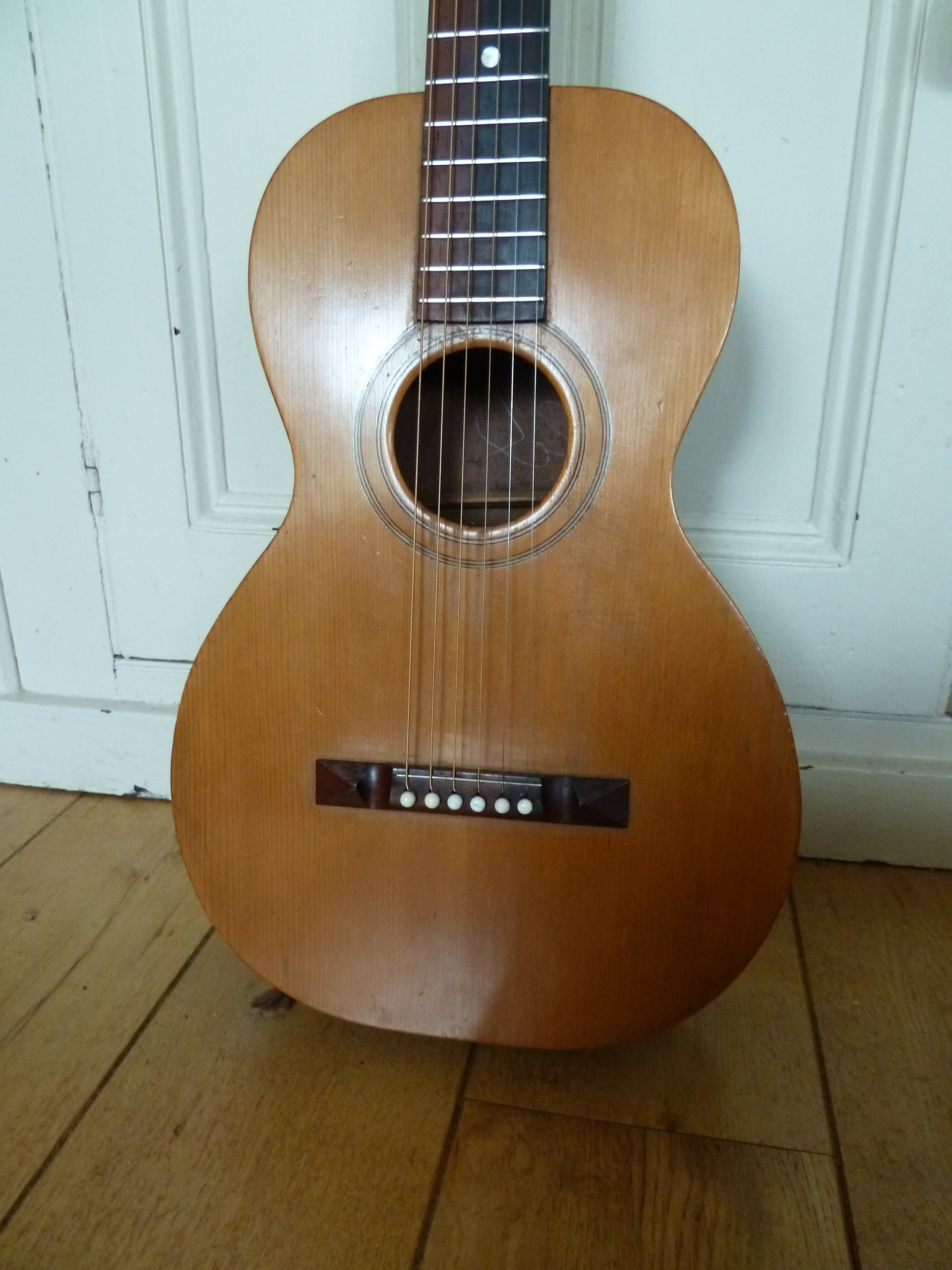
Lawrence, It looks to me like a Jethro Ambergy, a KY builder. Or a very nice copy of one. Everything ,but, the pegs look right. How about some measurements. Lower bout,upper bout ,waist ,body hieght and overall lengeth. Thanks Kevin.

Strumelia
@strumelia
04/10/13 05:35:57PM
2,403 posts


It reminds me a little of a Leonard or Clifford Glenn instrument, but the taper of the body near the peghead isn't quite the same.

It's a lovely dulcimer!

Ken Hulme
@ken-hulme
04/10/13 03:18:50PM
2,157 posts


Definately not a commercial instrument, although the builder was probably an experienced woodworker. it doesn't look like a first attempt. Older, probably, since it does not have a 6+ fret -- may date back to the 1960s or 70s. Whoever built it made the tuning peg holes too big, and too much of the shaft extends through the far side.

As Carrie said, look though the soundholes for any writing or a label.

Robin Thompson
@robin-thompson
04/08/13 08:40:02PM
1,553 posts

This Little Piggy (Sow model by Bobby Ratliff)


Instruments- discuss specific features, luthiers, instrument problems & questions

No surprise to me either that Bobby made you a gem, Ken! I plan to order one of his instruments later this year and, in the meantime, drool over those built for others.
Dusty Turtle
@dusty
04/08/13 07:34:23PM
1,848 posts

This Little Piggy (Sow model by Bobby Ratliff)


Instruments- discuss specific features, luthiers, instrument problems & questions

It's no surprise to me that Bobby makes such a remarkable instrument. Coming from you, Ken, this is high praise indeed.

Ken Hulme
@ken-hulme
04/08/13 04:19:03PM
2,157 posts

This Little Piggy (Sow model by Bobby Ratliff)


Instruments- discuss specific features, luthiers, instrument problems & questions

Just 15 minutes ago I unpacked the Sow model that Bobby Ratliff made for me, and I just had to force myself to make an initial report.

If you love traditional Noter & Drone style playing and sound, you REALLY want one of these! Shallow sides, narrow teardrop bout, mine is made from Holly wood, Butternut and Walnut. Light weight but solid feeling. His special finish is fabulous. Pictures were posted by Bobby last week.

This thing SINGS! Huge volume and high silvery soundfor such a small body. The narrow fretboard takes a minute or two to get accustomed to, but Bobby's string arangement makes it simple. There's the single Melody string, a wide-ish gap, and then what looks likea typical Melody couplet... but on the far side.The coupletis made up of the middle drone and the unwound bass string. Bobby set mine up for Gdd or Ggg tunings. Nice significantly large staple frets with a full width 3rd fret to facilitate tuning to 1-5-5. The full inch high fretboard makes keeping the instrument on your lap a snap with an occasionalin-flick of your right hand.

Ya done good, my friend. Many thanks!

Playing video will come soon, but don't hold your breath.


updated by @ken-hulme: 06/08/16 09:24:05PM
BethH
@beth-hansen
04/02/13 03:17:18PM
41 posts

My new ukulele


Adventures with 'other' instruments...

When I was waiting for my Autoharp to be made I kept having dreams that something like an autoharp would arrive on my doorstep complete with instruction book. Never an autoharp, but in my dream I could play it perfectly. Thanks for putting the uke/guitar hybrid into my brain, I wonder what my dreams will do with that little bit of info?

musicoutreach said:

Enjoy your uke! I recently purchased a Yamaha Guitalele - its a hybrid instrument that's a cross between a small classical guitar and a tenor ukulele. It has 6 nylon strings and I have it tuned in standard guitar tuning. The scale length is much more comfortable for me than a standard guitar and it gives me 2 extra strings which my baritone uke doesn't have. Another "odd" instrument for you to consider!!

Susanne

Dusty Turtle
@dusty
04/01/13 02:49:49PM
1,848 posts

My new ukulele


Adventures with 'other' instruments...

Congrats on the new instrument, Beth. I bought a Mahalo uke for my daughter for her birthday. It's painted pink!

BethH
@beth-hansen
04/01/13 01:23:18PM
41 posts

My new ukulele


Adventures with 'other' instruments...

I went into the store looking for a stick-on type of pick up for my dulcimer and walked out with a Mahalo Soprano Ukulele! I did not need another instrument, but she's totally won my heart and a whole new world of happy times are before me. If only I wasn't 20 year to retirement...when will I have time?! I already play the mountaindulcimer, autoharp, and Finnish kantele. I'm officially a collector of odd instruments.I've done well keeping it to Zithers, but this little thing was too cute not to take home.


updated by @beth-hansen: 08/03/23 03:37:49PM
Ken Hulme
@ken-hulme
04/01/13 02:48:06PM
2,157 posts


Strings will break going up or down. It's possible a slight kink developed somehow.

Not to be picky, but are you sure the string was vibrating when you turned the tuner knob? I've seen so many people break a string because they thought the tuner they were turning was the right one (NOT) and/or the direction they were going was the right one (NOT).

I recommend tuning only a string that is vibrating so that as you turn the knob a quarter turn you hear the tone change (regardless of what an electronic tuner might say). If the tone doesn't change, STOP as you're turning the wrong knob...

Answer to your basic question is that a .012 string will work for your VSL and what you want to do. Like Robin I make those changes all the time and seldom break a string (although it does happen).

  592