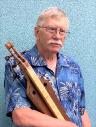

Replacing the Nut on a Homer Ledford
Instruments- discuss specific features, luthiers, instrument problems & questions
Maybe try a heat gun/hair dryer to warm up the glue on the ends? Sometimes that will soften the glue.
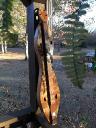
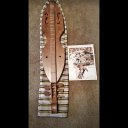
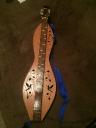
I just received a beautiful, basically mint Ledford that needs to have the Bone nut replaced. It appears that it has been firmly glued in place and does not want to budge. Any ideas on how to best go about removing it?
I have just bought a new dulcimer on eBay which was built by Nick Odell of Wisbech, Cambridgeshire, Engand. It has a very short scale length, just under 23", nicely built but the finish is not great. It has no 6 + half fret. Nick was Marc Bolan's guitar tech and a repair label signed by him and dated July 1972 was used as provenence for a Gibson Les Paul guitar which was supposed to have belonged to Marc. Odell posted a reply on a guitar query website about 12 years ago but nothing else online. I have been in contact with various Bolan websites but no-one has got back to me. So, does anyone know if Bolan ever used a dulcimer on recordings or may just have owned one? Has anyone ever seen a photograph? It is quite a distinctive looking instrumenta and would be easy to identify. Has anyone ever seen another Odell dulcimer?
I hope Lisa's blog is read. Her call for respect is needed.
Let's all play, whether by ear or in print, a chorus of Aretha Franklin's R-e-s-p-e-c-t.
The dulcimer produces such sweet music and it is versatile enough to be played in different ways.
I "amen" the appeal to respect others of our forum no matter their choice of playing style, use of TAB or SNM or memory. Let's just all have fun and enjoy the dulcimer in the way that appeals to us and allow others the same without disrespect related to their playing method or style.
I hope Lisa's blog is read. Her call for respect is needed. Possibly those trained classically are at a disadvantage because we have been trained to start with the written notation. It doesn't mean the end result must be mechanical.
Difficulty playing by ear also doesn't necessarily mean lack of trying. Ditto memorization. People have different learning styles and abilities.
Frankly one of the things I have enjoyed here is the understanding there are so many ways to play and enjoy the dulcimer.
I have loved awakening my ear in Ionian tuning. I still need the security blanket of music for moments of uncertainty. Mixolydian arrangements are beyond my ear at present other than snatches played repeatedly. Those arrangements go beyond what I used to do playing guitar by chord and various strums. Maybe some day I will be up to that, but right now I enjoy the freedom found playing my dulcimer.
Let's all play, whether by ear or in print, a chorus of Aretha Franklin's R-e-s-p-e-c-t.
Thank you all for answering my questions. This helps me out allot.
Hello to all. I'm Noah. Though I'm better known for my banjo playing and building on Banjo Hangout and YouTube (I've been playing for about ten years and building gourd and mountain style banjos for about five), I've had much interest in the mountain dulcimer. I started playing dulcimer in 2015 on the first one I made, after deciding that instead of buying one I could probably make a decent one, since I had about 20 banjos under my belt at the time. To date, I've made four. My first was a 4-string (double melody) walnut/cherry hourglass, and after playing it for some time and deciding what I liked/didn't like, I made my second, a 3-string walnut teardrop, which is the style I've favored the most and built since. I have a few pics of these on my profile.
I was aware that this site existed, but I completely forgot about it until stumbling upon it again and decided to join.
Links to my BHO profile and YouTube channel:
BHO: http://www.banjohangout.org/my/Noah+Cline
YouTube: https://www.youtube.com/channel/UC4zlsglpLMap5XSaUPaQ7QA?view_as=subscriber
If a total beginner is told to 'count your frets' then they'd likely be including both the 6 and the 6.5 fret when counting- thus thinking that the repeat octave is the C#. Most beginners don't yet know that they should count EITHER the 6 OR the 6.5 fret when 'counting frets'.. but not count both. I think it really helps to look at a picture:
Count your frets. Fret 7 is the repeat octave of the open strings. You show the C# [DB] as the 7th fret and D as the 8th fret. You included the C and the C#. One is for the D scale [C#] and one is for the G scale [C]. The 6+ fret allows playing a D scale, in DAd tuning, starting at the open string instead of the 3rd fret. This is because the frets are placed in a series of steps/half steps. Steps are the wide spaces. Half steps are the narrow spaces.
G scale = 3-4-5-6-7-8-9
D scale = 0-1-2-3-4-5-6+
I see from my friends here you have received all the help you need on this issue. Enjoy your dulcimer. Have fun playing it. Anymore questions, don't hesitate to ask.
Ken
"The dulcimer sings a sweet song."
I have it tuned to DAD. When I fret the melody strings closest to me they progress down the fretboard E, G flat, G, A, B C, D flat, D. Does that sound right to everyone. I am new to the dulcimer and want to learn how to play. I have attached a picture of my dulcimer if that will help.
It looks and sounds like your frets are fine.
I think people are making this more complicated than what you are asking and confused about.
The problem here is that on your D string the "G flat" note as you call it is more correctly called "F sharp"(F#). And what you are calling "D flat" is actually called "C sharp"(C#). The note half a step lower than G is usually called Fsharp, not G flat..though an F# & Gflat are both the same sounding note. Likewise, the note a half step lower than D is more commonly called Csharp, not Dflat... yet both are the same 'sounding' note. A glass of water which has water in it to the halfway (half fret) mark- is it called "half empty" (a 'flat' note) or called "half full"? (a 'sharp' note)- both describe the same amount of water (or the very same sounding note in this case).
It's easy to get this confused. Also think of a clock that's at 3:30. Is it 30 minutes past 3, OR is it 30 minutes to 4 ? One can think of the halfway point really in two different ways. So that note between C and D ...is it a C#, or a Dflat ? In the key of D it's called a C#, because the key of D is defined as having two sharps in it: a C# and an F#.... and no flats.
So, your dulcimer string when tuned to D is in fact correctly fretted and is playing: D(open string), E, F#, G, A, B, C, C#, and D.
That doesn't sound right although in MD talk we express the notes in sharps.
You should have:(nut)D-wide space-(1)E-wide space-(2)F#[Gb]-narrow space-(3)G-wide space-(4)A-wide space-(5)B-narrow space-(6)C-wide space-(7)D. The spacing then repeats. Any frets not in this order are plus frets. You may be counting the 6 1/2 (6+), getting the D scale, then your list is ok.
The MD fretboard is laid out in such a way to make the open scale of a D tuned string as being in the mixolydian mode of the key of G. This layout places the starting note of the ionian mode, used to name the strings key, on the 3rd fret. So if you check the notes from there up you will see the notes are in the order of the key of G: G-A-B-C-D-E-F#-G.
Hi Ray, welcome to our wacky but wonderful world. I've included a link to my article "I Just Got A Dulcimer, Now What? which is an illustrated glossary (so we all talk the same way about the same things) as well as answers to many beginner questions about tuning, playing, care and feeding of your new "friend".
First thing is, we talk about going "up" the fretboard (not down) because the notes go up in pitch as you move from the tuning head towards the tail end.
Second thing is, we usually write DAd rather than DAD. DAd reminds us that the bass string is tuned to D, the middle drone is tuned to A, and the melody string (closest to you) is tuned to d -- an octave higher in pitch than the bass D.
Third thing is that your dulcimer has what we call a 6+ or six-plus fret. There is also a 13+ fret. There's a long explanation that I won't go into here, but when you count fret numbers (when playing from tabulature for example), on your dulcimer you would count -- 1, 2, 3, 4, 5, 6, 6+, 7, 8, 9, 10, 11, 12, 13, 13+, 14, 15, 16
Fourth thing is that your dulcimer has 4 strings -- a "doubled melody course" as we say. Lots of people take off one of the two melody strings to make things simpler, especially when you're just starting out.
If you are tuned DAd, this is sometimes called a Mixolydian tuning, and the scale starts at the open (un-fretted) note. That note is d. The first fret is e, then f#, g, a, b, c', c'#,d'...
If you tune to DAA, then the scale starts at the 3rd fret, with d, e, f#, a, b....
A lot of players pay no attention to the letter designations (A, C#, Db, etc.) they "play by number" pressing fret 3, fret 4, fret 6 as called for by the song. You don't have to know about chords (although a lot of people will tell you that you really should) -- you can play traditionally by picking out the melody on the melody string (nearest to you) and just letting the other two string drone.
Ray, the scale starts at the third fret and goes up.
Hi everyone. I am new to this forum. I have a question about fret placement on my dulcimer. My dulcimer was a kit I found in a thrift store. I have it tuned to DAD. When I fret the melody strings closest to me they progress down the fretboard E, G flat, G, A, B C, D flat, D. Does that sound right to everyone. I am new to the dulcimer and want to learn how to play. I have attached a picture of my dulcimer if that will help.
Yes, it does indeed. Have you read Layne Redmond's book When Drummers were Women (or is it When Women were Drummers)?. How about you? Have you been playing? So far we're starting to learn the middle eastern rhythms (Ayoub, Baladi, Chiftiteli etc) and some of Marla Leigh's and others' tutorials. As you said, lots of material available. What have you been learning/doing with yours? (Always looking for ideas!)
Eileen, I think that is SOOOOO wonderful that you started your OWN group of women to learn frame drumming together. What could possibly be nicer?? I know that the tradition of women frame drummers goes back to very ancient times.
I imagine that the spirits of women from many different times and cultures are looking down on your little group with smiles and full hearts.
I wish you would take a photo of your group and post it here!
Hi again after quite the long absence. Wondering how you've done with your frame drum? This summer, 3 women and I have formed a little "learn-frame-drumming" group and we're all loving it. Youtube is our teacher! So far we all have smallish basic remo tars/frame drums. I'm going to check out a darbuka today (kijiji). Another big learning curve for sure. There is so much more to this than one would have expected - after the first Doum-Tek_Ka lessons!
Here's what I wrote in my blog about the Tab vs. By Ear debate nine years ago:
https://dulcimer-noter-drone.blogspot.com/2009/04/tabis-it-bad-or-good.html
It's really nice to be able to play by ear, not a "slave" to tab. But the main question is: Who's having fun? Hopefully, everyone. I've only been to two dulcimer jams, and that was in my 1st year of playing. I'll tell you what's what. I've never seen such a large group of people having so much fun. And 90% were looking at tab while playing. Do it your way.
One of the peculiarities I see among many of the others in my dulcimer group is an over-reliance on tablature. They are slaves to it. They don't hear the music -- they only play the notes. I play by ear primarily, and if I can't quite get it, I go through the tabs note by note. I play a lot of chords and link them with melody notes where possible. More and more often I actually look up at the standard musical notation rather than the tabs. There's a lot of information there.
That's my story, and I'm stickin' to it. . . . Bill in NM
Geckostar, the way I get these kinds of wanted items is that I set up a 'saved search' on Ebay that will send me an email alert the moment something with my key words pops up for sale. I've gotten very lucky using this method to get particular instruments I was hoping for, a couple of times!
BTW... welcome to FOTMD!
Only week 2, but still going strong with HASfit. :)
Hi everyone. This is my first post here in FOTMD but I sure am having fun so far. I have recently seen some photos of some beautiful dulcimers built by Bob McGowan. Is anyone familiar with his work or even own one of his instruments? I think he lived in the Memphis, TN area somewhat recently. Does anyone know if he is stilling building dulcimers?
Hi Geckostar97, I have two Bob Magowan mountain dulcimers that I play regularly (a baritone chromatic dulcimer and a non-chromatic standard style), and my husband has a Magowan "jocimer" (banjo/dulcimer). We love these instruments! If you get a chance, get yourself a Magowan instrument and enjoy!
That sounds like a good program, @Hugssandi !
@Dusty-Turtle I remember watching some Chinese cooking show on tv long ago, and one of the secret ingredients was... ketchup! I followed the recipes from the show and the result was pretty awesome.
Thank You Ken. The links are very much appreciated.
Hi John-c Welcome to our wacky and wonderful world. I've added links to a couple of articles I wrote years ago, which you may find useful as you start your dulcimer journey.
I Just Got A Dulcimer, Now What? is an illustrated glossary of dulcimer terms (so we all speak the same lingo), plus answers to many beginner questions about tuning, playing, care and feeding of your new instrument.
Get Noterized is a beginner's guide to playing the dulcimer in a traditional (non-3-finger chord) style.
Uncontrite Modal Folker is a discussion of musical Modes and Modal Tunings and how they apply to the mountain dulcimer.
NSThoreau, I have the same exact same old Dulcimer Shoppe kit. It has a 28" scale length, and the tuners had a hard time holding the strings. I changed the tuners years ago, but my dulcimer still has a bit of a problem holding its strings at high tension. Not exactly sure why that was, but I wasn't about to spend another amount of $ on a third set of tuners, so I left it with my replacements, which are working ok. The instrument is made from quite thin wood.
If you continue with the problem, I might suggest you change to .010 strings for the melody strings rather than .012, since the thinner strings will be at a lesser tension. You also might want to try tuning to the key of C rather than D, which helps as well to reduce the pull on the strings.
Hello everyone. I'm John from Lawrenceburg, KY. I had a dulcimer back in the 80s. Not sure who it was made by, but learned how to play with a noter a little. I don't think at the time I really understood or appreciated the instrument so I traded it off, and my interests turned towards the guitar. About 3 years ago I purchased a Psaltery at the Gatlinburg craftsman fair and have enjoyed learning it. Just recently I came across a John Kinniard Dulcimer (pics attached). I sent John an email and did get a response. He was very surprised that I found one of his, but as I understand it he only makes very high end guitars now. I have a renewed interest in the Dulcimer now, and basically lost my mind over them. Purchased a McSpadden off ebay and anxiously waiting it's arrival. BTW if anyone has any info or experience with the John Kinniard Dulcimer please share.
Enjoy your Sweet Song dulcimer. Like John, I've assembled a few of them. They are a nice dulcimer. I do like the walnut ones.
Ken
"The dulcimer sings a sweet song."
I suppose I'm one of the "Strange Ones" that names their dulcimers. I have "5" with names (4 of them are named after my wife's grandmothers and mine). Louise, Lola, Gertrude & Mary Francis. My Tennessee Flat Box is "Jesse James" - named after my father (Jesse) and my wife's father (James). We never had a son to name J.J. --- 3 daughters instead and Holly, Krista or Bethany just don't sound like dulcimer names.
That's great that you could pick up that dulcimer "for a song". McSpadden/Dulcimer Shoppe makes a nice kit, and I've assembled several of them. Mine came out well each time. The plans are clear and the materials are good, unlike some other kits that I won't mention. Congratulations, and enjoy the newest addition to your family!
It's not a McSpadden kit, I have one. The sound holes are too big, the holes on the large bout are at the 12th fret [McSpaddens are at 14th] and the fretboard looks to be too wide.